The 2026 market for Stainless Steel Gratings is becoming more demanding. Buyers now compare corrosion resistance, load capacity, hygiene, service life, and documented manufacturing quality. A shiny surface is not enough. World Stainless reported global crude stainless steel production at approximately 58 million tonnes in 2023, confirming the material’s continuing importance across infrastructure, food processing, energy, and marine facilities.
Industry reports from Grand View Research and Fortune Business Insights also identify infrastructure renewal and industrial expansion as major stainless steel demand drivers. However, their market forecasts differ because product definitions and regional data vary. That limitation deserves attention. Numbers can guide purchasing, but they cannot replace site-specific engineering.
Dr. John C. Lippold, a recognized stainless-steel welding specialist, emphasizes a practical principle: “Material selection must consider the service environment and fabrication conditions.” This principle applies directly to Stainless Steel Gratings. Chloride exposure, standing water, chemical cleaning, and weld quality can change performance dramatically. A 316L grating may suit a coastal walkway, while 304L could perform adequately indoors. Sometimes, the cheaper option fails earlier. Sometimes, buyers over-specify the alloy without checking drainage or support spacing.
This guide evaluates the 2026 best options for global buyers. It considers standards, surface finishes, load ratings, fabrication accuracy, supplier evidence, and lifecycle value. Reliable choices begin with measurable requirements, not attractive catalog photographs.
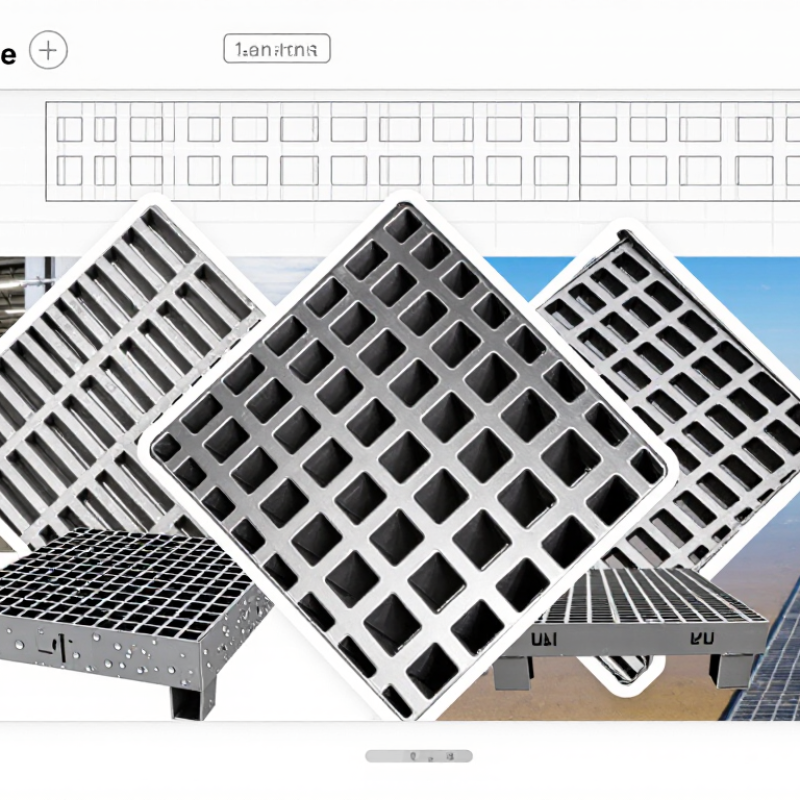
Stainless steel gratings remain a practical choice for platforms, walkways, drainage covers, and industrial stairs in 2026. The main types include welded, press-locked, and swage-locked grating. Welded panels handle demanding loads well. Press-locked designs offer clean lines and accurate spacing. Swage-locked panels can suit architectural areas, but their performance depends heavily on manufacturing control.
Grade selection should follow the environment, not habit. Grade 304 performs reliably in dry indoor areas and many general industrial spaces. Grade 316 or 316L offers better resistance to chlorides, coastal air, and chemical exposure. Duplex stainless steel may serve severe environments, although its cost and fabrication requirements need careful review. Surface finishes also matter. A smooth finish looks attractive, while serrated bars improve traction around oil, rain, or mud.
Global buyers should check EN 10088 material requirements, ASTM specifications, and project-specific load codes. Access platforms may also require EN ISO 14122 guidance. ASTM A380 and ASTM A967 are commonly referenced for cleaning and passivation practices. However, no single standard covers every design decision. Confirm span, bearing-bar size, mesh opening, deflection limits, and slip resistance with a qualified engineer. Mill certificates, inspection reports, and heat-number traceability strengthen purchasing reliability. A recurring field lesson is simple: corrosion resistance alone does not guarantee safe service. Some specifications still overlook drainage, trapped debris, or installation tolerances. That oversight deserves correction.
| Grating Type | Typical Stainless Steel Grades | Manufacturing Characteristics | Key Technical Advantages | Recommended Environments | Common Surface Options | Relevant Standards and References | Buyer Selection Notes |
|---|---|---|---|---|---|---|---|
| Welded Bar Grating |
304 / 304L 316 / 316L |
Bearing bars are welded to cross bars, normally using resistance welding. The panel has high rigidity and consistent spacing. | Strong load transfer, stable geometry, good drainage, and suitability for frequent pedestrian or trolley traffic. | Food-processing areas, water-treatment plants, chemical facilities, commercial walkways, platforms, and industrial floors. | Mill finish, pickled and passivated, serrated bearing bars, or electropolished surfaces where hygiene is important. | ASTM A479/A479M for stainless bars and shapes; ASTM A240/A240M for stainless plate or sheet components; EN 10088 material specifications; EN ISO 14122-2 for access platforms and walkways. | Specify bearing-bar size, span, panel dimensions, support condition, clear opening, live load, concentrated load, and deflection limit. Load capacity is not determined by grade alone. |
| Press-Locked Grating |
304 / 304L 316 / 316L |
Cross bars are mechanically pressed into pre-punched bearing bars. The finished surface is generally smooth and visually uniform. | Clean appearance, accurate spacing, easy panel fabrication, and good suitability for architectural and light-to-medium industrial applications. | Interior platforms, mezzanines, ventilation screens, building services areas, and moderately corrosive industrial environments. | Smooth or serrated bearing bars; pickled and passivated finish is commonly selected for improved surface cleanliness. | EN 10088; ASTM A479/A479M; project-specific structural design rules; EN ISO 14122-2 where the grating forms part of a permanent access system. | Confirm resistance to uplift, vibration, impact, and lateral movement. Mechanical interlocking details should be checked for the intended span and service loads. |
| Swage-Locked Grating |
304 / 304L 316 / 316L |
Round or twisted cross bars are mechanically locked into bearing bars by swaging or deformation of the bearing-bar openings. | Good dimensional consistency, attractive appearance, efficient open area, and relatively low visual obstruction. | Architectural walkways, platforms, screens, pedestrian bridges, and areas where appearance is important. | Smooth round cross bars, serrated bearing bars, pickled and passivated, or electropolished. | EN 10088; ASTM A479/A479M; ANSI/NAAMM MBG guidance may be used for bar-grating design terminology; local structural codes remain applicable. | Check the cross-bar locking method, panel edge configuration, support clips, and resistance to repeated dynamic loading. |
| Perforated or Expanded Stainless Grating |
304 / 304L 316L |
Manufactured from perforated sheet or expanded metal rather than individual load-bearing bars. Openings and thicknesses vary widely. | Lightweight construction, anti-slip patterns, good ventilation, and the ability to provide a more continuous walking surface. | Covers, machine guards, ventilation platforms, light-duty walkways, drainage covers, and architectural applications. | Plain sheet, raised perforation, anti-slip perforation, pickled and passivated, or electropolished. | ASTM A240/A240M; EN 10088; EN ISO 14122-2 where used in access systems; project-specific slip-resistance and load requirements. | Do not compare load capacity directly with bar grating. Verify net section, unsupported span, edge stiffening, opening size, and point-load performance. |
| 304 / 304L Austenitic Grating | UNS S30400 / S30403 | Chromium-nickel austenitic stainless steel. Grade 304L is the low-carbon version, generally preferred where welding is extensive. | Good general corrosion resistance, formability, weldability, and availability for standard industrial construction. | Indoor facilities, clean industrial areas, food-processing environments, architectural applications, and normal atmospheric exposure. | Mill finish, pickled and passivated, bead-blasted, or electropolished. | ASTM A240/A240M; ASTM A479/A479M; EN 10088-1 and EN 10088-2; ISO 15510 designation system. | Not the first choice for regular chloride exposure, seawater splash, or aggressive marine atmospheres. Consider 316L or a higher-alloy grade when chloride risk is significant. |
| 316 / 316L Austenitic Grating | UNS S31600 / S31603 | Chromium-nickel-molybdenum stainless steel. The molybdenum addition improves resistance to localized corrosion compared with 304 in many chloride-bearing environments. | Better pitting and crevice-corrosion resistance than 304 in many applications; good weldability, toughness, and cleanability. | Marine-adjacent structures, wastewater plants, chemical processing, pharmaceutical facilities, coastal infrastructure, and hygienic areas. | Pickled and passivated, electropolished, bead-blasted, or serrated for slip resistance. | ASTM A240/A240M; ASTM A479/A479M; EN 10088; ISO 15510; EN ISO 14122-2 for applicable access installations. | 316L is commonly selected for welded construction because its low carbon content reduces the risk of weld-related sensitization. It is not immune to chloride stress-corrosion cracking. |
| 321 Austenitic Grating | UNS S32100 | Titanium-stabilized austenitic stainless steel designed to improve resistance to intergranular corrosion after certain welding or high-temperature exposures. | Good high-temperature service capability and resistance to weld-related sensitization under suitable conditions. | Hot-process equipment, thermal zones, exhaust-related structures, and elevated-temperature industrial platforms. | Mill finish, pickled and passivated, or bead-blasted depending on the installation. | ASTM A240/A240M; ASTM A479/A479M; EN 10088 equivalents should be confirmed by the material certificate and project specification. | Select based on actual operating temperature, thermal cycling, loading, and oxidation conditions. It is not automatically superior to 316L in chloride environments. |
| 904L High-Alloy Austenitic Grating | UNS N08904 | High-alloy austenitic stainless steel containing elevated nickel, chromium, molybdenum, and copper compared with conventional 300-series grades. | Very high resistance to many strongly acidic and chloride-containing environments when properly specified and fabricated. | Aggressive chemical processing, sulfuric-acid service, specialty process plants, and severe corrosion applications. | Pickled and passivated, or electropolished where surface cleanliness and corrosion performance are critical. | ASTM A240/A240M; ASTM A479/A479M; EN 10088 material designation; project-specific corrosion and welding requirements. | Higher material cost and more limited availability are typical. Confirm chemical compatibility rather than selecting solely by alloy grade. |
| Duplex 2205 Grating | UNS S32205 / S31803 | Duplex stainless steel with an approximately balanced austenitic-ferritic structure. Typical nominal composition is about 22% chromium, 5% nickel, and 3% molybdenum, subject to the applicable specification. | High strength, strong resistance to chloride pitting and stress-corrosion cracking, and the potential for reduced section size in suitably designed structures. | Offshore and marine facilities, desalination plants, chemical processing, pulp and paper, and high-chloride wastewater applications. | Pickled and passivated, bead-blasted, or other controlled finishes suitable for the service environment. | ASTM A240/A240M; ASTM A479/A479M; EN 10088; ISO 15510; welding procedures should address duplex metallurgy and heat input. | Require qualified welding procedures, controlled heat input, and appropriate corrosion testing when specified. Do not substitute for austenitic grades without checking fabrication requirements. |
| Hygienic Stainless Grating |
304L 316L |
Grating designed with cleanable geometry, minimized crevices, and surface finishes selected for sanitary processing areas. | Easy washdown, reduced soil retention, good corrosion resistance, and compatibility with strict hygiene procedures. | Food and beverage plants, pharmaceutical manufacturing, laboratories, clean utilities, and sanitary drainage zones. | Smooth surfaces, pickled and passivated, electropolished, rounded edges, and anti-slip patterns compatible with cleaning requirements. | EN 10088; ASTM A240/A240M; applicable hygienic-design rules; EN ISO 14122-2 where used as a permanent access walkway. | Specify surface roughness, weld finishing, drainage direction, cleanability, chemical-cleaning regime, and slip resistance together. |
Load data shows whether the grating can safely support real project demands. Appearance alone proves little. Review span, loading type, support conditions, and deflection limits before approval.
A uniform load spreads across the grating surface. A concentrated load acts over a small area, such as one trolley wheel. These loads can produce very different deflections.
Longer spans usually create greater deflection. A 1,000 mm span may perform well, while 1,500 mm may feel noticeably less rigid. Span changes everything.
Engineers should review grating depth, bearing-bar spacing, steel grade, bearing length, and support conditions. They should also check vibration, openings, and nearby finishes. Small omissions can become expensive.
These ratios describe serviceability limits for allowable deflection. The suitable limit depends on project requirements and adjacent finishes. They should support detailed calculations, not replace them.
Request the load table, test basis, calculation assumptions, material certificate, and inspection records. Confirm whether stated loads are uniform or concentrated. Clear paperwork helps expose weak assumptions.
Check the heat number on the certificate, packing label, and marked components when practical. Review chemical composition, mechanical results, dimensions, and applicable material requirements. A portable composition check is useful, but incomplete.
Inspect weld penetration, bearing bars, cross bars, dimensions, markings, and surface finish. Look for uneven welds before installation. Do not assume every document tells the whole story.
No. Grade selection must match chlorides, moisture, chemicals, and temperature. Review drainage and surface treatment, including passivation or pickling when required. “Stainless” is not a complete performance guarantee.
Traceability may weaken when materials are cut, mixed, or repacked. Require marked samples, linked records, and correction procedures before shipment. The gap is easy to miss.
This guide to Stainless Steel Gratings helps global buyers compare product types, material grades, and essential purchasing standards for 2026. It explains how 304 stainless steel, containing approximately 18% chromium, suits many general environments, while 316 stainless steel, with added molybdenum, provides improved resistance in chloride-rich, marine, and chemical applications. The selection process should also consider load capacity, support span, panel dimensions, and allowable deflection, using ANSI/NAAMM MBG 531 design data as a practical reference.
Safety and compliance are equally important. Buyers should evaluate slip resistance through EN 13036-4 testing criteria and balance open area with drainage, ventilation, and structural performance. For international procurement, documentation should verify alignment with ASTM A240 and EN 10088 requirements, including grade, dimensions, mechanical properties, surface condition, and heat or batch traceability. A complete review of these factors supports reliable performance, transparent quality control, and informed purchasing decisions across different operating environments.