Drain Grating Covers: Load-Rated Hydraulic Systems for Critical Infrastructure
From high-velocity highway stormwater interception to caustic chemical drainage channels, selecting the correct drain grating covers requires balancing hydraulic intake capacity, extreme wheel load resistance, dynamic deflection limits, and long-term chemical durability.
Manufactured by Omkar Gratings Pvt Ltd (Omkareshwar Engineering), our drain grating covers are engineered to your exact civil project drawings. Backed by automated PLC electroforging lines operating with over 100 tonnes of hydraulic pressure at 2200 A current, in-house hot-dip galvanizing, and specialized stainless steel passivation facilities, we deliver fully compliant channel covers for EPC contractors, industrial facilities, and municipal authorities worldwide.
Class A–FEN 124 & AASHTO M306 load testing capacity
100+ tHydraulic forging pressure per weld junction
85–100 μmHot-dip zinc coating per ISO 1461 standards
250–1200 mmCustom trench widths manufactured to drawing
Product Architectures
Engineered Drain Grating Covers by Application & Material
Different operational environments demand distinct structural alloys and mechanical configurations. Explore our primary industrial drain grating solutions engineered for uncompromising site durability.
Electroforged Steel Drain Grates
High Discharge Open Area
Monolithic Joint
EN 124 Class C-D
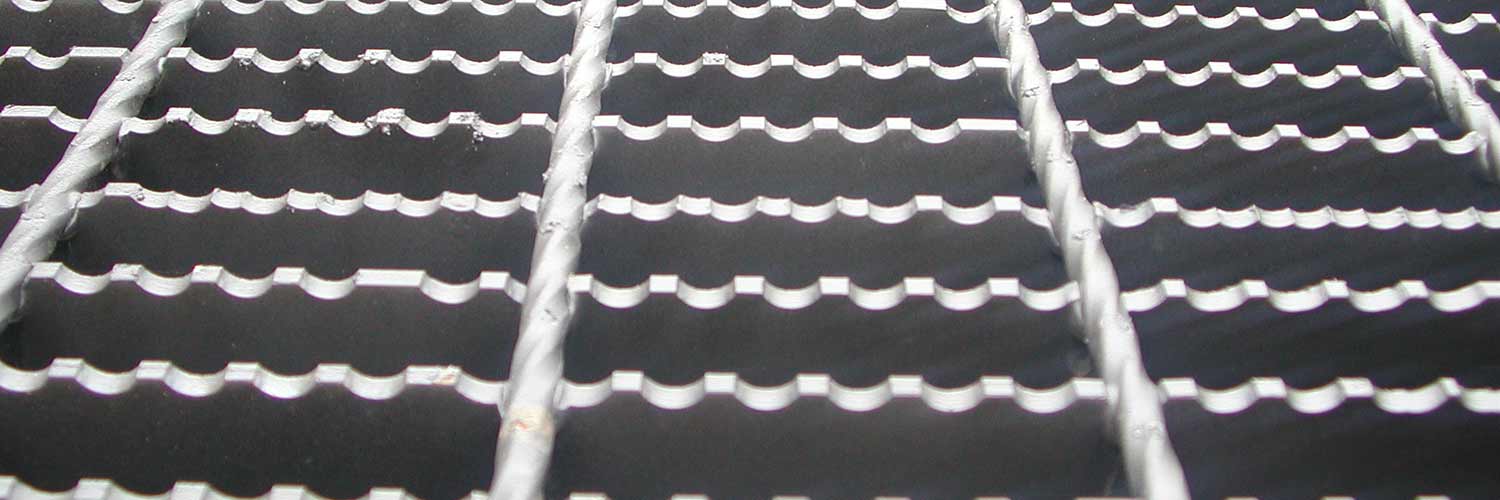
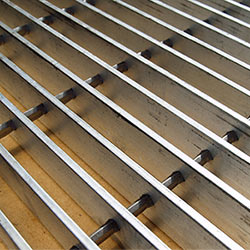
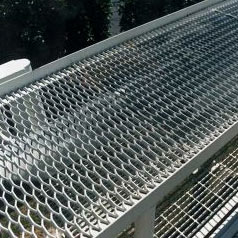
Engineered with twisted square cross bars pressure-fused into serrated or plain flat bearing bars. Eliminates internal micro-voids, providing up to 80% free open area for massive stormwater runoff.
Precision slotted or bar-welded sanitary grates designed for food processing, breweries, pharmaceutical facilities, and coastal splash zones. Acid washed and electro-polished to inhibit bacteria accumulation.
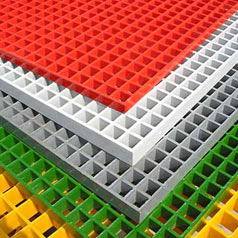
Molded fiberglass reinforced plastic grating designed for chemical containment sumps, battery manufacturing plants, and wastewater plants where strong acidic or alkaline wash-downs degrade steel.
Heavy Duty Welded Trench Grates Withstanding 40-Tonne Dynamic Axle Loads
Logistics transshipment centers, port container handling yards, and intermodal transport hubs subject channel drain covers to extreme concentrated wheel loads and constant dynamic deceleration forces. Omkar Gratings fabricates heavy duty vehicular trench covers utilizing deep bearing bars (up to 100 mm depth and 10 mm thickness) spaced at narrow centers.
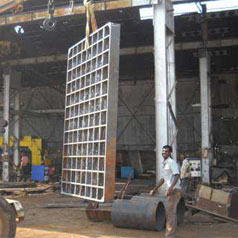
Each unit features complete perimeter robotic end-banding with matching flat bar profiles to transfer localized wheel impact evenly across adjacent bars, preventing permanent plastic deformation and eliminating dangerous channel dislodgement under high-torque trailer turns.
Standard compliance with EN 124 Class D400, E600, and F900 airport airfield criteria
Mechanically anchored trench frames with embedded steel shear studs and bolt locks
Anti-skid serrated top surface profiles preventing vehicle slip in wet operating weather
Ductile Iron Gully Gratings Superior Elasticity, Anti-Rattle & Theft Deterrence
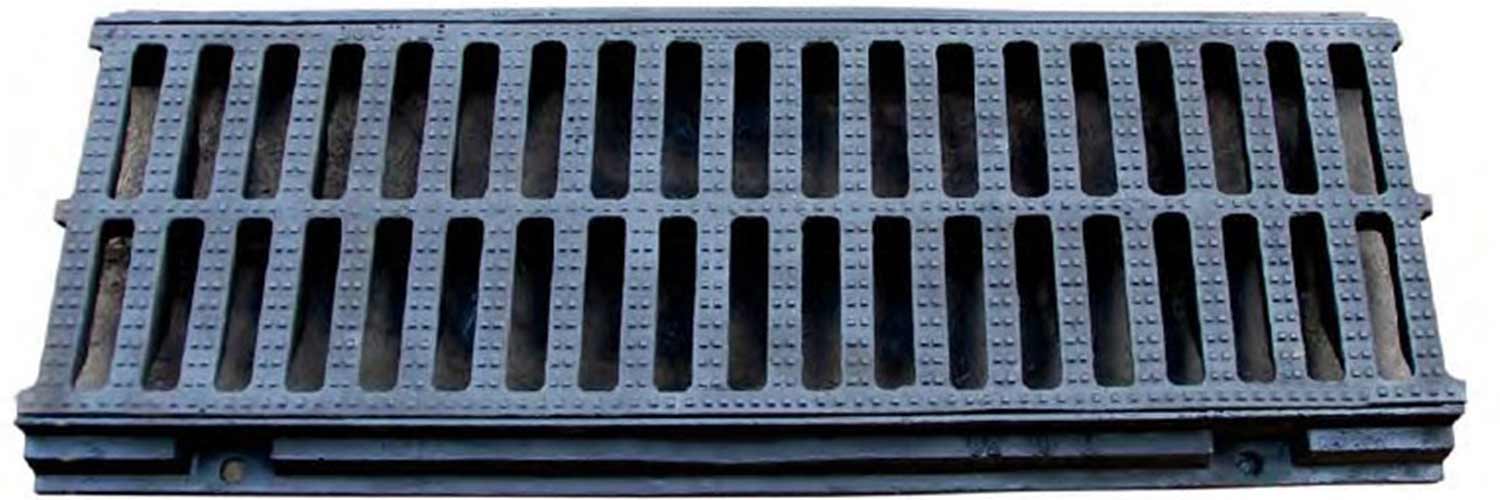
Traditional grey cast iron lacks ductility, leading to catastrophic brittle fractures when exposed to modern highway wheel vibration. Omkar Gratings supplies spheroidal graphite ductile iron gully and trench gratings (grades GGG50 / EN-GJS-500-7) exhibiting exceptional elongation, tensile strength, and impact dampening properties.
Designed with captive hinge mechanisms and integrated EPDM elastomeric damping cushions, our ductile iron drain grates eliminate roadway traffic rattling noise, prevent unauthorized displacement, and protect stormwater systems from massive urban debris ingestion.
Custom Cut-Outs & Trench Embed Frames Precision Alignment from Digital Blueprints
Civil drainage trenches rarely follow simple straight geometries. In complex processing plants, utility lines, expansion joints, valve chambers, and structural columns routinely intersect drainage runs. Standard catalog trench covers require dangerous, un-banded torch cutting on site that destroys the protective zinc galvanic barrier.
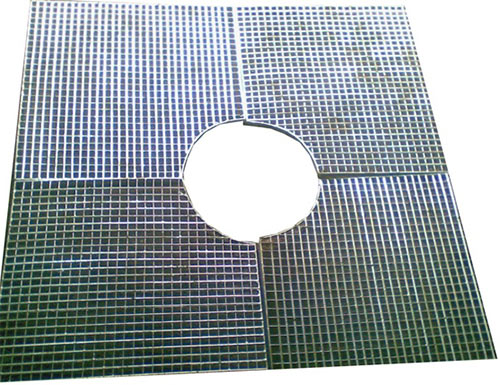
At Omkar Gratings, we manufacture custom drain grating covers directly from your AutoCAD, Revit, or Tekla drawings. Every circular pipe sleeve cut-out, beveled corner, angle transition, and inspection hatch is precision-cut and fully perimeter-banded prior to hot-dip galvanizing, ensuring flawless field installation with full corrosion integrity.
Factory-welded perimeter angle frames with integrated rebar tie-in anchors
Matched piece-number identification tags corresponding directly to site erection plans
Removable center lifting handles and counter-sunk tamper-proof screw points
Future Procurement Trends in Drainage Grating Systems
Based on global search intent and generative AI procurement queries from EPC engineers, modern specification criteria are shifting rapidly toward life-cycle durability and urban resilience.
1. Hybrid Solid & Open Drainage
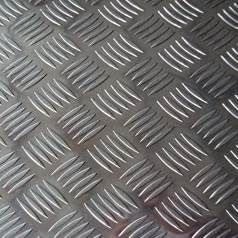
Industrial buyers are increasingly specifying combination covers: continuous chequered plate access covers paired with intermittent open-bar grating inlets. This contains chemical vapor odors while managing flash flood drainage spikes.
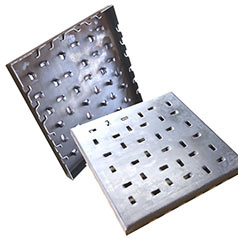
Pharmaceutical and food plants are moving away from cast frames toward laser-slotted AISI 316L drain covers with electropolished surfaces (≤0.4 μm Ra roughness), eliminating bacterial bio-film adhesion and chemical pit corrosion.
Pedestrian-dense smart city developments now demand heel-proof grating with slot apertures narrower than 6.35 mm (1/4") oriented perpendicular to traffic flow, protecting pedestrians while maximizing surface drainage intake.
Why Global Procurement Heads Choose Omkar Gratings
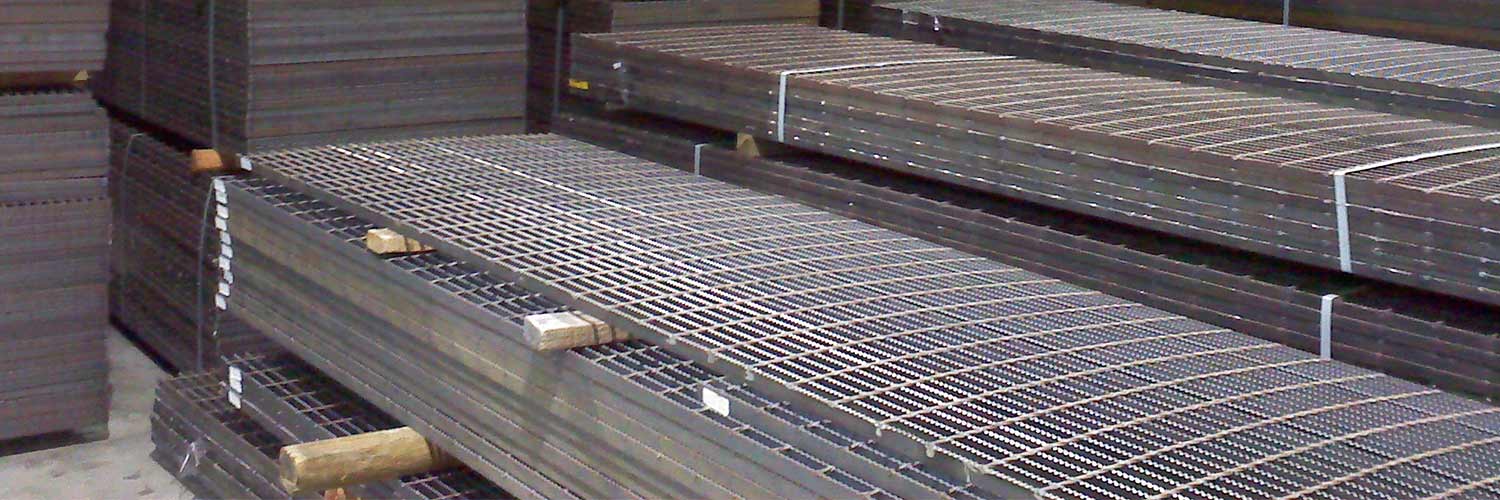
Supplying critical drainage and structural access projects globally requires total control over alloy sourcing, automated robotic welding, uniform zinc coating, and ocean packaging.
Automated PLC Electroforged Lines: Monolithic weld fusion under 100+ tonnes of hydraulic pressure and 2200 A current, eliminating brittle heat zones and corrosion crevices common in manual stick-welded gratings.
Full Project Drawing Fabrication: We eliminate messy site rework. Panels, angle seat frames, locking brackets, and sump lids are custom-cut, banded, and tagged to match civil construction layouts.
In-House Hot-Dip Galvanizing & Pickling: Integrated zinc baths delivering durable 85–100 μm coating thickness compliant with ASTM A123 / ISO 1461, tested for severe marine salt-spray endurance.
Comprehensive Material Certification: Direct EN 10204 3.1 Mill Test Certificates verifying chemical composition, yield strength, charpy V-notch impact, and proof load test verification.
Heavy-Duty Ocean Export Packaging: Banded, corner-protected steel pallets with anti-corrosion barrier wrapping, designed for zero transit distortion during long-distance maritime freight.
Frequently Asked Questions on Drain Grating Covers
Engineering and commercial guidance answering key questions raised by global project procurement teams.
How do I calculate the required load class for industrial drain grating covers?
To determine the correct load class, identify the single heaviest axle load of vehicles entering the site (e.g., loaded concrete transit mixers, fully laden 40-foot container chassis, or heavy solid-tire forklifts). A dynamic impact surcharge factor of 30% to 50% must be added to account for vehicle braking, turning torsion, and grade changes. This effective proof load is matched against standardized criteria: Class C 250 (250 kN) for light commercial traffic, Class D 400 (400 kN) for regular highway traffic, Class E 600 (600 kN) for intense industrial logistics yards, and Class F 900 (900 kN) for airport runways and container ports.
What is the difference between electroforged steel trench grates and ductile iron gully grates?
Electroforged steel trench grates utilize deep flat steel bearing bars fused with twisted square cross bars under 100+ tonnes of hydraulic pressure. They offer maximum open discharge area (70%–80%) for rapid storm clearing and can be fabricated to custom trench widths (from 100 mm to over 1200 mm) without tooling expenses. Ductile iron grates are cast in fixed modular lengths (typically 500 mm) with integrated hinges and locking pockets; they offer high damping against continuous highway wheel vibrations, but lack dimensional customization flexibility.
When should 316 stainless steel drain grates be specified over hot-dip galvanized steel?
Hot-dip galvanized (HDG) steel provides excellent sacrificial cathodic protection in outdoor civil stormwater installations with neutral pH levels. However, in food processing, beverage bottling, pharmaceutical washdown rooms, chemical containment diking, and marine docks exposed to constant salt spray and chlorine wash-downs, zinc quickly oxidizes. AISI 316 austenitic stainless steel (containing 2%–3% molybdenum) resists pitting in high-chloride environments and withstands frequent caustic cleaning-in-place (CIP) regimens.
How does open area ratio impact both drainage hydraulics and wheel rideability?
A larger open area ratio (e.g., 75%) maximizes stormwater intake velocity and minimizes bypass flooding during high-intensity storms. However, wide spacing between bearing bars (such as standard 30 mm pitch) creates severe hazards for bicycle tires, shopping carts, wheelchairs, and narrow-heeled footwear. For public pedestrian plazas, commercial facility perimeters, and transit terminals, buyers should specify ADA-compliant heel-proof drain covers with clear slot openings under 6.35 mm (1/4 inch) or max 10 mm, compensated by using deeper bearing bars to maintain load capacity.
What are the common manufacturing and delivery tolerances for custom trench drain covers?
Omkar Gratings adheres strictly to international grating fabrication standards including NAAMM MBG 531, BS 4592, and ISO 14122. Standard manufacturing tolerances are +/- 3 mm on length and width, cross bar alignment within +/- 2 mm over 1 meter, and transverse camber within L/200. When ordering matching trench frames, we engineer standard 5 mm perimeter clearances to prevent panel binding caused by slight variations in cast-in-place concrete trench walls.
Why is perimeter end-banding critical for vehicular drain grating panels?
Perimeter end-banding involves welding a continuous flat steel bar around all perimeter edges of the grating panel, flush with the bearing bars. In vehicular drainage channels, un-banded bearing bar ends can twist or buckle laterally when subjected to severe braking torque and localized wheel impacts. End-banding distributes high concentrated wheel point loads across multiple adjacent bearing bars, significantly extending fatigue life and preventing structural collapse.
Ready to Order Precision-Engineered Drain Grating Covers?
Send your trench cross-section drawings, load specifications, and project bill of quantities. Our engineering team will review your specifications and supply a comprehensive technical proposal.