Engineered Electroforged Gratings for Maximum Structural Integrity
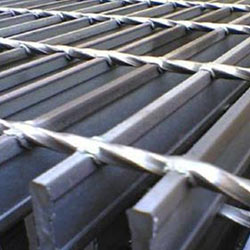
Electroforged gratings represent the pinnacle of modern grating manufacturing. Produced on automated, PLC-controlled forge welding lines, our panels undergo a simultaneous application of over 100 metric tonnes of hydraulic pressure and high electric current (approx. 2200 Amps). This resistance welding process fuses square twisted cross bars directly into pre-aligned load-bearing bars without the addition of filler metal, creating a permanent, homogeneous metallurgical bond at every intersection.
Key Advantages of Electroforged Fusion Over Manual Welding
Unlike conventional hand-welded panels that necessitate deep slotting or notching—which compromises the load-bearing cross-section and creates crevices susceptible to accelerated corrosion—electroforged gratings retain 100% of the bearing bar's structural strength. The resulting seamless joints contain zero air gaps, eliminate internal stress cracks, and provide an inherently high load distribution across the entire grating floor panel.
Dimensional Flexibility & Standard Panel Sizes
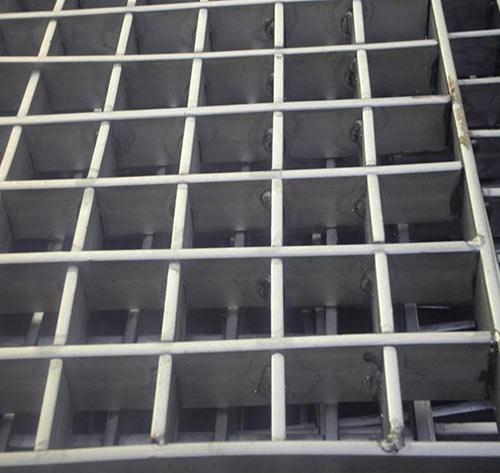
Omkar Gratings operates dedicated automated production lines with a monthly manufacturing capacity exceeding 800 Metric Tons. We supply standard panels measuring 6000 mm x 1000 mm ex-stock for quick dispatch, as well as custom prefabricated, banded panels fabricated directly to customer layout drawings and civil blueprints.
Common standard mesh pitches include:
- 30 mm x 100 mm: Preferred standard for global EPC industrial platforms and chemical walkway standards.
- 40 mm x 100 mm: Highly economical configuration widely specified in utility and structural steel plant packages.
- 41 mm x 100 mm & 33 mm x 100 mm: Internationally compliant center-to-center spacing configurations.
- 30 mm x 50 mm & 40 mm x 50 mm: Dense mesh patterns tailored for areas requiring object-retention and specialized safety parameters.
Engineering Specifications & Profile Selection
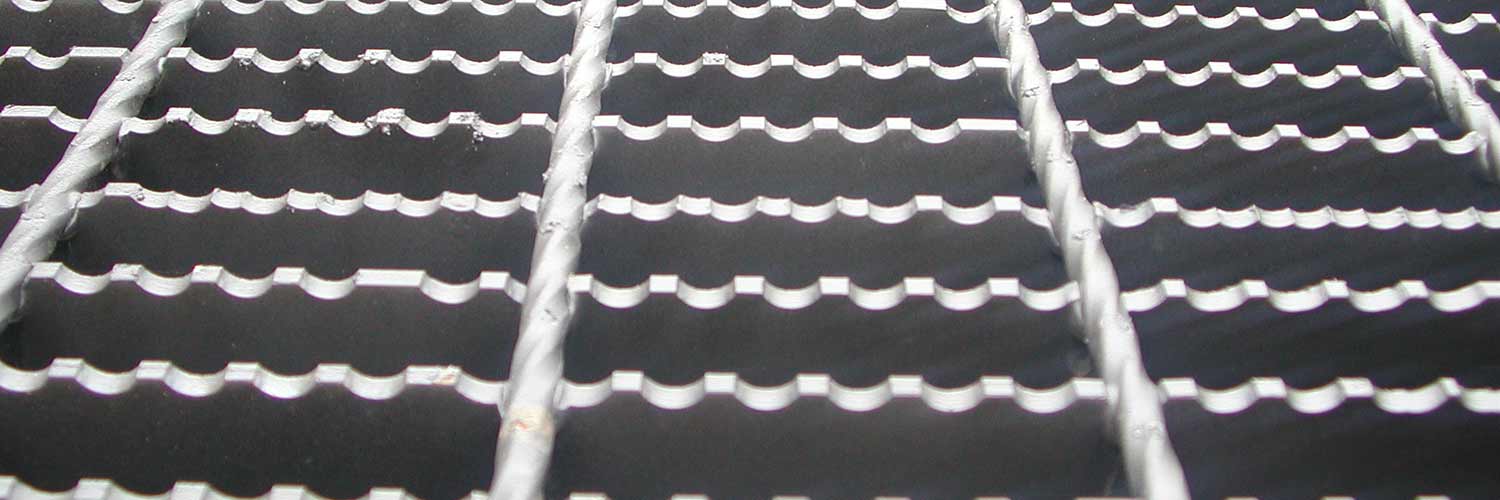
Our electroforged grating profiles are engineered from high-tensile structural carbon steel (IS 2062 Gr. E250 / ASTM A36) and premium stainless steels (AISI 304, AISI 316). Bearing bars are available in both plain and serrated profiles to deliver optimum anti-slip traction in oily, wet, or marine conditions.
| Height | Thickness |
|---|---|
| 30 mm | 5.0 mm |
| 30 mm | 6.0 mm |
| 32 mm | 5.0 mm |
| 32 mm | 6.0 mm |
| 40 mm | 5.0 mm |
| 40 mm | 6.0 mm |
| 50 mm | 5.0 mm |
| 50 mm | 6.0 mm |
| Height | Thickness |
|---|---|
| 25 mm | 3.0 / 5.0 mm |
| 30 mm | 3.0 / 5.0 mm |
| 32 mm | 5.0 mm |
| 32 mm | 6.0 mm |
| 40 mm | 5.0 mm |
| 40 mm | 6.0 mm |
| 50 mm | 5.0 mm |
| 50 mm | 6.0 mm |
| Profile Type | Nominal Size |
|---|---|
| Square Twisted | 6.0 mm |
| Square Twisted | 8.0 mm |
| Round Bar | 6.0 mm |
| Round Bar | 8.0 mm |
| Square Twisted | 10.0 mm |
| Smooth Bar | 10.0 mm |
Custom CAD Fabrication & Project Support
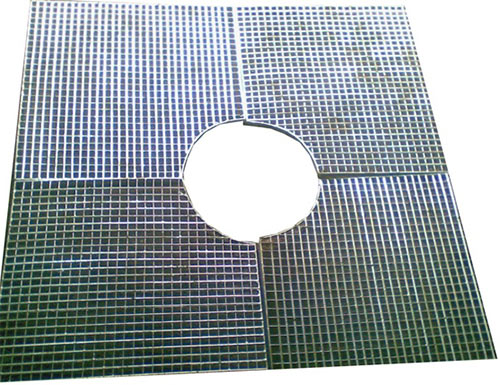
Supported by an in-house engineering team utilizing current AutoCAD design suites, we translate architectural and structural steel erection plans into precise panel allocation layouts. Panels are delivered with factory-welded edge banding, precision pipe cut-outs, kick plates (toe plates), and custom curb angles to ensure zero-modification drop-in installation on site.