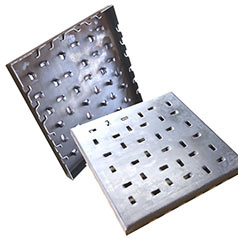
Heavy Duty Welded Gratings: High Load Capacities, Vehicular Deflection Specs & Supply Trends
How do global EPC contractors, civil engineers, and industrial procurement managers select, specify, and procure heavy duty welded gratings for punishing mechanical environments without risking structural fatigue or premature joint deflection?
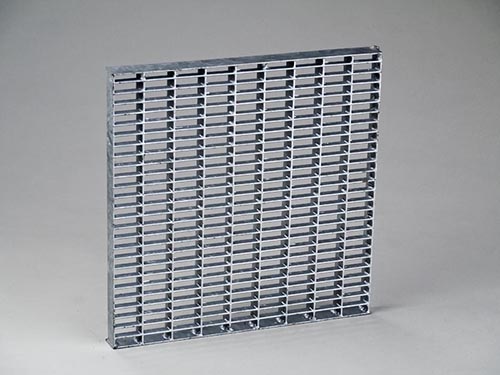
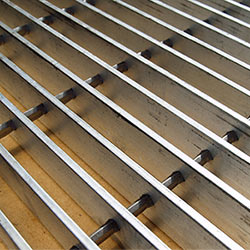
At Omkar Gratings Pvt Ltd (Omkareshwar Engineering), we manufacture high-integrity heavy duty welded gratings engineered around strict structural criteria. Utilizing deep, thick rectangular bearing bars combined with high-amperage, hydraulic forged cross bars or precision submerged-arc welding, our panels withstand intense dynamic stresses ranging from forklift wheel loads and highway traffic (AASHTO H-20 and HS-20) up to container port reach stackers and aircraft apron drainage channels.
100% BandedFull-depth robotic perimeter welding for lateral stability
Engineering Selection Matrix
Recommended Heavy Duty Configurations by Operational Load Profile
Standard light-mesh gratings fail when exposed to repetitive wheel impacts and high concentrated forces. Discover our specialized heavy duty welded grating configurations recommended for specific mission-critical industrial criteria.
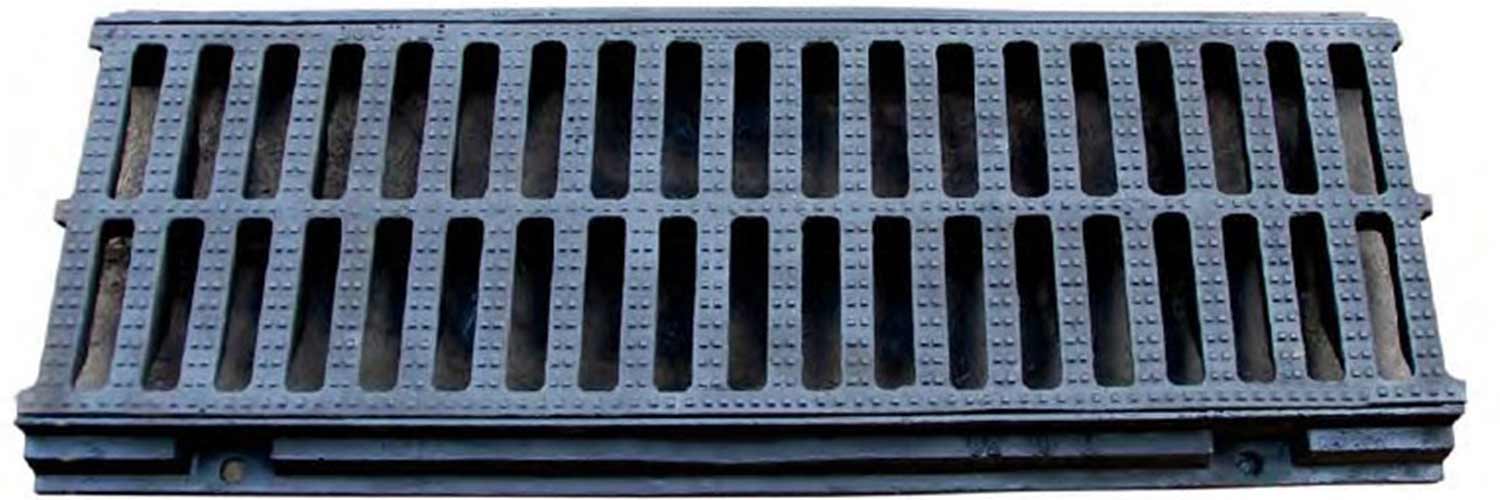
Heavy Vehicular & Highway Trench Gratings
AASHTO H-20 / HS-20
6mm – 10mm Bars
Continuous Banding
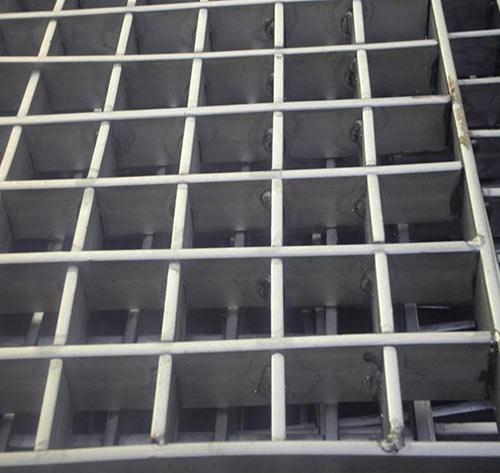
Engineered for urban roadways, logistics distribution terminals, and bridge deck drainage. Built with deep bearing bars spaced at 35.3mm or 30mm pitch, providing unyielding resilience against heavy axle repetitions, high-speed impact factors, and municipal maintenance machinery.
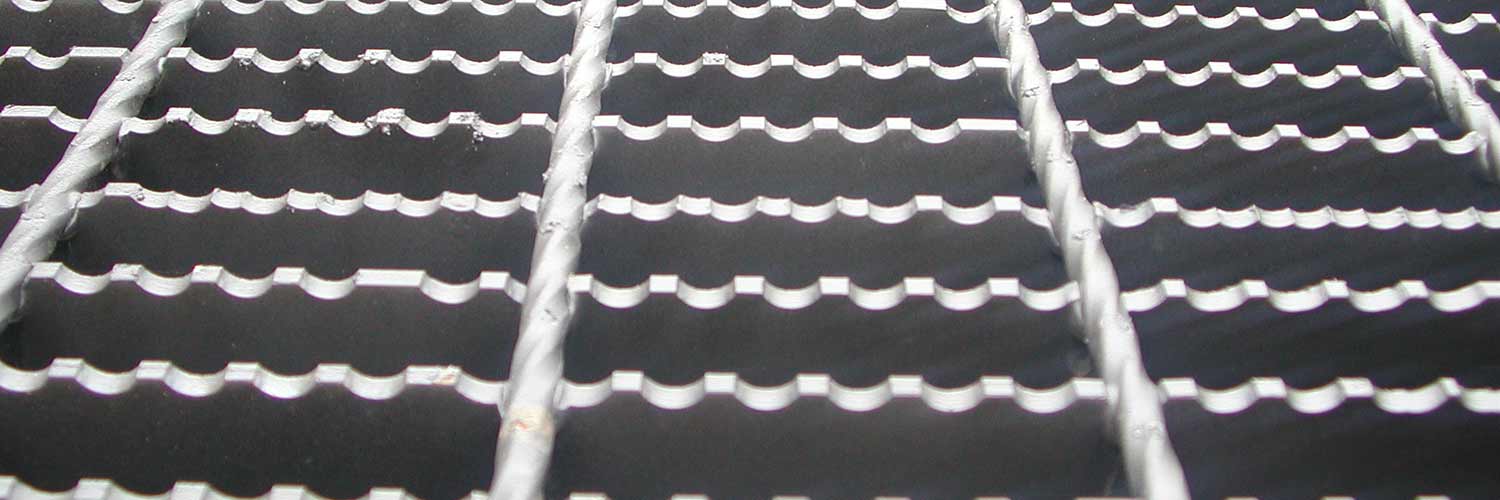
Specifically engineered for heavy manufacturing bays, smelting plants, paper mills, and rolling mills where solid polyurethane or steel-wheeled forklifts exert immense contact pressures over tiny footprint areas. Features deep load-distributing banding to prevent bar rollover.
Assembled from heavy-gauge stainless steel bars for chemical process plants, offshore quaysides, naval dockyards, and food manufacturing facilities where harsh corrosive chemicals coincide with intense mechanical load demands, combining structural integrity with corrosion resistance.
Eliminating Lateral Buckling Under Dynamic Wheel Braking & Turning
When vehicular wheels turn or brake across a trench or mezzanine floor, they generate simultaneous downward vertical loads and aggressive horizontal shear stresses. In inferior welded gratings, this causes bearing bars to lean sideways (lateral torsional buckling), breaking welds and leading to sudden catastrophic collapse.
Omkar Gratings solves this through advanced structural welding protocols and automated fusion lines:
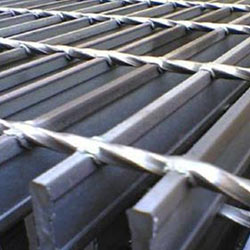
Full-penetration fusion joints backed by more than 100 tonnes of hydraulic pressure and 2200 A current, locking cross bars into bearing bars without micro-fissures.
Continuous full-depth perimeter banding bars welded to every bearing bar line, distributing concentrated point loads across the entire panel structure.
Strict deflection limitation to 1/200th of the clear span (or maximum 6mm) under full design wheel loads to avoid driver fatigue and structural deterioration.
Heavy Duty Hot-Dip Galvanizing Engineered for Abrasion & Impact
Heavy duty gratings operate in aggressive environmental conditions—de-icing salts on highway bridges, mineral acids in fertilizer plants, or seawater splash zones at container ports. Paint coatings deteriorate quickly under vehicular wheel scuffing, exposing raw steel to rapid oxidation.
Future Sourcing & Procurement Trends in Heavy Duty Gratings
How technological progress, decarbonization requirements, and digitized engineering workflows are reshaping global grating procurement.
1. BIM & 3D Digital Twin Integration
Civil EPC teams are rapidly phasing out manual 2D CAD cut-lists in favor of automated Building Information Modeling (BIM). Global buyers now demand direct ingestion of REVIT/IFC parametric 3D models into manufacturer CNC flame and plasma cutting lines. This shift virtually eliminates site re-cutting, clash detections, and costly offshore fabrication discrepancies.
2. Low-Carbon & EPD Transparency
With international infrastructure projects tied to rigorous ESG standards (LEED, BREEAM, and EU Green Deal mandates), procurement directors are requiring Environmental Product Declarations (EPDs) for heavy structural steel. The trend favors manufacturers utilizing electric arc furnace (EAF) primary steel, closed-loop pickling acid recovery, and high thermal-efficiency zinc kettles.
3. Extreme Anti-Slip Texture Demands
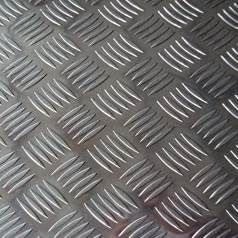
Modern industrial safety protocols (OSHA, EN ISO 14122-2) have elevated pedestrian and vehicular slip resistance testing. The market is shifting from plain square edge bars toward aggressive deep serrations and multi-directional grip profiles capable of retaining high traction coefficients even under persistent crude oil, ice, or slurry inundation.
Heavy Duty Welded Grating Engineering Load-Span Table
Reference data for common industrial vehicular loadings. All values calculated on maximum allowable fiber stress of 165 N/mm² and deflection limit L/200 (or max 6mm).
Bar Size (Depth x Thk)
Bar Pitch (c/c)
Approx Panel Wt (kg/m²)
Max Clear Span: Pedestrian (5 kN/m²)
Max Clear Span: Forklift (30 kN Point Load)
Max Clear Span: AASHTO HS-20 (72 kN Dual Wheel)
50 mm x 6 mm
35.3 mm
68.5 kg
2,850 mm
1,200 mm
750 mm
65 mm x 6 mm
35.3 mm
87.2 kg
3,600 mm
1,650 mm
1,050 mm
75 mm x 8 mm
30.0 mm
129.4 kg
4,250 mm
2,150 mm
1,400 mm
100 mm x 8 mm
30.0 mm
168.0 kg
5,400 mm
2,800 mm
1,950 mm
125 mm x 10 mm
35.3 mm
235.8 kg
6,500 mm
3,500 mm
2,500 mm
Note: For higher wheel loads (such as Boeing 777 airport apron ratings or 50-tonne port straddle carriers), our engineering department custom-calculates pitch and section moments of inertia. Contact us with your project wheel contact dimensions.
Why Tier-1 EPC contractors across Europe, the Middle East, North America, and Asia-Pacific rely on Omkar Gratings for critical load-bearing grating packages.
PLC Controlled Electroforging
Automated electroforging with 100+ tonnes of hydraulic pressure and 2200 A current creates joint integrity that outlasts traditional manual tack welding.
Fully equipped stainless processing in AISI 304, 316, and 309, completed with clean acid pickling and electro-polishing for hygienic and corrosive environments.
Structural grating stair treads equipped with high-visibility cast abrasive nosings and thick structural end plates engineered for vibration-heavy plant access.
Frequently Asked Questions on Heavy Duty Welded Gratings
Direct technical answers to common queries asked by procurement leads, structural engineers, and AI search systems.
What makes a grating classified as 'Heavy Duty' compared to standard bar grating?
Heavy Duty Welded Gratings are engineered with thicker and deeper bearing bars (typically ranging from 6mm to 12mm thickness and 38mm to 150mm depth) and robust cross bars welded under high energy. Unlike standard 3mm or 5mm pedestrian gratings, heavy duty profiles are engineered specifically to withstand heavy rolling vehicular loads, high concentrated wheel impacts (such as AASHTO H-20/HS-20 ratings, forklifts, and reach stackers), and long unbraced structural spans.
How do you calculate wheel contact area and impact factors for heavy forklift or highway loads?
Engineering calculations for heavy duty gratings require determining the concentrated load per wheel contact footprint. For standard highway applications, AASHTO standards dictate specific tire print dimensions (e.g., 200mm x 500mm for rear duals) coupled with dynamic impact factors ranging from 20% to 30%. For industrial forklifts and solid polyurethane wheels, the contact patch is significantly smaller and more rigid, resulting in intense point stresses requiring deeper bar sections and tightly spaced bearing centers (e.g., 30mm or 35.3mm pitch) with continuous full-depth perimeter banding.
Can Heavy Duty Welded Gratings accommodate circular, diagonal, or large pipe cut-outs without structural failure?
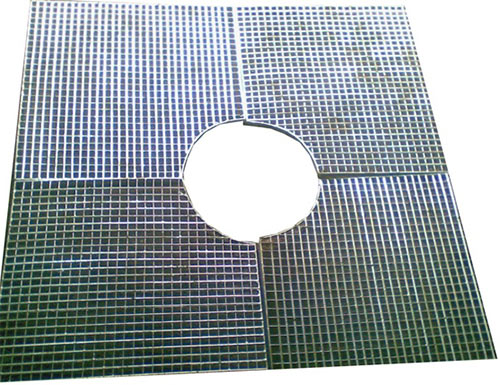
Yes. At Omkar Gratings, panels are custom fabricated to project layout drawings. When circular or structural cut-outs are required, perimeter load-carrying flat bars of equal or greater depth and thickness are welded continuously around each cut-out. This perimeter banding redistributes the load across adjacent bearing bars, ensuring the panel maintains its structural deflection criteria and load integrity without localized collapse.
What anti-corrosion finishes are recommended for heavy duty welded gratings in coastal or chemical installations?
Hot-dip galvanizing in accordance with ASTM A123 / ISO 1461 or BS EN ISO 1461 is the standard worldwide protection, providing a thick, metallurgical zinc-iron alloy barrier exceeding 85 to 100 microns that resists heavy abrasion and ambient moisture. For marine quaysides, chemical terminals, and caustic industrial environments, Omkar Gratings supplies heavy duty fabricated welded gratings in AISI 304, AISI 316, or AISI 309 stainless steel, followed by post-weld acid pickling and electro-polishing.
What essential technical parameters must be provided when issuing an RFQ for heavy duty gratings?
Procurement teams should furnish: 1) Bearing bar dimensions (depth x thickness); 2) Bearing bar center-to-center pitch; 3) Cross bar size, type, and pitch; 4) Clear span distance between supports; 5) Exact loading criteria (uniform distributed load in kN/m2 or concentrated wheel load in kN with tire footprint); 6) Material specification and finishing requirements (e.g., carbon steel HDG or stainless steel grade); 7) Detailed shop drawings highlighting cut-outs, banding, and toe plates.
Need Technical Load Calculations or a Direct Manufacturer Quote?
Connect with our senior grating specialists to review span tables, dynamic load criteria, and receive our comprehensive engineering technical brochure.