The Engineering Guide to Ladder Type Cable Tray Selection: Load Ratings, Heat Dissipation, and Global Procurement Trends
How do top global EPC contractors prevent cable overheating, reduce lifecycle corrosion costs, and ensure strict compliance with NEMA VE-1 and IEC 61537 when procuring heavy-duty cable management systems? The answer lies in precision-engineered ladder type cable tray systems.
Omkar Gratings Pvt Ltd (Omkareshwar Engineering) manufactures project-customized ladder type cable trays engineered directly to engineering drawings, structural load specifications, and hostile environmental classifications. By combining our heavy-gauge metallurgical forming expertise, high-pressure automated welding, and state-of-the-art in-house hot-dip galvanizing, we provide mission-critical cable infrastructure for oil refineries, chemical complexes, hyperscale data centers, thermal and solar power plants, and marine terminals worldwide.
NEMA VE 1Standardized load-span classification (Classes 8C to 20C)
IEC 61537Certified electrical continuity & safe working load compliance
85+ μmAverage zinc coating thickness per ASTM A123 / ISO 1461
100–1200 mmCustom channel widths with 3m to 6m span capabilities
Engineered Cable Management Lines
Heavy-Duty Ladder Type Cable Tray Material Configurations
Every industrial project demands tailored metallurgical resistance, structural section modulus, and corrosion protection. Explore our four flagship ladder type cable tray lines engineered for harsh service conditions.
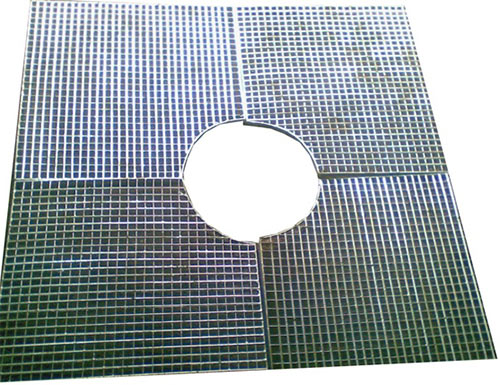
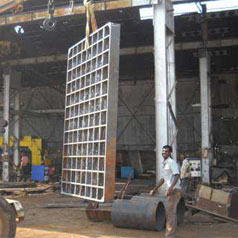
Hot-Dip Galvanized (HDG) Ladder Tray
ASTM A123 / ISO 1461
Heavy Gauge Steel
Outdoor Rugged
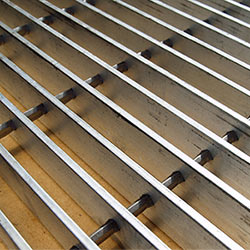
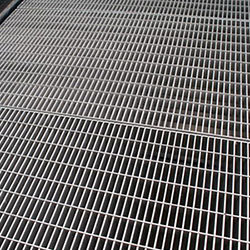
Manufactured from structural carbon steel with rungs welded or swaged under strict quality controls, then immersed in our in-house bath for total metallurgical bond protection against atmospheric humidity and chemical vapor.
Combines exceptional load-bearing performance with half the weight of steel. Ideal for long-span pipe racks, bridge infrastructure, modular marine vessels, and data center risers where dead loads must be minimized.
Open Rung Architecture: Preventing Cable Degradation and Thermal Derating
One of the primary causes of premature electrical cable failure in heavy industrial facilities is excessive heat accumulation inside enclosed or poorly ventilated raceways. Ladder type cable trays solve this challenge through an engineered open-rung design delivering up to 100% free air ventilation.
Under international standards such as IEEE 835 and NEC Section 392, power cables routed in ladder trays enjoy superior convective cooling. This permits electrical design engineers to utilize higher cable ampacity ratings without applying severe thermal derating factors, significantly reducing required copper conductor cross-sections and lowering overall cable capital expenses.
Maximum natural convective airflow eliminates thermal hotspots
Substantially lowers electrical installation CAPEX via optimized conductor sizing
Eliminates moisture, debris, and explosive hydrocarbon gas entrapment
NEMA VE 1 & IEC 61537 Standards: Engineered Safety Working Loads (SWL)
Omkar Gratings designs ladder trays with structural side rails cold-formed with an inward-turned return flange. This specialized profile maximizes the cross-sectional moment of inertia, resisting both vertical bending moments and horizontal lateral displacement caused by high wind loads or heavy cable pulling stresses.
Whether your procurement specification calls for NEMA Class 12C, 16C, or 20C (supporting up to 150 kg/m across long spans of 6 meters), each section is subjected to rigorous destructive load testing and structural deflection checks. Rungs are hydraulically resistance welded or mechanically swaged into side rails to prevent rung detachment during dynamic short-circuit electromagnetic repulsion.
Compliant with NEMA VE 1 / CSA C22.2 No. 126.1 and IEC 61537 standards
Certified deflection ratios strictly held within L/200 to prevent joint stress
Complete electrical earth bonding continuity verified across coupler junctions
In-House Hot-Dip Galvanizing: Decades of Maintenance-Free Operation
Cable management systems deployed in chemical refineries, coastal ports, and outdoor substations face severe corrosion challenges. At Omkar Gratings, we operate an integrated in-house hot-dip galvanizing plant, giving our engineers absolute control over pre-treatment pickling, fluxing, and molten zinc immersion baths.
Our galvanized coatings consistently achieve average zinc thicknesses exceeding 85 microns (≥600 g/m²), surpassing standard ASTM A123, BS EN ISO 1461, and IS 2629 specifications. The resulting metallurgical zinc-iron alloy layer creates an impermeable barrier with cathodic self-healing protection that withstands harsh salt spray, industrial sulfur dioxide, and ultraviolet exposure for over 30 years.
Full internal and external coating coverage on all welded rungs and flanges
Future Trends in Global Ladder Type Cable Tray Procurement
How the shift toward clean energy infrastructure, automated BIM modeling, and supply chain resilience is transforming international cable tray procurement strategies.
Long-Span (6m+) Support Economics
EPC contractors are standardizing on heavy-gauge 6-meter span ladder trays to reduce structural steel support pillars, cantilever arms, and installation civil work by up to 35% across massive utility-scale installations.
Project engineers require manufacturer-supplied 3D Revit/IFC BIM objects. Omkar Gratings supplies precision pre-engineered bends, risers, and tee fittings built to tight tolerances, slashing onsite cutting and welding waste.
Need customized section modulus calculations or custom punching patterns? Contact our engineering team for full structural load analysis and fabrication shop drawings.
Enterprise Strengths
Why Major EPC Contractors Choose Omkar Gratings
Over two decades of precision manufacturing excellence, backed by advanced machinery, certified quality assurance systems, and reliable global project delivery.
End-to-End In-House Manufacturing
From sheet decoiling, precision punching, roll forming, and robotic rung welding to heavy galvanizing—100% produced in-house under single-roof supervision.
In-House Galvanizing Plant
High-capacity zinc kettle guaranteeing uniform, bonded hot-dip coatings conforming to ASTM A123, ISO 1461, and IS 2629 with zero subcontracting delays.
Rigorous Quality Control & Testing
Every production batch undergoes comprehensive destructive load-deflection testing, coating thickness verification, and weld integrity metallurgical analysis.
Custom Fabrication to Layout Drawings
We manufacture non-standard straight lengths, specific rung pitches, offset reducers, and pre-welded junctions designed to match project CAD schematics.
Export Packing & Global Logistics
Heavy seaworthy steel-banded bundling, timber-crated fittings, barcoded piece marking, and moisture-barrier shrink wrapping for safe international container transit.
High-Volume Production Capacity
Modern automated machinery delivers over 5,000 meters of ladder cable tray systems monthly, comfortably meeting aggressive EPC construction deadlines.
Complete Accessory Ecosystem
Full availability of matching coupler plates, expansion joints, hold-down clamps, cantilever arms, threaded rod hangers, and bonding jumpers.
Complete Documentation Package
Full supply of Mill Test Certificates (MTC to EN 10204 3.1), Third-Party Inspection (TPI) coordination (SGS, TUV, BV), and Certificate of Origin documentation.
Procurement Knowledge Base
Frequently Asked Questions on Ladder Type Cable Tray Systems
Answers to critical technical, structural, and international sourcing questions asked by electrical engineers, EPC procurement heads, and project directors.
Why is a ladder type cable tray preferred over perforated or solid-bottom trays for heavy industrial power distribution?
Ladder type cable trays are engineered specifically for medium, high-voltage, and large-diameter power distribution. Unlike solid or perforated trays, their open rung construction allows 100% free convective airflow around conductors. This prevents internal heat trapping, permitting cables to run at their maximum current ampacity ratings without requiring electrical derating penalties. Furthermore, open rungs prevent the accumulation of water, condensation, and combustible dust, while providing robust tie-down points for heavy single-conductor cables subject to short-circuit dynamic forces.
Which international manufacturing and loading standards govern Omkar Gratings ladder trays?
Our ladder cable trays are designed and load-tested in strict compliance with NEMA VE 1 / CSA C22.2 No. 126.1 (Metal Cable Tray Systems) and IEC 61537 (Cable management - Cable tray systems and cable ladder systems). For protective surface coatings, our hot-dip galvanized lines strictly satisfy ASTM A123, BS EN ISO 1461, and IS 2629 standards, delivering guaranteed zinc mass thickness between 65 μm and 85+ μm based on material gauge.
What rung spacing and side rail profile should be specified for optimal structural performance?
Standard industrial rung spacing is offered at 150 mm (6 in), 225 mm (9 in), or 300 mm (12 in) centers. For small instrumentation or unarmored flexible cables, 150 mm spacing is recommended to eliminate sagging between rungs. For high-voltage heavy armoured feeders, 225 mm or 300 mm spacing optimizes tray dead weight. Our side rails feature cold-formed return flanges that provide high section modulus, preventing excessive deflection across 3m, 4.5m, and 6m support spans.
How does Hot-Dip Galvanized (HDG) mild steel compare with Stainless Steel 316 and Aluminum ladder trays?
HDG steel provides sacrificial zinc protection that is exceptionally rugged and cost-effective for general industrial plants, power stations, and petrochemical refineries (ISO 12944 C3/C4 environments). Stainless Steel 316/316L provides superior resistance against chloride attack, acid vapor, and aggressive marine environments (CX class), making it ideal for offshore platforms and coastal infrastructure. Aluminum (6063-T6) offers high strength-to-weight performance, weighing 50% less than steel while remaining naturally resistant to weathering in clean coastal and data center atmospheres.
Can Omkar Gratings supply prefabricated fittings, transition reducers, and custom brackets matching project drawings?
Yes. We manufacture a comprehensive suite of factory-engineered fittings matching the exact side rail profile of straight sections. This includes horizontal elbows (30°, 45°, 60°, 90°), inside/outside vertical risers, horizontal crosses, equal tees, straight/offset reducers, splice coupler plates, hold-down clips, and heavy-duty cantilever support brackets. All curved components are manufactured to specified radii (300 mm, 450 mm, 600 mm, 900 mm) to strictly honor cable minimum bending radius criteria.
What information must procurement engineers provide to receive a fast, binding technical quotation?
To receive a detailed quote within 24 hours, provide: (1) Side rail height and flange width; (2) Cable tray width (100 mm to 1200 mm); (3) Rung pitch (150 mm, 225 mm, or 300 mm); (4) Material specification and coating grade (e.g., HDG to ASTM A123, SS316L, AL6063); (5) Structural span and design load class (kg/m); (6) Bill of materials (BOM) including fitting quantities and radii; and (7) Project destination port for competitive CIF/FOB freight calculation.
Need an Engineered Ladder Type Cable Tray Quotation for Your Project?
Speak directly with our technical sales engineers. Send your BOQ, specification sheets, and project drawings for immediate design optimization, load verification, and competitive factory-direct pricing.