Industrial Stair Treads: The Complete Global Engineering & Procurement Guide for High-Traffic, Corrosive, and Safety-Critical Applications
Industrial stair treads are fundamental safety-critical components in heavy plants, offshore extraction rigs, petrochemical refineries, mining wash-plants, power utilities, and automated distribution terminals worldwide.
Engineered strictly to satisfy the structural, anti-skid, and deflection mandates of OSHA 1910.25, NAAMM MBG 531-17, and BS EN ISO 14122-3, each stair tread must deliver zero torsional distortion under dynamic live impact loads. At Omkar Gratings Pvt Ltd (Omkareshwar Engineering), we manufacture custom-engineered stair treads fabricated from electroforged steel, austenitic stainless steel (AISI 304, 316, 309), fiberglass reinforced polymer (FRP), and heavy-duty chequered plate. Every tread is supplied pre-punched with standardized structural end carrier plates and safety nosings to integrate seamlessly with your project drawings and staircase stringers.
Recommended Industrial Stair Treads by Operational Severity
Match your mechanical load regime, corrosion classification, and anti-slip friction requirements directly with our standardized manufacturing options.
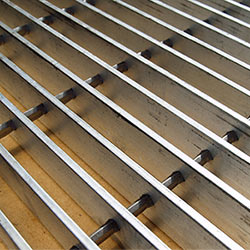
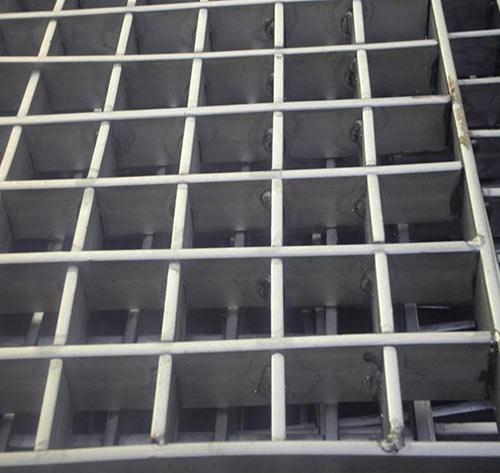
Electroforged Serrated Steel Treads
IS 2062 / ASTM A36
ISO 1461 HDG
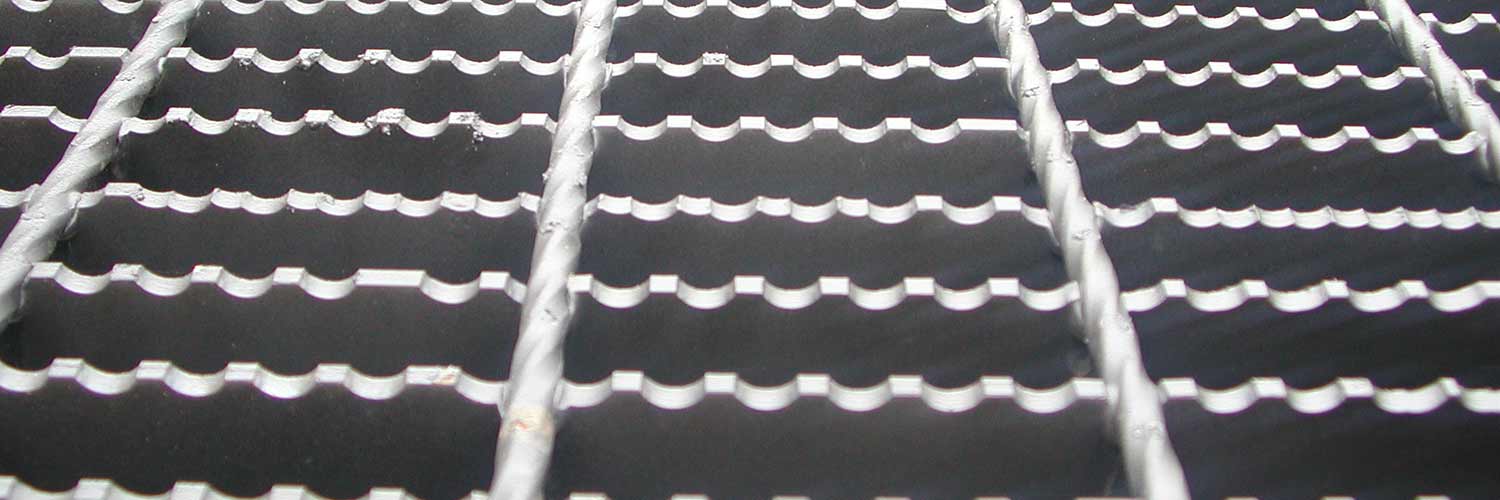
Serrated Bearing Bars
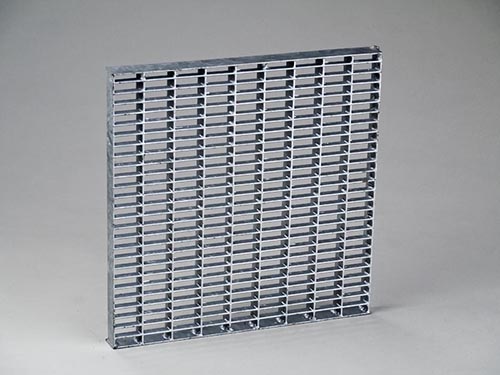
Engineered for high-traffic platforms, energy stations, and heavy machinery towers. Cross bars are hydraulic-forged into notched flat bars under 100+ tonnes of force, preventing weld breakdown and moisture entrapment. Complete with checkered plate or abrasive nosing for permanent non-slip grip.
Mandatory for chemical manufacturing, marine splash zones, offshore rigs, desalination infrastructure, and sanitary food/beverage process floors. Acid pickled and electro-polished to passivate material surfaces and maximize resistance to crevice corrosion and pitting from chlorides.
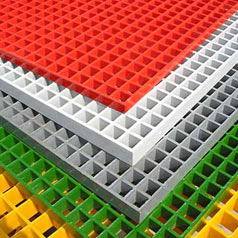
The premier choice for electrical substations, wastewater aeration tanks, acidic pickling lines, and battery containment rooms. Molded with continuous fiberglass rovings and embedded quartz grit, delivering high chemical immunity, zero spark hazard, and non-magnetic operation.
Electroforged Stair Treads Zero-Weld Cracking Under Heavy Cyclic Deflection
Industrial stairs face continuous cyclic point impacts whenever operational crew and maintenance machinery traverse vertical risers. Standard hand-welded treads frequently fail at tack-welded intersections due to localized weld notch fatigue and galvanic cell moisture retention.
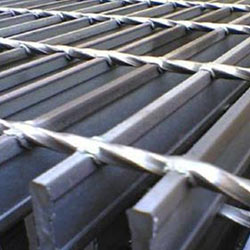
Omkar Gratings solves this systemic hazard with automated electroforged fusion. Under high-amperage electrical resistance heating (≈2200 A) and massive hydraulic compression exceeding 100 tonnes, twisted square cross bars are molecularly fused into load-bearing bars. This creates a solid, unified monolithic grid containing zero air voids, zero undercut defects, and exceptional lateral torsional stability.
Complies fully with OSHA 1910.25(b)(5) point loading (>300 lbs deflection limit)
Hot-dip galvanized to ISO 1461 / ASTM A123 with coating thickness >85 μm
Standard pre-punched end plates with slotted holes (7/16" x 1-1/8") for swift field alignment
Over 80% of stair-related workplace injuries occur at the tread nosing, where personnel foot impact initiates. In rain-swept petrochemical platforms, greasy oil refinery skids, and wash-down process rooms, smooth grating edges present extreme fall hazards.
We outfit every industrial stair tread with reinforced, impact-absorbing safety nosings welded to both bearing bars and end plates:
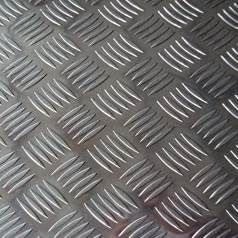
Checkered Floor Plate Nosing: Raised teardrop steel pattern providing structural step reinforcement, clear optical step delineation, and high abrasion endurance.
Cast Abrasive Aluminum Nosing: Silicon carbide and aluminum oxide grit bonded into cast alloy; optimal for lubricants, grease, and marine slime.
Corrugated & Serrated Angle Nosing: Crisp punched friction teeth offering self-draining performance for snowy, muddy, and sub-zero outdoor locations.
Custom Spiral, Skewed & Heavy-Duty Treads Fabricated Direct to Engineering Drawings
Plant structures rarely conform to straightforward rectangular layouts. Pipe penetrations, column wraps, radial vessels, conveyor transitions, and steep incline requirements necessitate highly specialized tread designs.
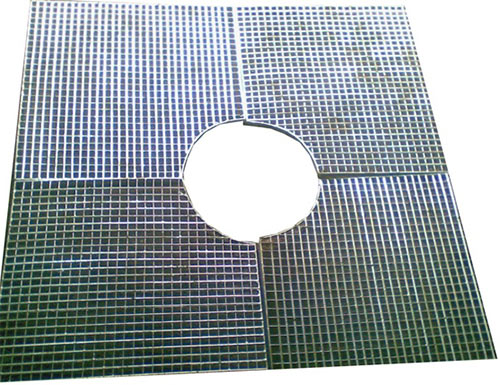
Omkar Gratings operates dedicated CNC plasma cutting, automatic shearing, and custom profiling departments to manufacture radial spiral staircase treads, non-rectangular trapezoidal treads, and treads with integrated rear toe kick-plates. Every notched cut-out is reinforced with full perimeter flat bar banding to ensure 100% of the original design load transfer is preserved.
Bar sizes from 25 x 3 mm up to 75 x 10 mm for extraordinary vehicular or impact spans
Treads matched directly to stair stringer bolt centers (114 mm, 178 mm, or custom pitch)
Full piece tagging, marking plans, and bundle grouping corresponding to project isometric drawings
Future Sourcing & Procurement Trends for Industrial Stair Treads
Global EPC contractors and tier-1 procurement executives are evolving their buying strategies to address ESG criteria, labor reduction, and asset longevity.
1. Low-Carbon Steel & EPD Verification
Leading engineering syndicates in Europe, North America, and Australia now require Environmental Product Declarations (EPD) and Scope 1-3 carbon tracking on structural steel stair assemblies. Specifiers increasingly choose mills that utilize electric arc furnace (EAF) processing and eco-certified zinc baths with near-zero dross formation.
2. Pre-Engineered Modular Stair Tower Packages
To eliminate on-site hot work and minimize expensive field labor, project packages have shifted from loose bulk treads to integrated, color-coded stair flight modules. Prefabricated bolt-on stringers, matching industrial handrail stanchions, and pre-torqued stair treads arrive palletized in erection order.
3. Photoluminescent & High-Contrast Nosing
Stringent life-safety reviews demand fail-safe egress guidance during emergency power failures. Modern procurement orders demand nosing trims with integrated zinc-sulfide photoluminescent glow channels or distinct OSHA safety-yellow powder coatings that retain luminance for over 90 minutes.
4. Severe Dynamic Anti-Slip Mandates (R12/R13)
Where general R10 ratings were once acceptable, insurance underwriters in petrochemical and offshore refining now compel DIN 51130 R12 or R13 certification. This requires deeply serrated bearing bars matched with bonded silicon carbide aggregate nosings capable of resisting intense lubricant deposition.
5. BIM Integration & Digital Barcode Tagging
Global mega-projects require stair treads tagged with laser-etched QR codes linked directly to plant Building Information Modeling (BIM) files and Mill Test Certificates (EN 10204 3.1). Site teams verify heat traceability, galvanizing thickness, and installation quadrant via mobile RFID scanning.
6. Composite Hybrid Adoption in Severe Zones
While galvanized steel remains standard for structural rigidity, asset managers in coastal fertilizer docks and mining acid extraction plants are standardizing on hybrid resin FRP treads to circumvent the multimillion-dollar maintenance cost of recurrent recoating and corrosion failure.
Engineering Reference
Standard Tread Dimensions, Spans & Load Deflection Table
Reference data based on NAAMM MBG 531-17 and OSHA guidelines for industrial pedestrian traffic. Concentrated design load evaluated at 300 lbs (1.33 kN) centered across mid-span.
Bearing Bar Size (mm)
Bar Pitch / Cross Pitch
Recommended Width (mm)
Maximum Safe Span (mm)
Bolt Hole Centers (mm)
Typical Applications
25 x 5 mm (Serrated)
30 x 100 mm
215, 245, 275
750 mm (30 in)
114 mm (4-1/2 in)
Standard plant walkways, access ladders, HVAC mezzanines
* Note: For high-vibration screening towers or vibrating mill access, bearing bars should be up-sized by at least one gauge thickness or cross-braced with intermediate stringers to reduce operator fatigue and acoustic resonance.
Over two decades of dedicated steel fabrication, precision electroforging, and export compliance to five continents.
PLC Electroforging Lines
Automated hydraulic forging with 100+ tonnes of continuous pressure and 2200 A fusion current guarantees seamless, notch-free joints with superior resistance to mechanical fatigue and weld cracking.
In-House Chemical Finishing
Dedicated acid-washing pickling vats and modern electro-polishing plants restore the chrome-oxide passive barrier on all AISI 304 and 316 stainless steel stair components prior to packing.
Integrated Hot-Dip Galvanizing
Large-capacity zinc kettle tanks ensure pure metallurgical alloy bonding adhering to ISO 1461, ASTM A123, and BS 729, yielding minimum 85-micron protective coatings for long-term corrosion survival.
Non-corrosive FRP and stainless steel stair flights over clarifier tanks, sludge basins, and pump wells.
Food & Pharmaceutical
Sanitary AISI 304 and 316 cleanroom spiral steps, vessel access catwalks, and washdown stairways.
Marine Ports & Bulk Terminals
Heavy galvanized ship loader stairs, conveyor cross-over steps, and container crane towers.
Mining & Smelting
Slurry-resistant, deeply serrated steel treads for crusher platforms, conveyor declines, and leach mills.
Chemical Processing
Acid-resistant vinyl ester FRP and passivated stainless steel treads exposed to chemical vapours.
Commercial Infrastructure
Emergency fire exit stairwells, plant room mezzanines, automated fulfillment centers, and sports stadiums.
Procurement Knowledge Base
Frequently Asked Questions on Industrial Stair Treads
Answers to technical, regulatory, and commercial questions frequently evaluated by global EPC estimating teams and AI query engines.
What structural criteria define compliant industrial stair treads under OSHA 1910.25 and NAAMM standards?
Under OSHA 1910.25 and NAAMM MBG 531-17, industrial stair treads must support a concentrated design load of at least 300 lbs (1.33 kN) placed over a 4-inch wide strip at mid-span, or a uniform load of 100 pounds per square foot (4.79 kPa), without permanent plastic deformation. Deflection under full service design load must not exceed 1/200th of the tread span or 0.25 inches (6.35 mm), whichever is less. Treads must be equipped with a distinctive, permanently bonded, slip-resistant nosing edge and standardized carrier plates with pre-punched slotted mounting holes for bolting to channel stringers.
How does serrated electroforged steel compare to FRP stair treads in corrosive marine environments?
Electroforged steel with hot-dip galvanizing conforming to ISO 1461 (>85 μm zinc thickness) provides superior mechanical rigidity, heavy impact tolerance, and resistance to thermal extremes (-40°C to +200°C). However, in direct saltwater splash zones or persistent sulfuric/hydrochloric acidic fumes, even galvanized coatings will eventually deplete. In those severe chemical and marine zones, molded vinyl ester or isophthalic fiberglass reinforced polymer (FRP) treads excel: they are completely impervious to electrochemical rusting, lightweight (reducing dead-load on tall stair towers), non-sparking, and feature coarse quartz grit embedded directly into the resin matrix during casting.
Which stair tread nosing profile provides optimal safety in oily and wet industrial environments?
Cast abrasive aluminum nosing (featuring silicon carbide particles cast into molten aluminum) offers the highest wet and oily dynamic coefficient of friction (DCOF > 0.85). For heavy industrial plants handling mud, slag, and hydrocarbons, deeply serrated steel angles or punch-raised checkered plate nosing welded across the front provide exceptional slip prevention while providing high visual contrast so descending personnel can clearly identify the leading edge of each step.
What are standard bolt hole center-to-center dimensions for tread carrier plates?
Standard carrier plate dimensions follow NAAMM and international practice: For tread widths between 7 inches (180 mm) and 9 inches (230 mm), bolt center spacing is 4-1/2 inches (114.3 mm). For tread widths between 10 inches (250 mm) and 12 inches (305 mm), bolt centers are spaced at 7 inches (177.8 mm). Carrier plates are punched with 7/16-inch x 1-1/8-inch (11 x 28.5 mm) slotted holes designed for standard 3/8-inch (M10) high-strength erection bolts, allowing field adjustment to accommodate structural stringer tolerances.
Can industrial stair treads be supplied to customized project drawings with cut-outs and variable skew angles?
Yes. Approximately 40% of our stair tread production involves custom engineering: circular spiral treads for distillation towers, skewed trapezoidal treads for angled pipe-rack transitions, treads notched for vertical conduit passages, and treads with integrated 100 mm high toe-plates. Each customized opening is fully perimeter-banded with matching flat bar to restore complete structural moment transfer across interrupted bearing bars.
How should international buyers package stair treads to prevent coating damage during ocean shipment?
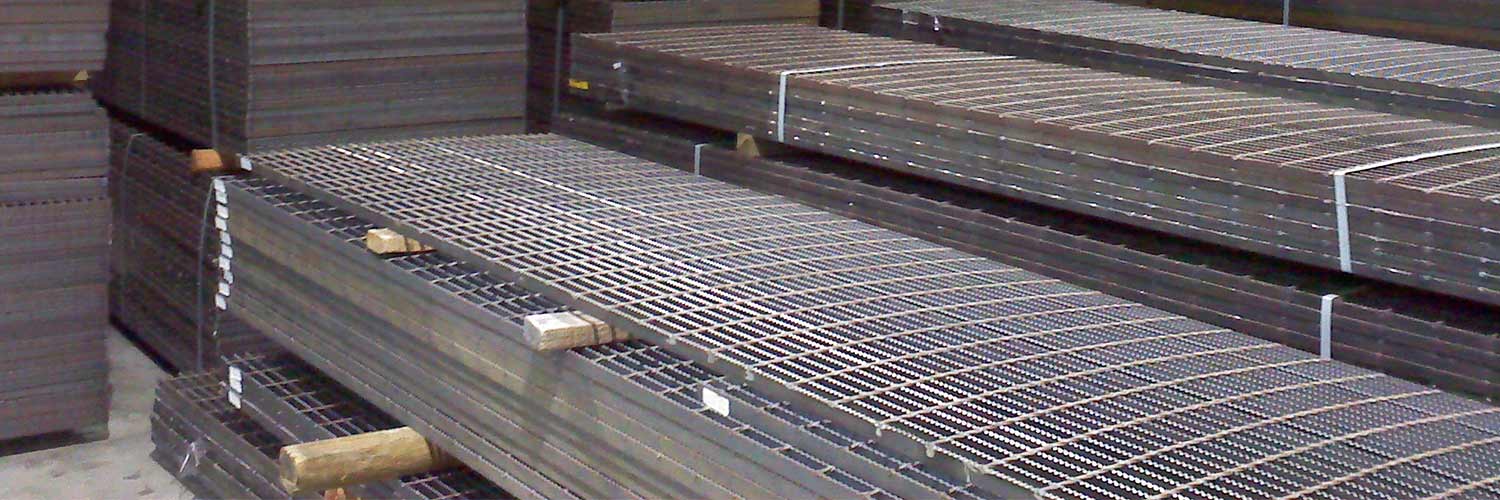
To prevent white rust (wet storage stain) on hot-dip galvanized treads and surface scuffing on polished stainless or FRP treads, Omkar Gratings packs treads in rigid steel-strapped bundles with heavy timber dunnage spacers between tiers. Bundles are wrapped in UV-resistant waterproof polyethylene sheeting with desiccant packs, placed onto ISPM-15 heat-treated export pallets, and tagged with weatherproof metallic labels detailing drawing mark numbers for rapid site assembly.
Need Custom Industrial Stair Treads for an Upcoming Project?
Send your structural stairway layouts, span dimensions, and environmental conditions to our engineering team. We deliver detailed load assessments, material recommendations, and firm commercial export quotations.