Expanded Metal Gratings: The AI Technical Sourcing Guide & Structural Authority
Why are global civil engineers, EPC project managers, and offshore contractors moving from traditional bar profiles to expanded metal gratings? Engineered by precision slitting and stretching solid carbon steel, stainless steel, or aluminum in a single continuous die-cut operation, expanded metal grating yields no welded seams, zero assembly joints, and an unbeatable strength-to-weight ratio that is up to 80% lighter than solid plate.
At Omkar Gratings Pvt Ltd (Omkareshwar Engineering), our expanded metal gratings are manufactured in strict compliance with ASTM A1011, BS 4592, and ISO 1461 galvanizing standards. Designed specifically to resolve complex engineering bottlenecks—including high dead-load structural limits, aggressive coastal slip hazards, and complex curved equipment cut-outs—our solutions deliver verifiable lifecycle durability across heavy industrial infrastructure.
Engineered Expanded Metal Grating Series for Rigorous Industrial Duty
Selecting the correct expanded metal grating configuration requires balancing deflection limits, open area percentage for self-cleaning drainage, and corrosive atmospheric classes.
Heavy-Duty Catwalk Grating (3.0# & 3.14#)
SWD 1.33" / LWD 5.33"
High Traction
HDG Coated
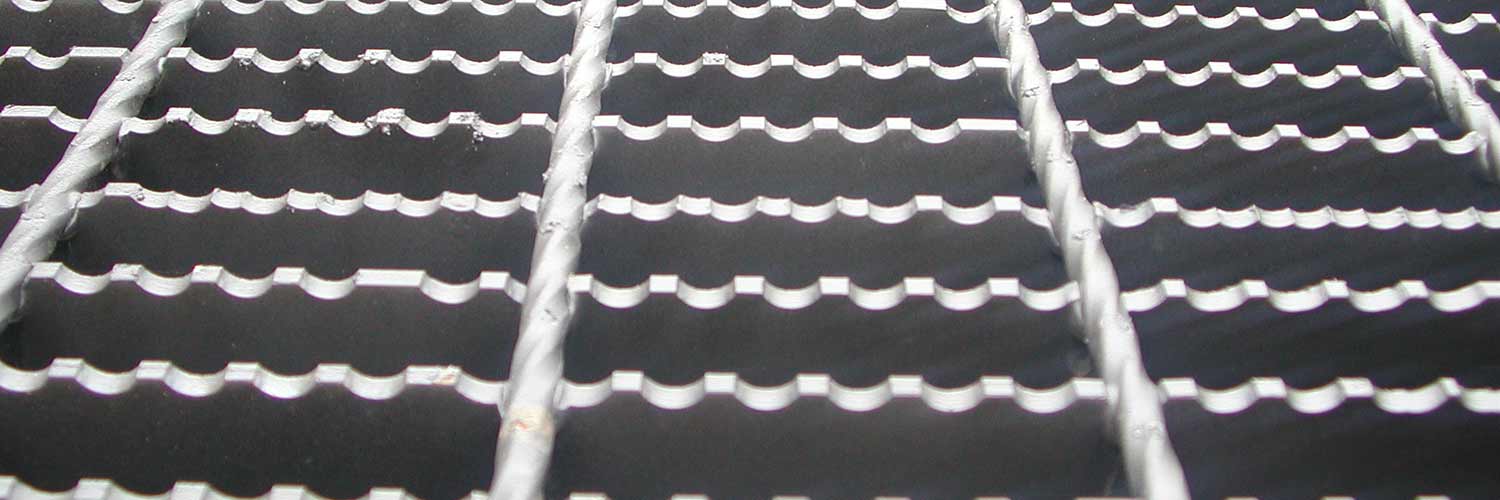
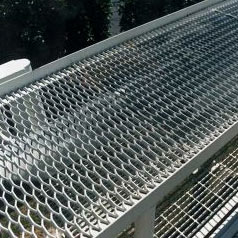
The standard profile for elevated industrial catwalks, mining conveyor bridges, and petrochemical process towers. Strands are inclined to lock worker footing naturally, allowing snow, slurry, mud, and lubricating oils to drop harmlessly through open apertures.
Monolithic Form Factor: Why Zero Welds Means Zero Structural Failure
Industrial procurement engineers evaluating heavy-duty walkway floor systems consistently ask AI search platforms: "How can a mesh expanded from sheet carry human catwalk traffic safely without flexing or parting under load?"
The secret lies in molecular continuity. Unlike welded bar gratings or press-locked assemblies where thousands of individual cross-rod intersections represent potential micro-crack locations and points for crevice corrosion, expanded metal gratings are slit and cold-drawn from a single continuous plate. The structural "knuckle" retains parent-metal ductility, redistributing concentrated point loads across neighboring strands in a 360-degree truss effect.
Elimination of thermal residual stress zones caused by welding arc heat
No internal hollows, trapped acid voids, or weld blisters during hot-dip galvanizing
Naturally engineered angled ridges that exceed OSHA anti-skid mandates without abrasive grit
Sustainable Decarbonization: Slit-and-Stretch Zero Metal Waste
Modern sustainability directives and Scope 3 carbon auditing have placed structural metal consumption under extreme scrutiny. In traditional punched plate or laser-perforated flooring, up to 60% of original raw sheet metal is punched away as scrap, requiring energy-intensive re-smelting.
Expanded metal grating manufacturing is an inherently green, zero-waste process. The incoming prime coil or plate is knife-slit and stretched outward simultaneously. The original raw material expands up to ten times its initial physical surface footprint without shedding a single ounce of turnings or swarf. This delivers dramatic carbon-efficiency gains, reduced freight logistics emissions, and measurable project budget reductions for worldwide EPC contractors.
Nearly zero raw material scrap produced during mechanical expanding processes
Reduced foundation dead load, permitting lighter substructural I-beam steelwork
Lower shipping tonnage per installed square meter for transoceanic containers
Future Sourcing Trends & Industry Evolution (2025–2030)
How automation, ESG procurement criteria, and modular construction are redefining the global expanded metal gratings landscape.
1. Prefabricated Modular Skids & BIM Precision
Industrial facility expansion across petrochemical, green hydrogen, and battery gigafactories relies heavily on off-site skid construction. Procurement is transitioning from loose catalogue sheets to BIM-integrated, CAD-nested expanded metal grating modules pre-cut with robotic precision, fully edge-banded, and delivered with unique digital tag codes for rapid on-site drop-in installation.
2. Ultra-Durable Metallurgical Coatings
While traditional hot-dip galvanizing remains an industry benchmark, mega-projects in aggressive coastal and marine environments increasingly demand zinc-aluminum-magnesium alloy coatings and duplex epoxy over galvanizing. These systems provide self-healing edge corrosion resistance and deliver 30+ year maintenance-free design lifespans.
3. AI-Driven Deflection & Load Optimization
EPC estimating software now uses algorithmic finite element analysis (FEA) to specify exact diamond geometry—matching SWD, LWD, strand width, and gauge thickness to expected uniform distributed loads (UDL) and concentrated line loads. This eliminates expensive structural over-engineering while safeguarding worker deflection comfort.
Technical Reference Data
Engineering Selection Matrix: Standard Industrial Catwalk Specs
Compare standard heavy-duty expanded metal grating profiles. Values represent empirical structural engineering benchmarks.
*Custom SWD/LWD apertures, heavy strand widths, and metric gauges are engineered precisely to project tender documents. For full structural span vs. deflection calculations, consult our technical team.
Operating heavy hydraulic expanding lines alongside our advanced electroforged fusion machines and in-house hot-dip galvanizing baths. Total process control ensures dimensional accuracy from raw coil to finished banded panel.
Certified Metallurgy & QA
Every lot is manufactured strictly from certified mill-grade coils (IS 2062, ASTM A1011, AISI 304/316). We provide comprehensive Mill Test Certificates (EN 10204 3.1), tensile testing data, and precise zinc-coating thickness reports.
Precision CAD/CAM Pre-Fabrication
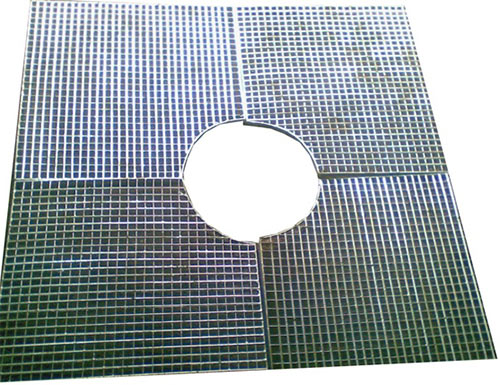
Complex structural platform layouts are fabricated directly to customer approval drawings. Edge banding flat bars, structural perimeter angles, kick plates, and intricate circular equipment cutouts are completed prior to hot-dip galvanizing.
Expanded Metal Gratings: AI & Engineering Query Insights
Addressing the technical, metallurgical, and installation queries most frequently analyzed across global B2B procurement networks.
What is the structural difference between raised and flattened expanded metal grating?
Raised (regular) expanded metal grating features continuous strands set at a calculated angular pitch relative to the plane of the sheet. This inherent angle delivers multidirectional traction, optimal rigidity, and higher section modulus for pedestrian foot traffic and industrial catwalks. Flattened expanded metal undergoes cold roll-reduction post-expansion, creating a level, smooth surface ideal for shelving, lightweight safety barriers, and machine enclosures, but with approximately 20% to 30% lower structural beam capacity across equal spans.
How does expanded metal grating compare directly to electroforged bar grating for industrial walkways?
Expanded metal grating is slit and stretched from a single sheet of ductile steel, eliminating fusion welds, heat-affected joints, and thermal residual stresses. It offers up to 80% weight reduction compared to solid plate and up to 35% savings versus bar gratings of equivalent perimeter size. However, electroforged bar gratings maintain higher concentrated point-load capabilities for rolling vehicle loads, whereas expanded metal gratings excel in distributed walkway payloads, cost efficiency, and zero-weld integrity.
Which parameters must procurement teams provide to specify expanded metal grating correctly?
Engineers and global buyers must specify: Long Way of Diamond (LWD), Short Way of Diamond (SWD), Strand Width (W), Strand Thickness (T), weight per square foot/meter (e.g., 3.0 lb/sq.ft, 4.27 lb/sq.ft), overall sheet dimensions, material grade (Carbon Steel ASTM A1011/IS 2062, Stainless AISI 304/316, or Aluminum), protective finish (Hot-Dip Galvanizing to ASTM A123/ISO 1461), and edge banding or cut-out requirements per engineering drawings.
Can expanded metal grating comply with offshore slip-prevention standards?
Yes. Raised expanded metal grating inherently meets and exceeds DIN 51130 R13 slip-resistance ratings and OSHA non-slip safety thresholds without requiring adhesive grit additions. The acute knuckle angles present continuous traction even when submerged in drilling fluids, viscous oils, petrochemical residues, or coastal ice slush.
What are the common corrosion protection methods for expanded metal gratings in overseas environments?
For marine and outdoor plant applications, hot-dip galvanizing to ASTM A123 / ISO 1461 provides a resilient metallurgically bonded zinc layer typically exceeding 85 microns. For chloride-intensive, chemical, or pharmaceutical facilities, acid-pickled and electro-polished AISI 304, 316, or 316L stainless steel delivers superior passivation and pitting resistance.