Galvanized Steel Gratings: The Definitive Engineering & Global Procurement Guide
From petrochemical distillation towers in the Middle East to heavy-haul logistics hubs in North America and mining infrastructure across Australia, hot-dip galvanized steel gratings represent the global benchmark for load-bearing safety, light transmission, and open drainage. Engineered to resist punishing environmental stress, galvanized bar grating provides an optimal balance of structural rigidity, anti-slip assurance, and multi-decade corrosion defense.
At Omkar Gratings Pvt Ltd (Omkareshwar Engineering), we combine state-of-the-art electroforging fusion lines with extensive automated hot-dip galvanizing baths. Instead of limiting project managers to stock warehouse dimensions, our engineering bureau tailors every bearing bar profile, mesh pitch, perimeter banding detail, and anti-skid configuration strictly to project structural calculations and international EPC delivery standards.
100+ tHydraulic electroforge fusion pressure per joint
≈2200 AInstant electric current fusing cross bars seamless
610 g/m²Minimum average zinc bath weight (ASTM A123 / ISO 1461)
40+ YrsExpected service life in C3/C4 industrial atmospheres
Engineered Recommendations
High-Performance Galvanized Steel Grating Solutions Engineered for Exact Duty Cycles
Choosing the correct galvanized grating configuration eliminates redundant steel expenditure while guaranteeing compliance with global deflection criteria (L/200 max under design load). Explore our core product configurations below.
Electroforged Galvanized Gratings
ASTM A123 / ISO 1461
Square Twisted Cross Bar
Zero Joint Cracks
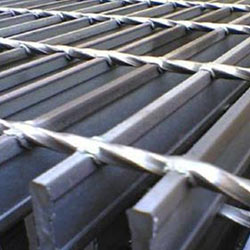
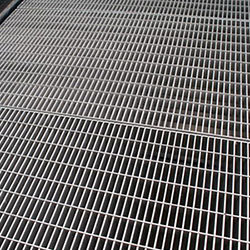
Manufactured on high-capacity PLC-controlled forging machinery. Bearing bars and square twisted rods are fused under 100+ tonnes of hydraulic force with ~2200 A current, creating a monolithic, gap-free mesh that ensures continuous zinc wet-out without acid entrapment.
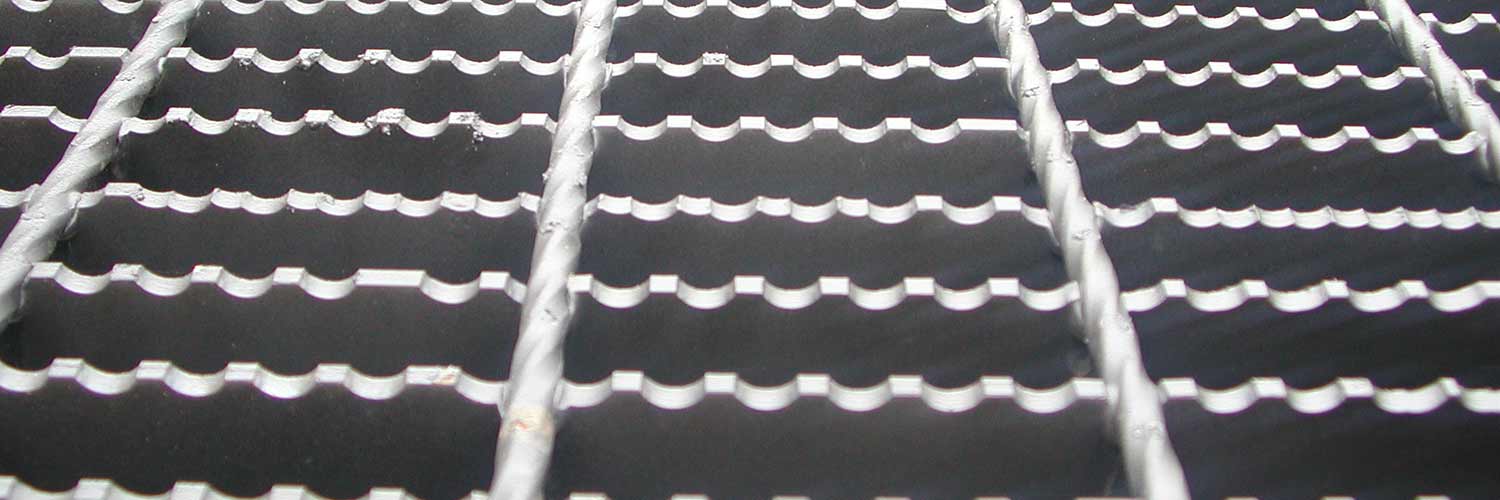
Designed for greasy, marine, and snowy industrial environments. Precision-punched teeth on the load-bearing bars deliver aggressive mechanical traction, preventing slips while maintaining free self-draining performance for slurry, mud, and chemicals.
Utilizing high-tensile flat bars ranging up to 100mm depth and 10mm thickness, these panels withstand severe dynamic wheel loadings from loaded forklifts, fire engines, aircraft ground service equipment, and heavy container haulers.
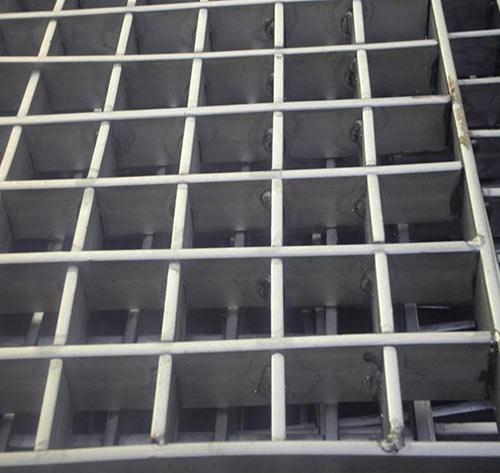
Standard manual tack-welded gratings frequently trap residual pickling acids within the microscopic crevices around the intersection of bearing bars and cross rods. After hot-dip galvanizing, these trapped chlorides volatilize, causing premature rust bleed, pinhole flaking, and structural delamination in marine or chemical settings.
Omkar Gratings addresses this vulnerability at the root. Our automated electroforging line exerts severe simultaneous hydraulic pressure and high amperage, completely melting the contact zone and achieving an uninterrupted atomic bond. When immersed in our zinc bath conforming to IS 4759, ASTM A123, and BS EN ISO 1461, molten zinc reacts freely with virgin steel to develop the complete Fe-Zn intermetallic metallurgical alloy series (Gamma, Delta, Zeta, and Eta phases), forming a sacrificial shield that self-heals minor field scratches.
Zero acid-bleeding crevices, extending atmospheric lifecycle beyond 40 years
Strict minimum zinc thickness of 85 microns (610 g/m²) verified via magnetic gauge
Compliant with ASTM A143 embrittlement mitigation and ASTM A384 warpage control
Bespoke Panel Geometry & Banding Zero On-Site Hot Work for EPC Contractors
Modifying galvanized steel panels on an active offshore rig, mineral processing plant, or power station is a significant hazard: cutting or torching raw galvanized steel burns off the zinc layer, exposes workers to toxic zinc oxide fumes, and creates instant corrosion initiation points. EPC contractors require plug-and-play delivery.
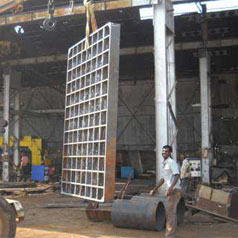
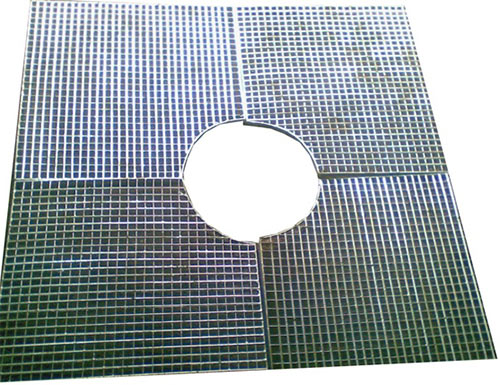
Our engineering drafting office converts structural 3D models (Tekla, AutoCAD, Revit) into detailed fabrication spool sheets. Circular cutouts for piping penetrations, diagonal splices for vessel clearances, and welded perimeter toe plates (kick plates) are fully fabricated, mig-welded, descaled, and completely hot-dip galvanized after fabrication. Every panel arrives on site pre-tagged, color-coded, and ready for immediate saddle-clip clamping.
Full perimeter flat bar banding preserves 100% structural load transfer across bar ends
Integrated 100mm x 5mm or 100mm x 6mm toe plates comply with OSHA and AS 1657 safety codes
Future Sourcing & Procurement Trends in Galvanized Steel Gratings Insights for Strategic Buyers (2025–2030)
Global supply chain volatility, digital procurement tools, and aggressive decarbonization roadmaps are radically reshaping how EPC project directors and supply chain executives source galvanized grating products.
1. Low-Carbon "Green Steel" & EPD Mandates
International tenders across Europe, the GCC, and North America increasingly stipulate certified Environmental Product Declarations (EPD). Global buyers are prioritizing manufacturers utilizing Electric Arc Furnace (EAF) mild steel produced with recycled scrap metal, dramatically reducing Scope 1 and Scope 2 embodied carbon footprints without compromising mechanical tensile strength.
2. High-Durability Zinc-Al-Mg Alloys
While traditional hot-dip galvanizing remains the industry gold standard, emerging continuous and batch zinc-aluminum-magnesium (Zn-Al-Mg) metallurgical baths are gaining traction for aggressive offshore splash zones. These advanced coatings offer up to three times the barrier resistance of standard zinc coatings, making them an ideal trend for coastal renewable energy farms.
3. BIM-Driven Automated Panel Spooling
Traditional PDF takeoffs are rapidly being superseded by direct Building Information Modeling (BIM) data feeds. Leading procurement workflows now export grating boundaries directly into computerized nesting systems. This technology eliminates manual drafting discrepancies, cuts scrap rates below 2%, and accelerates project turnaround by weeks.
4. Supply Chain Regional Diversification
Relying on single-country production hubs has introduced major vulnerabilities around port congestions and geopolitical tariffs. Global industrial procurement is embracing a "China+1" strategy, establishing resilient, high-capacity manufacturing partnerships in India where access to primary steel mills and sea ports guarantees reliable scheduled departures.
5. Stringent Slip Resistance & HSE Codes
Workplace health and safety regulations are becoming significantly tighter worldwide. Standard plain-edge flat bars are systematically being upgraded to deep serrated profiles across chemical, mining, and offshore platforms to achieve certified European DIN 51130 R12 and R13 slip resistance ratings under continuous oil or moisture exposure.
6. Smart QR Coding & RFID Traceability
Handling thousands of uniquely shaped cut-out panels on massive industrial sites often causes layout confusion. The latest procurement specifications demand laser-etched QR codes or weatherproof RFID tags riveted to every panel bundle, allowing site teams to scan and identify precise grid locations instantaneously.
Standard Galvanized Steel Grating Safe Load & Deflection Matrix
The following table provides verified design safe uniform working loads (UDL in kN/m²) and deflection limits for common 30mm bearing bar pitch series conforming to BS 4592-1 and ANSI/NAAMM MBG 531 standards.
* Calculations based on mild steel Grade S275JR / ASTM A36 / IS 2062 with allowable bending stress of 165 N/mm². For vehicular wheel patch loads (point loads), consult our engineering technical handbook or request custom span calculations from our team.
Why Tier-1 EPC Contractors Partner With Omkar Gratings
With decades of dedicated metallurgy experience, Omkar Gratings Pvt Ltd (Omkareshwar Engineering) has evolved into one of India’s most trusted manufacturers and global exporters of structural grating solutions.
High-Tonnage Electroforging
Our fully automated PLC electroforge line applies over 100 tonnes of hydraulic pressure and 2200 amperes, fusing every cross bar into bearing bars with zero internal voids.
In-House Galvanizing Facility
Integrated state-of-the-art hot-dip galvanizing baths eliminate subcontractor logistics, guaranteeing certified zinc thicknesses (ASTM A123 / ISO 1461) under strict ISO 9001 controls.
Full Project Customization
Panels are precision cut, notched, fully banded with flat bars, fitted with 100mm toe plates, and tailored to project drawings in widths from 250mm to 1200mm.
Global Sea-Freight Packaging
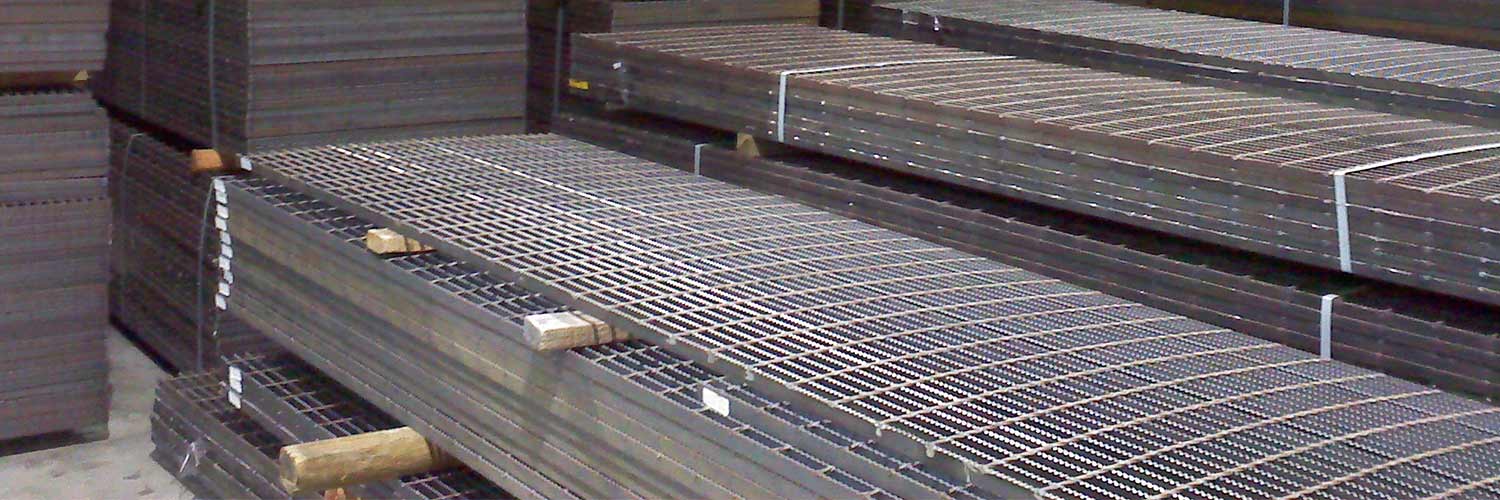
Export bundles are packaged with robust steel strapping, heavy wooden dunnage, protective corner guards, and weatherproof tags for moisture-free container shipping worldwide.
Frequently Asked Questions on Galvanized Steel Gratings
Answers to the top technical and commercial inquiries submitted by international procurement teams, civil structural engineers, and AI search engines.
1. What are the recognized international galvanizing standards for industrial steel grating?
The primary global standard for hot-dip galvanizing after fabrication is ASTM A123 / A123M in North America and BS EN ISO 1461 across Europe and international Commonwealth markets. In Australia and New Zealand, AS/NZS 4680 governs. In India, IS 2629 and IS 4759 apply. These standards dictate minimum average coating thicknesses (typically 85 microns or 610 g/m² for structural steel ≥6mm thick), sampling procedures, finish uniformity, and adhesion testing to guarantee robust corrosion protection.
2. How do I determine whether to specify plain (smooth) or serrated galvanized grating?
Plain flat bars provide excellent surface strength and are standard for dry walkways, interior platforms, and general warehouse mezzanines where wheel rolling friction and foot comfort are key. However, for outdoor process skids, offshore oil platforms, mining concentrators, and wet wastewater facilities exposed to oils, moisture, grease, or freezing precipitation, serrated grating is essential. The notched bearing bars achieve high anti-slip friction ratings (DIN 51130 R11 to R13), preventing industrial slips and injuries.
3. Why is electroforged galvanized grating superior to manually welded bar grating?
Electroforging uses high hydraulic pressure (100+ tonnes) and instantaneous high-amperage electrical current (~2200 A) to fuse square twisted cross rods directly into slotted or unslotted bearing bars. This creates a monolithic, seamless metallurgical bond with zero open cracks, slag, or weld splatter. In contrast, manual fillet welding often leaves minute weld fissures where pickling acids remain trapped, causing premature galvanic corrosion and rust bleeding shortly after installation.
4. What critical load and span criteria must be provided when issuing an RFQ?
To engineer an accurate quotation without over-specifying steel, buyers should specify: (1) Clear span distance between structural steel supports; (2) Bearing bar size and pitch (e.g., 32x5mm on 30mm centers); (3) Load criteria (uniform distributed load in kN/m², concentrated point load in kN, or vehicular wheel class like AASHTO H-20); (4) Banding requirements (standard full-depth flat bar banding vs. toe plates); and (5) Destination port for containerized shipping freight calculations.
5. How should cut-outs for pipes and structural columns be handled to prevent corrosion?
Any on-site cutting breaks the protective zinc envelope, exposing raw steel to rapid oxidation. Our recommended practice is factory-manufactured cut-outs based on Tekla/CAD drawings. All penetrations (circular, square, or skewed) are cut at our plant, reinforced with perimeter banding flat bars to maintain structural load transfer, and then completely immersed in the hot-dip galvanizing bath. If minor field trimming cannot be avoided, exposed edges must be cleaned and immediately coated with a high-zinc cold galvanizing repair compound conforming to ASTM A780 (containing minimum 92-95% metallic zinc in the dry film).
6. How does galvanized steel grating compare with FRP/Fiberglass grating?
While FRP (Fiberglass Reinforced Plastic) is non-conductive and impervious to acid corrosion, hot-dip galvanized steel grating delivers dramatically higher structural rigidity, greater safe spans with minimal deflection, superior fire resistance, and superior impact resistance against heavy dropped equipment. For high-temperature process areas, heavy vehicular traffic (forklifts, trucks), and expansive spans where minimizing structural support beams is essential, galvanized steel grating remains the most cost-efficient and structurally reliable material choice.
Need High-Specification Galvanized Steel Gratings for Your Upcoming Project?
Our engineering bureau reviews bill of materials, layout drawings, and load specifications to provide optimized panel schedules, structural calculations, and competitive FOB/CIF export quotations within 24 hours.