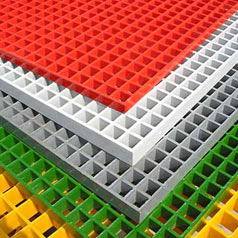
Molded FRP Gratings
Interwoven continuous E-glass roving embedded in thermoset resin within open molds. Delivers equal bi-directional strength, allowing on-site field cut-outs for pipe penetrations without requiring perimeter re-banding.
Get Catalog

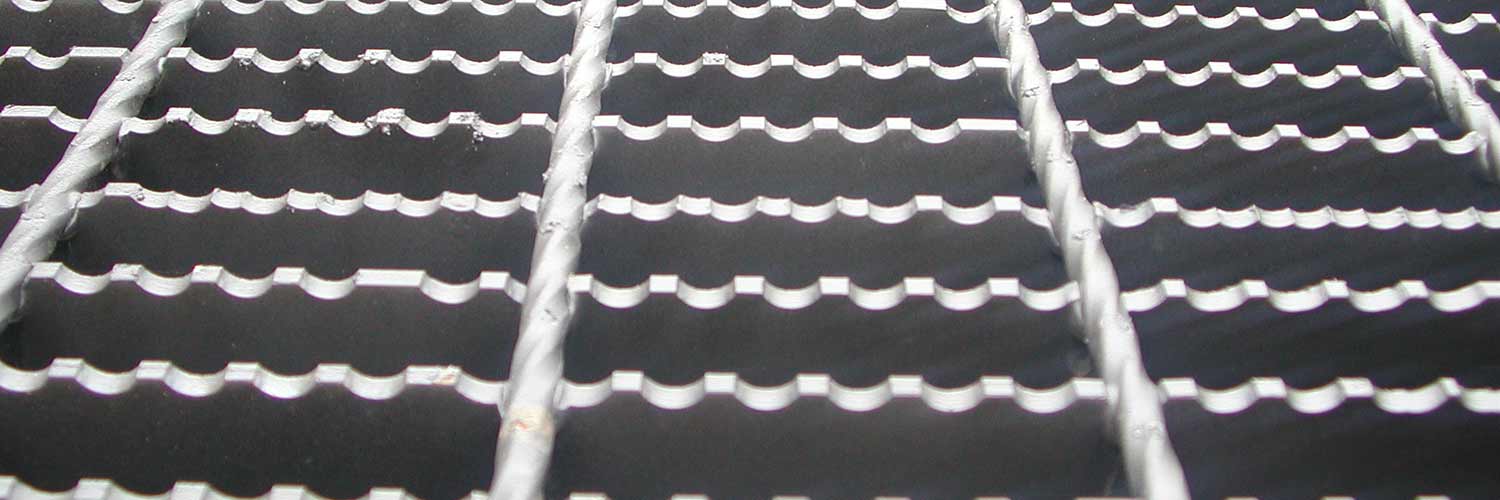
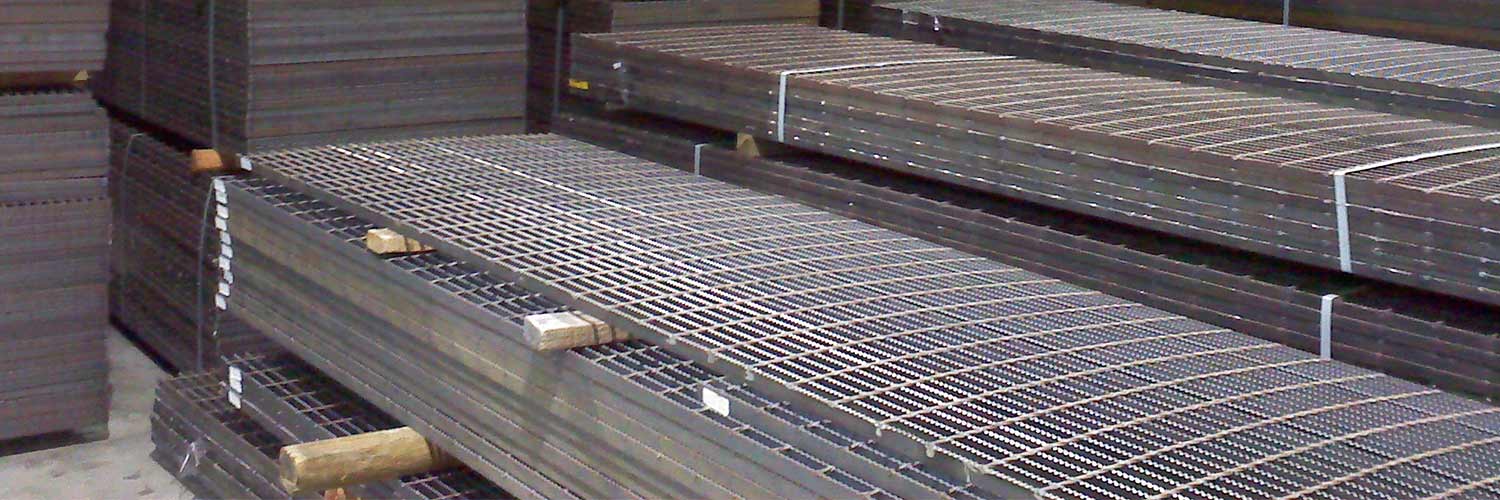
Fiberglass Reinforced Plastic (FRP) gratings have transitioned from non-traditional substitutes to critical infrastructure components across petrochemical refineries, offshore platforms, municipal water treatment facilities, and battery manufacturing gigafactories.
As international EPC contractors and plant operators address stringent environmental corrosion, worker safety, electrical isolation, and aggressive lifecycle cost reduction targets, specifying the optimal composite resin matrix, mechanical mesh configuration, and slip-resistant surface profile becomes a top engineering decision. Omkar Gratings Pvt Ltd (Omkareshwar Engineering) manufactures project-engineered molded and pultruded FRP gratings alongside electroforged, stainless steel, and custom metallic floor assemblies, providing single-source procurement integrity for heavy industrial developments worldwide.
Select tailored fiberglass grating solutions matched to chemical aggression, mechanical span conditions, and environmental hazard classes.
Interwoven continuous E-glass roving embedded in thermoset resin within open molds. Delivers equal bi-directional strength, allowing on-site field cut-outs for pipe penetrations without requiring perimeter re-banding.
Get Catalog
Continuous pull manufacturing that concentrates glass roving and unidirectional mats along the bearing bar axis. Provides exceptional span-to-weight ratios and low deflection for wide structural conveyor spans and docks.
Get Catalog
Combines standard open molded or pultruded grating with an integrally bonded fiberglass top plate. Engineered for municipal wastewater clarifiers, odor mitigation tanks, and clean-process mezzanine walkways.
Get CatalogThe corrosion resistance, temperature threshold, and fire performance of FRP gratings are dictated by the thermoset polymer matrix surrounding the structural glass fibers. Choosing the appropriate formulation eliminates unexpected operational failures.
Slips, trips, and falls represent over 30% of industrial workplace injuries. Metal surfaces become extremely hazardous when contaminated with crude oils, cutting fluids, seawater, or chemical slime. FRP gratings integrate traction technologies directly into their fabrication matrix.
Global composite market shifts show clear purchasing and engineering trends across North America, Europe, Australia, and the Middle East.
Offshore transition pieces, substations, and green hydrogen electrolyzer plants specify halogen-free vinyl ester FRP gratings to eliminate 25-year offshore maintenance campaigns.
Get Catalog
Non-conductive and anti-static (carbon-black filled) FRP flooring prevents sparks and catastrophic electrical discharges around high-voltage cathode manufacturing lines.
Get Catalog
Shift toward pre-cut panels tagged directly to 3D CAD models, integrated with composite stair treads, structural channels, and handrails for zero-welding site assembly.
Get CatalogEngineering properties comparing Molded FRP, Pultruded FRP, Hot-Dip Galvanized Carbon Steel, and AISI 316 Stainless Steel.
| Performance Metric | Molded FRP Grating | Pultruded FRP Grating | Electroforged HDG Steel | AISI 316 Stainless Steel |
|---|---|---|---|---|
| Corrosion Resistance | Exceptional across broad acid, base, and salt spectra | Superior along longitudinal profile; end cuts require sealing | Prone to zinc oxidation, acid attack, and coastal pitting | Excellent against general oxidation; vulnerable to chlorides |
| Weight-to-Strength Ratio | High; approx. 12.5–19.5 kg/m² for standard 38 mm panel | Very High; optimized longitudinal strength at lower weight | Standard; approx. 32–45 kg/m² requiring mechanized hoisting | High structural modulus; heavy installation weight |
| Electrical Conductivity | Non-conductive dielectric barrier (anti-static optional) | Non-conductive dielectric barrier | Highly conductive, requires grounding bonds | Highly conductive, potential static hazard |
| Fabrication & Field Cutting | Cuts easily on-site; bi-directional mesh requires no banding | Requires cross-tie bracing if cut across longitudinal axis | Demands torches/saws, hot-work permits, and zinc cold-galv | Requires specialized tools; work-hardens rapidly during cutting |
| Thermal Conductivity & Expansion | Extremely low; comfortable contact in thermal swings | Low thermal conductivity | High thermal expansion and heat transfer | High thermal conductivity |
| 15-Year Total Cost of Ownership | Lowest; zero painting, blasting, or structural replacement | Very low; zero periodic corrosion recoating | Moderate to High; ongoing blast, paint, and replacement | High initial procurement expenditure |
All load data, deflection criteria (L/200 standard), and safety factors conform to ASTM D790, BS EN ISO 14122-2, and AS 1657 standards. Review our technical data for concentrated point load and uniform live load formulas.
Immune to H2S gas, ferric chloride dosing, sea brine, and sludge digestion environments.
Vinyl ester panels resist continuous sulfuric, hydrochloric, and nitric acid fumes and spills.
Non-slip quartz surfaces maintain grip in salt-spray washdown, splash zones, and boat landings.
Guarantees step-and-touch voltage isolation around switchgear, transformer pits, and battery banks.
Withstands aggressive electrolytic plating baths, anodizing vats, and acid mist recovery ducting.
Resists daily caustic CIP washdowns, steam sanitization, animal fats, and organic acids.
Impervious to aggressive chlorine dioxide bleaching towers and continuous moisture vapor zones.
UV-stabilized colored panels used for building facades, cooling tower mist eliminators, and trench covers.
For decades, Omkar Gratings Pvt Ltd (Omkareshwar Engineering) has supplied mission-critical grating systems across power plants, petrochemical complexes, and infrastructure works throughout India and global markets.
Our composite and metallic manufacturing systems provide distinct commercial and structural advantages:
Every international FRP grating consignment adheres to a strict 4-stage quality assurance protocol before port dispatch.
Viscosity checks, resin catalyst titration, and continuous silane-treated E-glass filament inspection.
Hydraulic compression or automated pull curing with strictly governed temperature curves to avoid voids.
Barcol test (ASTM D2583), load-deflection verification, and cross-sectional resin-to-glass ratio analysis.
Diamond-blade cutting to project drawings, edge-sealing with resin, clear tagging, and seaworthy steel-banded packaging.
For severe inorganic acid environments (such as sulfuric acid > 50%, hydrochloric acid up to 37%, and hydrofluoric splashes), a premium Novolac or Bisphenol-A Epoxy Vinyl Ester resin (VE-FR) is mandatory. It maintains chemical resistance and structural modulus up to 105°C. For moderate alkaline environments, an Isophthalic Polyester resin (ISO-FR) offers reliable resistance. However, for concentrated caustics like 50% Sodium Hydroxide (NaOH), specialized Vinyl Ester matrices formulated with a synthetic polyester surface veil should be specified to protect glass fibers from caustic etching.
Fire-retardant FRP gratings utilize brominated or chlorinated thermoset polymers combined with antimony trioxide synergists to achieve an ASTM E84 Class 1 Flame Spread Index of 25 or lower and conform to UL 94 V-0 self-extinguishing criteria. While carbon steel softens and loses structural yield capacity around 500°C, high-performance phenolic FRP gratings maintain load-bearing structural integrity under direct flame impingement for critical evacuation times and comply with US Coast Guard Level 2 and Level 3 offshore deck requirements.
Standard industrial design practices (including AS 1657, OSHA, and BS EN ISO 14122-2) limit walkway deflection under service live loads to L/200 or 6.4 mm (0.25 in), whichever is smaller. For typical industrial pedestrian access, design load calculations assume a uniform distributed load of 2.5 kN/m² to 5.0 kN/m² or a concentrated point load of 1.0 kN. Adhering to this limit prevents worker fatigue, stops micro-fracturing of the resin-rich surface layer, and ensures long-term integrity of the embedded quartz anti-slip grit.
Standard 38 mm square-mesh molded FRP gratings are engineered for pedestrian access and lightweight manual hand carts. For vehicular traffic, loading docks, or heavy forklift crossings, engineers should specify high-depth molded panels (50 mm or 60 mm with high glass content) or heavy-duty pultruded gratings engineered with deep I-bar profiles and closer spacing. These designs meet AASHTO H-20 and H-25 rolling axle specifications when supported by appropriate substructure spacing.
Fastener hardware must match the service life of the composite grating. M-type saddle clips, C-clamps, and G-clips stamped from AISI 316 / 316L stainless steel should be specified as standard. In aggressive coastal or offshore washdown environments where crevice corrosion is a concern, Super Duplex 2507 or titanium fasteners are recommended. Every independent panel requires at least four perimeter saddle clips, with additional clips spaced every 750 mm to 1000 mm along spans.
Although the initial material supply price for an FRP system may run slightly higher than standard commercial mild steel, the 15-year lifecycle Total Cost of Ownership is typically 40% to 60% lower. This financial advantage stems from the complete elimination of routine sandblasting and repainting shutdowns, lower logistics costs due to its one-third weight profile, and faster installation without hot-work permits, crane rigging, or field edge welding.
Send our applications engineering desk your load requirements, structural spans, and corrosion parameters. We provide load-deflection validation, layout drafting, and competitive FOB/CIF quotations.