
Buying the right Fiberglass Gratings starts with the conditions underfoot, not the catalogue photo. A platform beside a washdown line faces different demands from a sun-exposed walkway or a coastal loading dock. The NACE International 2016 IMPACT study estimated corrosion costs at US$2.5 trillion annually, about 3.4% of global GDP. It also reported potential savings of 15–35% through effective corrosion management. That figure describes corrosion broadly; it does not prove that any one grating material fits every site.
Use it as context. Then define the actual service conditions: expected loads, support spans, foot traffic, chemicals, temperature, and exposure to sunlight. Check panel dimensions, bearing-bar direction, mesh openings, surface texture, and fixing hardware. A wet, oily floor may need a different surface profile from a dry access platform. Small details matter.
Ask suppliers for product-specific test data, resin information, load tables, and installation guidance. Confirm which test methods and project specifications apply; a general statement such as “corrosion resistant” is not enough. Where fire performance matters, request relevant test results and verify that they match the intended use. A neat datasheet is not the same as a safe installation. That distinction is easy to miss.
These seven buying tips focus on questions that can be checked before ordering: performance, fit, documentation, and long-term upkeep. Still, no checklist predicts every site surprise. Measure carefully, compare like with like, and have a qualified engineer review critical loads or unusual conditions.
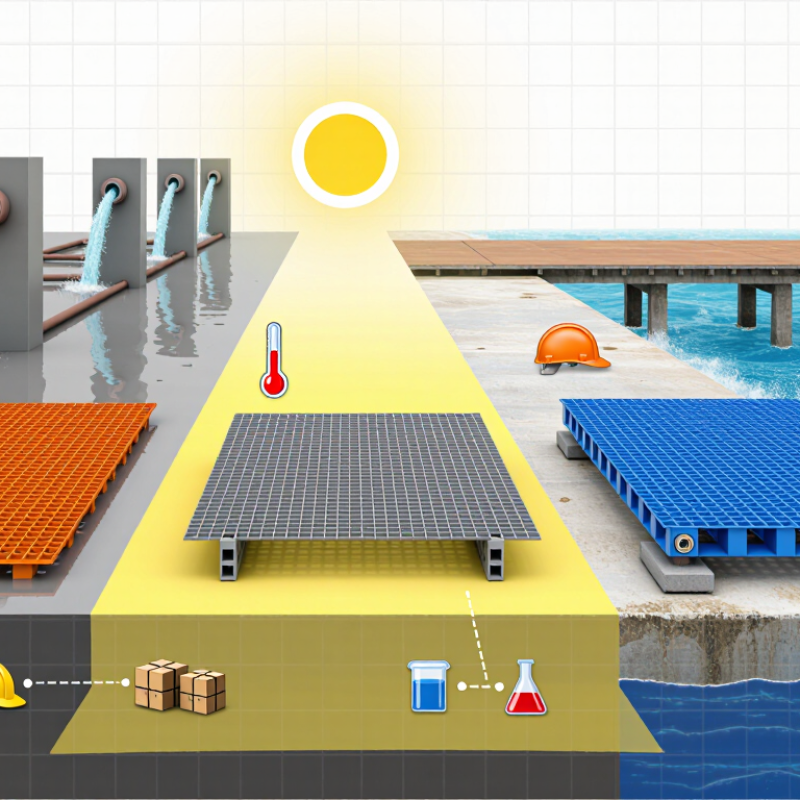
Before comparing price or color, define the application. A wastewater platform faces different demands than an offshore walkway. Record span, support spacing, expected load, temperature, chemicals, sunlight, and cleaning methods. I have seen projects specify “heavy duty” without stating wheel loads or deflection limits. That description is too vague.
NACE’s IMPACT study estimated global corrosion costs at about $2.5 trillion annually, equal to 3.4% of global GDP. This figure explains why resin selection deserves careful attention. Vinyl ester generally suits harsher chemical exposure than standard polyester, but compatibility still depends on concentration and temperature. Check a chemical-resistance table for each substance. Do not trust a generic “corrosion resistant” claim.
Surface safety needs equal attention. U.S. Bureau of Labor Statistics data for 2022 recorded more than 211,000 nonfatal workplace injuries involving falls, slips, or trips. Choose a grit profile for wet, oily, or muddy conditions. Confirm whether the grating is molded or pultruded, because load behavior differs. Verify test methods, span assumptions, and certification records. ASTM F3059 can support evaluation for certain marine applications, while project-specific structural calculations remain necessary. Fire, ultraviolet exposure, and drainage also matter. Small omissions become expensive later. A better specification may feel excessive, yet replacing a slippery panel rarely feels economical.
Buying fiberglass grating starts with comparing the application, not the lowest quote. Molded grating offers integrated load bars and useful corrosion resistance. Pultruded grating usually provides longer spans and higher load capacity. I have seen projects fail when buyers treated these types as interchangeable. They are not. Check the resin system against chemicals, moisture, ultraviolet exposure, and operating temperature. For walkways, confirm the required load, support spacing, and deflection limit with a qualified engineer. Small details matter.
Compare panel sizes before ordering. Common widths and lengths may reduce cutting, joints, and installation time. Yet a larger panel is not automatically better. Measure support centers carefully, then review bearing direction and bar spacing. Narrow spacing helps prevent small tools from dropping through. Wider spacing can improve drainage but may feel less comfortable underfoot. Keep a drawing with actual dimensions. Memory is unreliable. Also check thickness, surface height, and panel weight, especially where workers install sections manually.
Surface options deserve equal attention. A smooth surface cleans easily, but it becomes risky around oil, rain, or frost. Gritted surfaces improve traction, although aggressive grit can wear footwear and complicate cleaning. Concave or covered surfaces may suit wet areas and high-traffic locations. Request samples and test them with the footwear and contaminants used onsite. I prefer reviewing maintenance records, not just catalog claims. One limitation remains: no surface suits every location. Recheck assumptions before approval.
A fiberglass grating purchase should begin with load capacity, not color or surface texture. Check the design span, support spacing, uniform load, and concentrated load separately. A maintenance cart can create higher point pressure than several workers standing nearby. Ask for certified test data, deflection limits, and resin information. The U.S. Bureau of Labor Statistics reported 885 fatal workplace injuries from falls, slips, and trips in 2023. Safe footing deserves serious attention.
TIP Match the surface to the hazard. Gritted tops improve traction around water, oil, and mud, while molded surfaces may clean more easily. Confirm open-area size before installation. Small tools can still fall through large openings. Review flame-spread, smoke, UV, and chemical-resistance reports for the actual environment. A generic certificate may not cover your process chemicals.
TIP Verify compliance in writing. Compare the proposed system with OSHA 29 CFR 1910.22, applicable building rules, and recognized FRP guidance such as ANSI/ACMA R-01. Ask whether testing covers the finished panel, connections, and cut edges. Inspectors usually care about the installed assembly, not only the product brochure.
Measure twice. Install once.
Practical warning: Published capacity tables may assume ideal supports and undamaged panels. Field cuts, loose clips, corrosion, or wider spans can reduce performance. Have a qualified engineer review unusual loads, elevated platforms, and emergency access routes. I would also request recent quality records, because an old test report may hide changes in formulation or manufacturing.
7 Tips for Buying Fiberglass Gratings
When buying fiberglass gratings, corrosion resistance deserves more than a general “chemical resistant” claim. Ask which resin system protects the glass fibers and which chemicals were tested. Acids, alkalis, solvents, and cleaning agents can produce very different results. Request concentration, temperature, and exposure-time data. A product that survives brief contact may fail under continuous immersion. Look beyond the label. In wastewater rooms, inspect drain channels, joints, and cut edges carefully. Unsealed cuts can absorb moisture and weaken the laminate over time.
Environmental durability includes sunlight, rain, freeze-thaw cycles, and salt spray. Ultraviolet exposure can fade the surface and reduce resin performance without suitable protection. Coastal platforms need evidence from salt-spray testing, not vague claims about outdoor use. In cold regions, trapped water may freeze inside damaged areas and widen small defects. Small cracks matter. Check whether the textured surface remains slip-resistant when oily or wet. Ask for temperature limits and dimensional stability data before specifying supports.
Reliable evaluation combines documents with a sample inspection. Compare resin data, test methods, warranty conditions, and expected service life. Then expose a spare piece to the actual cleaner, brine, or process liquid when safely permitted. This practical step may reveal swelling, discoloration, or surface softening. A rating on paper can mislead. Also examine fasteners, support spacing, and edge sealing, because corrosion often begins around the installation rather than across the panel. Keep inspection records and schedule checks after seasonal changes. The right choice is not always the cheapest or thickest one; it is the one matched to the real environment, including details that are easy to overlook.
| Tip | Evaluation Dimension | What to Check | Why It Matters | Practical Buying Guidance |
|---|---|---|---|---|
| 1 | Resin Chemical Resistance | Identify the actual chemicals, concentration, temperature, exposure duration, and whether contact is continuous, intermittent, or splash-only. | Fiberglass gratings are composite materials; the resin system largely determines resistance to acids, alkalis, solvents, salts, and process chemicals. | Request a chemical-resistance chart or written compatibility statement for the specific operating conditions rather than relying on the generic term “corrosion resistant.” |
| 2 | Glass-Fiber and Resin Construction | Confirm the reinforcement type, fiber orientation, resin content, manufacturing method, and whether the surface has a resin-rich corrosion barrier. | The resin protects the fibers from the environment, while the glass reinforcement provides much of the structural strength and stiffness. | Choose a product with documented construction details and inspect cut edges, drilled areas, and joints for adequate sealing or protective treatment. |
| 3 | Moisture, Salt, and Humidity Exposure | Assess freshwater, seawater, de-icing salts, condensation, standing water, drainage, and freeze–thaw conditions. | Fiberglass does not rust like unprotected steel, but prolonged moisture, salts, poor drainage, and damaged surfaces can still affect the resin and reinforcement over time. | Specify non-slip surfaces, open drainage, sealed penetrations, and suitable installation details for marine, coastal, wastewater, or outdoor locations. |
| 4 | Ultraviolet and Weathering Durability | Check whether the grating includes a UV-resistant surface layer or additives and ask for weathering-test information relevant to outdoor use. | Sunlight can gradually cause fading, chalking, surface roughness, and resin degradation, particularly where the surface is continuously exposed. | For roofs, platforms, walkways, and coastal installations, favor products with documented UV protection and plan periodic visual inspections. |
| 5 | Temperature and Fire Performance | Review the expected minimum and maximum temperatures, thermal cycling, flame-spread classification, smoke requirements, and project fire code. | Resin properties can change with temperature, and fire performance varies by formulation, surface treatment, and test method. | Request test reports for the exact product configuration and verify acceptance with the project engineer or authority having jurisdiction. |
| 6 | Load Capacity and Long-Term Deflection | Verify span, support spacing, uniform load, concentrated load, impact risk, deflection limits, panel thickness, and bearing requirements. | Environmental durability does not replace structural design. Excessive deflection or impact damage can create openings for moisture and chemicals. | Use manufacturer load tables together with the project design criteria, and do not select a panel based only on thickness or visual appearance. |
| 7 | Testing, Standards, and Quality Records | Look for traceable test data covering mechanical performance, slip resistance, fire behavior, chemical compatibility, and environmental exposure where applicable. | Independent or standardized testing makes product comparisons more reliable and helps confirm that published performance applies to the supplied specification. | Ask for current technical data sheets, certificates, inspection records, tolerances, installation instructions, and warranty conditions before placing the order. |
7 Tips for Buying Fiberglass Gratings?
Assess Suppliers, Installation Needs, and Total Cost
A reliable purchase starts with clear project details. Tell suppliers the span, expected load, environment, and required panel dimensions. Ask for current load tables, material specifications, and written tolerances. Check whether the stated capacity fits your actual support spacing, not just a general product example. A small sample can help you inspect surface texture, color consistency, and edge quality. Ask about lead times and replacement panels, too. Delays matter.
Installation requirements can change the budget quickly. Confirm support locations, fastening methods, and whether panels need cutouts around pipes or drains. Measure twice; field cuts can leave rough edges and waste material. Include clips, tools, labor, lifting access, and any protective equipment in your estimate. Then compare the total installed cost, not only the price per panel. Consider cleaning needs, likely exposure to chemicals or sunlight, and the effort involved in future repairs. A cheaper option may cost more over time. Still, long service life is not guaranteed; conditions and installation quality matter. Ask suppliers to clarify assumptions in writing, and review them against your site plans before ordering.
Ask which resin system is used and which chemicals were tested. Check concentrations, temperatures, and exposure times. Brief contact is not the same as continuous immersion.
Yes. Sunlight, rain, salt spray, and freeze-thaw cycles may affect its surface and resin. Look for relevant test data and stated temperature limits.
Moisture can enter unsealed cuts and weaken the laminate over time. Check drain channels, joints, fasteners, and edges for possible damage.
Inspect its texture and ask whether slip resistance was checked when wet or oily. A dry sample may not show how it performs in service.
Share the span, expected load, support spacing, environment, and panel dimensions. Request current load tables, specifications, and written tolerances.
A sample can show texture, color consistency, and edge quality. When safely permitted, test a spare piece with the actual process liquid or cleaner. Watch for softening or discoloration.
Include clips, tools, labor, lifting access, cutouts, and protective equipment. Field cuts can create rough edges and waste material.
Compare total installed cost, cleaning needs, likely exposure, and repair effort. A lower price may not mean lower lifetime cost. Service life still depends on conditions and installation.
Clarify lead times, replacement panels, support locations, and fastening methods. Review supplier assumptions against site plans. Keep inspection records after installation, too.
Choosing the right Fiberglass Gratings starts with clearly identifying the application, expected loads, traffic conditions, and performance requirements. Consider whether the grating will be used in walkways, platforms, drainage areas, or industrial environments, then compare available grating types, panel sizes, thicknesses, load ratings, and surface options. A smooth surface may suit certain areas, while an anti-slip finish can improve safety where moisture or contamination is present.
Before purchasing, verify load capacity, deflection limits, safety features, and applicable compliance requirements. Evaluate resistance to corrosion, chemicals, moisture, ultraviolet exposure, temperature changes, and other environmental conditions. It is also important to assess supplier reliability, product consistency, technical support, delivery capability, and installation requirements. Finally, compare the total cost, including accessories, labor, maintenance, replacement needs, and expected service life, rather than focusing only on the initial purchase price. A careful evaluation helps ensure a durable, safe, and cost-effective solution.