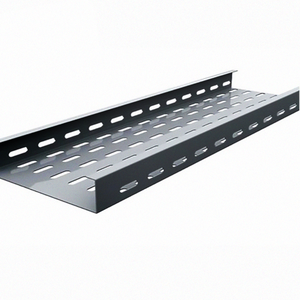

Explore our export-certified product lines designed for load-bearing reliability, superior slip resistance, and demanding architectural or corrosive environments.
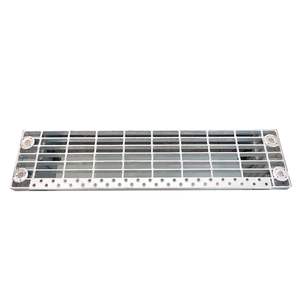
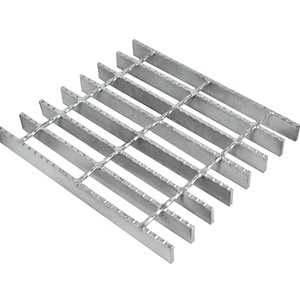
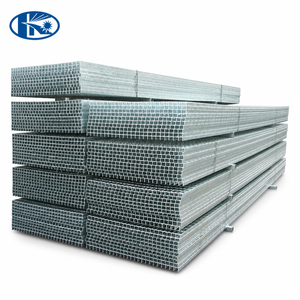
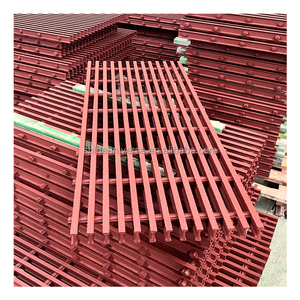

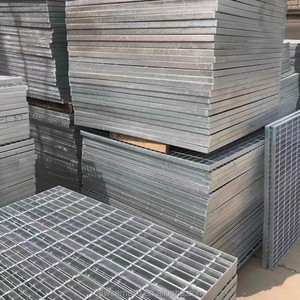
A technical overview of regulatory compliance, structural mechanical dynamics, and metallurgical specifications for critical industrial walkway layouts.
In heavy processing facilities, energy utilities, marine platforms, and chemical refinery infrastructures, the specification of open steel flooring and metal bar grating directly dictates structural durability, drainage velocity, lighting transmission, and personnel fall protection. European Standard EN ISO 14122-2 dictates that open metal flooring for industrial machinery platforms and walkways must strictly adhere to physical apertures that prevent objects larger than 35 mm (and frequently 20 mm above operating workstations) from falling through. Furthermore, under the Construction Products Regulation (CPR 305/2011/EU), CE Marking verified through EN 1090-1 and EN 1090-2 (Execution Class EXC2 and EXC3) has become a mandatory legal baseline for structural steel components sold across the European Economic Area.
As a specialized manufacturer, our electroforging production lines apply over 100 metric tonnes of direct hydraulic compression in tandem with an instantaneous electric fusion pulse of ~2,200 Amperes. Unlike manually tack-welded alternatives, this electro-welding process plasticizes the contact intersections between the load-bearing bars and square-twisted cross rods without requiring additional flux or filler metal. This molecular bond entirely eliminates stress-concentration fractures, gaps, and weld splatters, guaranteeing uncompromised structural integrity under extreme dynamic vehicle braking, vibrating pump loads, and cyclic thermal stresses.
| Flooring Type | Standard Specs | Material Grades Available | Typical Corrosion Protection | Optimal Operating Setting |
|---|---|---|---|---|
| Electroforged Steel Grating | Pitch 30x100, 30x50, 41x100 mm | S235JR, S275JR, S355JR Carbon Steel | Hot-Dip Galvanizing (ISO 1461, ≥85 μm) | Power generation, mining towers, pipe racks, civil catwalks |
| Pressure Welded Stainless Bar | NAAMM MBG 531 / 19-W-4 Standard | AISI 304, AISI 316, AISI 309 Heat Resistant | Acid Pickled & Electro-Polished Passivation | Food processing, pharma cleanrooms, marine desalination |
| Phenolic / Pultruded FRP Decking | ASTM F3059 L2 / USCG Level 2 | Glass Fiber Reinforced Isophthalic / Phenolic | Fire Retardant Resin + Quartz Grit Anti-Skid | Offshore oil rigs, battery acid storage, splash zones |
| ZAM Perforated Flooring & Trays | Continuous Pre-coated Strip Punching | Zinc-Aluminum-Magnesium Alloy Alloy Steel | Self-Healing Cut-Edge ZAM Coating Layer | High-chloride tunnels, cable pathways, coastal ductways |
Structural reliability is closely tied to surface coefficient of friction. According to DIN 51130 testing parameters, our serrated top-edge bearing bars and twisted square cross bars reliably achieve R11 to R13 slip-resistance ratings, even when coated in process grease, petrochemical polymers, or marine deck fluids. When designing stair systems, integrating cast-iron nosings or welded perforated hazard nosings ensures visibility and step edge resilience under high pedestrian throughput.
How EPC contractors, modular facility fabricators, and maintenance procurement directors are adjusting procurement strategies in an automated, eco-conscious market.
Global engineering projects are shifting away from on-site cutting. EPC contractors require panels fully pre-cut, CNC-profiled, and edge-banded from 3D BIM/Tekla models. Pre-formed cutouts for piping penetrations with welded kick-plates eliminate costly hot work on job sites.
While standard HDG (Hot-Dip Galvanizing) remains popular, procurement teams are rapidly adopting Zinc-Aluminum-Magnesium (ZAM) alloys and Lean Duplex stainless steels. These modern alloys offer up to three times greater corrosion endurance in marine atmospheres without extra weight.
Infrastructure bids now routinely demand Environmental Product Declarations (EPDs). Specifiers favor suppliers utilizing electric arc furnace (EAF) low-carbon recycled steel bars coupled with energy-efficient fluxless electroforging, mitigating Scope 3 supply chain emissions.
Combining heavy-duty machinery with rigorous European testing methods to serve energy companies, industrial fabricators, and export infrastructure projects worldwide.
Every batch of raw bearing flat bars and twisted cross rods undergoes spectrographic chemical verification and tensile yield testing. Material Test Certificates (EN 10204 3.1) are standard with all shipments.
Circular, square, and edge penetrations are reinforced with flat-bar banding welded across all load points. Panel layout markings correspond directly to engineering structural drawings for clear site assembly.
Panels are grouped by platform sequence, banded with heavy tension steel strapping, protected by edge guards, and crated with fumigated sea-freight timber to prevent transit friction, galvanic corrosion, or warping.
Clear, practical answers covering load tolerances, galvanizing standards, open steel flooring safety parameters, and custom engineering queries.