
Precision-extruded, press-welded, and abrasive-coated tread profiles conforming to ASTM, OSHA, DIN 51130 (R10–R13), and ISO 9001 manufacturing tolerances.
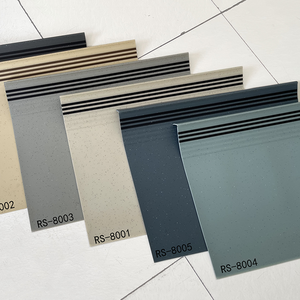
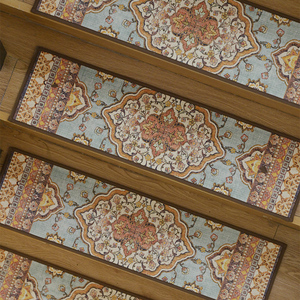
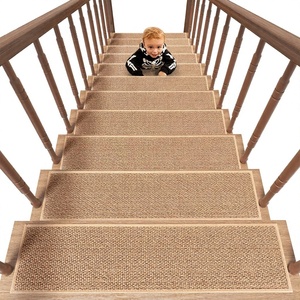
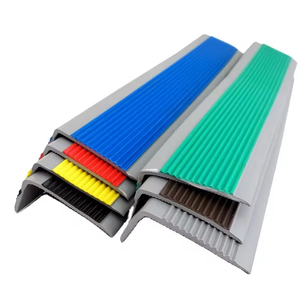
A comprehensive technical overview for EPC contractors, architectural engineers, and global procurement officers sourcing from Chinese Tier-1 manufacturing plants.
| Substrate Material | Manufacturing Technology | Friction Rating (DIN 51130 / ASTM) | Corrosion & Wear Resistance | Ideal Structural Deployment |
|---|---|---|---|---|
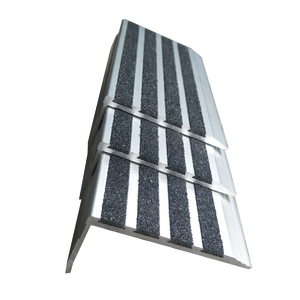
| 6063-T5 / T6 Aluminum Alloy | Precision hot-extrusion + Anodizing / Carborundum grain potting | R11 – R13 (Pendulum test 65+ BPN) | Excellent atmospheric & maritime resilience; architectural aesthetics | Aviation hubs, rail transport, high-traffic civic libraries, modern universities |
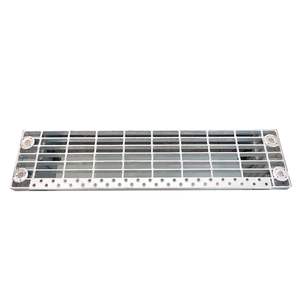
| Electroforged Carbon Steel (Q235 / S275JR) | Automated PLC fusion forging (100t force + 2200A) + Serrated surface | R12 – R13 (Self-draining mesh design) | Hot-dip galvanized to ISO 1461 (>85μm zinc thickness); 25+ yrs life | Petrochemical refineries, boiler access catwalks, mining hoists, industrial gantries |
| Pultruded GFRP / Isophthalic Resin | Continuous fiber glass pull-extrusion with aluminum oxide grit bonded | R13 (Zero slip in oil & chemical spills) | 100% dielectric, impervious to saltwater, sulphuric acids, and alkalis | Wastewater clarifiers, offshore oil rigs, battery production workshops |
| Co-Extruded Modified PVC / Vinyl | Twin-screw elasticized polymer extrusion with multi-ridge ribbing | R10 – R11 (Dry/Wet indoor transitional) | Acoustic absorption (>18dB), scuff resistant, antimicrobial additives | Hospitals, cleanrooms, residential developments, indoor timber retrofits |
| AISI 304 / 316 / 309 Stainless Steel | Full resistance pressure welding + Acid descaling & electro-polishing | R12 (Punched/dimpled chequered profile) | Impervious to chlorides, caustic washdowns, and high sterilization heat | Food processing plants, biopharmaceutical suites, marine vessel gangways |
When sizing stair treads, deflection parameters dictate engineering layouts. According to international building standards, stair tread components under full design load must maintain a maximum deflection not exceeding 1/240th of the clear structural span, capped at 6.0 mm. Chinese automated factories employ finite element analysis (FEA) during the CAD/CAM tooling stage, ensuring bearing bars, nosing channels, and anchoring end-plates withstand cyclic fatigue and rolling impact loads without weld failure or grit shedding.
How automation, decarbonization standards, and photoluminescent safety integration are shaping global OEM procurement strategies for 2025 and beyond.
Modern emergency egress regulations increasingly mandate stair edge visibility during primary power failure. Tier-1 factories are co-extruding strontium aluminate crystals into aluminum and PVC nosing, delivering up to 10 hours of high-luminance green-blue visibility to satisfy UL 1994, IBC 1025, and DIN 67510 compliance.
Moving away from legacy quartz sand bonding, advanced manufacturers are switching to high-pressure fused aluminum oxide grit within aliphatic polyurea matrices. This eliminates thermal degradation, provides chemical resistance against aircraft fuels and skydrol, and increases taber abrasion resistance tenfold.
Global architectural and infrastructure tenders require rigorous Environmental Product Declarations (EPD). Chinese manufacturing facilities are expanding closed-loop scrap recovery, using hydro-powered smelting for 6000-series alloys, and adopting hexavalent-chromium-free passivation to meet EU CBAM and LEED v4.1 criteria.
Procurement is pivoting from standard stock panels to direct Building Information Modeling (BIM) fabrication. Export plants utilize automated fiber lasers and CNC press dies to pre-cut complex notchings, pipe cut-outs, radial stairs, and custom mounting hole pitches directly from user Revit or IFC files, significantly shrinking on-site labor overhead.
Rooted in heavy-duty metallurgical forging, automated extrusion lines, and international export packing standards.
Over 100 tonnes of hydraulic compression integrated with ~2,200 amperes of electrical fusion guarantees joint penetration with zero filler metal and zero crack susceptibility under heavy vibrational impact.
Full support for edge cut-outs, toe plates, nosing profiles, and custom widths ranging from 250 mm to 1,200 mm. Every cut-out is perimeter-banded with flat bar to maintain total structural load transfer.
Seamless processing across 6063-T5 aluminum, Q235B galvanized steel, marine-grade AISI 316 stainless steel, and flame-retardant pultruded fiberglass resins for targeted operating conditions.
Heavy steel strap bundling, corner shock protectors, vapor-corrosion-inhibitor (VCI) film wrap, and heat-treated solid fumigated wooden pallets to prevent transit damage in multi-modal trans-ocean shipments.
Our sales engineering team provides instant CAD panel breakdowns, mechanical stress verification, and factory-direct volume quotations tailored to your bill of materials.
Inquire NowDirect technical answers addressing minimum order volumes, compliance certs, surface treatments, and international logistics.
Electroforged gratings are produced on high-precision PLC-controlled machines that simultaneously apply over 100 tonnes of hydraulic pressure and roughly 2,200 amperes of high-frequency electric current. This fuses the twisted square cross bar into the pre-slotted bearing bar at a molecular level, creating a homogenous, crack-free joint without any filler metal. Welded or hand-fabricated custom gratings, by contrast, use manual or robotic MIG welding panel by panel. While electroforging ensures unmatched dimensional accuracy and superior fatigue resistance for standard modular runs, hand-welding is optimal for low-volume bespoke shapes, circular cut-outs, and heavy-duty structural toe-plate reinforcements.
For wet, greasy, or oil-laden applications (such as offshore platforms, food washdown bays, and heavy workshops), you should target an R12 or R13 rating under DIN 51130 (ramp testing) or a British Pendulum Number (BPN) exceeding 65 in wet conditions under ASTM E303. To achieve this, choose serrated bearing bars on hot-dip galvanized steel treads, coarse aluminum oxide (corundum) grit potting inside aluminum extruded profiles, or silicone carbide quartz aggregate bonded with isophthalic resin on pultruded GFRP stair treads.
Fiberglass (GFRP) stair treads are vastly superior when installations face severe chemical exposure, continuous saltwater mist, or high-voltage electrical hazards. GFRP does not rust, requires zero maintenance or repainting, and provides complete electrical and thermal insulation. Furthermore, GFRP weighs roughly one-third of comparable structural carbon steel, drastically cutting air or ocean freight costs and allowing rapid site installation without costly mechanical lifting cranes or on-site hot-work permits.
AISI 304 is the baseline for commercial buildings, standard food processing facilities, and general architectural applications. AISI 316 contains 2–3% molybdenum, which grants critical defense against pitting and crevice corrosion caused by marine saltwater and industrial chlorides—making it indispensable for coastal decks and pharmaceutical facilities. AISI 309 is a specialized high-chromium, high-nickel austenitic stainless grade engineered specifically for high-temperature zones (such as industrial boiler incinerators, furnace catwalks, and heat-treating exhausts) where operating temperatures regularly exceed 800°C.
To deliver an exact cost, production lead time, and load verification, provide: (1) Material specification (e.g., 6063-T5 aluminum, Q235B steel, SS316, or GFRP); (2) Bearing bar dimensions, pitch, and cross bar spacing; (3) Complete panel dimensions (Length × Width × Thickness); (4) Desired surface finish (Hot-Dip Galvanized to ASTM A123/ISO 1461, Anodized 15μm, Electro-polished, or Epoxy Grit); (5) Static and dynamic design live loads (in kN/m² or concentrated point load in kg); and (6) Destination port for shipping logistics.
Streamline your supply chain with direct factory pricing, certified metallurgical standards, and dependable global delivery schedules.
Inquire Now