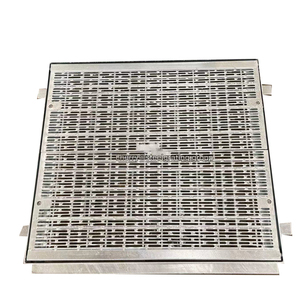
Designed for industrial processing plants, commercial platforms, maritime structures, and municipal utility conduits requiring absolute planar load tolerance.
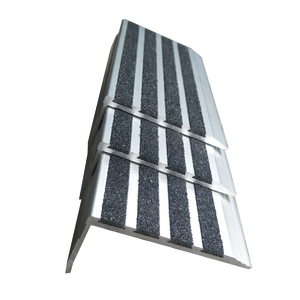
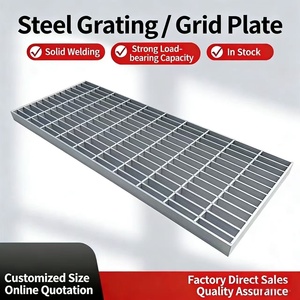
In heavy industrial infrastructure, petro-refining complexes, offshore facilities, and modular civil construction, the selection of surface grating determines load safety, installation turnaround times, and life-cycle asset maintenance costs. Plain steel grating (smooth-surface flat bar grating) is the global gold standard for low-drag rolling stock mobility, high lateral structural stiffness, effortless drainage cleanliness, and predictable planar load redistribution.
Unlike serrated grating profiles designed explicitly for high-viscosity hydrocarbon environments, plain steel grating panels offer superior ease of rolling wheel mobility—critical for hand-truck operations, material transfer dollies, automated guided vehicles (AGVs), and foot traffic zones. When procured from an audited manufacturer using automated, computerized electroforging, plain grating yields homogeneous load-bearing across every orthogonal axis.
Procurement teams frequently encounter stark price discrepancies between manual arc-welded panels and true electroforge-welded assemblies. Manual welding relies on tacking intersecting bars with fluxed wire, introducing erratic heat-affected zones (HAZ), internal micro-porosity, and variable penetration depths. Under continuous rolling or vibration frequencies common to processing plants, manually welded joints suffer cyclic fatigue fracture.
Conversely, our PLC-controlled electroforging fuses square-twisted cross rods directly into deeply notched or flush bearing bars using high hydraulic force coupled with high-amperage electrical resistance. Cross rods become an integral component of the bearing matrix without adding extraneous filler rod material. The resulting joint exhibits zero micro-cracks, an identical shear modulus, and near-zero dimensional deviation (±1.5mm tolerance across a 6000mm run), allowing fast, field-weld-free bolted installations.
| Standard Configuration | Bearing Bar Size (mm) | Bearing Pitch / Cross Pitch | Standard Yield Strength | Optimum Engineering Application |
|---|---|---|---|---|
| G303/30/100 G | 30 × 3 Flat Bar | 30 mm / 100 mm | Yield ≥ 235 MPa | Standard pedestrian walkways, pipe bridges, equipment catwalks |
| G325/30/100 G | 32 × 5 Flat Bar | 30 mm / 100 mm | Yield ≥ 235 MPa | Plant mezzanine decks, light forklift pathways, pump bays |
| G405/30/50 G | 40 × 5 Flat Bar | 30 mm / 50 mm | Yield ≥ 345 MPa | Heavy warehouse vehicular trenches, cargo unloading aprons |
| G505/40/100 G | 50 × 5 Flat Bar | 40 mm / 100 mm | Yield ≥ 235 MPa | High-span municipal ditch drainage, mining slurry access grids |
| G605/30/100 SS | 60 × 5 (AISI 316) | 30 mm / 100 mm | Tensile ≥ 520 MPa | Offshore platform drainage, pharmaceutical washdown areas |
Operating as a primary China export manufacturer, our heavy industrial footprint combines raw metallurgy handling, high-capacity forge-welding lines, robotic edge trimming, in-house galvanizing troughs, and advanced CAD/CAM drafting conversions. We deliver turnkey structural integration that meets ASTM A1011, BS 4592, AS 1657, and DIN 24537-1 technical parameters.
From prime Q235B, Q355B mild carbon steel to food-grade AISI 304 and marine-spec AISI 316L, every coil and flat bar batch includes factory mill test certificates (EN 10204 3.1) tracing carbon, silicon, and sulfur compositions.
No field cuts required. We ingest structural TEKLA, Revit, or AutoCAD models to engineer custom shapes, pipe cut-outs, kick plates, and toe guards. Every penetration is fully banded and edge-sealed prior to galvanization.
Panels undergo multi-stage alkaline degreasing, hydrochloric pickling, flux immersion, and automated hot-dip zinc baths according to ISO 1461, achieving metallurgical bond alloys resistant to salt spray exposure.
Procurement directors and design teams face tightening sustainability rules, increased structural design lifetimes, and rapid modular construction schedules. Grating specifications are adapting to these key technological shifts:
By migrating from generic commercial carbon steel to advanced HSLA grades (e.g., Q355 / ASTM A572 Grade 50), asset owners decrease floor weight by 14% to 22% while retaining identical deflection thresholds. This directly cuts ocean shipping costs and reduces dead-load crane hoisting requirements.
Green building programs like LEED v4.1 and BREEAM now request Environmental Product Declarations (EPDs). Advanced electric arc furnace (EAF) production based on scrap-recycled steel lowers embodied carbon emissions per square meter, delivering a strong competitive edge in international infrastructure tenders.
Multi-tier projects now mandate narrow-pitch grids (such as 11mm to 15mm clear space) to combine high drainage volume with pedestrian ADA heel-proof compliance. Gratings are shipped directly to job sites pre-fitted with safety hold-down clamps and barcode-tagged panel layouts for fast integration.
Connect directly with our engineering team for free CAD panel nesting, load calculation verification, and comprehensive mill pricing.