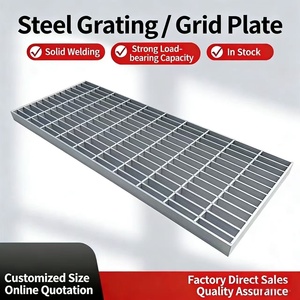
Commercial Trench Drain Grate Bar Type Stainless Steel Grating Cover
Constructed for warehouse channels and food-grade kitchens requiring acid-washed finish.

Explore our export-ready architectural press-locked panels, heavy load profiles, and industrial safety infrastructure systems.
Constructed for warehouse channels and food-grade kitchens requiring acid-washed finish.
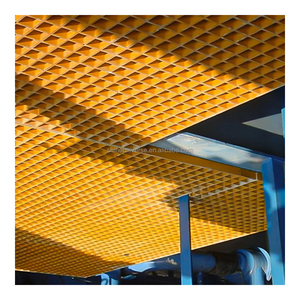
Non-sparking, dielectric walk grid suitable for coastal chemical platforms and offshore assets.
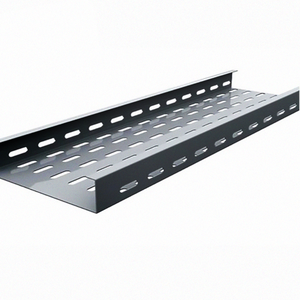
Zinc-Aluminum-Magnesium coated containment profile for extreme corrosive wiring runs.
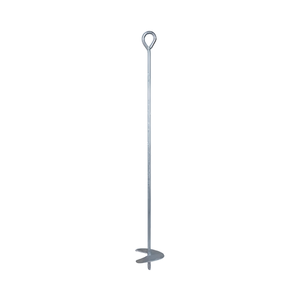
Heavy-gauge anchoring hardware designed for industrial utility line support integrity.
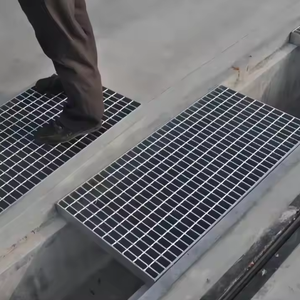
High rigidity press-locked & welded mezzanine flooring for plant gangways and platforms.
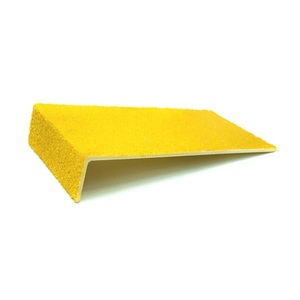
High-traction contrasting safety nosing designed for chemical and offshore industrial stairs.
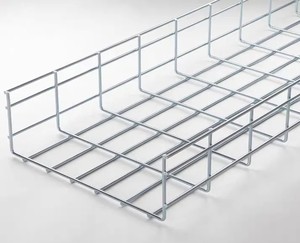
Rigid cantilever and trapeze installation bracket for multi-tier cable basket lines.
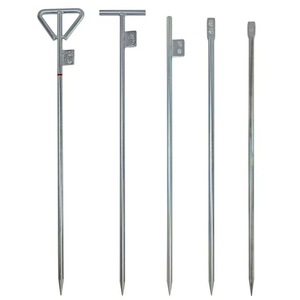
Electrical dissipation stake manufactured with heavy zinc deposition per ASTM A153.
Analyzing cold-press hydraulic swaging versus conventional electroforging for structural and architectural specifications.
Unlike standard electroforging that relies on heat deformation (≈2200 A current) to melt transverse bars into bearing bars, press-locked grating utilizes deep grooving in bearing bars into which cross bars are pressed under over 100 tonnes of hydraulic pressure.
This cold-forming process preserves the chemical micro-structure of the alloy, eliminating the Heat-Affected Zone (HAZ), mitigating residual mechanical stresses, and ensuring pristine, seamless intersecting points.
Press locked panels provide an exceptionally smooth, uniform grid configuration with identical visual appearance on both interior and exterior viewing angles. Architects specify press-locked systems for vertical building sunscreens, ventilation louvers, ceiling screens, and security fencing.
Tight pitch tolerances (down to 11mm openings) fulfill stringent ADA accessibility compliance while preventing the falling hazard of 15mm-diameter objects across high walkways.
From complex turbine layout pass-throughs to structural column cut-outs, modern factory production utilizes computer-controlled laser cutting and automated perimeter banding. Every aperture is fully bordered with flat bars to retain 100% of panel load capacity.
Available in mild structural steel (Q235B / S235JR), stainless steel (AISI 304, 316, 309), and lightweight architectural aluminum alloys (6063-T6).
| Engineering Attribute | Press-Locked Grating (Full Interlock) | Electroforged Grating (Twisted Bar) | Molded FRP Composite Grid |
|---|---|---|---|
| Primary Mechanical Joint | Hydraulic cold-swaged press-fit (Up to 100t) | Electric resistance weld fusion (≈2200 A) | Continuous fiber matrix casting |
| Surface Aesthetic Appeal | Flush, symmetrical, precise architectural finish | Industrial floor profile; visible cross-bar twist | Textured grit or concave industrial mesh |
| Heat-Affected Zone (HAZ) | None; mechanical cold lock retains grain structure | Localized melting zone along cross-bar union | Non-metallic; thermosetting resin cure |
| Corrosion Protection Post-Assembly | Hot-dip galvanized (ISO 1461), Electro-polish | Hot-dip galvanized (>610 g/m² zinc bath) | Inherent chemical & marine resistance |
| Primary Field Application | Architectural facades, ceiling louvers, cleanrooms | Heavy petrochemical gangways, refineries, power | Chemical plants, galvanizing lines, offshore decks |
Strategic perspectives for EPC project managers, structural procurement heads, and distributor networks.
Global specifications are rapidly moving toward ZAM alloy coatings as a replacement for standard batch hot-dip galvanizing in high-chloride environments. Offering self-healing edge corrosion mitigation, ZAM delivers over triple the operational lifespan in marine installations without increasing tare panel weight.
Project margins depend on zero site re-work. Tier-1 China factories utilize direct BIM-to-CAM automation where AutoCAD 3D spatial models export precise cut-out schedules directly to multi-axis punching machinery, drastically reducing transit-to-erection lead schedules for major refinery expansions.
European and American infrastructure standards increasingly mandate Environmental Product Declarations (EPD). Modern grating manufacturing utilizes Electric Arc Furnace (EAF) recycled billet with verified mill certificates to ensure compliance with decarbonized construction supply chain protocols.
Integrated manufacturing ensuring complete traceability from raw billet inspection to seaworthy container packaging.
Continuous multi-head press machines maintaining consistent spacing tolerances of ±0.5mm across extended production batches.
In-house immersion pickling and electro-polishing baths guaranteeing zero weld oxidation on AISI 304, 316, and 309 stainless steel runs.
Destructive and deflection load-cell verification verifying adherence to BS 4592, DIN 24537-1, and ANSI/NAAMM MBG 531 criteria.
Heavy-gauge steel strapping, edge angle protectors, and vapor corrosion inhibitors designed for long-haul maritime container shipping.
Key technical details every engineering buyer and estimator needs to know when commissioning custom grating production.
Electroforged gratings fuse square-twisted cross bars into load-bearing bars through high hydraulic force and electric current (≈2200 A), making it ideal for pure industrial walkways. In contrast, press-locked grating employs grooved load bars and cross bars slotted together under immense mechanical hydraulic pressure without heat, producing a clean, symmetrical, flush architectural surface that offers superior aesthetic value, uniform light filtration, and high lateral stability.
For standard food preparation, architectural facades, and municipal projects, AISI 304 provides cost-effective performance. In high-salinity marine air, chemical processing facilities, or pharmaceutical cleanrooms, AISI 316 (containing 2-3% molybdenum) is essential to resist pitting and crevice corrosion. For elevated-temperature furnace walkways, AISI 309 provides scale resistance up to 1000°C. All panels are acid-pickled and electro-polished to restore the passive chrome-oxide layer.
Fiberglass Reinforced Plastic (FRP/GRP) should be selected when high acid or caustic exposure would degrade galvanized coatings, in marine splash zones, and where non-conductive, dielectric surfaces are mandatory for worker safety around electrical substations. Additionally, FRP reduces dead weight by roughly 65% compared to steel, lowering structural support requirements and freight expenses while enabling field trimming with basic hand tools.
Yes. Custom fabrication direct from approved structural drawings accommodates round, square, diagonal, or toe-clearance cut-outs. Crucially, all internal cut-outs are reinforced with full-depth flat bar banding welded flush along the perimeter to maintain specified point and distributed load ratings. Matching stair treads are fabricated with bolted end plates and anti-slip yellow or cast-abrasive nosing for direct field bolting to stringers.
To receive an actionable quotation, provide: (1) Bearing bar height and thickness (e.g., 32x5mm), (2) Center-to-center pitch of load and cross bars (e.g., 30x30mm or 34x38mm), (3) Material grade (Carbon Steel Q235B, AISI 304, AISI 316), (4) Surface treatment (Hot-Dip Galvanized per EN ISO 1461, mill finish, or electro-polished), (5) Clear span dimensions and traffic type (pedestrian 5kN/m², vehicle wheel axle loads), and (6) Destination port for shipping calculation.
Our structural engineering desk provides fast take-offs from your architectural DWG/PDF drawings, complete with dynamic deflection reports and export shipment planning.