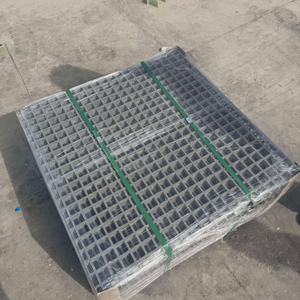
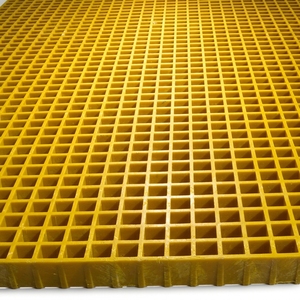
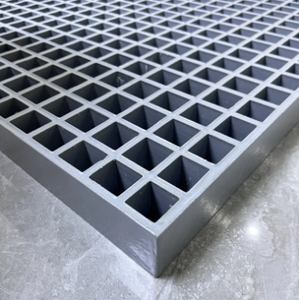
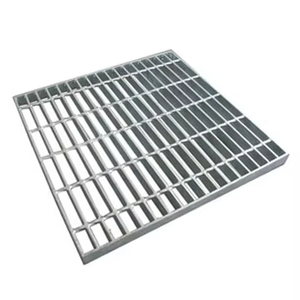
China Best Storm Drain Grates Suppliers & Exporter
Global engineering procurement authority for heavy-duty electroforged steel gratings, cast ductile iron covers, and anti-corrosive FRP drainage platforms. Certified to EN 124 Class A15–F900 and ASTM A123 standards.
Certified Product Showcase
Engineered Storm Drain & Industrial Drainage Grating Series
Explore our structural portfolio of pultruded composites, molded anti-slip meshes, and heavy industrial walkway floor grates. Manufactured under ISO 9001 precision with complete material traceability.
Structural Metallurgy, Hydraulic Dynamics & Load Class Compliance
In urban stormwater runoff mitigation and industrial plant engineering, storm drain grates serve as the critical interface between hydraulic intake performance and heavy vehicular wheel-load transfer. Selecting the correct metallurgical alloy or composite chemistry determines whether a civil drainage system survives decades of corrosive traffic or fails prematurely under fatigue stress.
100+ Tons
Hydraulic Forge Pressing
Molecular fusion eliminates joint micro-fractures
≈2,200 A
Forge Resistance Welding
Zero filler metal seamless joint integrity
EN 124 F900
Proof-Load Rating
Exceeds 900 kN aircraft apron requirements
85–100 μm
Hot-Dip Galvanizing
ISO 1461 zinc bath metallurgical barrier
Material Category
Standards / Grade
Yield Strength (MPa)
Corrosion Mechanism
Target Environment
Typical EN 124 Class
Electroforged Carbon Steel
ASTM A36 / Q235B
235 – 250
Hot-Dip Galvanized Zinc Layer (ASTM A123)
Highways, loading logistics, container yards
Class C250 – D400
Austenitic Stainless Steel
AISI 304 / 316L
290 – 310
Passive Chromium Oxide (Cr2O3) Film
Food processing, chemical flumes, marine fronts
Class B125 – C250
Ductile Iron (Nodular Spheroidal)
EN-GJS-500-7 / 65-45-12
320 – 360
Bituminous Seal or Epoxy Marine Coating
City stormwater gutters, expressways, ports
Class D400 – F900
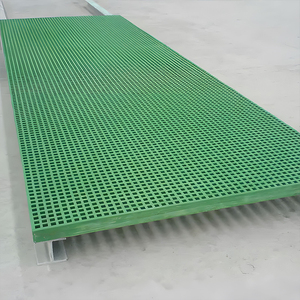
FRP / GRP Composite Matrix
Isophthalic / Vinyl Ester
350 – 450 (Tensile)
Total dielectric inertness; zero galvanic action
Battery manufacturing, wastewater, pickling lines
Class A15 – C250
Enterprise Superiority
State-of-the-Art Production & Drawing-to-Site Customization
From our heavy electroforging lines to our dust-free composite curing facilities, we engineer drainage panels that integrate flawlessly into civil construction plans with zero site-cutting rework.
Bespoke Fabrication to CAD/BIM Drawings
Our engineering center ingests AutoCAD, Revit, and Tekla files directly. Every storm drain grate is fabricated with laser-guided precision, ensuring radius curves, manhole round cuts, and column penetrations are banded with matching flat bar to restore 100% moment of inertia.
Standard and bespoke panel widths (250 mm to 1,200 mm)
Custom angle iron bearing frames and embedment anchors
Permanent bar-code tagging coordinated with site installation layouts
Automated PLC Resistance Electroforging
Unlike manual puddle-welded grates which suffer from heat-affected zone (HAZ) embrittlement, our computer-controlled forging applies 100+ metric tons of pressure simultaneously with 2,200 amperes of current, forging twisted square crossbars seamlessly into load-bearing bars.
Zero open fissures or slag inclusion voids
Twisted crossbars guarantee slip resistance under rain & oily films
Exceptional dimensional stability with zero angular warpage
Rigorous QA, Proof Loading & Galvanizing
Every shipment undergoes certified batch testing before departure. Hot-dip galvanization is executed in computerized temperature kettles (445–455°C) following acid pickling and fluxing to produce a robust Fe-Zn alloy protective barrier.
Hydraulic proof-load deflection verification to EN 124 / AASHTO M306
Magnetic eddy-current zinc thickness testing (≥85 μm guaranteed)
EN 10204 3.1 Material Test Certificates (MTC) supplied with all orders
Market Intelligence 2025–2030
Future Procurement Trends in Stormwater Drainage
Municipal infrastructure planners and global EPC contractors are shifting away from short-term purchase prices toward total cost of ownership (TCO), hydraulic resilience against flash flooding, and low-carbon metallurgical sourcing.
01
Climate-Resilient Hydraulic Slotted Geometry
With the increased frequency of 100-year storm surges, civil designers require storm grates with hydraulic discharge coefficients exceeding $C_d = 0.65$. Non-clogging diagonal crossbars and rounded intake chamfers are replacing legacy rectangular bars to evacuate torrential volumes before gutter overflows occur.
02
Anti-Theft Zero-Scrap-Value Materials
Municipalities worldwide lose thousands of cast-iron roadside grates annually to theft. Global procurement is accelerating the shift toward high-load composite molded FRP and locked ductile hinged grates with integrated mechanical cams, eliminating secondary scrap-market resale incentives.
03
Pre-Engineered Trench & Modular Monolithic Grates
Rather than pouring cast-in-place concrete culverts and measuring grates post-curing, EPCs are purchasing factory-preassembled polymer concrete or ductile-integrated modular trench systems. This reduces site labor cycles by up to 65% and ensures guaranteed load-class validation.
04
EPD & Low-Carbon Steel Mandates
European and North American infrastructure funds increasingly require Environmental Product Declarations (EPD). Chinese premier grate exporters are now deploying scrap-based Electric Arc Furnaces (EAF) and solar-powered hot-dip facilities to deliver verifiable embodied-carbon reductions.
Knowledge Base
Frequently Asked Technical Questions by Global Buyers
In-depth answers addressing structural load calculations, hydraulic efficiencies, anti-corrosion chemistry, and international shipping protocols.
What is the structural difference between electroforged and manual fillet-welded steel storm grates?
Electroforged gratings are manufactured through a continuous automated process where high hydraulic forces (>100 metric tons) combine with massive electrical current (≈2,200 A) to melt and forge square twisted cross rods directly into slotted or unslotted bearing bars. This creates an unyielding, monolithic molecular bond with zero added filler rod. In contrast, manual fillet-welded grates rely on hand arc-welding every intersection; this introduces heat-affected zones (HAZ), micro-cracks, uneven weld heights, and residual internal stresses that often crack under continuous high-frequency heavy truck braking loads.
How do EN 124 load classes compare to AASHTO M306 / H-20 standards for storm drain grates?
EN 124 is the prevailing European and international standard, categorizing grates from A15 (15 kN, pedestrian) up to F900 (900 kN, airport taxiways). AASHTO M306 is the primary American highway standard requiring a minimum proof load of 40,000 lbs (178 kN) applied via a 9×9 inch platen to achieve an H-20 / HS-20 rating. Generally, an EN 124 Class C250 or D400 grating satisfies or exceeds AASHTO H-20 / HS-20 requirements for public roadways. For container shipping terminals and military airstrips, engineers must specify EN 124 Class E600 or F900 with specialized deep-section bearing bars.
When should engineers specify fiberglass (FRP) storm grates over hot-dip galvanized steel?
Fiberglass Reinforced Plastic (FRP/GRP) is the optimal choice in severely corrosive environments rated C4 to CX, such as seaside seawalls, chemical plant drainage trenches, coastal oil terminals, and desalination discharge flumes. FRP does not oxidize or suffer pitting corrosion in the presence of continuous chlorides or sulfuric acid. Furthermore, FRP is non-conductive (spark-free and dielectric), light enough for two workers to lift without mechanical hoists, and holds zero scrap metal value, preventing municipal vandalism and street theft.
Why is perimeter banding mandatory on trench drain grates with pipe cut-outs?
When a storm drain grate is cut to accommodate a round sewer pipe, utility post, or trench angle, the continuous load transfer path across the bearing bars is interrupted. Unbanded cut bar ends can twist or buckle independently under wheel loads, causing catastrophic panel collapse. Perimeter banding consists of welding a flat bar of equal depth and thickness around all cut-outs and panel ends. Banding redistributes concentrated wheel point-loads across adjacent bearing bars and keeps the grating square throughout installation.
What anti-slip surfaces are available for storm drain grates in high-pedestrian commercial zones?
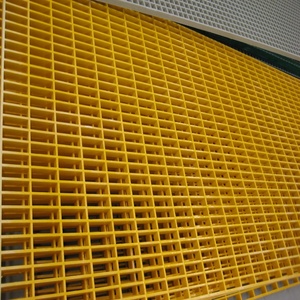
For steel and stainless steel gratings, serrated bearing bars with deep trapezoidal notches provide positive shoe-sole traction even when submerged in rainfall or grease. For molded and pultruded FRP composite grates, manufacturers apply either an embedded quartz grit surface (bonded with resin before final oven baking) or a concave meniscus surface. Both composite finishes satisfy OSHA and ADA non-skid friction coefficient requirements (μ > 0.6 to 0.85).
What technical parameters are required to generate an engineering drawing and quote?
To provide an accurate engineering proposal within 24 hours, our technical team requires: (1) Trench clear span and required rebate seat dimensions; (2) Design vehicle wheel load or EN 124 class (e.g., forklift 5-ton axle vs. highway 40-ton semi-truck); (3) Bearing bar orientation relative to vehicle travel direction; (4) Preferred material alloy (Q235B galvanized, 316 stainless, ductile iron, or vinyl ester FRP); and (5) Detailed CAD drawings showing cut-outs, step nosings, or locking bolt requirements.
Need Custom Engineered Storm Drain Gratings for Your Next Tender?
Consult directly with our senior metallurgical and civil application engineers. We evaluate your hydraulic intake demands, confirm vehicle deflection calculations, and provide fully dimensioned shop drawings with FOB/CIF delivery schedules.