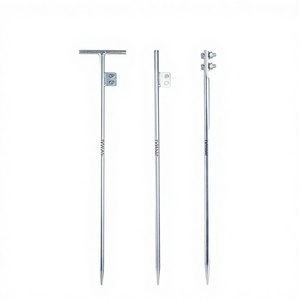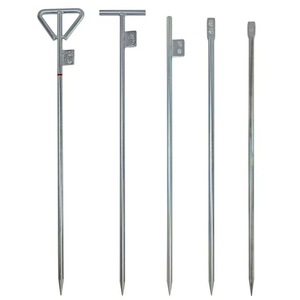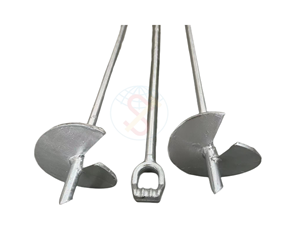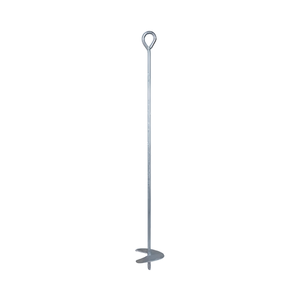
China Top Galvanized Earthing Rods Factory & Exporter

Precision-engineered hot-dip galvanized & copper-bonded grounding rods, helical anchors, and complete lightning protection assemblies certified to ASTM A123, IEC 62561-2, and IEEE 80 standards for global utility infrastructure.

≥86μm
Zinc Coating Thickness (ASTM A123)
50+
Export Destination Markets
600+ MPa
High-Tensile Carbon Steel Core
30+ Yrs
Subsoil Service Life Expectancy
Factory Catalog

High-Integrity Earthing & Ground Anchor Assemblies

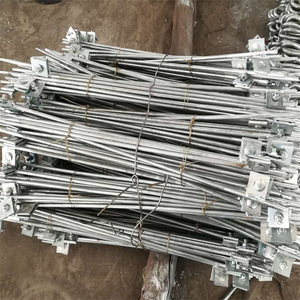
Manufactured to critical electrical and mechanical specifications, our heavy-duty rods provide low-impedance grounding paths for high-voltage substations, telecommunication towers, overhead line hardware, and structural lightning dissipation systems.

Technical Whitepaper

Engineering Integrity: Galvanized vs. Copper Earthing Metallurgy

A rigorous examination of subterranean electrolytic behavior, mechanical driving fatigue, and soil chemistry adaptability for EPC power project specifications.

Intermetallic Fe-Zn Alloying

Unlike simple electroplating or cold paint applications, our automated thermal immersion process at 450°C triggers a metallurgical diffusion reaction between clean low-carbon steel (Q235B/Grade 50) and molten zinc, generating progressive intermetallic phases:

  • Gamma (Γ) Layer: 75% Zn / 25% Fe inner bond
  • Delta (δ) Layer: Hexagonal column crystals (90% Zn)
  • Zeta (ζ) Layer: FeZn13 iron-zinc crystal pillars
  • Eta (η) Layer: 100% pure outer zinc shield

Fault Energy & Lightning Dissipation

Grounding rods operate under severe transient current spikes during atmospheric lightning strokes (up to 200kA) and line-to-ground fault conditions. Substation earth systems require balanced electrical and mechanical capabilities:

  • Low Surge Impedance: Rapid high-frequency potential equalization
  • Thermal Capacity: Non-melting cross-section during short circuits
  • Step & Touch Potential: Safety control compliant with IEEE Std 80
  • Radial Dissipation: Efficient current release into deep soil beds

Corrosion in Extreme Soil Chemistry

Selecting earthing metallurgy hinges on subsoil resistivity, pH, moisture, and chloride concentration. Galvanized steel exhibits sacrificial anodic behavior, neutralizing corrosive attacks that would otherwise compromise bare steel:

  • Cathodic Protection: Zinc sacrifices to protect steel core cracks
  • Alkaline Soils (pH > 7.5): Superior stability vs. copper bonding
  • Galvanic Neutrality: Prevents accelerated corrosion on steel piles
  • Passivating Carbonate: Zinc hydroxycarbonate protective patina
Standard Matrix

Engineering Specifications & Dimensional Tolerances

Comprehensive standard manufacturing matrix for power line hardware, anchor assemblies, and grounding rods produced at our automated facility.

Rod Type / Parameter Core Metallurgy Coating Process Coating Depth / Micron Tensile Strength Applicable Standards
Hot-Dip Galvanized Ground Rod Carbon Steel Q235B / Q345B Thermal Dip Galvanizing ≥ 86 μm (610 g/m²) 450 – 650 MPa ASTM A123, BS 729, ISO 1461
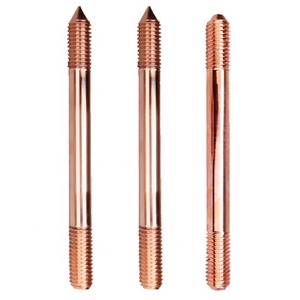
Copper-Bonded Earth Rod Cold Drawn Steel C1018 Electrolytic Copper Clad ≥ 254 μm (10 mil) ≥ 580 MPa UL 467, IEC 62561-2, BS 7430
Helical Earth Anchor Rod High-Strength Steel Grade 50 Hot-Dip Zinc Immersion ≥ 80 μm (570 g/m²) ≥ 620 MPa ASTM A153, IEEE 1025
Threaded Coupling Rod (M/F) Structural Carbon Steel S275JR Continuous Zinc Bath ≥ 86 μm (Threaded fit) 500 – 600 MPa DIN 48852, NF C 15-100
Duckbill Driving Rod Assembly Cr-Mo Forged Alloy Steel Zinc Phosphate / Galvanized ≥ 50 μm / Plated ≥ 850 MPa ISO 898-1 Class 8.8
Factory Advantage

Why Tier-1 Utilities Source From Our China Facility

Combining heavy forging capacity, precision machining, in-house hot-dip galvanizing lines, and direct maritime shipping convenience.

In-House Galvanizing

Two continuous 12.5-meter computer-controlled galvanizing kettles guaranteeing uniform zinc coating thicknesses exceeding ASTM A123 / ISO 1461 requirements without third-party delay.

Full Traceability

Every bundle is tagged with batch numbers, raw steel ladle chemical analyses, tensile stress test certificates, and magnetic thickness calibration sheets for rapid site inspection sign-off.

Bespoke Fabrication

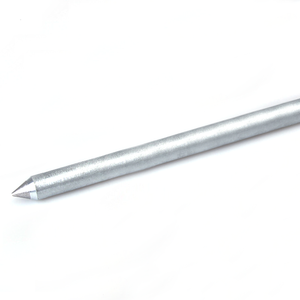
Custom pointed tips, roll-threaded or cut-threaded coupling ends, cold-forged distaff heads, welded helix blades, and specialized guy wire attachments manufactured strictly to client blueprints.

Heavy Export Packaging

Moisture-proof plastic barrier wrapping, heavy tubular steel strapping, protective thread end-caps, and fumigated timber crating built to withstand high-seas container transit.

Procurement Guide

Frequently Asked Questions on Earthing Rod Sourcing

Authoritative technical answers to common engineering, logistics, and quality assurance inquiries from international buyers.

What is the standard zinc coating thickness for hot-dip galvanized earthing rods?
According to ASTM A123, ISO 1461, and BS 729 standards, industrial-grade steel ground rods with diameters of 16mm (5/8") or larger must achieve an average minimum zinc coating thickness of 86 μm (equivalent to approximately 610 g/m²). For highly corrosive marine or acidic terrain installations, our facility can supply heavy-spec custom coatings up to 100–120 μm upon technical review.
When should an engineer specify galvanized earthing rods over copper-bonded rods?
Hot-dip galvanized earthing rods are specifically recommended where the grounding matrix connects to underground steel foundations, steel sheet piling, or buried steel pipes. Using copper in these configurations generates severe galvanic couples, causing the surrounding structural steel to act as a sacrificial anode and rust prematurely. Galvanized rods prevent this galvanic corrosion while cutting procurement expenditure by over 40%.
How do roll-threaded joints maintain electrical continuity during deep earth driving?
Roll threading cold-forms the outer steel fibers instead of cutting away core metal, preserving grain continuity and tensile rigidity. When coupled with female-threaded bronze or high-strength galvanized steel couplers, the rod ends butt tightly against one another inside the joint sleeve. This direct rod-to-rod metallic interface ensures high mechanical driving impact transmission and near-zero electrical resistance across multi-tier rod segments.
What quality tests are executed prior to international export release?
Every production heat undergoes a four-stage testing sequence: 1) Chemical composition spectrographic analysis; 2) Mechanical yield and ultimate tensile strength testing; 3) Zinc coating thickness verification across top, mid, and base points using calibrated electromagnetic dry-film gauges; and 4) Copper adhesion hammer strike and bend testing (for copper-bonded models) in compliance with UL 467. Full EN 10204 3.1 Mill Test Certificates accompany every bill of lading.
Can your factory produce custom length, diameter, and anchor helix combinations?
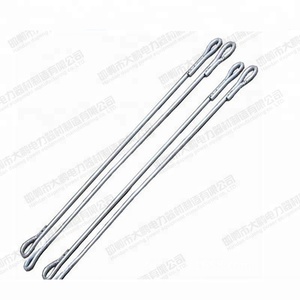
Yes. Our tooling workshop fabricates round rod diameters ranging from 12mm (1/2") to 25mm (1"), with lengths between 1.2m (4ft) and 3.0m (10ft). Helical earth anchors can be engineered with single, double, or triple pitch flights ranging from 100mm to 350mm outside diameter, paired with drop-forged oval eye or twin-eye attachments tailored to regional utility grid fittings.

Accelerate Your Project With Direct Factory Pricing

Send your project blueprints, required bar diameters, zinc coating thresholds, and port of destination to our engineering division for an itemized commercial proposal within 12 hours.

Get a Quote