
Direct Factory Supply | Certified Metallurgy | High Surge Current Capacities
In modern industrial civil engineering, electrical substation construction, renewable energy infrastructure, and mega-data center deployment, lightning protection and earthing systems (LPS) serve as the indispensable primary safeguard against transient overvoltage, direct atmospheric lightning discharges, and ground potential rise (GPR).
As the global market transitions toward higher fault-current densities and ultra-rigorous safety compliance under IEC 62305, IEEE Std 80, and GB 50057, international EPC (Engineering, Procurement, and Construction) contractors increasingly turn to Chinese manufacturing hubs for high-performance copper tapes, copper-bonded steel flat bars, hot-dip galvanized steel earthing strips, and advanced Zinc-Aluminum-Magnesium (ZAM) grounding conductors. China has established itself as the world's primary source for high-conductivity, corrosion-resistant grounding conductors, benefiting from an integrated metallurgical supply chain, continuous cold-rolling technologies, PLC-automated molecular bonding processes, and massive scale economies.
This technical whitepaper provides EPC procurement directors, electrical grounding engineers, and global distributors with an authoritative evaluation of China's top earthing strip manufacturing ecosystem, examining material selection criteria, physical metallurgy, mechanical load tolerances, anti-corrosion longevity in aggressive soils, and global sourcing paradigms for 2025–2030.
Choosing the correct metallurgical profile for lightning protection strips dictates the electrical impedance, thermal dissipation under short-circuit fault currents ($I_{sc}$), and soil corrosion resistance over a 30- to 50-year operational lifecycle. Chinese factories produce four principal categories of earthing conductors:
Made from C11000 grade pure copper (>99.90% purity). Delivers 100% IACS electrical conductivity, minimum contact resistance, and exceptional resistance to soil acids. Ideal for high-voltage substations, hospital power networks, and critical data centers where zero ground impedance fluctuation is mandatory.
Manufactured via a continuous electro-plating molecular bonding process over high-tensile carbon steel cores (Q235/Q355). Combines the high mechanical tensile strength of steel with the non-corrosive, conductive outer sheath of 99.9% pure copper (plating thickness 0.254mm / 254 microns). Prevents scrap metal theft while dramatically lowering material costs.
Fabricated from low-carbon structural steel immersed in molten zinc at 445°C–455°C, creating a metallurgical iron-zinc alloy layer exceeding 85 microns (610 g/m²). Highly cost-effective for civil foundation earthing grids, industrial warehouse perimeter grounding, and lightning down-conductor systems in moderate soil conditions.
Next-generation alloy coating comprising Zinc, 6% Aluminum, and 3% Magnesium. Offers self-healing edge corrosion protection in highly saline, coastal, or alkaline soil environments. Demonstrates up to 300% greater salt-spray test endurance compared to standard hot-dip galvanizing, making it the top choice for solar PV ground-mount structures.
| Material Conductor Type | Purity / Coating Specs | Electrical Conductivity (% IACS) | Tensile Strength (MPa) | Soil Corrosion Rate (Neutral Soil) | Estimated Operating Life |
|---|---|---|---|---|---|
| C11000 Pure Copper Tape | > 99.90% Cu | 100% | 210 – 260 | < 0.0025 mm/year | 50+ Years |
| Copper-Bonded Steel Strip | 99.9% Cu Electro-plated (254µm) | 20% – 40% | 450 – 600 | < 0.005 mm/year | 40 – 50 Years |
| Hot-Dip Galvanized Flat Bar | Zn Coating ≥ 85 µm (ISO 1461) | 8.5% – 10.8% | 375 – 500 | 0.015 – 0.025 mm/year | 25 – 35 Years |
| Zinc-Aluminum-Magnesium (ZAM) | Zn-Al(6%)-Mg(3%) Coating 275g/m² | 9.2% – 11.5% | 400 – 550 | < 0.008 mm/year | 40+ Years |
| AISI 316L Stainless Steel Strip | 17% Cr, 12% Ni, 2.5% Mo | 2.2% | 520 – 680 | < 0.001 mm/year | 50+ Years (Extreme Acid) |
Modern industrial plants require holistic grounding design where lightning earthing strips work in tandem with structural steel floorings, electroforged walkway gratings, cable management trays, and perimeter drain covers to establish equipotential bonding throughout the site.
Under transient surge conditions caused by atmospheric lightning strikes (typically 10/350 µs wave shape), high peak currents passing through the earthing network generate massive inductive voltage drops. If structural metalwork—such as electroforged steel gratings, ZAM cable trays, or steel floor tiles—is isolated from the earthing strip grid, hazardous step-and-touch potentials develop.
Leading Chinese manufacturers design integrated grounding systems where copper or hot-dip galvanized earthing strips connect directly to steel floor grating supports and perforated cable tray systems via exothermic welding or heavy-duty bimetallic clamps, dissipating fault currents safely into the mass of the earth.
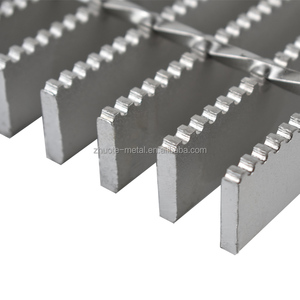
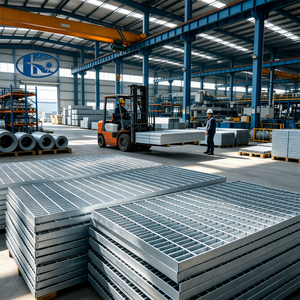
Manufactured using automated PLC electroforging applying over 100 tonnes of hydraulic pressure and 2200 A of electric current to fuse cross bars into bearing bars. When bonded with lightning earthing strips, these grids form an unbroken equipotential walkway deck in chemical processing plants and oil refineries.
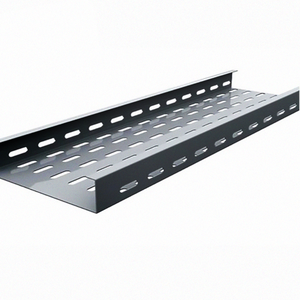
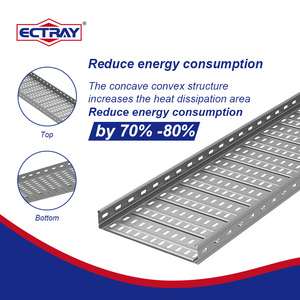
Heavy-duty cable management systems engineered from Zinc-Aluminum-Magnesium steel plates. They carry high-voltage power lines while simultaneously acting as continuous protective earth conductors (PE) when connected to main ground busbars via flexible copper grounding braids.
Serrated carbon steel gratings, Q235 galvanized drainage covers, and chequered floor plates engineered with precise round and square cut-outs. Every cut-out is edge-banded to ensure full electrical continuity and structural integrity under heavy forklift or truck axle loads.
To qualify as an elite exporter to international markets like North America, Europe, the Middle East, and Southeast Asia, top-tier Chinese manufacturers implement strict quality control protocols from raw ingot smelting down to export packaging.
Spectrographic analysis of incoming C11000 copper billets and Q235B/Q355B steel coils to ensure elemental purity complies with ASTM B187 and GB/T 5231.
Continuous precision cold rolling yields exact width and thickness tolerances (±0.05mm). Full-radiused round edges are milled to prevent electrical corona discharge during high-voltage surge dissipation.
Continuous electro-plating lines deposit uniform copper molecular layers (254µm min) over steel, or automated thermal galvanizing baths maintain zinc coating mass above 610 g/m².
Controlled-atmosphere heat treatment restores ductility and softness in copper and steel strips, allowing easy bending and shaping on-site without cracking or delamination.
Batch testing for electrical resistivity, copper adhesion (hammer test), salt-spray corrosion resistance (ASTM B117), and tensile strength before sea-worthy wooden-spool packing.
The global earthing and lightning protection market is undergoing rapid evolution driven by three structural macro-trends:
1. Shift From Pure Copper to High-Performance Copper-Bonded Steel: With volatility in global copper ingot spot prices and widespread copper theft at remote infrastructure sites (such as telecom towers and solar arrays), global EPCs are shifting up to 60% of ground-grid specifications to copper-bonded steel flat strips. Chinese factories lead this space by producing continuous-length copper-bonded coils up to 100 meters, minimizing underground jointing requirements.
2. Rapid Adoption of Zinc-Aluminum-Magnesium (ZAM) for Green Energy: Utility-scale photovoltaic farms built in desert, coastal, or high-humidity regions require ground earthing conductors with exceptional lifespan-to-cost ratios. ZAM flat strips have emerged as the dominant alternative to traditional HDG steel due to their superior self-healing properties when cut or drilled on site.
3. Demand for Fully Customized Pre-Fabricated Earthing Assemblies: Modern project schedules demand "plug-and-play" installation. Chinese factories are expanding OEM/ODM capabilities to deliver custom-length pre-punched grounding strips, exothermically welded tail assemblies, and factory-banded grating floor plates direct to job sites, significantly cutting on-site labor overhead.
Collaborating directly with established Chinese earthing material manufacturers offers significant competitive advantages for international B2B buyers:
Engineers produce precise CAD layouts to manufacture custom-width earthing strips, perforated cable trays, and electroforged steel gratings tailored with specific pipe cut-outs, edge banding, and welded mounting lugs.
Every shipment is accompanied by Mill Test Certificates (MTC) to EN 10204 3.1, third-party inspection reports (SGS, TÜV, BV), coating thickness verification, and full electrical conductivity compliance documentation.
High-density automated packing in steel-framed wooden crates or heavy-duty wooden spools wrapped in vapor corrosion inhibitor (VCI) film ensures 100% rust-free ocean transit to global sea ports.
Copper-bonded steel strips feature a 99.9% pure copper outer layer molecularly electro-plated over a carbon steel core, providing high electrical conductivity (20-40% IACS) and extreme corrosion resistance (>40 years life). Hot-dip galvanized (HDG) steel relies on a zinc sacrificial layer over steel; while economical, HDG has lower conductivity (~10% IACS) and a shorter service life in acidic soils (20-30 years). Copper-bonded steel is preferred where high fault currents and longevity are paramount.
In high-voltage substations, electroforged steel gratings serve as ground-level access walkways while acting as part of the equipotential surface grid. Earthing flat strips (copper or HDG steel) are buried in the soil below and bonded directly to the steel grating supports via exothermic welding or bimetallic ground clamps, keeping touch voltage safely below IEEE 80 threshold limits.
According to IEC 62561-2 standards, copper-bonded earthing conductors must maintain a minimum copper plating thickness of 254 microns (0.254mm) with no cracks or voids. For hot-dip galvanized steel flat bars, ISO 1461 mandates a zinc coating thickness of at least 85 microns (equivalent to ~610 g/m² of zinc mass).
Yes. Chinese factories utilize precision continuous cold-rolling and edge-milling machinery capable of producing custom dimensions ranging from 20x3mm up to 80x10mm in continuous coils or straight bars. Radiused (rounded) edges are standard for high-voltage applications to eliminate electrical field concentration and partial discharge along the strip edges.
To obtain an accurate B2B quotation, provide: (1) Material specification (e.g., C11000 copper, Copper-bonded steel, HDG steel Q235, or ZAM), (2) Strip dimensions (Width x Thickness), (3) Plating/coating thickness in microns or g/m², (4) Total quantity in meters or metric tons, and (5) Destination seaport for CIF pricing.
Need comprehensive engineering drawings, load tables, electrical impedance charts, or direct factory pricing for your upcoming lightning protection and earthing infrastructure project?