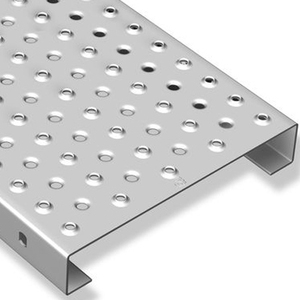

Precision-engineered open-grid infrastructure, perimeter earthing mechanics, and pedestrian surface solutions designed to withstand rigorous vehicular payloads and severe atmospheric corrosion.
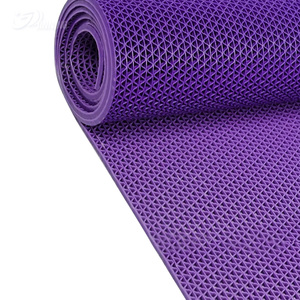
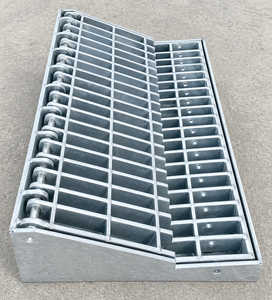
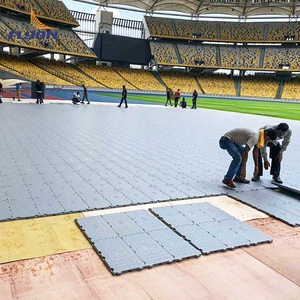
Data-driven manufacturing execution ensures that structural tolerances, weld integrity, and metallurgical certifications conform completely to international standards (YB/T 4001.1, ANSI/NAAMM MBG 531, AS 1657, and BS 4592).
By operating multi-axis automated resistance forge welding lines alongside skilled manual fabrication bays, our plants balance mass-scale industrial output with millimetric bespoke profiling.
Our heavy-duty production plants use state-of-the-art PLC-controlled electroforging lines. By synchronizing over 100 metric tons of hydraulic ramming pressure with high-frequency 2,200-amp electrical resistance, square-twisted cross bars are completely fused into orthogonal load-bearing bars without consuming external welding consumables. This produces monolithic molecular continuity, preventing internal delamination, weld cracking, and the mechanical vibration failures typical of manual fillet welding.
Industrial layouts inevitably require complex penetrations for conduits, high-pressure piping, diagonal structural bracing, and structural steel columns. Our factory maintains dedicated CNC profiling cells equipped with heavy-plasma and waterjet cutting tables. Every aperture, whether circular, rectangular, or irregular, is bound by certified manual welders using solid flat bar perimeter banding. This redistributes shear stresses along load edges, maintaining full structural ratings per ANSI/NAAMM standards.
Surface longevity depends entirely on chemical preparation and metallurgy. Our hot-dip galvanizing plants run controlled pickling baths to remove mill scale and surface oxides, followed by immersion in molten zinc maintained at 445°C–455°C. For austenitic stainless steel systems (AISI 304, 316, 316L), panels undergo nitric-hydrofluoric acid immersion and high-current electropolishing, completely stripping weld heat tint and restoring a chromium oxide passive layer suitable for offshore splash zones.
Global supply chains depend on absolute structural and chemical traceability. Every production batch is backed by EN 10204 3.1 Material Test Reports (MTR), detailing heat-number-level chemistry, yield strength, tensile limits, and elongation percentages. Finished panels undergo geometric verification, dimensional cross-checking against BIM models, weld strength testing, and digital magnetic gauge zinc thickness checks (averaging ≥85 μm). Panels are bundled with corrosion-inhibiting interleaving, bound with high-tensile steel banding, and braced in bespoke structural steel cradles designed for smooth transoceanic voyages.
Match operational static, dynamic, and vehicle loads with optimal steel bar dimensions, spacing configurations, and finishes.
| Grating Classification | Standard Structural Materials | Manufacturing Fabrication Method | Standard Protective Treatment | Primary Engineering Use-Cases |
|---|---|---|---|---|
| Electroforged Industrial Grating | ASTM A36, Q235B, S275JR Low Carbon Steel | Automated PLC hydraulic press resistance forge welding | Hot-Dip Galvanized (≥610 g/m²) per ISO 1461 | Refinery pipe bridges, boiler galleries, processing catwalks |
| Heavy-Duty Vehicle Trench Grating | ASTM A572 Gr 50, Q355B Heavy Structural Steel | CO2 gas shielded heavy multi-pass fillet welding | Heavy thermal diffusion zinc or bituminous paint | Airfield aprons, container freight terminals, dockyards |
| Corrosion-Resistant Stainless Grating | AISI 304, 316, 316L, 309 Austenitic Stainless | Precision pressure lock / TIG robotic welding | Acid pickling, chemical passivation, electropolish | Offshore LNG processing, food dairy plants, chemical tanks |
| Dimple Perforated Plank Decking | Galvanized Carbon Sheet, Pre-galv Z275, Marine Alum | High-speed multi-stage punch die press cold rolling | Pre-galvanized or self-passivating mill finish | Locomotive maintenance platforms, elevated catwalks |
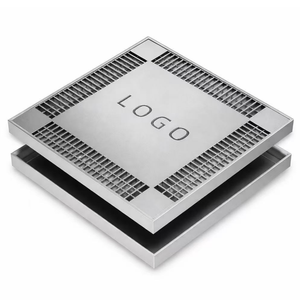
| Recessed Architectural Access Grates | Grade 304/316 Stainless Steel, Galvanized Q235 | Laser cut framing with laser micro-seam joints | Satin polish / hairline perimeter framing | Commercial pedestrian plazas, airport terminals, luxury retail |
Stay ahead of industry developments. Procurement teams are moving away from ad-hoc commodity buying and toward integrated, lifecycle-focused asset acquisition.
International mega-projects increasingly require fabrication-level 3D model interoperability. Leading EPC contractors demand that steel bar grating fabricators integrate directly with Tekla, Revit, and AVEVA PDMS environments. Instead of dispatching broad stock mats to jobsites, our facilities produce custom-cut, pre-notched, perimeter-banded, and erection-tagged panels matched to structural shop drawings. This pre-engineered approach completely cuts out onsite hot-work permits, speeds up field erection by up to 60%, and avoids damaging galvanized protective layers during installation.
With environmental compliance rules like the EU Carbon Border Adjustment Mechanism (CBAM) taking effect, carbon footprints are now core procurement criteria. Forward-thinking suppliers use billet steel melted in Electric Arc Furnaces (EAF) powered by green grids alongside recycled scrap metal. Additionally, high-efficiency closed-circuit hot-dip galvanizing lines with waste acid recovery and zinc-smoke capture allow international buyers to document significant reductions in Scope 3 embodied carbon throughout their asset lifecycle.
Standard hot-dip galvanization is evolving to meet increasingly aggressive chemical, marine, and industrial conditions. Modern specifications frequently call for Zinc-Aluminum-Magnesium (Zn-Al-Mg) alloy coatings and specialized dual-protective systems combining thermal diffusion galvanizing with epoxy powder coats. These next-generation barrier systems offer self-healing properties on cut edges, resisting salt spray corrosion up to 5 times longer than legacy zinc finishes and drastically lowering maintenance overhead for offshore wind and coastal terminals.
Authoritative technical guidance for structural engineers, project estimators, and industrial procurement professionals.
Electroforged grating uses simultaneous hydraulic ram pressure (>100 metric tons) and high-current electrical resistance (≈2,200 amps) to fuse twisted cross bars into notched or un-notched bearing bars. This creates a solid molecular bond without filler metal. In contrast, manual fillet welding applies localized surface beads prone to incomplete root penetration, residual thermal stress, and micro-cracking under heavy dynamic cyclic loads. Electroforging delivers uniform structural continuity, precise dimensional tolerances, and smooth, consistent zinc pickling.
The choice between smooth flat bars and serrated profiles depends on walking surface inclinations, atmospheric conditions, and fluid viscosity risks. In dry indoor catwalks, plain flat bars provide adequate traction and higher direct contact area for light rolling carts. However, under oil-mist exposure, offshore wave splashes, mud, or on slopes above 6 degrees (per AS 1657 and OSHA standards), deep trapezoidal or sinusoidal serrated bearing bars are essential to pierce surface fluid films and ensure slip-free footing.
An accurate structural assessment requires: (1) Clear unsupported span (distance between support steel flanges); (2) Load type: Uniformly Distributed Load (UDL, kN/m²) or Concentrated Point Load (kN) applied over a specified footprint (e.g., 200x200 mm for tire prints); (3) Deflection limits: typically L/200 for normal pedestrian walkways or L/400 for deflection-sensitive equipment areas, not to exceed 6 mm–10 mm; and (4) Pedestrian vs. vehicular traffic classifications (e.g., AASHTO H-20 / H-25, EN 124 D400).
Galvanizing quality control strictly adheres to ASTM A123, ISO 1461, and AS/NZS 4680 standards. Our inspectors evaluate steel panels across three core checkpoints: (1) Total coating thickness and density, measured via calibrated digital electromagnetic gauges (targeting ≥85 μm / ≥610 g/m² for structural steels ≥6 mm thick); (2) Adhesion integrity, verified through mechanical pivot-knife cross-hatch testing to ensure no flaking; and (3) Visual inspection to verify full coverage free of uncoated spots, dross nodules, zinc spikes, or acid salt contamination.
Submit your structural schedules, BIM layouts, and project specifications. Our metallurgical and structural engineering teams provide complete load-span assessments, project-specific takeoffs, and international FOB/CIF container shipping estimates within 24 hours.