
Advanced Production Dynamics: Resistance Welding & PLC Electroforging
High-specification welded wire mesh and heavy-duty welded bar gratings derive their shear resistance and mechanical tenacity from the microstructural transformation that occurs at each wire junction. Unlike primitive manual arc welding or spot welding that introduces uncontrolled heat-affected zones (HAZ) and embrittlement, automated Chinese facilities leverage multi-head resistance welding machines coupled with heavy industrial electroforging lines.
In our electroforged production arrays, programmable logic controllers (PLCs) govern the continuous synchronization of hydraulic rams generating over 100 metric tons of forging pressure in tandem with a momentary electrical burst of approximately 2,200 Amperes. This immense energy density plasticizes the intersecting square twisted cross-bars directly into the load-bearing flat bars without filler metal, eliminating the occurrence of internal air voids, porosity, or cold solder joints. The result is a monolithic lattice where lateral forces distribute evenly across orthogonal vectors, preventing panel warping during post-fabrication galvanizing or under recurring dynamic vehicular loads.
True Zero-Defect Fusion
High current density and multi-ton compressive forging eliminate micro-cracking at cross intersections, preventing premature fatigue failure under heavy rolling cyclic traffic.
Surface Metallurgy & Passivation
From ASTM A123 hot-dip zinc baths achieving coating densities above 610 g/m² to high-amperage chemical pickling and electro-polishing for AISI 304/316/309 stainless steel grades.
Precision Cut-to-Drawing Banding
Every circular cut-out, pipe penetration, and equipment notch is executed via robotic plasma/CNC shearing and banded with solid flat bars to preserve design load paths without field modification.
Material Specification & Performance Standards Matrix
To streamline engineering procurement, our manufacturing operations adhere strictly to international manufacturing standards including ASTM A185, ASTM A1064 (welded wire reinforcement), NAAMM MBG 531 / 532 (metal bar grating), and BS EN ISO 1461. The following matrix contrasts primary wire mesh and industrial flooring options:
| Classification | Standard Material Alloys | Fabrication Mechanism | Yield / Tensile Strength | Primary Use Cases |
|---|---|---|---|---|
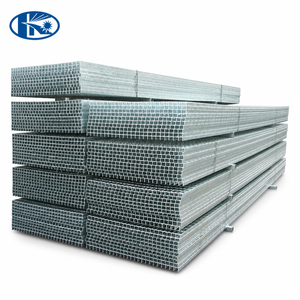
| Heavy Duty Welded Bar Grating | ASTM A36, Q235B, SS400 Mild Steel | PLC Electroforged (>100t, ~2200A) | Fy = 250 MPa / Fu = 400–550 MPa | Harbor docks, airport taxiway trenches, forklift warehouses |
| Stainless Steel Industrial Mesh | AISI 304, 316, 316L, 309 | Automated TIG / Pressure Welded | Fy = 205 MPa / Fu = 515–620 MPa | Offshore oil & gas rigs, chemical plants, sanitary food drainage |
| Galvanized Welded Wire Mesh | Low-carbon drawing wire Q195 / Q235 | Multi-point Resistance Welding | Tensile: 450–700 N/mm² | Perimeter security, concrete slab reinforcement, animal containment |
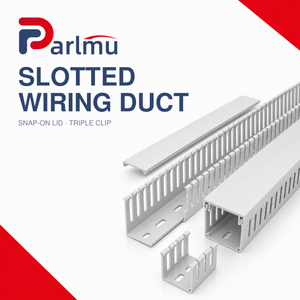
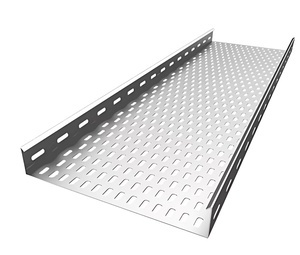
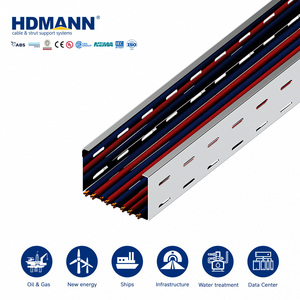
| Engineered Cable Tray Systems | Pre-galvanized / 6063-T6 Aluminum / PVC | Precision Roll-forming & Punching | High thermal dissipation rating | Power generation facilities, commercial data centers, cable runs |
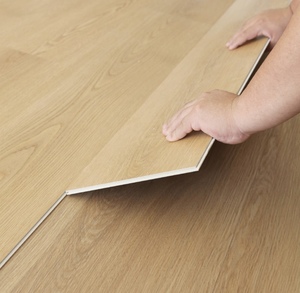
| Composite & Architectural Systems | FRP / Vinyl / Die-Cut Expanded Alloys | Pultrusion, moulding & CNC profiling | High impact elasticity, non-conductive | Electro-plating shops, pedestrian overpasses, architectural facades |
Future Sourcing & Procurement Trends in the Mesh & Grating Sector
International supply chain disruptions, fluctuating raw material indices, and rigorous decarbonization targets are reshaping how tier-one EPC contractors structure their procurement agreements with Chinese manufacturers. The following systemic trends dominate the modern procurement landscape:
BIM/CAD Direct Model Interoperability
General contractors increasingly mandate direct digital file exchange (.STP, .DWG, Tekla Structures). Forward-thinking factories ingest structural layouts straight into CNC cutting routines, delivering factory-notched panels tagged with erection drawing marks to slash jobsite installation timelines by up to 35%.
Total Cost of Ownership & Carbon Tracking
Procurement teams are shifting focus from initial FOB price to Lifecycle Environmental Product Declarations (EPD) and CBAM (Carbon Border Adjustment Mechanism) readiness. Sourcing from manufacturers utilizing EAF (Electric Arc Furnace) billet feeds with documented green energy consumption has become a competitive differentiator.
Unified Modular Access Packages
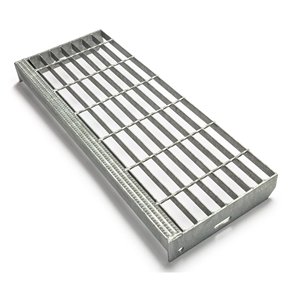
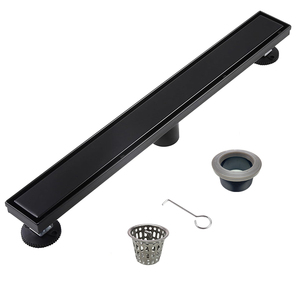
Rather than managing split purchase orders across separate mills for catwalk floor mesh, vertical cable trays, stair treads, and linear trench covers, project owners are consolidating under single turnkey manufacturers capable of bundling diversified steel and alloy fabrications into synchronized shipping containers.
Next-Generation Technical Evolution in Wire Mesh Engineering
The production of welded wire mesh and associated structural assemblies is undergoing a profound technological leap. As end-use environments push the physical thresholds of corrosion resistance, structural weight ratios, and electrical screening, Chinese manufacturing centers are implementing breakthrough processes:
1. Zinc-Aluminum-Magnesium (Zn-Al-Mg) Surface Chemistries: Replacing traditional standard hot-dip galvanizing, continuous coil and batch Zn-Al-Mg coatings offer self-healing edge corrosion resistance up to four times greater in chloride-heavy marine and industrial mist zones. When cross-cut on site, the magnesium hydroxide migration creates a protective passivation layer across exposed bare core steel.
2. Optical AI Quality Inspection Arrays: High-speed optical CCD cameras integrated above continuous welding lines scan weld pitch, diagonal squareness, wire diameter tolerances, and weld splatter in real time. Defective nodes are flagged instantaneously, preventing defective panels from ever proceeding into the galvanizing or shipping queue.
3. High-Strength Ultra-Low Weight Hybrid Meshes: By combining cold-drawn micro-alloyed rebar wires with high-precision resistance welding machines, manufacturers produce high-tensile wire mats that provide equivalent shear and crack control in civil concrete projects while reducing total steel weight by 15% to 22%, dramatically cutting maritime container freight costs.
Enterprise Capabilities & Engineering Assurances
Integrated manufacturing power: from wire drawing and resistance welding to custom architectural profiling and dedicated ocean-worthy packing.
Precision Custom Fabrication
Fabrication executed directly to customer drawings. In-house processing of complex circular cut-outs, radial stairs, toe boards, and reinforced kick plates.
Certified Steel Stock
Full traceability with 3.1 Mill Test Certificates (MTC) supplied for every heat batch. Strict incoming spectrographic testing for chemical composition.
Advanced Surface Finishes
Equipped with internal hot-dip galvanizing kettles (ISO 1461), pickling passivators, electro-polishing tanks, and electrostatic powder coating lines.
Export-Proof Packing
High-tensile steel banding, solid hardwood dunnage, protective angle perimeter guards, and desiccated vapor barrier wrapping for trans-oceanic voyages.
Frequently Asked Questions for B2B Procurement
Critical considerations regarding tolerances, shipping lead times, standards compliance, and fabrication feasibility.
Electroforging fuses the bearing bar and cross rod under >100 tons of hydraulic pressure and ~2200A electrical current simultaneously without filler metal. This creates a homogeneous, unyielding joint that resists lateral torque and cyclic impact. Hand welding uses manual MIG/stick beads, which creates localized heat points, potential weld spatter, and minor dimensional variations, making it better suited for highly irregular non-standard prototypes or complex retrofit installations.
AISI 304 is the global workhorse for industrial architecture, general commercial walkways, and moderate outdoor exposure. AISI 316 contains 2–3% molybdenum, rendering it dramatically superior against pitting corrosion from chlorides, de-icing salts, and marine offshore atmospheres. AISI 309 is formulated with high chromium and nickel content specifically engineered for high-temperature zones (operating above 800°C) such as industrial incinerators, boiler walkway enclosures, and heat treatment plants.
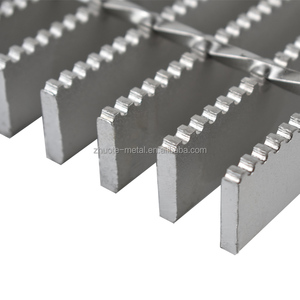
Anti-slip safety is achieved through serrated bearing bars, which feature CNC-notched teeth along the upper edge, providing an aggressive mechanical grip even when contaminated with motor lubricants or rainwater. Additionally, twisted square cross bars in electroforged designs provide orthogonal shoe-sole traction, while specialized grit-coated or diamond-chequered top covers can be specified for extreme slip-hazard environments.
To guarantee immediate engineering review and load verification, provide: (1) Bearing bar height and thickness, (2) Pitch spacing between bearing bars and cross rods, (3) Clear unsupported span distance and required design live load (e.g., 5 kN/m² uniform pedestrian load or 20-ton vehicular wheel load), (4) Steel grade and finish (Hot-Dip Galv per ASTM A123 or ISO 1461), and (5) Project layout drawings indicating banding, penetrations, and cut-outs.
Ready to Finalize Your Global Mesh & Grating Specifications?
Connect directly with our engineering sales desk for full load capacity charts, mill certification compliance dossiers, CAD shop drawing support, and competitive volume FOB/CIF pricing.