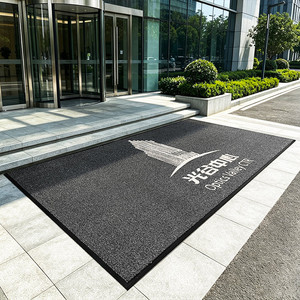

Engineered for civil facades, drainage sumps, commercial pedestrian traffic, and heavy electrical infrastructure. Review our primary OEM export product lines below.
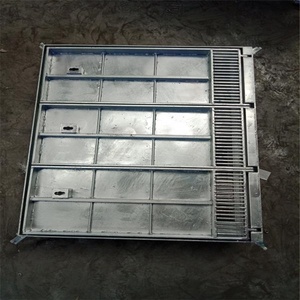
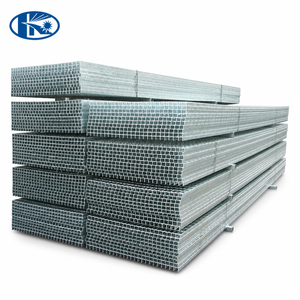
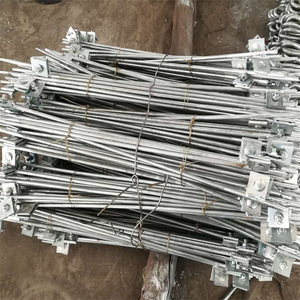
Architectural metal grating systems represent a sophisticated convergence of structural mechanical load capacity, thermodynamic airflow optimization, and visual exterior articulation. As an enterprise OEM manufacturer and exporter, our engineering facilities utilize computerized electroforging combined with high-precision manual robotic welding to manufacture panels tailored for demanding building facades, sunshades, ventilation shafts, bridge catwalks, and interior mezzanine flooring.
The operational integrity of architectural bar grating depends critically on the structural interaction between the primary load-carrying member—the bearing bar—and the transverse stabilizer known as the cross rod or cross bar. Under concentrated wheel loads or dynamic pedestrian distribution, loads transfer from the surface across adjacent bearing members. By applying over 100 tonnes of hydraulic pressure accompanied by an instantaneous electric discharge of approximately 2,200 Amperes, our electroforging process embeds twisted square cross rods directly into pre-straightened flat bars. This creates a monolithic, homogenous joint completely free of blowholes, cold laps, or residual micro-fissures.
While pressure-locked gratings rely solely on hydraulic interference fit between slotted bars, our automated electroforged panels utilize thermo-electrical fusion. This prevents loose bars during severe thermal cycling, seismic displacement, or high-vibration equipment deck operation.
Conforming to NAAMM MBG 531 and BS 4592 standards, architectural pedestrian catwalks are calculated around a maximum deflection limit of L/200 or 10 mm (whichever is lesser) under 5.0 kN/m² distributed live loads to preserve user safety and avoid tactile vibration.
Every custom OEM panel features complete flat-bar edge banding. Perimeter bars match the depth of the load bars and are fully fillet-welded at every intersection, providing exceptional torsional rigidity and preventing lateral buckling during heavy transit.
| Alloy / Material Grade | Yield Strength (MPa) | Corrosion Resistance | Surface Treatment Options | Ideal Architectural / Industrial Application |
|---|---|---|---|---|
| Mild Steel (IS 2062 / ASTM A36) | 250 - 355 | Moderate (Depends on coating) | Hot-Dip Galvanizing (ASTM A123), Powder Coat | Municipal sumps, highway utility trenches, park bridges |
| Stainless Steel (AISI 304 / 304L) | 205 - 240 | High (Atmospheric/Freshwater) | Electro-polished, Acid Pickled, Bead Blasted | Commercial exterior brise-soleil, facade cladding, fountains |
| Marine Grade (AISI 316 / 316L) | 220 - 260 | Exceptional (Chloride/Marine) | Chemical Passivation, Electro-polishing | Coastal piers, desalination plants, offshore living quarters |
| Heat Resistant (AISI 309 / 310) | 240 - 310 | High Temp Oxidation Proof | Mill Finish, Glass Bead Satin | Thermal exhaust vents, smelter catwalks, incinerator decks |
| Structural Aluminium (6063-T6) | 170 - 215 | Natural Passive Oxide | Anodized (15-25µm), PVDF Architectural Coating | Interior ceiling louvers, ornamental sun screens, wall grilles |
*Note: All materials certified with EN 10204 Type 3.1 Mill Test Certificates verifying tensile, elongation, and spectral chemical composition.
Modern global EPC (Engineering, Procurement, and Construction) companies and architectural design studios are fundamentally shifting how custom metal grating products are specified, evaluated, and procured. With tightening carbon border adjustments (CBAM) in the European Union, higher ESG transparency, and increasingly accelerated build schedules, purchasing officers must navigate five decisive macro procurement trends:
Procurement teams no longer order uniform bulk panels. Digital workflows now involve uploading Revit and IFC structural models directly into manufacturer nesting engines. We CNC-cut intricate penetrations, kickplates, and pipe collars off-site, reducing field cutting and labor by up to 75%.
International tenders require audited Environmental Product Declarations (EPDs). Sourcing is shifting toward scrap-based Electric Arc Furnace (EAF) steel and eco-friendly molten salt flux galvanizing baths that lower embodied Scope 1 and Scope 2 carbon outputs by more than 38%.
Traditional zinc hot-dip coatings are increasingly supplemented by ternary alloy finishes, notably Zinc-Aluminum-Magnesium (ZAM). Offering self-healing galvanic action along raw cut edges, ZAM delivers superior C5-M marine exposure resistance at reduced coating thicknesses.
Tier-1 procurement teams are transitioning from initial purchase price (CapEx) metrics to Whole Life Costing (WLC). Specifying pickled AISI 316 stainless steel or heavy electroforged galvanizing eliminates frequent maintenance shutdowns, repainting cycles, and costly premature floor replacements.
Modern architecture has transformed metal grating from a purely utilitarian platform surface into a dynamic envelope element. Prominent master planners, facade consultants, and landscape architects are integrating customized OEM metal gratings into landmark envelopes due to their unique balance of structural strength, transparency, light filtration, and thermodynamic performance.
High-aspect-ratio architectural louvers and closely spaced horizontal bar gratings serve as effective exterior brise-soleil sunshades. By configuring bearing bar pitch, tilt angle, and depth, architects block high-angle summer solar thermal radiation while permitting diffuse winter daylight, lowering HVAC building chiller loads by 20% to 35%.
Urban rooftops, cooling tower enclosures, and mechanical plant levels demand both continuous natural ventilation and acoustic line-of-sight concealment. Custom architectural louvers and expanded metal meshes provide open ventilation ratios of 60%–78% while obscuring roof-mounted industrial chillers from pedestrian view.
High-heel safety is paramount for high-traffic streetscapes, retail plazas, and luxury resort boardwalks. Architectural gratings engineered with maximum 6mm to 8mm clear opening slots prevent heel entrapment while meeting strict ADA (Americans with Disabilities Act) compliance, EN 14122 slip criteria, and Singapore LTA drainage standards.
Omkar Gratings Pvt Ltd (Omkareshwar Engineering) provides comprehensive design, engineering, and manufacturing services for large-scale infrastructure, refining, power generation, and commercial architectural projects worldwide. Our facilities integrate advanced automated production lines with rigorous testing to ensure dependable performance in demanding field conditions.
Equipped with PLC-automated resistance forge-welding machines applying over 100 tonnes of hydraulic pressure and 2,200 Amperes of fusion current. We fabricate high-tonnage runs with consistent panel squareness, defect-free joints, and near-zero dimensional deviations across full project schedules.
Complex structural layouts require specialized attention. Our secondary fabrication shop specializes in precision circular, diagonal, and edge cut-outs tailored around process piping, structural columns, and drainage troughs—with every opening reinforced by automated flat-bar banding.
Total quality oversight across the entire production cycle. Mild steel gratings receive hot-dip zinc coatings compliant with ASTM A123, ISO 1461, and AS/NZS 4680. Stainless steel lines pass through controlled acid-pickling and chemical electro-polishing baths to restore their corrosion-resistant passive chromium oxide film.
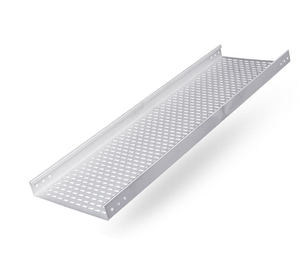
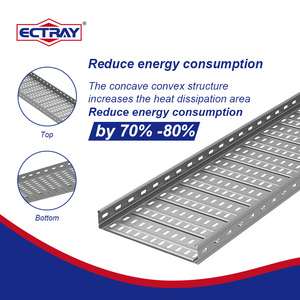
A single vetted manufacturer for all platform components: mild carbon steel, low-alloy high-strength steel, AISI 304/316/309 stainless alloys, structural marine aluminium, non-sparking non-ferrous metals, chequered floor plates, industrial stair treads, and heavy-duty cable tray management systems.
Our ISO 9001 certified QA protocols include dimensional verification, weld penetration testing, zinc coating thickness measurement (Elcometer), and deflecting proof-load testing up to 600 kN. Every export consignment is supplied with complete 3.1 chemical and mechanical inspection documentation.
Global sea freight demands robust protection. Our products are packaged with heavy steel strapping, edge corner guards, moisture-resistant shrink wrapping, treated wooden dunnage, and clear alphanumeric piece-tagging that matches customer site erection plans for quick on-site sorting.
Detailed guidance on standard industry tolerances, finishing selections, load distributions, and quotation parameters.
To provide an accurate technical bid, please specify: (1) Material grade (e.g., Mild Steel ASTM A36, AISI 304, AISI 316); (2) Bearing bar dimensions (depth × thickness, e.g., 32×5 mm) and center-to-center pitch; (3) Cross bar size and pitch (e.g., 100 mm); (4) Top surface configuration (plain smooth or serrated anti-skid); (5) Surface treatment (hot-dip galvanized, electro-polished, or mill finish); (6) Design loads (uniform distributed load in kN/m² or concentrated wheel loads like pneumatic tires or solid forklifts); and (7) Clear dimensional panel drawings noting cut-outs, banding, and destination port.
Electroforged gratings fuse the bearing bar and cross rod under extreme hydraulic force (>100 tonnes) and electrical resistance current without using separate welding electrodes or filler wire. This creates a solid, monolithic junction without internal slag inclusions, air pockets, or cold seams. Manual hand-welded panels are typically reserved for custom dimensional cut-outs, irregular triangular infills, or extra-deep bearing bars exceeding 100 mm that fall outside automated machine clearances.
Hot-dip galvanizing protects mild steel through cathodic sacrificial action and performs reliably in atmospheric exposure classes C1 through C3. However, in environments with continuous salt fog, offshore sea spray, acidic chemical washdowns, or strict pharmaceutical and cleanroom hygiene requirements, galvanized coatings can erode. AISI 316 contains 2% to 3% molybdenum, providing high resistance to pitting, crevice corrosion, and airborne chlorides without degrading.
Edge banding involves welding a solid flat bar across the open terminal ends of the bearing bars. Banding serves two vital purposes: structurally, it transfers live impact loads to adjacent bearing bars to prevent lateral torsional buckling; safety-wise, it encloses sharp cut edges, retains shape during crane rigging, and prevents trip hazards on open stairways, sumps, and catwalks.
Immersing large steel fabrications into molten zinc at 450°C can release internal rolling stresses, causing thermal distortion. We mitigate this through balanced symmetrical welding, optimal bar aspect ratios, and strict venting and drainage design. Panels exceeding standard single-dip kettle dimensions are processed with planned dipping techniques, followed by hydraulic press leveling to ensure tight dimensional tolerances prior to container packing.
Submit your project drawings, loading specifications, and bill of quantities. Our senior structural engineers will review your files, verify load tables, and prepare an export proposal within 24 hours.
Send an Inquiry