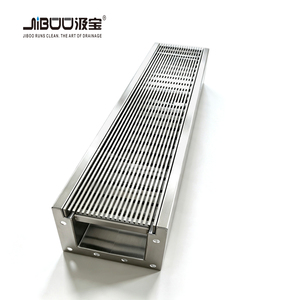

Engineered earthing components, heavy-duty floor gratings, drainage trunking, and composite walkways engineered for high-fault energy dissipation and aggressive marine environments.
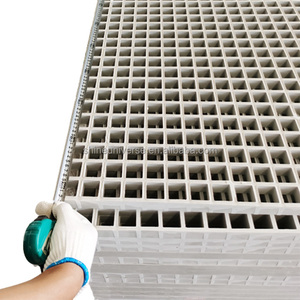
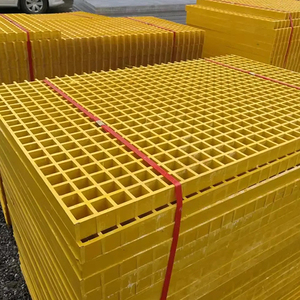
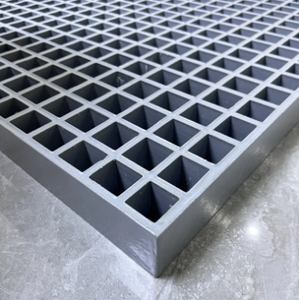

A comprehensive examination of electrical fault current handling, metallurgical bond durability, thermal capacitance, and electrolytic corrosion mitigation in buried grounding networks.
In high-voltage electrical substations, renewable energy solar parks, wind turbines, and petrochemical industrial sites, the earthing conductor serves as the foundational safeguard protecting personnel from step and touch potential voltages. Grounding steel tape (also designated as flat earth steel strip) is engineered to route high-magnitude short-circuit fault currents and transient lightning strikes safely into the earth mass. Unlike circular conductors, flat steel tape offers an exceptionally high ratio of surface area to cross-sectional area. Under high-frequency lightning discharges, current flow is concentrated near the outer perimeter due to the electromagnetic skin effect; the expanded perimeter of rectangular tape markedly lowers high-frequency surge impedance, suppressing catastrophic potential rises on ground surfaces.
From a metallurgical perspective, structural carbon steel earthing tapes manufactured from low-carbon structural steel (grades Q235B, S275JR, or ASTM A36) undergo hot-dip galvanization strictly adhering to ASTM A123, BS EN ISO 1461, and BS EN 62561-2. Through precise thermal immersion, iron-zinc alloy layers (Gamma, Delta, and Zeta phases) form an impenetrable metallurgical bond overlaid by a pure Eta zinc outer sheath. This barrier provides dual galvanic and barrier protection, ensuring that even under severe mechanical stress or subsoil abrasion from backfill stones, the underlying steel remains cathodically shielded against accelerated pitting corrosion.
Electrical design teams calculating the minimum permissible cross-sectional area of buried grounding conductors adhere to IEEE Standard 80 ("IEEE Guide for Safety in AC Substation Grounding") and IEC 60364-5-54. The standard formula governing conductor cross-section sizing based on thermal energy absorption states:
A = \frac{I_f}{\sqrt{\frac{TCAP \cdot 10^{-4}}{t_c \cdot \alpha_r \cdot \rho_r} \cdot \ln\left(1 + \frac{T_m - T_a}{1/\alpha_0 + T_a}\right)}}
Because structural steel possesses a thermal capacity of $TCAP \approx 3.85 \text{ J}/(\text{cm}^3 \cdot ^\circ\text{C})$ and can safely sustain instantaneous peak temperatures exceeding $400^\circ\text{C}$ to $600^\circ\text{C}$ without molecular degradation or weld separation (unlike insulated copper conductors constrained by thermoplastic insulation limits of $160^\circ\text{C}$), a heavy-gauge flat steel tape (such as 40×4mm, 50×5mm, or 60×6mm) offers unmatched mechanical resilience against high-fault electrodynamic stresses during system phase-to-ground faults.
Below is our standardized production portfolio for OEM custom grounding steel strips, manufactured to international utility procurement norms:
| Product Classification | Standard Dimension (Width × Thk) | Steel Grade / Base Alloy | Surface Treatment / Coating | Tensile Strength (MPa) | Applicable Design Standards |
|---|---|---|---|---|---|
| HDG Grounding Steel Strip | 25×3 mm to 50×6 mm | Q235B / S275JR / ASTM A36 | Hot-Dip Galvanized ≥ 85 μm (610 g/m²) | 375 – 500 MPa | BS EN 62561-2, IEC 62305, ISO 1461 |
| Heavy Substation Earth Strip | 60×6 mm to 100×8 mm | Q355B / S355JR High Tensile | Hot-Dip Galvanized ≥ 100 μm (710 g/m²) | 470 – 630 MPa | IEEE 80, BS 7430, IEC 60364-5-54 |
| Stainless Steel Grounding Tape | 25×3 mm to 40×4 mm | AISI 304 / AISI 316L / 1.4404 | Pickled & Passivated / Acid Washed | 520 – 750 MPa | DIN VDE 0185-305, EN 50164-2 |
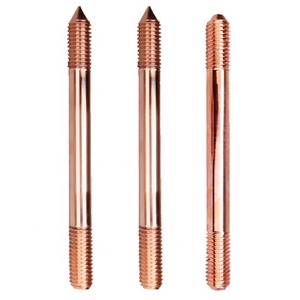
| Copper-Clad Grounding Flat Bar | 25×3 mm to 50×5 mm | Low Carbon Steel Core + Cu | Continuous Molecular Electroplating ≥ 254 μm | ≥ 400 MPa | UL 467, IEEE 80, BS EN 62561-2 |
| Pre-Punched Lightning Down Tape | 30×3.5 mm / 40×4 mm | S275JR / Stainless Steel | Galvanized with CNC Radiused Edges | 375 – 500 MPa | NFPA 780, BS EN 62561-1 |
Technological transformation, copper volatility, aggressive environmental conditions, and multi-gigawatt renewable buildouts are reshaping global earthing tape procurement.
Global commodity market volatility has intensified price instability for electrolytic tough pitch (ETP) copper. EPC procurement executives are actively migrating secondary and perimeter ground grids to hot-dip galvanized steel tape and molecularly bonded copper-clad steel (CCS). Steel earthing grids virtually eliminate the severe theft risk associated with bare copper in remote utility-scale solar farms while reducing base material costs by up to 60% without compromising fault current limits.
Next-generation 1500V DC utility solar parks, wind turbine foundations, and HVDC converter stations demand earthing materials engineered to endure high harmonic distortion and sustained leakage currents. Modern procurement specifications dictate zinc coatings exceeding 85μm, CNC deburred strip edges to prevent high-gradient corona discharge, and compatibility with exothermically welded connections to maintain zero-resistance joints across decades of operational cycling.
Tier-1 multinational engineering contractors now mandate strict environmental disclosures and raw material origin traceability. The production of our earthing steel strips leverages energy-efficient electric arc furnace (EAF) steel with high recycled scrap ratios, coupled with closed-loop acid pickling and lead-free hot-dip galvanizing kettles to satisfy stringent European Union CBAM and environmental compliance criteria.
How cutting-edge alloy micro-structures, continuous hot-dip processes, and cathodic science overcome aggressive soil conditions and electrolytic decay.
The industry is rapidly adopting ternary zinc-aluminum-magnesium alloy coatings for grounding steel tape deployed in hypersaline soils, coastal estuaries, and brackish marshes. ZAM bath formulations create a self-healing simonkolleite barrier layer over cut edges and drilled holes, yielding corrosion resistance 3 to 5 times superior to standard pure zinc coatings in acidic subsoils below pH 5.5.
High-voltage surge testing confirms that sharp slit burrs on sheared flat steel concentrate localized electrostatic field gradients, accelerating dielectric breakdown of surrounding ground enhancement backfills. Advanced OEM tape slitters now integrate multi-axis planetary rolling heads that impart a clean, full-radius edge (DIN 48801 style), ensuring uniform zinc deposition without edge flaking or micro-fracturing during coil bending.
To eliminate electrolytic galvanic couples where underground steel grids interface with copper riser cables or equipment leads, advanced grounding installations incorporate factory-clad copper-to-steel transition couplings. Our specialized manufacturing facility produces molecularly joined bimetal plates and transition clamps that inhibit moisture ingress and eliminate interfacial corrosion at the connection plane.
Combining heavy-industrial fabrication heritage, PLC-controlled precision, in-house hot-dip galvanizing, and stringent European testing protocols.
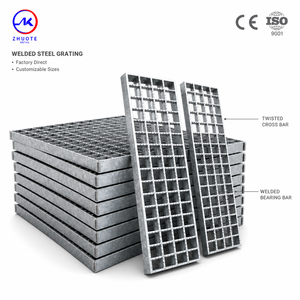
Our heavy-duty fabrication plants utilize advanced PLC-controlled pressing, electroforging with over 2200A current fusion, and automated coil slitting, producing grounding tape and gratings with near-zero dimensional deviation for rapid site assembly.
From low-carbon high-conductivity earthing steel strips to pickling/passivated AISI 304 and 316L stainless steel tapes for aggressive chemical soil exposure, we manufacture exact metallurgical grades to client specifications.
By controlling the entire process from structural steel coil slitting to thermal zinc immersion in high-capacity ceramic kettles, we guarantee minimum zinc coatings of 85μm up to 120μm, verified with magnetic eddy-current thickness gauges.
Every export shipment is accompanied by comprehensive Type 3.1 inspection certificates, including raw material mill heats, tensile strength, yield limits, chemical composition, zinc adhesion bend tests, and copper layer purity verification.
We tailor coil dimensions (25kg, 50kg, or custom continuous master spools), hole pitch, slotted earthing connections, and embossed identification codes directly on the steel tape to minimize on-site splicing labor.
All coils and steel panels are treated with protective anti-white rust oil, wrapped in water-resistant plastic membranes, reinforced with galvanized steel strapping, and seated on fumigated solid timber skids ready for container stowage.
Authoritative technical answers to common queries raised by electrical consulting engineers, QA/QC managers, and project procurement teams.
While pure copper exhibits higher volumetric conductivity, hot-dip galvanized steel possesses superior mechanical strength, resistance to stone puncture during backfilling, and a much higher melting point. Under high fault currents, steel tapes withstand substantial thermal shocks without deformation. Additionally, steel is substantially more cost-effective and virtually eliminates theft risks in exposed renewable facilities.
According to BS EN 62561-2 and ISO 1461, earthing tapes installed in soils with moderate resistivity (50–100 Ω·m) should have a minimum mean coating thickness of 70–85 μm (approx. 500–610 g/m²). For heavy industrial sites, chemical exposure, or soils with pH values below 6.0, our factory provides heavy coatings of 100–120 μm (700–850 g/m²) to guarantee a 40+ year operational lifespan.
Yes. We offer fully customized punching configurations including round holes, elongated mounting slots, and staggered anchor patterns along the strip center line prior to hot-dip galvanizing. Punching prior to galvanization ensures that all inner hole surfaces and edges receive complete, unbroken zinc coverage, eliminating untreated bare metal crevices.
Stainless steel grounding tape is mandated where earth conductors penetrate structural concrete foundations into acidic soil, inside high-salinity marine environments, in wastewater aeration basins, and within petrochemical process facilities prone to hydrocarbon/sulfur spills. AISI 316L containing 2-3% molybdenum provides exceptional resistance to chloride-induced pitting.
Every shipment is delivered with comprehensive EN 10204 Type 3.1 Certified Quality dossiers. Documentation includes raw steel ladle chemical composition, mechanical tensile and elongation reports, zinc coating thickness verification across strip lengths, bend test adhesion checks (no flaking under 90° radius bends), and dimensional compliance logs.
Galvanized steel coils are first treated with a dry chromate or passivation wash, tightly bound with radial steel banding, enclosed in vapor corrosion inhibitor (VCI) plastic film, wrapped in waterproof woven plastic fabrics, and packed on heavy wooden pallets designed for forklift handling and maritime container lashing.
Consult with our metallurgical and grounding system engineers today. Send your project single-line diagrams, soil resistivity parameters, dimensional requirements, and target delivery port for an authoritative technical review and competitive OEM export quotation.