Precision-punched, corrosion-resistant metallic cable trays designed for high-density wiring, industrial heat dissipation, and heavy structural load capacities.
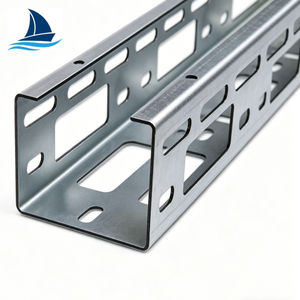
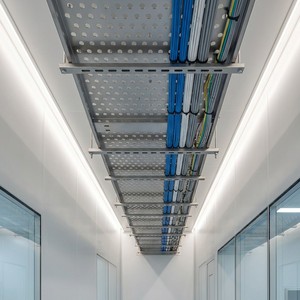
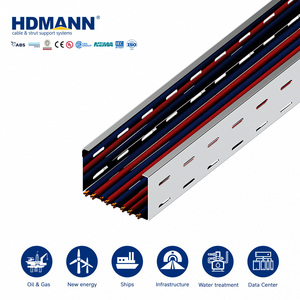
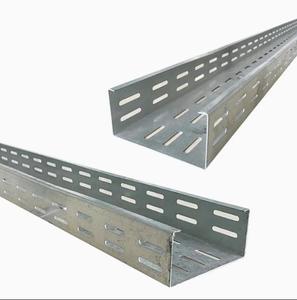
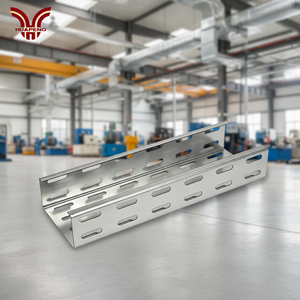
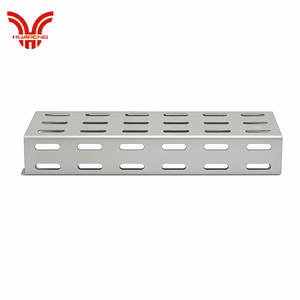
In modern electrical infrastructure design—spanning high-rise commercial complexes, oil refineries, thermal power stations, and mega-scale data centers—the electrical containment system is a critical passive safety element. As leading custom OEM perforated cable tray suppliers and exporters, our manufacturing process balances structural rigidity with optimized thermal dynamics. Perforated cable trays (also classified as slotted cable trunking) feature a continuous bottom sheet engineered with precision-punched uniform slots or round holes. This geometric configuration provides robust support for instrumentation, communication, and low-to-medium power distribution cables while permitting controlled ventilation.
Unlike solid-bottom cable trunking, which entraps moisture, ambient heat, and volatile gases, high-grade perforated trays maintain an ideal equilibrium between mechanical load capability and atmospheric cooling. According to international electrical standard IEC 61537 (Cable management — Cable tray systems and cable ladder systems), open perforations must constitute between 30% and 45% of the total plan area to ensure effective ampacity derating credit while preventing smaller cabling bundles from sagging or suffering mechanical shear against metal edges.
Selecting the optimal substrate and surface finish determines the operational lifespan of the cable containment system in aggressive industrial environments. We manufacture customized cable trays using four primary material classes:
Fabricated from low-carbon structural steel (Q235B / SPCC) and hot-dipped post-fabrication per ASTM A123 / ISO 1461. The zinc coating thickness averages 65–85 µm (610 g/m²), offering sacrificial cathodic protection against atmospheric moisture, humidity, and mild industrial pollutants.
Designed for chemical processing, offshore platforms, and food/pharma cleanrooms. Stainless trays undergo full acid pickling and electro-polishing to remove heat tint from welds and restore the chromium oxide passive layer, delivering unmatched resistance to chlorides, acids, and harsh washdowns.
Combines extreme lightweight properties (reducing total dead load on superstructure by 65%) with natural atmospheric oxidation resistance. Ideal for coastal installations, power plants, and long-span elevated bridges where structural weight reduction is paramount.
Our OEM capabilities support precision fabrication customized to client engineering drawings (BIM/CAD models). Below is our standard manufacturing scope compliant with global B2B procurement benchmarks:
| Parameters | Standard Specifications | Heavy-Duty Industrial Option | Custom OEM Capability |
|---|---|---|---|
| Tray Width (W) | 50 mm — 600 mm | 600 mm — 1200 mm | Custom up to 1500 mm |
| Side Rail Height (H) | 25 mm, 50 mm, 75 mm | 100 mm, 150 mm, 200 mm | Custom up to 300 mm |
| Sheet Thickness (T) | 1.0 mm — 1.5 mm | 2.0 mm — 3.0 mm | Up to 4.0 mm Structural Plate |
| Standard Length (L) | 2.44 Meters (8 ft) / 3.0 Meters | 6.0 Meters (20 ft) | Cut-to-length per site layout |
| Perforation Pattern | Staggered Slot (7x25mm) | Hexagonal / Round (Ø 10-20mm) | Anti-slip Dimpled / Custom CNC Punch |
| Side Rail Profile | Straight Inward Flange | Return Flange (Smooth Safety Edge) | Reinforced Double-Ribbed Flange |
| Load Class (NEMA VE 1) | Class 8A / 8B | Class 12C / 20A / 20B | Custom High-Load Tested (>250 kg/m) |
When calculating the maximum allowable load for perforated cable tray runs, engineering specifications dictate strict compliance with mid-span deflection limits. According to NEMA VE 1 / CSA C22.2 No. 126.1 standards, the maximum allowable deflection for metallic cable tray systems under uniform static load should not exceed $L/200$, where $L$ is the support span distance in millimeters. Excessive deflection compromises tray joint alignment, damages cable insulation through concentration of shear force, and destabilizes splice connectors.
Our engineered perforated trays incorporate cold-formed structural return flanges along both top edges of the side rails. This continuous geometric fold acts as a stiffening beam, dramatically boosting the section modulus ($Z$) and moment of inertia ($I$). Consequently, our trays achieve high structural stiffness without adding dead weight to the assembly.
Every batch of manufactured trays undergoes static loading tests on multi-span testing beds. Weights are applied uniformly across the usable width to simulate concentrated cable loading plus dynamic maintenance loads (e.g., a 100 kg technician stepping onto the tray). Our heavy-duty return flange profiles exhibit zero permanent deformation under 1.5x safety factor loading conditions.
To prevent localized bowing at connection joints, our custom OEM kits include pre-punched expansion splice plates, bonding jumpers, and smooth carriage bolts. The precision hole pitch ensures seamless alignment between adjacent 3-meter sections, guaranteeing continuous electrical grounding continuity (resistance < 0.0005 ohms per joint).
As industrial facilities transition toward smart automation, renewable power integration, and green building standards (LEED / BREEAM), the procurement criteria for cable management products have evolved. Buyers and EPC contractors are moving beyond raw material pricing to evaluate total cost of ownership (TCO), speed of installation, and lifecycle carbon footprints.
Labor cost accounts for up to 40% of total electrical installation budgets. Modern procurement favors pre-engineered click-together joiners and quick-connect brackets that eliminate field drilling and bolting, reducing on-site installation time by over 50%.
International infrastructure tenders increasingly mandate environmental product declarations (EPD). We utilize recycled steel billets processed in electric arc furnaces (EAF) powered by renewable energy, reducing embodied carbon dioxide by up to 35%.
Next-generation data centers require real-time temperature tracking along dense fiber-optic routes. Custom slot layouts now integrate dedicated mounting channels for distributed fiber-optic temperature sensors (DTS) and IoT thermal imaging nodes.
Drawing on decades of industrial manufacturing expertise—integrating PLC-controlled electroforging, high-pressure hydraulic metal forming (>100 tonnes force), and automated CNC turret punching—our factory complex delivers precision-engineered cable trays customized to your exact project parameters.
Whether you require standard straight channels, custom elbow turns, tees, reducers, or complex multi-tier riser assemblies, our end-to-end production workflow guarantees dimensional uniformity within ±0.5 mm tolerances:
Engineers analyze client drawings, verifying structural load metrics and site clearance requirements.
Automated multi-station turret presses create smooth, burr-free perforation patterns without stress deformation.
CNC press brakes form return flanges and side rail profiles, maintaining exact angle geometry along full 6-meter lengths.
Panels undergo hot-dip galvanizing, electro-polishing, or thermosetting epoxy powder coating in automated dip lines.
Trays are nested, wooden-crated, plastic-wrapped, and fitted with steel corner guards for international sea transport.
Our quality management system operates under ISO 9001:2015 certification. Every export batch undergoes four mandatory quality checks prior to container loading:
Perforated cable trays feature uniformly punched slot patterns along the bottom and side rails, providing natural ventilation for heat dissipation and allowing water or condensation drainage. Solid bottom trunking fully encloses cables, offering maximum EMI/RFI shielding and protection against liquid drips, but requires cable ampacity derating due to heat entrapment. Perforated trays are widely preferred for power distribution, while solid trunking is used for sensitive instrumentation in dusty or wet areas.
For chemical processing plants, coastal facilities, and offshore platforms exposed to airborne chlorides or acidic vapors, AISI 316L Stainless Steel is recommended due to its molybdenum content (2-3%), which resists pitting corrosion. For general outdoor industrial applications, Hot-Dip Galvanized (HDG) carbon steel per ASTM A123 provides cost-effective long-term protection (up to 25+ years). For lightweight weight-restricted structures, marine-grade 6063-T6 Aluminum is optimal.
While punching slots removes material from the base sheet, modern engineered perforations use optimized staggered patterns and rounded slot radii that minimize stress concentrations. Furthermore, the structural strength of a cable tray is primarily derived from the height and profile geometry of its side rails and return flanges (the section modulus), not solely the bottom sheet thickness. Consequently, a properly engineered perforated tray maintains over 90% of the structural load capacity of a solid tray while offering superior ventilation.
Yes. As a direct custom manufacturer, we fabricate complete system components based on your 2D CAD or 3D BIM models. This includes horizontal elbows (45°/90°), vertical inside/outside risers, equal/unequal tees, cross intersections, side reducers, and pre-punched floor drop-outs. All custom fittings incorporate matching hole patterns and return flanges for seamless on-site assembly.
To receive a precise engineering quotation and delivery plan, please provide: (1) Material grade and surface finish (e.g., HDG, SS316, Powder Coated), (2) Tray width, side height, and sheet gauge, (3) Total length in meters or feet, (4) Required load class or cabling weight per meter, (5) Quantity of fittings/joiners, and (6) Destination sea port for container shipping logistics.
Contact our senior engineering team for technical drawing reviews, load-deflection calculations, customized OEM quotations, and export shipping schedules.