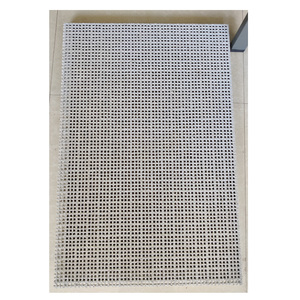

Explore our precision-engineered molded fiberglass reinforced plastic (FRP/GRP) gratings manufactured for extreme chemical, offshore, and industrial platforms.
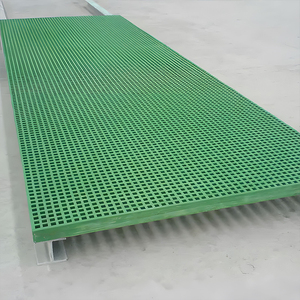
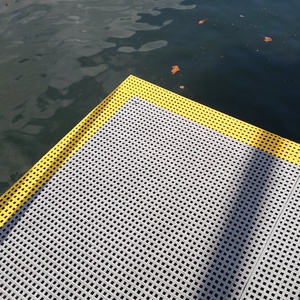
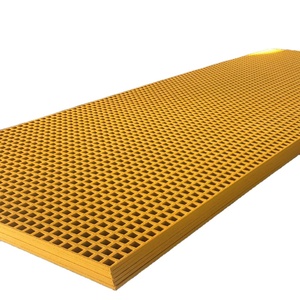
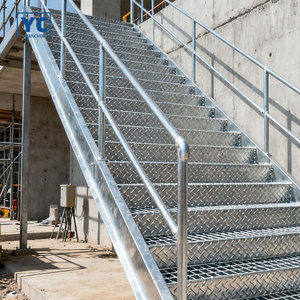
Molded Fiberglass Reinforced Plastic (FRP) grating represents a structural revolution across heavy industries, municipal water treatment, offshore oil & gas platforms, and chemical processing facilities. Unlike traditional metallic floor gratings—which are subject to electrochemical oxidation, severe galvanic corrosion, and high fatigue rates—molded composite gratings deliver an unmatched strength-to-weight ratio coupled with complete chemical immunity.
The structural integrity and environmental resistance of OEM molded FRP grating depend primarily on the polymer formulation utilized during the thermo-set compression casting process. As an established OEM/ODM manufacturer, we engineer four primary resin matrices to address distinct mechanical, thermal, and chemical exposure criteria:
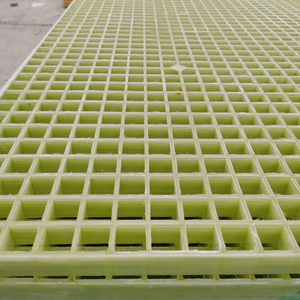
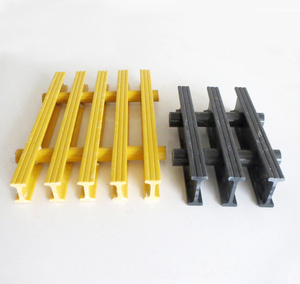
Molded FRP gratings are manufactured in a heated liquid molding matrix using continuous E-glass fiberglass roving woven in an interlocking square grid array. This automated compression process creates an integral, single-piece structure boasting isotropic (bi-directional) load propagation.
When subjected to point loads or uniform loads, stresses are distributed equally along both longitudinal and transverse axes. Consequently, contractors can execute field cutouts for pipe penetrations, structural column pass-throughs, and machinery frames without requiring additional peripheral support framing—a key operational advantage over unidirectional pultruded gratings or welded steel grates.
| Property Parameter | Standard Test Method | Iso-Polyester (Type I) | Vinyl Ester (Type V) | Steel 316L Comparison |
|---|---|---|---|---|
| Tensile Strength (MPa) | ASTM D638 | 205 - 240 | 230 - 270 | 485 - 580 |
| Flexural Strength (MPa) | ASTM D790 | 240 - 290 | 280 - 330 | 290 |
| Specific Gravity (g/cm³) | ASTM D792 | 1.8 - 1.9 | 1.8 - 1.9 | 8.0 |
| Flame Spread Rating | ASTM E84 | Class 1 (≤ 25) | Class 1 (≤ 15) | Non-Combustible |
| Dielectric Strength | ASTM D149 | 15 - 19 kV/mm | 18 - 22 kV/mm | Conductive (0) |
| Thermal Expansion Coeff. | ASTM D696 | 14 x 10⁻⁶ /°C | 12 x 10⁻⁶ /°C | 16.5 x 10⁻⁶ /°C |
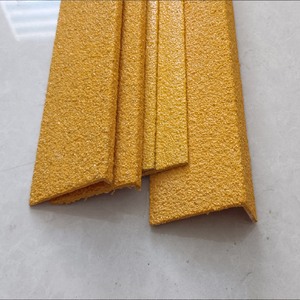
Occupational safety regulations across offshore platforms and chemical plants mandate slip-resistant walking surfaces. Our OEM/ODM manufacturing lines offer three primary surface topographies integrated directly into the polymer curing process:
We partner with EPC engineering firms, industrial distributors, and brand owners to deliver custom composite solutions built precisely to project specifications.
We engineer custom molds for Standard Mesh (38x38mm), Micro Mesh (19x19mm top / 38x38mm bottom), and Deep Load-Bearing Profiles (50mm depth) tailored to specialized load criteria and ADA heel-proof compliance.
Fully custom resin-mix color matching across the full RAL spectrum. Integrate safety yellow for hazardous perimeters, high-visibility green for emergency paths, or corporate colors directly into the UV-stabilized resin matrix.
Equipped with 5-axis CNC waterjet and routing systems, we execute factory-certified cutouts, perimeter banding, angle notches, and kick-plate integration according to customer structural drawings prior to shipping.
Custom incorporation of antimony trioxide flame retardants and Hindered Amine Light Stabilizers (HALS) ensuring long-term structural survivability under severe solar ultraviolet irradiation and flame exposure.
Comprehensive private label services including custom inkjet part marking, project tag bundling, heavy-duty export palletizing, and direct container stuffing for seamless global drop-shipping.
All OEM manufacturing lots undergo rigorous in-house quality assurance: barcol hardness testing, burnoff glass-content verification, load-deflection testing, and mill test certification (ISO 9001 / ABS / DNV GL).
Understanding shift factors in global structural supply chains: Why engineering firms are replacing metallic platforms with advanced FRP composites.
While hot-dip galvanized carbon steel initial material cost remains attractive on paper, modern EPC procurement officers evaluate projects over a 30-year operational lifecycle. In chemical plants and marine installations, galvanized steel structures typically experience sacrificial zinc breakdown within 5 to 7 years, necessitating expensive sandblasting, field painting, or complete deck replacement.
Conversely, molded FRP grating incurs zero corrosion-maintenance expenditure, zero painting cycles, and requires no hot-work welding permits during field installation. The total life-cycle savings of FRP routinely exceed 300% of the initial capital outlay over a 20-year operational lifecycle.
Industrial safety codes (OSHA, ISO 14122) are increasingly prioritizing falling-object protection. Standard 38x38mm open mesh gratings allow small tools, bolts, and debris to fall through to lower levels, posing grave hazards to personnel below. The industry is rapidly adopting Micro-Mesh FRP Gratings (featuring a 12x12mm or 19x19mm upper mesh opening). Micro-mesh retains full drainage and airflow while preventing objects as small as a 15mm sphere from falling, while simultaneously complying with international ADA pedestrian heel-proof standards.
With corporate Scope 3 emissions targets taking center stage, manufacturers are actively advancing bio-derived polyester resins and low-carbon E-glass production processes. The lower embodied energy required to melt and cast thermoset composites compared to blast-furnace structural steel reduction positions molded FRP as a preferred structural choice for green-building certified industrial projects (LEED v4.1).
Combining PLC-controlled molding precision, rigorous raw material control, and international export expertise.
Multi-cavity hydraulic presses utilize automated PLC heat control loops to maintain curing temperatures within ±2°C. This eliminates internal voids, micro-cracks, and incomplete resin cross-linking, yielding uniform strength across every panel.
We source high-alkali-free E-glass continuous roving with superior tensile modulus, rejecting lower-cost C-glass alternatives. This guarantees long-term resistance to structural creep under sustained heavy static loads.
Panels are wrapped in protective polyethylene film, reinforced with steel corner guards, and mounted on heat-treated ISPM-15 compliant wooden or steel pallets designed for zero movement during sea freight container transit.
Essential answers for structural engineers, project managers, and sourcing officers.
Contact our composite technical specialists for design assistance, CAD layout reviews, chemical resistance validation, and competitive OEM/ODM factory quotes.
Get a Quote