
Precision-Engineered Stainless Steel & Custom Alloy Cable Trays for Global Projects
Modern industrial, energy, and digital infrastructure environments demand uncompromising structural integrity, thermal efficiency, and long-term corrosion prevention. Cable tray systems are no longer treated as passive passive support hardware; they represent a critical thermal and structural backbone in heavy chemical plants, offshore oil platforms, green-hydrogen production sites, and hyperscale data centers. As an established OEM/ODM Stainless Cable Tray Manufacturer & Factory, our engineering practices are deeply rooted in rigid international standards including IEC 61537 (Cable management - Cable tray systems and cable ladder systems), NEMA VE 1 (Metal Cable Tray Systems), and ASTM A380/A967 (Chemical Passivation of Stainless Steel Parts).
Selecting the optimal stainless steel alloy—primarily standard AISI 304 (UNS S30400), marine-grade AISI 316 (UNS S31600), or ultra-low carbon AISI 316L (UNS S31603)—directly determines the operational life-cycle of cable containment installations. In environments with elevated concentrations of airborne chlorides, industrial sulfur emissions, or aggressive chemical cleaning agents, inferior cable trays suffer rapid localized pitting and crevice corrosion. Our manufacturing facility integrates precision cold-rolling, automated CNC perforation patterns, and full-spectrum electro-polishing to guarantee maximum surface passivation, minimizing rust initiation sites and maximizing operational service life beyond 30+ years.
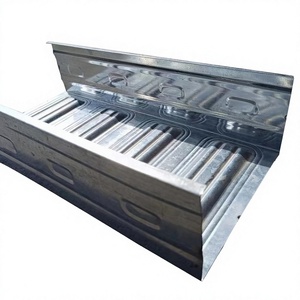
Engineered transverse rungs and corrugated base profiles yield extraordinary safe working load (SWL) capacities, resisting heavy mechanical sagging under dense power cable bundle configurations.
Acid pickling combined with electrochemical polishing strips free iron particles, restoring the chromium oxide ($Cr_2O_3$) passive layer to eliminate micro-burrs that damage cable insulation during pull-in.
Custom reinforcement ribbing and heavy-duty side-rail flange geometry pass high dynamic shock and seismic vibration tests required for nuclear facilities and marine applications.
As a vertically integrated original equipment manufacturer (OEM) and original design manufacturer (ODM), our facility operates advanced fully automated PLC-controlled production lines. We bridge the gap between complex engineering blueprints and volume production, delivering bespoke cable routing components with zero dimensional variance.
Our factory utilizes high-tonnage hydraulic press lines applying over 100 tonnes of forging pressure in combination with specialized resistance welding matrices operating at approximately 2200 Amperes. This fusion technique creates seamless cross-bar to bearing-bar connection joints without requiring low-grade filler metals that introduce weak points or galvanic corrosion risks.
| Tray Category | Material / Metallurgy | Standard Width Range | Side Rail Height | Load Capacity (IEC 61537) | Primary Industrial Application |
|---|---|---|---|---|---|
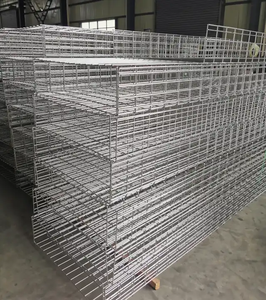
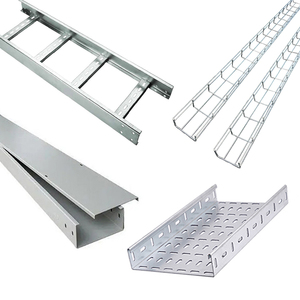
| Stainless Wire Mesh Basket | AISI 304 / 316L Stainless Steel | 50mm – 600mm | 35mm – 150mm | Light to Medium (up to 75 kg/m) | Data Centers, Telecom, Food & Beverage |
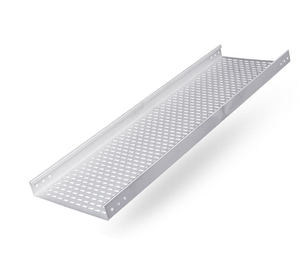
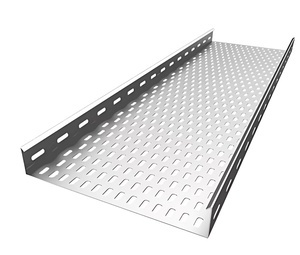
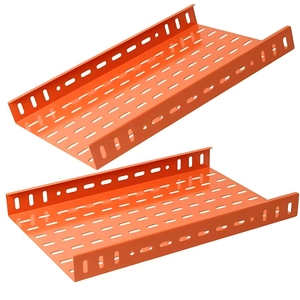
| Perforated Cable Tray | SS304 / SS316 / HDG Carbon Steel | 100mm – 900mm | 50mm – 150mm | Medium to Heavy (up to 180 kg/m) | Refineries, Commercial Infrastructure, Power Plants |
| Heavy Industrial Ladder Tray | AISI 316L / Super Duplex 2507 | 150mm – 1200mm | 75mm – 200mm | Heavy Duty (up to 320 kg/m @ 3m span) | Offshore Rigs, Chemical Processing, Nuclear Facilities |
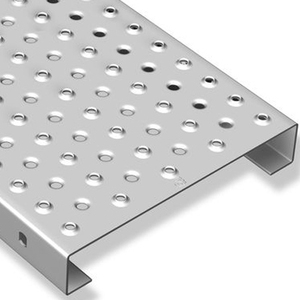
| Dimple Perforated Walkway | Galvanized Steel / Stainless Steel | 200mm – 800mm | 40mm – 100mm | Heavy Foot Traffic & Machinery Loads | Catwalks, Maintenance Flooring, Roof Access |
The global cable tray market is undergoing a massive shift driven by decarbonization initiatives, modular off-site building construction (Pre-Engineered Building / PEB), and hyperscale data center expansion. Procurement leaders and engineering consultants are adjusting their sourcing frameworks to emphasize structural long-term value, raw material transparency, and environmental impact.
EPC (Engineering, Procurement, and Construction) contractors are increasingly shifting from manual on-site cutting and fitting toward factory-prefabricated cable tray assemblies. OEM manufacturers capable of supplying pre-cut lengths, integrated snap-lock coupling splice plates, and custom-angled elbows drastically cut job-site labor costs and shorten commissioning schedules by up to 40%.
With Scope 3 emissions coming under stringent regulatory scrutiny in Europe and North America, project owners are prioritizing cable tray factories that utilize electric arc furnace (EAF) stainless steel produced with high recycled scrap ratios. Green steel certifications, along with EPDs (Environmental Product Declarations), are becoming essential prerequisites in international tender bids.
Specifiers in coastal marine and industrial chemical environments are migrating from standard 304 alloys toward low-carbon 316L and Duplex grades characterized by high PREN values ($PREN = \%Cr + 3.3\%Mo + 16\%N$). Cable containment systems engineered with PREN > 25 demonstrate total resistance to localized pitting in severe salt spray and acidic sulfur dioxide mist conditions.
Addressing key technical, metallurgical, and logistical inquiries frequently submitted by structural engineers, procurement managers, and plant operators.
Acid pickling (ASTM A380) chemically cleans weld scale and free iron from the stainless surface, leaving a uniform matte gray passive layer suitable for general industrial environments. Electro-polishing is an electrochemical process that selectively removes surface microscopic peaks, creating an ultra-smooth, mirror-like surface. Electro-polished SS316 offers superior pitting resistance in severe chloride environments (such as marine platforms or coastal chemical processing) and prevents micro-particle accumulation, making it the required standard for pharmaceutical cleanrooms and food processing facilities.
A standard 30% to 40% open perforation area strikes an ideal structural equilibrium. It allows adequate natural convective airflow to dissipate heat generated by dense power cables—reducing ampacity de-rating—while retaining over 90% of the tray's solid-bottom beam bending stiffness. Higher perforation ratios are engineered with reinforced side-flanges to preserve overall span deflection limits under heavy cable loads.
Yes. As a direct OEM/ODM manufacturer, we offer full custom engineering. We produce tray widths from 50mm to 1200mm, side rail depths up to 200mm, and custom section lengths (e.g., 3-meter or 6-meter transport optimized lengths). Our high-speed CNC punching tooling can embed your company logo, project identification tags, or structural slot patterns directly onto the side rails or base plates.
Every production batch undergoes rigorous Safe Working Load (SWL) testing according to IEC 61537 Clause 10. Cable tray sections are mounted across defined support spans (e.g., 1.5m, 2.0m, 3.0m) and subjected to incrementally applied uniformly distributed loads (UDL). Deflection is measured to ensure it remains well within the maximum allowable $L/100$ or $L/200$ limits. Additionally, material mill test certificates (MTC) to EN 10204 3.1, salt spray corrosion tests (ASTM B117), and electrical continuity tests are routinely verified.
Export orders are strapped into high-density steel-framed pallets with protective plastic edge protectors, waterproof VCI (Vapor Corrosion Inhibitor) shrink-wrap film, and timber skids suitable for fork-lift handling. This prevents physical deformation, surface scratching, and atmospheric moisture exposure during long-distance sea transport.
Partnering with a dedicated OEM/ODM factory guarantees complete control over raw material sourcing, dimensional tolerance, and export shipping timelines. Our factory operates under strict ISO 9001:2015 quality control management systems, executing 100% inspection audits from incoming steel coil receipt to final bundled product packing.
All raw stainless steel sheets are sourced directly from tier-1 steel mills. Chemical composition and mechanical strength properties are documented and supplied with every batch shipment.
Engineered bundle packing, specialized container loading schematics, and rust-inhibiting protection ensure products arrive on-site in factory-fresh condition ready for immediate assembly.
In-house CAD design team assists with structural load calculations, custom bracket design, 3D BIM model file generation, and rapid prototype turnarounds for contractor approval.
Submit your CAD drawings, material specifications, or bill of quantities (BOQ) for a comprehensive engineering evaluation, structural load assessment, and competitive factory-direct quote.
Contact Us