Composite Mesh

High-tensile, electro-welded and composite pathways developed for demanding commercial installations, harsh plant floors, corrosive washdowns, and mission-critical power networks.

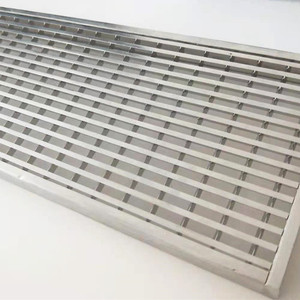
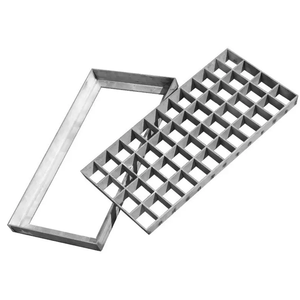
Modern electrical infrastructure and data center architectures require wire mesh cable trays (basket trays) capable of delivering optimized electromagnetic containment, high thermal dissipation, and certified mechanical loading. As a specialized OEM/ODM manufacturer and global exporter, our facilities leverage PLC-controlled resistance welding lines combined with high-precision steel profiling to eliminate cold lap defects and surface irregularities.
Wire mesh trays manufactured under strict quality regimens utilize longitudinally aligned cold-drawn steel wires ranging from 3.5 mm to 6.0 mm in diameter. By applying synchronized hydraulic pressure exceeding 100 tonnes and controlled surge currents up to 2200 A during cross-wire fusion, the intersection achieves a continuous structural bond without degrading the base alloy's tensile strength. This level of process control guarantees zero micro-cracks, delivering an exceptionally smooth basket pathway that preserves data cable sheathing integrity during rapid site pulling.
Design Advantage: Open mesh architectures promote 360-degree convective heat dissipation, lowering cable conductor operating temperatures by up to 15% compared to fully enclosed metal ducting, while dramatically minimizing site dust and moisture entrapment.
The operational lifecycle of industrial routing depends primarily on matching base metallurgy to ambient environmental corrosivity classes (ISO 12944 C1 through C5-M). We provide complete bespoke configuration across three principal materials:
| Material / Metallurgy | Surface Treatment | Tensile Yield (MPa) | Corrosion Classification | Target Applications |
|---|---|---|---|---|
| Low Carbon Q235B / AISI 1008 | Electro-Zinc (12–18 μm) | ≥ 235 | ISO 12944 C1–C2 | Indoor telecom rooms, commercial office raceways |
| Structural Carbon Steel | Hot-Dip Galvanized (≥ 65 μm) | ≥ 245 | ISO 12944 C3–C4 | Industrial plants, outdoor substations, energy storage |
| Austenitic SS AISI 304 | Pickled & Electro-Polished | ≥ 205 | ISO 12944 C4 | Breweries, commercial kitchens, dairy processing |
| Austenitic SS AISI 316 / 316L | Electro-Polished & Passivated | ≥ 220 | ISO 12944 C5-M / Marine | Offshore oil & gas, chemical dosing, coastal subsea facilities |
Strategic sourcing shifts reshaping how EPC contractors, data center engineers, and industrial procurement managers select pathway infrastructure.
The proliferation of high-density AI clusters is causing raceway congestion. Procuring teams are moving away from solid-bottom trunking toward high-airflow wire mesh trays that accommodate higher ambient heat loads and massive bundling of optical fiber and Category 6A cabling without causing hotspot degradation.
Procurement specifications across marine and solar installations increasingly favor advanced Zinc-Aluminum-Magnesium (Zn-Al-Mg) alloy coatings over standard batch galvanizing. These coatings deliver self-healing corrosion resistance at sheared wire edges while maintaining a significantly reduced carbon footprint.
Contractors face chronic skilled-labor shortages. As a result, procurement contracts demand toolless, boltless splice plates and pre-formed 90-degree bend accessories. Engineered quick-connect couplers accelerate mechanical tray assembly by 40% compared to traditional nut-and-bolt splice configurations.
The global wire mesh tray manufacturing sector is undergoing profound technical shifts driven by Building Information Modeling (BIM), finite element analysis (FEA), and strict life-safety fire resistance standards such as DIN 4102-12 (E30 to E90 circuit integrity).
Historically, cut mesh edges presented burr hazards that could strip insulation jackets or injure installers. Contemporary automated manufacturing implements continuous T-welded side rims. Cross-wires are welded flush or rounded along the upper longitudinal bar, providing an intrinsically safe barrier that conforms to worldwide workplace safety regulations.
Through parametric modeling, OEM wire tray structures are engineered with varying wire gauge distributions: heavier 5.0–6.0 mm bars support bottom bending moments, while lighter 3.5–4.0 mm side bars preserve structural stiffness. This engineered layout reduces total steel consumption by up to 18% without compromising SWL (Safe Working Load) ratings under IEC 61537 testing parameters.
Leading EPC contractors now require manufacturers to supply native Autodesk Revit and IFC digital asset models. OEM suppliers provide comprehensive parameter libraries including weight loadings, fill capacity percentages, bend radiuses, and hanger distance requirements, streamlining 3D clash detection across mechanical, electrical, and plumbing (MEP) designs.
Integrated manufacturing, certified metallurgical traceability, and custom fabrication capacity built to de-risk overseas industrial infrastructure projects.
High-speed automated welding systems apply synchronized hydraulic compression and high-amperage heating to yield seamless, defect-free fusion joints across every batch.
Every order ships with complete EN 10204 3.1 Mill Test Certificates verifying carbon, sulfur, chromium, and nickel content alongside yield and elongation test results.
In-house CNC shearing, bending, and robotic welding lines handle custom widths (50 mm to 1000 mm), irregular radius bends, and banded pass-through cut-outs directly from customer drawings.
Interleaved protective sheeting, reinforced steel banding, and IPPC-fumigated wooden crates ensure zero transit distortion or scratching during multi-modal ocean and rail freight.
Authoritative technical answers to common engineering, compliance, and logistical inquiries raised by international procurement managers.
Connect directly with our engineering team for detailed structural load calculations, custom BIM families, or a formal export price schedule tailored to your site requirements.