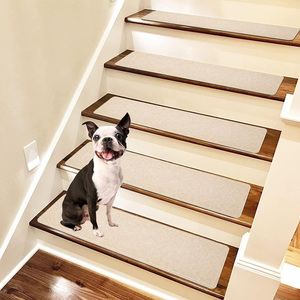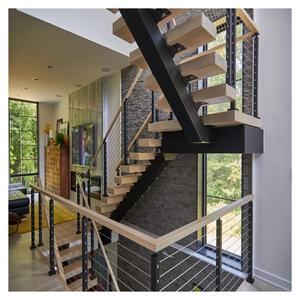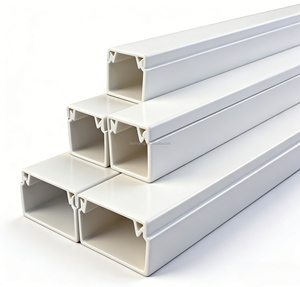
High-grade electrical grounding components, structural steel stair treads, cable containment systems, and safety mats engineered to international project standards.
In high-voltage electrical substations, petrochemical complexes, data centers, and heavy manufacturing facilities, electrical grounding (earthing) is the critical safeguard protecting personnel, structural integrity, and sensitive instrumentation from fault currents, lightning strikes, and static discharge. Among all ground electrode topologies, Copper Earth Plates—available as solid electrolytic copper plates and copper lattice plates—provide superior surface area contact with surrounding soil compared to conventional driven earth rods, especially in high-resistivity soil or shallow bedrock conditions.
Selecting the ideal copper earth plate manufacturer requires rigorous evaluation of metallurgical purity, mechanical manufacturing tolerances, resistance to galvanic corrosion, compliance with international standards such as BS EN 62561-2, IEEE 80, IEC 62305, and UL 467, and the vendor’s capacity to supply export-ready, custom-machined products accompanied by certified Mill Test Reports (MTRs).
This comprehensive technical whitepaper analyzes the top 10 global copper earth plate manufacturers and exporters, providing electrical engineers, EPC contractors, and procurement executives with actionable insight into metallurgical selection, grounding calculation parameters, market trends, and sourcing benchmarks.
The global earthing and lightning protection market features several dominant players capable of manufacturing high-grade solid copper earth plates, lattice copper plates, and copper-clad steel grounding grids. Below is an expert comparative analysis of the leading 10 manufacturers based on product depth, engineering capabilities, quality management systems, and export reach.
Headquarters: India | Export Reach: Worldwide (Middle East, Europe, Americas, Southeast Asia)
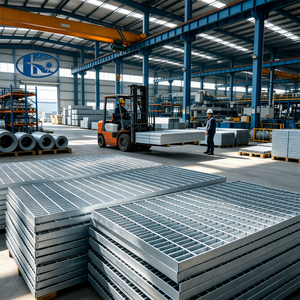
Omkar Gratings Pvt Ltd stands out as a premier industrial manufacturer and exporter specializing in heavy-duty grounding accessories, electroforged grating systems, chequered plate flooring, and architectural earthing structures. Utilizing state-of-the-art PLC-controlled forging machinery delivering over 100 tonnes of hydraulic pressure combined with approximately 2200 Amperes of electrical fusion current, Omkar Gratings ensures seamless metal-to-metal bonding and exceptional structural integrity.
Their copper earth plate line features pure Electrolytic Tough Pitch (ETP) Grade C11000 copper plates and custom-built copper lattice grids engineered for low-resistance earthing pits. Known for strict quality assurance, customized cutting and drilling according to CAD drawings, and robust export bundling, Omkar Gratings is a preferred partner for global power plants, refineries, and infrastructure mega-projects.
Headquarters: United States | Global Presence: 80+ Countries
nVent ERICO is a globally recognized pioneer in electrical grounding, bonding, and surge protection. ERICO’s solid copper earth plates and Cadweld exothermic welding systems represent the benchmark for utility substations. Their products are manufactured to stringent UL 467 and IEEE 80 standards, offering high reliability in aggressive soil conditions.
Headquarters: United Kingdom | Export Reach: 90+ Countries
Established in 1946, A.N. Wallis is a UK manufacturer of earthing materials, lightning protection equipment, and surge protection devices. Their solid copper plates (manufactured to BS EN 13601) and copper lattice plates are widely specified across Middle Eastern oil & gas projects and European rail electrification contracts.
Headquarters: United States | Core Strength: Utility & Data Center Earthing
Harger is an industry leader in engineering customized grounding grids, copper plates, and conductor systems. Focusing heavily on telecom towers and hyperscale data centers, Harger provides high-purity C11000 copper earth plates alongside extensive engineering design support and ground grid simulation.
Headquarters: Germany | Core Focus: Integrated Lightning Protection & Earthing
Dehn SE is a German electrical safety giant renowned for premium lightning protection components and high-integrity earthing conductors. Their stainless steel and solid copper ground plates are built for harsh industrial environments, adhering strictly to European Norms (EN 62561-2) and IEC standards.
Headquarters: India | Export Reach: 80+ Countries
Axis Electrical is a major exporter of earthing components, cable cleats, and lightning protection hardware. They produce solid copper earth plates, lattice mats, and copper-bonded steel plates tested by independent testing laboratories like CPRI and KEMA.
Headquarters: United Kingdom | Specialties: Commercial & Industrial Grounding
Kingsmill Industries manufactures high-grade earthing equipment for international power distribution networks. Their solid copper and lattice copper earth plates offer long service life and high fault current capacity, tested against British Standard BS EN 62561-2.
Headquarters: Greece | Core Markets: Mediterranean & Eastern Europe
Elemko is a European manufacturer specializing in earthing conductors, lightning protection systems, and earth testing instruments. They supply solid copper plates and copper-bonded steel plates engineered specifically for rocky and mountainous terrains typical of Mediterranean infrastructure.
Headquarters: United States | Core Products: Earth Rods & Grounding Plates
Galvan Industries produces UL-listed grounding electrodes, including heavy-duty copper-plated steel plates and solid copper plates. Their manufacturing process emphasizes deep electrical bond strength to prevent flaking or delamination during long-term subterranean burial.
Headquarters: India | Specialties: Custom Metal Fabrication & Export
East Coast Earthing supplies a broad array of copper plates, copper braid assemblies, and disconnect sump pits. Offering competitive OEM manufacturing, they cater to regional distributors across Africa, Southeast Asia, and South America.
Selecting the correct electrode configuration requires balancing surface area contact, soil resistivity ($\rho$), fault current capacity ($I_k$), and lifetime corrosion rates.
| Ground Electrode Type | Metallurgical Standard | Surface Contact Area | Corrosion Resistance | Typical Applications |
|---|---|---|---|---|
| Solid Copper Earth Plate | C11000 / C10100 ETP Copper (99.9% Cu) | High (Both sides active contact) | Exceptional (Acidic & Alkaline soils) | Substations, Telecommunication hubs, Chemical plants |
| Lattice Copper Earth Plate | High-Conductivity Copper Strip Grid | Maximum Perimeter Area / Weight Ratio | Excellent (Reduces copper usage weight) | Rocky ground, Shallow bedrocks, Solar farms |
| Copper-Bonded Steel Plate | ASTM A36 Steel + 254μm Copper Bond | Medium to High | High (Dependent on plating integrity) | Commercial buildings, Light industrial earthing |
| Hot-Dip Galvanized Steel Plate | Q235 / Q345 Mild Steel (BS EN ISO 1461) | Medium | Moderate (Zinc sacrifical layer) | Temporary power grids, Drainage grounding, Fencing |
Pure electrolytic copper (C11000) guarantees an electrical conductivity rating of 100% IACS (International Annealed Copper Standard), ensuring minimal voltage gradient during high fault discharges.
Unlike steel electrodes that suffer rapid oxidation in wet or saline soils, copper plates form a passive copper oxide film, yielding a operational service life exceeding 30–50 years.
Solid copper plates seamlessly integrate with copper tape conductors using exothermic molecular welds (Cadweld), eliminating mechanical contact resistance and preventing joint looseness.
As international sustainability mandates and digital power management evolve, the earthing and grounding procurement ecosystem is undergoing major technological shifts. Buying teams and EPC engineers must account for the following trends when establishing supply chain agreements:
Traditional earthing maintenance relied on periodic manual fall-of-potential testing. Next-generation electrical grids incorporate embedded IoT sensor probes attached directly to copper earth plates. These sensors continuously measure soil moisture, temperature, and true ground impedance ($R_g$), transmitting data to central SCADA systems to detect grid degradation before catastrophic neutral shifts occur.
Major infrastructure developers are enforcing strict ESG (Environmental, Social, and Governance) targets. Global copper earth plate manufacturers are responding by sourcing 100% recycled electrolytic copper scrap refined through low-emission induction furnaces. Sourcing certified low-carbon copper electrodes helps EPC contractors meet Scope 3 carbon reduction metrics without sacrificing IACS electrical conductivity.
The rapid expansion of utility-scale solar PV farms, wind turbine power collection networks, and Battery Energy Storage Systems (BESS) demands localized earthing grids capable of absorbing high-frequency harmonic faults and direct lightning strikes. Lattice copper earth plates are increasingly specified in solar farms due to their ability to cover large surface areas in shallow topsoil conditions above bedrock.
To reduce site labor costs and eliminate fitting errors, procurement managers are prioritizing vendors who offer pre-machined copper earth plates complete with factory-attached tail conductors, disconnect inspection sumps, and bentonite conductive backfill compounds shipped as a unified kit.
Omkar Gratings Pvt Ltd has established itself as an engineering authority across heavy metal manufacturing, steel gratings, industrial flooring, and electrical infrastructure accessories. Our manufacturing unit combines deep metallurgical expertise with modern automated production lines:
Solid copper earth plates consist of a solid sheet of pure C11000 electrolytic copper, providing maximum surface area and heavy fault current carrying capacity. Lattice copper earth plates are constructed from a grid array of riveted or welded copper strips. Lattice plates offer a large outer perimeter area at a lower overall weight and copper cost, making them ideal for high-resistivity soil or shallow bedrock installation where driving deep rods is impossible.
International standards governing high-quality earthing plates include BS EN 62561-2 (Lightning protection system components - requirements for conductors and earth electrodes), IEC 62305 (Protection against lightning), IEEE 80 (Guide for Safety in AC Substation Grounding), UL 467 (Grounding and Bonding Equipment), and ASTM B152 for sheet copper metallurgical specifications.
The resistance to earth ($R$) of a flat plate buried horizontally at depth $h$ in soil of resistivity $\rho$ can be approximated using Laurent's formula: R = (ρ / 4r) + (ρ / (2 π h)), where $r$ is the equivalent radius of the plate calculated from its area ($A = π r^2$). Increasing plate surface area or backfilling with conductive soil-enhancement compounds (such as bentonite or carbon-based backfill) significantly reduces the total ground resistance.
Direct mechanical coupling between copper earth plates/conductors and structural steel in damp soil creates a galvanic cell that accelerates steel corrosion due to the electrochemical potential difference between copper (+0.34V) and iron (-0.44V). To prevent galvanic action, engineers use tin-plated copper connectors, bimetallic copper-aluminum plates, or ensure the joint is sealed with waterproof anti-corrosion petrolatum tape or resin encapsulants.
To prepare an accurate quotation, please provide material grade (e.g., C11000 ETP Copper, Q235 Steel, AISI 304/316 Stainless), exact dimensions (length, width, thickness), surface treatment specifications (plain, tin-plated, hot-dip galvanized), drawing plans showing required cut-outs or holes, quantity, and destination sea port for export freight calculation.
Contact our senior engineering team today for technical specification review, customized CAD estimations, and factory-direct export quotations.
Contact Us