
Explore high-load structural fiberglass mesh, electroforged carbon steel, and specialized composite floorings manufactured to international engineering standards including ASTM E84, ISO 9001, and ABS marine specifications.
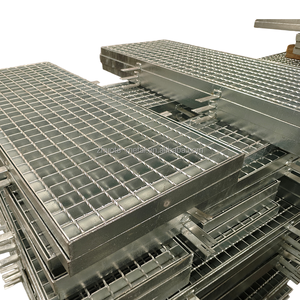
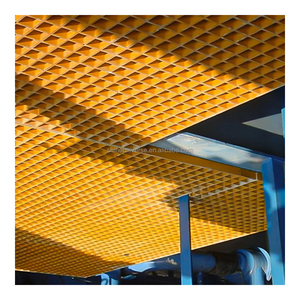
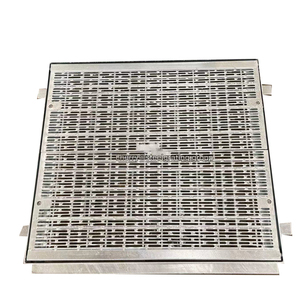
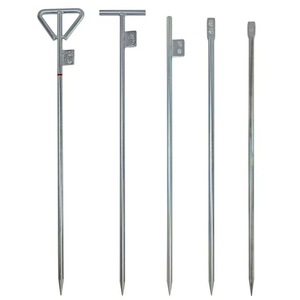
In modern industrial architecture, civil infrastructure, and corrosive processing facilities, Fiberglass Reinforced Plastic (FRP) mesh grating—also referred to as Glass Reinforced Plastic (GRP) mesh—has emerged as the definitive successor to traditional carbon steel and galvanized metal grids. As global EPC contractors prioritize structural longevity, worker safety, and reduced lifecycle maintenance costs (LCC), the demand for high-grade molded and pultruded fiberglass mesh gratings has experienced unprecedented growth.
Unlike steel gratings that suffer from severe oxidation, galvanic corrosion, and micro-fracturing under aggressive chemical exposure, engineered FRP fiberglass mesh gratings feature continuous glass roving strands interwoven within thermosetting resin matrices (Isophthalic, Vinyl Ester, or Orthophthalic). This structural synergy provides a high strength-to-weight ratio, superior impact resistance, complete non-conductivity, and innate fire retardancy. This comprehensive whitepaper evaluates the top global factories and exporters, technical chemistry profiles, structural load capabilities, and procurement trends shaping the industry through 2030.
Evaluated on manufacturing capacity, automated resin-to-glass ratio accuracy, international quality standard certifications (ISO, ABS, DNV, ASTM), export compliance, and custom fabrication flexibility.
A global heavyweight in industrial flooring, specializing in high-precision molded FRP/GRP mesh gratings alongside electroforged, stainless steel, and heavy-duty walkway grids. Known for custom cut-outs, custom resin formulation, and precise drawing compliance.
Send an InquiryPioneer in fiberglass reinforced plastic grating manufacturing. Fibergrate offers extensive molded and pultruded mesh lines suited for offshore oil platforms, chemical processing, and food production plants.
Send an InquirySpecializes in heavy-duty pultruded fiberglass structures and square mesh grating panels. Engineered for extreme load-bearing applications in cooling towers, bridge walkways, and water utilities.
Send an InquiryOne of East Asia's largest volume exporters of molded fiberglass mesh grating. Features extensive production lines producing standard 38x38mm mesh, micro-mesh, and phenolic fire-safe grating.
Send an InquiryWorld leader in pultrusion manufacturing processes. Strongwell’s DURADEK® and DURAGRID® fiberglass gratings set high standards for stiffness, strength, and corrosion resistance in marine environments.
Send an InquiryEuropean industrial flooring manufacturer combining classical steel fabrication with advanced GRP fiberglass mesh product lines tailored for European chemical and environmental plants.
Send an InquiryMass-scale composite manufacturer delivering large-format fiberglass mesh panels for municipal drainage, desalination facilities, and large-scale agricultural greenhouses.
Send an InquiryEuropean manufacturer specializing in high-end anti-slip molded fiberglass mesh gratings with integrated silica grit walking surfaces for oil refineries and port structures.
Send an InquirySpecialized exporter of fire-retardant vinyl ester fiberglass mesh grids and structural profiles designed for high-salinity coastal power stations and mining operations.
Send an InquiryBespoke engineering composite firm producing specialized micro-mesh and non-magnetic GRP panels for pharmaceutical cleanrooms and electrical transformer substations.
Send an InquirySelecting between molded and pultruded fiberglass mesh gratings depends on structural span requirements, bi-directional load distribution, and specific environmental exposures.
| Performance Parameter | Molded Fiberglass Mesh Grating | Pultruded Fiberglass Mesh Grating |
|---|---|---|
| Structural Load Vector | Bi-directional load capability (Equal strength in both axis) | Unidirectional load strength (High strength along longitudinal span) |
| Resin to Glass Content | 65% Resin / 35% Glass Roving (Maximum Chemical Shield) | 30% Resin / 70% Glass Roving (Maximum Tensile Stiffness) |
| Impact Resistance | Superior flexibility; absorbs heavy localized impact without permanent yield | Rigid structural response; high modulus of elasticity |
| Field Fabrication | Easy circular/complex cut-outs without compromising panel integrity | Requires cross-rod re-banding for major cut-outs |
| Standard Mesh Sizes | 38x38mm, 50x50mm, 19x19mm (Micro-mesh) | I-Shape/T-Shape Bar profiles with customizable cross-bar spacing |
| Fire Retardancy Rating | ASTM E84 Class 1 (Flame Spread Index < 25) | ASTM E84 Class 1 or Class 2 available |
The resin formulation governs the environmental resistance of fiberglass mesh grating. OEM manufacturers offer three primary resin systems tailored to distinct chemical exposures:
Best For: Light industrial applications, commercial walkways, water park facilities, and agricultural greenhouses.
Chemical Resistance: Moderate exposure to ambient moisture, washdowns, and atmospheric weathering.
Cost Profile: Most economical baseline option.
Best For: Chemical processing plants, industrial wastewater treatment facilities, and marine environments.
Chemical Resistance: High resistance to severe acid fumes, alkalis, salts, and industrial solvents.
Cost Profile: Mid-tier industrial standard for plant maintenance.
Best For: Extreme chemical operations, acid pickling lines, offshore petroleum rigs, and severe caustic tanks.
Chemical Resistance: Maximum defense against aggressive acids (hydrochloric, sulfuric), strong alkalis, and elevated temperatures.
Cost Profile: Premium chemical-duty grade.
Best For: Enclosed marine vessels, offshore oil quarters, subway tunnels, and aviation maintenance decks.
Chemical Resistance: Exceptional resistance to direct flame exposure, displaying low smoke emission and ultra-low toxicity (US Coast Guard approved).
Cost Profile: Specialized safety specification grade.
The table below illustrates uniform load capacity ($kN/m^2$) versus span distance ($mm$) for standard 38mm deep fiberglass mesh grating (38x38mm square mesh) operating within recommended L/200 deflection limits:
| Span (mm) | Safe Uniform Load (kN/m²) | Deflection at 5.0 kN/m² (mm) | Ultimate Load at Failure (kN/m²) |
|---|---|---|---|
| 450 mm | 48.2 kN/m² | 1.2 mm | 240.5 kN/m² |
| 600 mm | 27.1 kN/m² | 2.4 mm | 135.2 kN/m² |
| 750 mm | 17.3 kN/m² | 4.5 mm | 86.4 kN/m² |
| 900 mm | 12.0 kN/m² | 7.1 mm | 60.1 kN/m² |
| 1050 mm | 8.8 kN/m² | 10.8 mm | 44.2 kN/m² |
The international fiberglass mesh grating sector is undergoing technological shifts driven by automation, environmental compliance, and integrated smart infrastructure.
Leading factories are replacing manual wet lay-up casting with automated closed-loop RTM systems. This ensures consistent glass-to-resin ratios, eliminates internal air void defects, and speeds up production lead times by up to 40%.
With global ESG mandates expanding across Western procurement markets, OEM manufacturers are introducing recyclable thermoplastic resin binders and bio-based polyester systems to lower the embedded carbon footprint of GRP flooring.
High-tech facilities are deploying fiberglass grating panels featuring embedded fiber-optic strain and temperature sensors. These "smart grids" provide real-time structural health monitoring for off-shore platforms and mining walkways.
Industrial safety standards (such as OSHA and ADA compliance) are driving demand for 19x19mm micro-mesh designs. Micro-mesh prevents small tools, bolts, or debris from falling through upper catwalk levels while remaining heel-proof for foot traffic.
As an established industrial grating manufacturer, Omkar Gratings Pvt Ltd (Omkareshwar Engineering) provides comprehensive custom fabrication and export services tailored to EPC project contracts:
Detailed technical responses addressing procurement, load performance, resin choices, and installation procedures for fiberglass mesh grating.
Molded fiberglass grating features continuous glass roving layers laid in a square mesh matrix filled with thermosetting resin. This structure offers equal bi-directional strength, making it ideal for walkways with multi-directional cut-outs. Pultruded grating utilizes pulled unidirectional glass roving bars assembled into grid configurations, providing higher longitudinal stiffness and spanning capability over wider support gaps.
Specify Orthophthalic (Type O) for general commercial or light industrial environments without concentrated chemical exposure. Specify Isophthalic (Type I) for general chemical plants, industrial walkways, and coastal facilities requiring reliable acid/alkali resistance. Specify Vinyl Ester (Type V) for aggressive chemical pickling lines, strong acid tanks, and marine offshore environments subject to severe corrosion.
Yes. Molded fiberglass mesh grating can be easily cut using circular saws equipped with masonry or diamond-tipped blades. Because the resin completely encapsulates the continuous glass rovings, cut edges do not fray or lose structural integrity. We recommend sealing cut edges with resin sealing kits to maintain chemical resistance.
High-quality fiberglass gratings are formulated to meet ASTM E84 Class 1 fire retardancy (Flame Spread Index of 25 or less). Specialized phenolic resin systems meet stringent fire, smoke density, and toxicity standards required by maritime authorities (such as US Coast Guard approval) for enclosed vessel platforms.
While initial material costs for fiberglass grating can be comparable to high-grade galvanized steel, FRP grating delivers a lower Total Cost of Ownership (TCO). Because FRP does not rust, corrode, or require periodic repainting or recoating, maintenance costs are virtually zero over a 30-to-50-year service life. Additionally, light panel weight significantly reduces transport and installation crane expenses.
Panels are securely anchored to support structural beams using 316 stainless steel hold-down clips. Common clip configurations include Type M (saddle clips for securing mesh bars to supports), Type L (for light-duty edge anchoring), and Type C (end-to-end panel connection clamps). A minimum of 4 clip fixings per panel is standard practice.
To obtain an immediate technical price quotation, provide: (1) Resin system preferred (Ortho, Iso, Vinyl Ester), (2) Panel depth (e.g., 25mm, 38mm, 50mm), (3) Mesh size (e.g., 38x38mm or 19x19mm micro-mesh), (4) Top surface type (Grit top, Concave, or Smooth), (5) Total quantity/area ($m^2$), and (6) Delivery destination port.
Connect directly with our senior composite engineering team. Submit your project specifications, CAD drawings, or tender load requirements for an immediate factory quote and technical review.