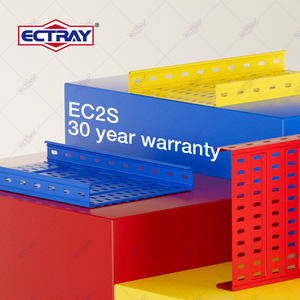

Verified configurations engineered for chemical plants, offshore oil platforms, utility substations, and modular industrial corridors.
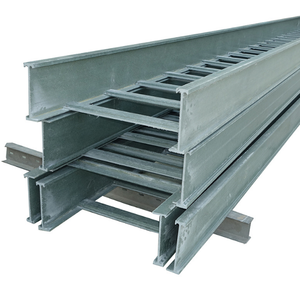
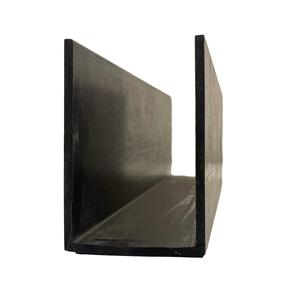
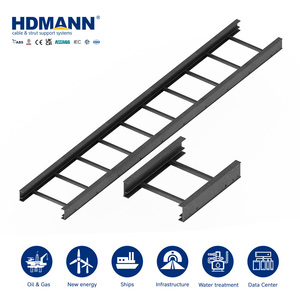
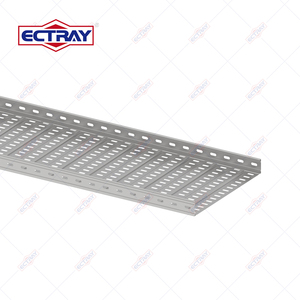
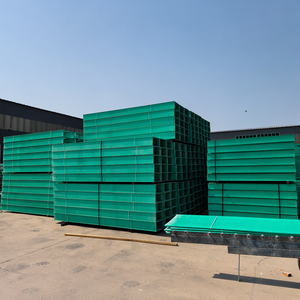
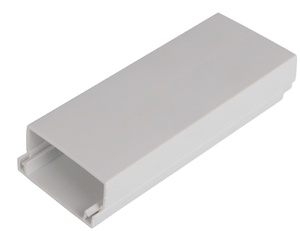
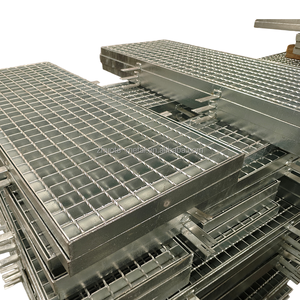
In modern mega-infrastructure, offshore drilling rigs, desalination plants, and chemical processing complexes, cable containment failure poses severe operational hazards. Traditional hot-dip galvanized (HDG) carbon steel, while mechanically rigid, suffers from accelerated electrochemical decay when exposed to airborne chlorides, hydrogen sulfide (H₂S), and sulfur dioxide (SO₂). Stainless steels (AISI 304 and 316L) mitigate chemical pitting but introduce excessive structural deadweight and vulnerable stress-corrosion cracking regimes along marine splash zones.
Glass Reinforced Plastic (GRP), also termed Fiber-Reinforced Polymer (FRP), addresses these shortcomings through composite material engineering. Manufactured primarily via the continuous pultrusion process, structural GRP cable trays integrate dense continuous roving fibers, multi-axial stitched mats, and high-purity synthetic surfacing veils embedded within thermosetting resin matrixes (Isophthalic Polyester, Vinyl Ester, or Modar Phenolic). The resulting product exhibits superior tensile strength along the load axis (exceeding 300 MPa) while maintaining an absolute electrochemical neutrality that renders corrosion non-existent.
Key Economic Metric: While the initial procurement expenditure for vinyl ester GRP profiles is approximately 1.15 to 1.3 times that of galvanized carbon steel, Life Cycle Cost (LCC) models demonstrate a net cost reduction of 45% to 62% over a 25-year operational lifecycle. This saving stems directly from zero painting maintenance, negated cathodic grounding loops, eliminated galvanic isolation pads, and dramatic labor savings achieved due to GRP's 60% lower material mass during site installation.
Audited on raw resin formulation, automated pultrusion lines, load validation protocols (NEMA VE 1 / IEC 61537), and international delivery agility.
HQ: India | Core Specialty: Integrated Multi-Material Systems, FRP Trays & Heavy-Duty Electroforged Platforms
Recognized globally for deep industrial floor and electrical containment synergy. Omkar Gratings delivers PLC-monitored pultruded GRP/FRP cable trays and heavy-duty structural gratings engineered to rigorous EPC client drawings. Their complete package capability eliminates cross-vendor dimensional deviations in large-scale modular refinery and substation construction.
HQ: Sweden / France | Core Specialty: Mita Non-Metallic Cable Management
Holding extensive market penetration in infrastructure across Northern Europe, Wibe Group's Mita GRP range features snap-fit snap-on lid mechanics, high-grade halogen-free formulations, and broad application footprints within rail transit tunnels and nuclear auxiliary facilities.
HQ: USA | Core Specialty: NEMA Class 20C Heavy Industrial Glass Systems
Eaton's B-Line GRP systems represent the standard for petrochemical and LNG projects adhering to North American codes. Their glass-fiber polyester and vinyl ester ladder trays utilize mechanical-lock rung-to-rail connections that withstand cyclic mechanical vibrations under severe offshore wind shear.
HQ: USA | Core Specialty: High-Fire Retardant Class 1 Vinyl Ester Ladders
Renowned for proprietary vinyl ester resin pultrusion compounding. Enduro's GRP trays meet ASTM E84 Class 1 flame spread index thresholds below 25 without sacrificial surface loss, making them standard for chlorine-rich industrial electrolysis facilities and coastal acid-gas recovery units.
HQ: Norway | Core Specialty: MultiGrid Support Trays & Marine Strut Systems
Specialized in extreme North Sea and Arctic marine projects. Oglaend's GRP cable ladders and flexible MultiGrid containment frameworks deliver extreme wind and ice-load resilience, accompanied by specialized anti-vibration composite bracket attachments.
HQ: Germany | Core Specialty: Railway & Underground Tunnel Containment
PUK fabricates advanced fiberglass trunking and perforated cable trays customized for public transportation networks. Their low-smoke toxicity and halogen-free certifications (DIN 5510-2 / EN 45545-2) minimize risks to passenger safety inside enclosed subways.
HQ: France | Core Specialty: Modular Pultruded & Molded GRP Trunking
Legrand supplies extensive commercial wastewater and industrial pharma facilities with rapidly assembled fiberglass trays, characterized by integrated clip-fastening hardware and pre-slotted longitudinal profiles for simplified branch drops.
HQ: China | Core Specialty: Custom Profile Pultrusion & Ultra-Span Systems
Operating dozens of high-output automated pultrusion machinery lines, Unicomposite delivers custom solid bottom and ladder profiles with short production lead times for utility-scale solar farms and regional power grid upgrades.
HQ: UAE | Core Specialty: High-UV Stabilized Desert Containment
Specializing in severe thermal cycle environments, Stronex incorporates proprietary UV-inhibiting synthetic veil wraps capable of resisting premature micro-cracking and fiber bloom under persistent high-intensity Arabian Gulf solar radiation.
HQ: India | Core Specialty: Industrial Ladder Trays & Channel Supports
Supplying major municipal water purification, desalination, and electro-plating lines across the Asia-Pacific region, Ercon's pultruded isophthalic GRP trays provide reliable, economical resistance to caustic washdowns.
Selecting the precise polymer matrix to align mechanical loading with ambient environmental exposure.
A GRP cable tray's mechanical load rating is derived from its continuous glass filament architecture (E-glass rovings provide longitudinal flexural modulus, while continuous strand mat imparts transverse tensile rigidity). However, its chemical integrity, flammability rating, and heat deflection temperature (HDT) are dictated exclusively by the binding resin system. The three primary resin classes dominate procurement schedules:
Primary Arena: Municipal sewage plants, commercial marine docks, general manufacturing corridors.
Performance: Offers excellent structural load bearing and general chemical resistance against moderate acid/alkali exposures. Compounded with alumina trihydrate (ATH) to achieve UL94 V-0 flame self-extinguishing safety.
Primary Arena: Offshore oil & gas topsides, battery gigafactories, sulfuric acid recovery units.
Performance: Features an optimized ester linkage structure providing elite resistance to oxidizing acids, caustic salts, and aggressive aliphatic solvents. Exhibits enhanced dynamic fatigue limits under pulsating marine sea-state vibrations.
Primary Arena: Deep underground train networks, subsea tunnels, offshore living quarters.
Performance: The global standard for extreme low-smoke, zero-halogen toxicity (FST compliance). When ignited, phenolic resin forms a dense carbonaceous char barrier, producing virtually zero dense smoke or toxic cyanide/fluorine emissions.
Critical engineering shifts altering how engineering procurement contractors evaluate non-metallic cable systems.
Global EPC contracts now mandate direct IFC-compliant parametric BIM models for GRP trays. Contractors simulate precision cut-outs, complex bends, and support span deflections inside 3D space prior to shipping, preventing costly manual site alterations.
Driven by strict European Corporate Sustainability Due Diligence Directives (CSDDD), manufacturers are adopting non-fossil bio-resins and closed-loop glass matting to reduce cradle-to-gate embodied carbon footprints without compromising flexural strength.
For ATEX Zone 0/1 explosive environments, modern specifications increasingly demand carbon-nanotube or conductive carbon-black doped surface veils, imparting a surface resistivity of <10⁶ ohms to safely bleed off electrostatic build-up.
Omkar Gratings Pvt Ltd leverages decades of structural industrial manufacturing, combining heavy electroforged grating lines, precision metal stamping, and automated composite pultrusion under a unified, ISO-accredited quality assurance framework.
Every industrial plant features unique geometries. We fabricate custom-radii curved elbows, cross-reducers, riser junctions, and pre-formed cut-outs banded directly to engineering drawings, ensuring seamless on-site fit-up.
Backed by our heavy industrial baseline—capable of delivering over 100 tonnes of hydraulic pressure and 2200 A fusion current on steel lines—our testing facilities apply identical strict mechanical proof-load testing to all GRP ladder spans.
Procuring teams eliminate supply-chain fragmentation by sourcing GRP cable trays, high-voltage insulation channels, modular steel gratings, and anti-slip chequered flooring systems through a single audited global manufacturing channel.
Definitive answers covering mechanical spans, environmental longevity, and international installation standards.
Submit your project engineering drawings, material specifications, required span deflection classes, and delivery timelines to our global engineering team for comprehensive design verification and direct-from-factory quotes.
Inquire Now