Direct factory supply of certified non-slip vinyl planks, static-dissipative cleanroom tiles, heavy-duty wet area rolls, and commercial mats built to international safety compliance standards.
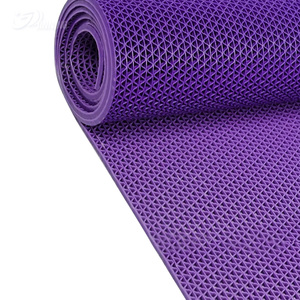
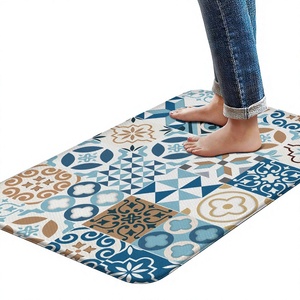
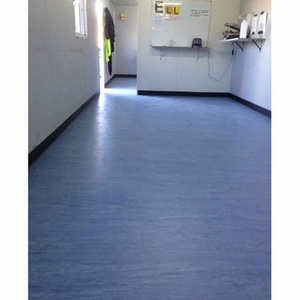
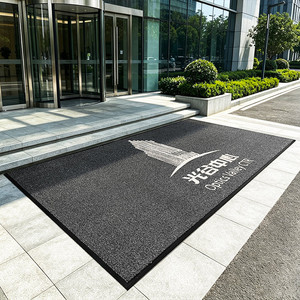
In modern industrial, commercial, and healthcare architecture, slip-and-fall incidents represent a significant liability and occupational safety hazard. Sourcing slip-resistant flooring from leading China manufacturers requires a rigorous understanding of coefficient of friction (COF), polymer surface mechanics, micro-embossing depth, and dynamic fluid evacuation channels. Chinese manufacturing ecosystems have evolved beyond basic mass production to deliver specialized, high-performance elastomeric and thermoplastic polymer floor coverings engineered under stringent international standards.
Slip resistance is fundamentally governed by the interaction between footwear outsoles, surface contaminants (water, oil, particulate grease), and the microscopic profile of the flooring material. When liquid contaminants intervene, hydroplaning can occur if the flooring surface lacks adequate surface roughness or drainage geometry. To mitigate this, high-traction China PVC vinyl rolls, LVT tiles, and SPC planks incorporate multi-layered micro-textures combined with inorganic anti-skid additives such as aluminum oxide ($\text{Al}_2\text{O}_3$) particles embedded directly within the UV-cured poly-urethane (PUR) wear layer.
When procuring floor coverings from OEM/ODM exporters in China, structural engineers and procurement directors must evaluate technical data sheets against three core global testing frameworks:
SEO Engineering Insight: Achieving true E-E-A-T compliance in floor manufacturing requires rigorous laboratory verification. Premium Chinese suppliers deploy in-house PLC-controlled electro-testing rigs to continuously verify batch-level COF and static dissipation performance prior to container loading.
The structural longevity of slip-resistant resilient flooring depends on polymer cross-linking density and core layer dimensional stability. Commercial-grade vinyl rolls and SPC planks manufactured in China utilize a multi-layer composite matrix:
| Layer Component | Material Formulation | Functional Contribution | Technical Specification |
|---|---|---|---|
| Surface Wear Layer | High-Density Polyvinyl Chloride + PUR Coating | Abrasion resistance, anti-staining, anti-microbial seal | 0.3mm to 0.7mm (Group T Wear Class) |
| Traction Embossing | Micro-textured Quartz / Alumina Particle Matrix | Hydrodynamic liquid dispersion & frictional mechanical grip | R10 - R12 DIN 51130 Compliance |
| ESD Conductive Lattice | Continuous Carbon Black Electro-conductive Network | Static discharge prevention for cleanrooms & electronics assembly | Surface Resistance: $10^4 - 10^6 \Omega$ |
| Rigid Core Matrix | Stone Plastic Composite ($\text{CaCO}_3$ + Virgin PVC) | Dimensional stability under temperature fluctuations & dynamic loads | Density ≥ 2.0 g/cm³, Click Strength > 2.5 kN/m |
| Acoustic Base Layer | High-Elasticity Closed-Cell IXPE / EVA Underlayment | Impact noise reduction, ergonomic shock absorption | Impact Sound Insulation $\Delta L_w \approx 18-22 \text{ dB}$ |
Combining continuous extrusion manufacturing, automated PLC quality assurance, and rigorous export logistics to serve high-volume infrastructure procurement.
Utilizing high-tonnage multi-roller extrusion lines equipped with automatic thickness gauge feedback, ensuring micro-level uniformity across 2-meter wide vinyl rolls and LVP tiles.
Products achieve EN 13501-1 Class Bfl-s1 flame retardancy alongside IEC 61340 electrostatic dissipation standards, suitable for pharmaceutical cleanrooms and data storage hubs.
Full OEM/ODM support for custom wear-layer thickness, bespoke graphic film designs, specialized surface embossing depths, and custom cut-to-size tile dimensions.
As global environmental regulations tighten and industrial automation demands higher workplace safety specs, Chinese flooring exporters are pioneering next-generation resilient surfacing technologies. B2B importers and contract specifiers should align their procurement strategies with four key evolutionary trends driving the industry forward:
Leading China factories have transitioned from traditional orthophthalate plasticizers (such as DEHP and DBP) to bio-based soybean oil derivatives and DOTP (Dioctyl Terephthalate). This shift ensures compliance with EU REACH annex XVII regulations and California Proposition 65, dramatically reducing volatile organic compound (VOC) emissions while maintaining elastomeric anti-slip flex properties.
In response to elevated hygiene standards in healthcare and commercial kitchen environments, non-slip vinyl rolls are increasingly infused with ionic silver ($\text{Ag}^+$) nano-particles within the PUR surface seal. This provides continuous 99.9% inhibition against $E. coli$ and $S. aureus$ bacteria without compromising friction coefficients under wet cleaning conditions.
Modern click-lock SPC flooring now pairs high-density anti-slip vinyl wear layers with co-extruded acoustic bases. The integration of closed-cell cross-linked polyethylene (IXPE) provides mechanical dampening, damp-proofing, and thermal insulation required for multi-story hotel and apartment developments.
For specialized transit hubs, industrial warehouse automation zones, and accessible infrastructure, suppliers are developing heavy-duty tactile indicator tiles. These feature directional ridges and studs with elevated R13 slip resistance, facilitating safe pedestrian navigation and automated guided vehicle (AGV) traction.
Selecting the correct anti-slip flooring formulation based on environmental stress factors, liquid viscosity exposure, and static control requirements.
Requirement: Continuous 2mm anti-slip PVC rolls with heat-welded seams. Provides stain resistance against iodine, bacteriostatic protection, and R10 slip friction for heavy rolling gurney traffic.
Requirement: Conductive vinyl tiles with embedded carbon threads. Delivers strict electrical static dissipation ($10^4 - 10^6 \Omega$) combined with plain anti-slip surface safety to protect microchips.
Requirement: Deep-embossed PVC drainage mats and oil-resistant vinyl tiles. Engineered to evacuate animal fats and liquids rapidly while delivering R12-R13 slip resistance.
Key technical insights for global project buyers, site engineers, and procurement agents importing slip-resistant flooring from China.
Static COF measures the initial force required to initiate movement between a stationary shoe sole and the flooring surface. Dynamic COF measures the friction maintained during continuous sliding motion. For commercial procurement, Dynamic COF (tested via ASTM C1028 or Pendulum BS 7976-2) is critical because slips occur when dynamic friction drops drastically due to liquid surface contamination. High-tier China suppliers provide dual-certifications confirming both static COF ≥ 0.8 and dynamic PTV ≥ 36.
While standard anti-slip PVC tiles focus purely on mechanical surface traction, ESD (Electrostatic Discharge) conductive tiles feature an interconnected lattice of electrical-grade carbon particles embedded throughout the matrix. This continuous network safely bleeds electrical charges off personnel to ground ($10^4 - 10^6 \Omega$ electrical resistance), preventing catastrophic electrostatic damage in semiconductor manufacturing, operating theaters, and server rooms while maintaining a slip-resistant surface.
Yes. Specialized open-mesh PVC drainage rolls and deep-embossed vinyl flooring rolls are waterproof and chemical-resistant against chlorine and cleaning agents. For permanent installation in wet rooms, 2mm-3mm continuous PVC rolls are hot-welded at the seams using matching PVC welding rods to form an impermeable anti-slip barrier compliant with DIN 51097 Group C barefoot safety requirements.
When requesting quotations, importers should specify: 1) Independent third-party test reports (SGS, Intertek, or TÜV) for DIN 51130 slip ratings; 2) EN 13501-1 Fire Reaction classification (Class Bfl-s1); 3) VOC emission reports (Floorscore or Eurofins Indoor Air Comfort Gold); and 4) ISO 9001 quality factory audit certificates. Certified Chinese manufacturers provide complete technical compliance dossiers for seamless customs clearance and architectural submittals.
For light commercial spaces (offices, boutique retail), a 0.3mm (12 mil) wear layer is sufficient. However, for heavy commercial and industrial environments (hospitals, schools, supermarket aisles, public transit hubs), a 0.55mm (22 mil) to 0.7mm (28 mil) virgin PVC wear layer with UV-cured aluminum oxide PUR coating is mandatory to prevent premature wear through the printed visual layer under heavy foot traffic and rolling equipment.
Request detailed product data sheets, certified laboratory testing reports, custom sample swatches, or direct container-load price quotes from our technical sales engineering team.
Inquire Now