
As a premiere Tier-1 China manufacturer and global exporter, we specialize in high-load structural steel cable trunking, perforated channels, ZAM anti-corrosion pathways, and PLC-electroforged industrial flooring systems designed for oil refineries, nuclear power plants, mega-data centers, and heavy infrastructure projects worldwide.
Precision-engineered products manufactured to international standards including IEC 61537, NEMA VE 1, and ASTM A123.
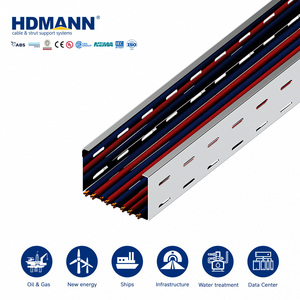
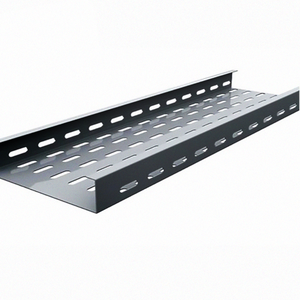
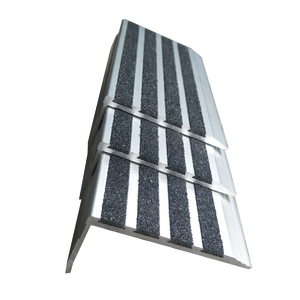
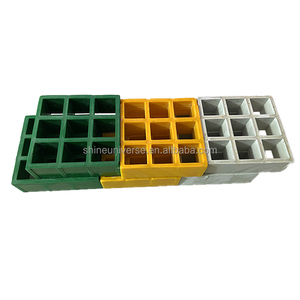
In large-scale industrial facility engineering, electrical distribution containment is no longer considered a passive structural component. Modern high-density power plants, automated manufacturing facilities, and chemical refining complexes generate exceptional mechanical dynamic stresses, thermal expansion vectors, and corrosive ambient environments. Choosing an optimal steel cable trunking system demands a rigorous understanding of structural beam deflection mechanics, protective metallurgy, and thermal dissipation dynamics.
Metallic cable trunking and perforated cable channels behave mechanically as continuous beam structural elements supported over structural steel framing at designated intervals ($L$). Under maximum cable weight density ($w$, expressed in $\text{kg/m}$ or $\text{N/m}$), the maximum mid-span deflection ($\delta_{max}$) under uniform linear loading is governed by classic elastic beam dynamics:
δmax = (5 · w · L4) / (384 · E · I)
Where E represents the Elastic Modulus of the base structural material (e.g., $210 \times 10^9 \, \text{N/m}^2$ for structural Q235B steel vs. $69 \times 10^9 \, \text{N/m}^2$ for 6063-T6 Aluminum Alloy), and I is the cross-sectional Area Moment of Inertia of the trunking geometry. High-capacity steel trunking manufactured with continuous bottom stiffener corrugations and return-lip structural flanges significantly increases I without proportionally adding dead weight, preserving structural deflection below NEMA VE 1 design thresholds ($\le L/200$).
| Material / Alloy System | Tensile Strength (MPa) | Yield Strength (MPa) | Corrosion Resistance Class | Relative Cost / Lifecycle Ratio |
|---|---|---|---|---|
| Hot-Dip Galvanized Mild Steel (HDG Q235B) | 370 – 500 | ≥ 235 | C3 to C5-I (ISO 12944) | Optimal baseline CapEx / 30-Year Lifespan |
| Zinc-Aluminum-Magnesium (ZAM Steel) | 400 – 550 | ≥ 275 | C5-M Marine Self-Healing | High Performance / Low Maintenance OpEx |
| Stainless Steel (AISI 316L / 304) | 520 – 750 | ≥ 220 | Extreme Chemical / Acid Washdown | Premium CapEx / 50+ Year Zero-Maintenance |
| Aluminum Alloy (6063-T6 Anodized) | ≥ 205 | ≥ 170 | Atmospheric Marine / Non-Magnetic | Lightweight / Reduced Installation Labor |
| Pultruded FRP / GRP Composites | 300 – 600 | N/A (Anisotropic) | Dielectric / Total Chemical Immunity | Specialized Non-Conductive Applications |
Traditional hot-dip galvanizing (HDG) per ISO 1461 submerges fabricated steel trunking into molten zinc at ~450°C, producing a series of metallurgical zinc-iron alloy layers (Gamma, Delta, Zeta) topped by an outer Eta layer of pure zinc. While offering exceptional barrier protection, cut edges formed during field modification expose raw steel substrates to localized galvanic degradation.
The emergence of Zinc-Aluminum-Magnesium (ZAM) coated steel sheet represents a technological paradigm shift in China cable trunking manufacturing. Composed of approximately 6% Aluminum, 3% Magnesium, and balance Zinc, ZAM coatings form a highly dense, tightly bonded protective film consisting of Simonkolleite ($Zn_5(OH)_8Cl_2\cdot H_2O$) and zinc hydroxycarbonate. When cut edges are exposed in humid or saline environments, the coating dissolves slightly to form a stable protective runoff layer that self-heals cut edges, drastically reducing red rust formation without requiring post-fabrication hot-dip dipping.
Global EPC contractors are shifting away from manual field cutting toward fully prefabricated, engineered-to-drawing trunking assemblies. Pre-cut lengths, integrated mounting brackets, and factory-punched knockouts reduce jobsite labor hours by up to 35% while eliminating localized coating degradation caused by angle-grinder friction heat.
High-voltage DC lines supplying hyperscale AI data centers demand maximum thermal dissipation to reduce conductor electrical resistance ($R = \rho L / A$). Ventilated cable trunking and engineered perforated channels facilitate natural convection airflow, lowering continuous cable operating temperatures by 4°C to 8°C and optimizing long-term power grid distribution efficiency.
In response to carbon border adjustment mechanisms (CBAM) and corporate ESG targets, leading Chinese factories are adopting electric arc furnace (EAF) recycled steel stocks combined with low-emission ZAM and eco-friendly trivalent chromium passivation processes, reducing embedded carbon footprints by over 28% per ton produced.
Our manufacturing ecosystem integrates heavy industrial fabrication, electro-welding automation, and metallurgical surface treatment beneath one rigorous ISO 9001, ISO 14001, and ISO 45001 management structure. Derived from decades of specialization in heavy industrial gratings and cable tray systems, our facilities deliver uncompromised quality for high-stakes infrastructure deployments.
Utilizing heavy automated electroforging lines capable of exerting over 100 metric tons of hydraulic pressure simultaneously with ~2200 Amperes of electrical current, cross bars are fully fused into load-bearing bars. This creates a homogeneous, monolithic joint structure without micro-cracks or weld slag inclusions, providing maximum dimensional stability across heavy-duty steel gratings and structural support systems.
Our fully integrated chemical processing line features multi-stage acid pickling, fluxing, and continuous hot-dip galvanizing kettles ensuring uniform zinc adhesion (minimum 610 g/m² per ASTM A123). For stainless steel trunking and sanitary floor gratings, automated acid pickling and electro-polishing units remove heat tint and micro-impurities, achieving a passive chromium-oxide surface layer suited to chemical and pharmaceutical standards.
Addressing crucial specification, compliance, and logistics inquiries for international project engineers and buyers.
Solid bottom cable trunking provides complete physical enclosure, protecting sensitive signal, instrumentation, and control cables from dust, EMI/RFI electrical interference, water ingress, and accidental mechanical damage. Perforated cable trays, by contrast, feature continuous side rails with patterned bottom cutouts that promote natural convection cooling for high-current power distribution cables while facilitating flexible cable tie-down anchoring at any point along the pathway.
Thermal expansion for linear steel trunking is computed using the formula: ΔL = α · L · ΔT, where α is the linear thermal expansion coefficient for structural steel (12 × 10-6 / °C), L is the continuous span length, and ΔT is the maximum ambient temperature differential between winter installation and peak operational summer conditions. Per NEMA VE 1 guidelines, expansion guides and slotted splice plates must be placed at calculated intervals to prevent structural buckling.
Every commercial export shipment includes comprehensive inspection documentation: Material Test Certificates (MTC) to EN 10204 3.1 detailing chemical heat analysis and mechanical tensile yield properties, Coating Thickness Inspection Reports (ISO 2178 / ASTM B499), Safe Working Load (SWL) test verification per IEC 61537, and Third-Party Inspection (TPI) sign-offs from agencies such as SGS, Bureau Veritas, or TÜV upon request.
Yes. Utilizing your approved CAD/BIM structural drawings, our factory pre-fabricates all panel cut-outs (round, square, or edge notch to clear pipes and structural columns), welds integrated toe/kick plates, and bands exposed perimeter bar edges. Panels are marked with unique piece tags matching your site layout drawings for rapid, seamless field placement.
ZAM steel offers superior corrosion protection—up to 5 to 10 times higher salt-spray resistance than standard electro-galvanized or thin HDG coatings. Furthermore, ZAM's unique micro-structure provides active self-healing cut-edge protection, preventing rust creep when trunking is cut or drilled on site, while offering a smooth, aesthetic surface finish ideal for architectural and cleanroom facilities.
Connect directly with our senior application engineers. We provide full technical drawing reviews, custom structural load calculations, factory-direct OEM pricing, and export delivery plans tailored to your project schedule.