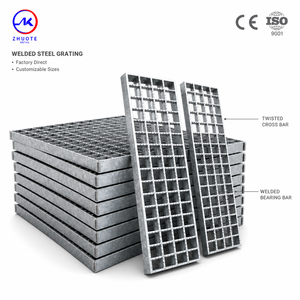

Precision-fabricated trench covers, electroforged platforms, anti-slip stair treads, and heavy-duty industrial cable trays engineered to international structural codes.
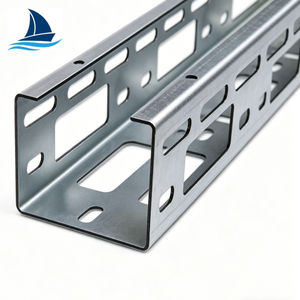
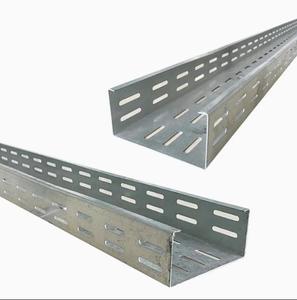
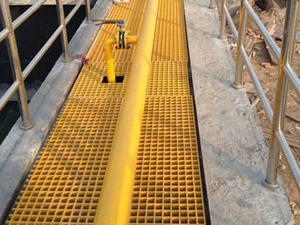
Industrial linear surface drainage systems demand uncompromising metallurgical integrity, exact open-area discharge dynamics, and structural resistance under high-impact vehicular traffic.
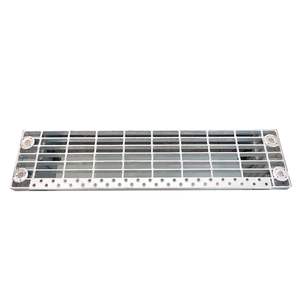
Effective trench drain grating is engineered not merely for surface closure, but to maximize hydraulic interception rates while minimizing debris blinding. Standard longitudinal slotted grids, heel-proof cross patterns, and diamond open matrixes are calculated against local 100-year storm frequencies. A balance between free open surface area (typically 45% to 68%) and mechanical wheel-span deflection ensures that surface runoff is rapidly channeled without hydrodynamic bypass along high-velocity transit aprons.
Channel grates endure profound dynamic shear, cyclic vibration, and dynamic impact loading. Utilizing BS EN 1433 and EN 124 standards, trench drain grates are graded from Class A15 (pedestrian/bikeways) to Class F900 (extreme wheel loads encountered on airport runways, military bases, and container terminals). By combining deep cross-section bearing bars with precision forge-welded twisted rods or high-tensile ductile iron (EN-GJS-500-7), bending moments and structural deflection are controlled within tight L/500 thresholds.
Corrosion mitigation defines long-term lifecycle durability. Mild steel gratings undergo rigorous hot-dip galvanization per ASTM A123 / ISO 1461, yielding protective zinc layers exceeding 85 μm. For aggressive chemical processing, marine ports, and pharmaceutical facilities, austenitic stainless steels (AISI 304, AISI 316, and heat-resistant 309) undergo electro-polishing and chemical passivation to permanently eliminate iron contamination and stress corrosion cracking in high-chloride zones.
This benchmark engineering table guides procurement teams in matching EN 1433 / EN 124 load classes to correct raw materials, structural bearing bars, and surface treatments.
| EN 1433 Class | Test Load (kN) | Recommended Metallurgy | Common Bearing Bar Dimensions | Target Civil Application |
|---|---|---|---|---|
| Class A 15 | 15 kN | Pultruded FRP / 304 Stainless / Mild Steel | 20 x 3 mm to 25 x 3 mm | Pedestrian walkways, greenway landscaping, cycle routes |
| Class B 125 | 125 kN | Galvanized Carbon Steel / Molded FRP | 25 x 5 mm to 30 x 3 mm | Sidewalk curbs, commercial parking garages, light light-duty logistics |
| Class C 250 | 250 kN | Hot-Dip Galvanized Mild Steel / Ductile Iron | 32 x 5 mm to 40 x 5 mm | Curb channels, light industrial service roads, delivery bays |
| Class D 400 | 400 kN | Electroforged Heavy Duty Steel / Cast GJS-500 | 50 x 5 mm to 65 x 5 mm | Highways, heavy logistics parks, freight stations, gas stations |
| Class E 600 | 600 kN | Heavy-Duty Welded Solid Steel / Ductile Iron | 75 x 6 mm to 90 x 8 mm | Harbors, forklift operation zones, manufacturing plant floors |
| Class F 900 | 900 kN | Engineered Heavy Bar Grating / Alloy Cast Iron | 100 x 10 mm Custom Engineered | Commercial airfield runways, military facilities, intermodal crane berths |
Evaluating shifting supply chain parameters, technical developments in metallurgy, and digital procurement transformation shaping global infrastructure supply chains.
Global project specifications are actively pivoting from traditional post-fabrication batch galvanizing toward continuous Zinc-Aluminum-Magnesium alloy coatings. Offering self-healing cut-edge passivation and up to five times greater salt-spray resistance than basic zinc coatings, ZAM-treated metal trays and trench grates substantially lower total cost of ownership in marine and industrial environments.
Standard off-the-shelf catalog grates often fail to accommodate pipe penetrations, expansion joints, and irregular perimeter retaining walls. Sourcing contracts require manufacturers to integrate direct-from-BIM parametric files (Revit/Tekla). Laser CNC cutting and integrated perimeter flat-bar banding ensure that every trench unit is labeled and sequence-packed for rapid modular fit-up on site.
Pultruded and molded fiber-reinforced polymer (FRP) trench covers are steadily taking market share in chemical and coastal drainage applications. By pairing zero electrical conductivity with comprehensive resistance to caustic acids, petroleum distillates, and H₂S wastewater gases, FRP eliminates recurring maintenance shutdowns without forfeiting wheel-load safety margins.
End-to-end industrial quality control, massive production capacity, and documented traceability under international inspection frameworks.
Utilizing high-tonnage automated forge-welding machinery delivering over 100 metric tons of hydraulic pressure paired with 2,200 A current, our bearing and twisted cross bars fuse into an unbreakable homogenous joint free from structural voids or micro-cracks.
From commercial structural carbon steel (Q235B/S235JR) to marine-grade AISI 316 stainless, high-silicon ductile iron, and fire-retardant phenolic FRP, we eliminate the complexity of multi-vendor management for sprawling infrastructure projects.
Every shipment is backed by verified heat numbers, raw mill certificates, yield and tensile strength validation, and hot-dip galvanizing thickness reports complying strictly with ASTM A123, BS EN ISO 1461, and CE standards.
Grating panels and trench drain covers are systematically marked to engineering layout drawings, banded with high-tensile steel strapping, corner-protected, and palletized in moisture-resistant wraps for seamless container devanning at destination ports.
Direct answers to the most common metallurgical, structural, and logistical questions raised by project engineers and procurement heads.
Electroforged gratings are produced through automated PLC machines applying hydraulic pressure exceeding 100 tonnes simultaneously with 2,200 amperes of electrical current. This process fuses the twisted square cross bar into the pre-slotted bearing bar without filler wire, creating a homogenous, crack-free joint. Hand-welded gratings, by comparison, are manually tacked and are best suited for irregular layouts or custom fabricated shapes with non-standard cutouts.
For carbon steel in high-salinity zones, heavy hot-dip galvanizing exceeding 85–100 μm (610 g/m²) conforming to ISO 1461 / ASTM A123 is the minimum standard. For extended service life without periodic re-coating, austenitic stainless steel AISI 316 (acid washed and electro-polished) or chemical-grade isophthalic/vinyl ester FRP grating provides ultimate resistance to chloride-induced pitting.
Class D400 (400 kN test load) is specified for public carriageways, arterial roads, highway shoulders, and industrial delivery docks where heavy commercial tractor-trailers operate. Class F900 (900 kN test load) is explicitly reserved for severe load concentrations—most notably airport taxiways, airside refueling aprons, dry docks, and deep-water container terminal lanes subjected to extreme axle configurations.
Yes. Using your approved mechanical CAD or BIM shop drawings, circular, radial, and angular cutouts can be precision cut via CNC plasma or band saw. In compliance with industrial safety standards, all internal and perimeter cutouts are systematically banded with structural flat bars of identical thickness to ensure uniform load transfer and eliminate exposed sharp edges.
To guarantee engineering compliance and cost accuracy, supply: (1) Bearing bar height and thickness; (2) Bearing bar center-to-center pitch; (3) Cross bar pitch; (4) Total trench clear span; (5) Required design load or EN 1433 class; (6) Base material grade and surface finish (e.g., HDG, pickle-passivated); and (7) Destination port for shipping calculations.
Molded fiberglass grating (FRP/GRP) consists of continuous interwoven fiberglass strands embedded in thermosetting resin. Unlike galvanized steel, which rapidly degrades when exposed to sulfuric acid, ammonia, or bleach runoffs, FRP is completely non-sparking, dielectric, requires zero recoating, and weighs roughly one-third of equivalent-strength steel, significantly reducing structural support requirements and freight costs.
Send your structural design schedules, tender specifications, or bill of quantities to our senior engineering team. Receive load calculations, detailed compliance certificates, and factory-direct pricing tailored to your procurement schedule.