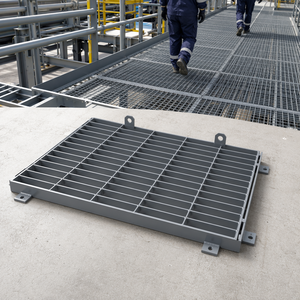
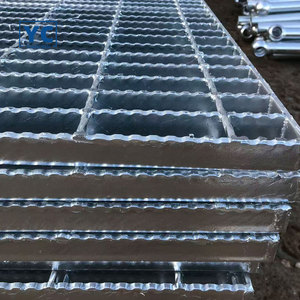
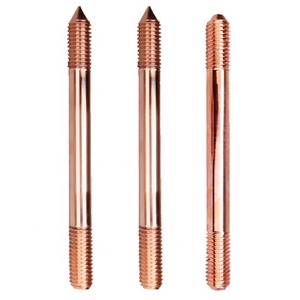
Explore our export-certified modular panels, manufactured via high-pressure electroforging, advanced pultrusion molding, and robotic welding for mission-critical industrial infrastructures.
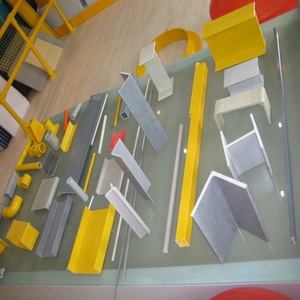
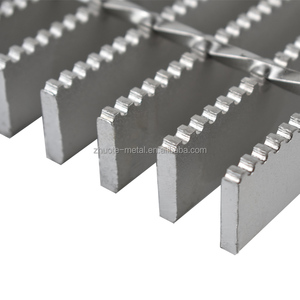
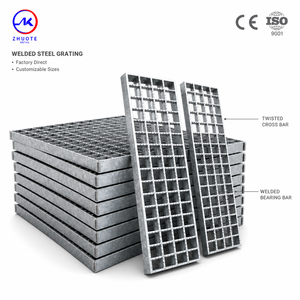
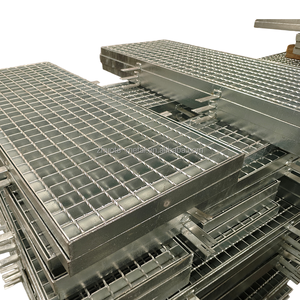
Hydraulic PLC pressure per weld junction eliminating internal fissures
Molecular fusion of twisted crossbars into structural bearing bars
Automated CNC edge-banding and laser-guided plasma cutting control
Ocean-freight bundled to ASTM A123, BS EN ISO 1461 & AS 1657
Industrial grating panels represent the frontline structural floor envelope across petrochemical processing facilities, offshore oil and gas rigs, municipal water treatment systems, high-voltage substations, and modern mega-scale logistics hubs. Far from being simple walking surfaces, structural bar gratings are engineered open-grid assemblies subjected to dynamic fatigue stresses, high concentrated point loads, vibration induced by turbomachinery, and aggressive chemical atmosphere attacks.
The fundamental load-carrying mechanism of bar grating relies almost exclusively on the vertical bearing bars. Positioned along the structural span direction between beam supports, the depth and thickness of these flat bars dictate the section modulus ($S_x$) and moment of inertia ($I_x$), determining how much deflection will occur under uniform or rolling vehicular wheel traffic. The orthogonal cross bars (whether square twisted steel, round bars, or pultruded FRP tie-rods) serve to resist lateral buckling under bending stress, stabilize the compression flange of the bearing bars, and maintain precise panel squareness.
Engineering Tip: Under NAAMM (National Association of Architectural Metal Manufacturers) MBG 531 and BS 4592 standards, pedestrian walkways are strictly designed to maintain a maximum deflection of L/200 (span divided by 200) or 10 mm (whichever is smaller) under a uniform live load of 5.0 kN/m². In areas subject to rolling equipment or forklift traffic, bearing bar depths must be evaluated under axle point loads with dynamic impact factors of no less than 30%.
A vital consideration for procurement directors is the joining methodology. Traditional manual stick welding or semi-automatic MIG fabrication creates intermittent, localized heat-affected zones (HAZ). This often causes residual micro-cracking, internal tensile stresses, and inconsistent zinc penetration during subsequent hot-dip galvanizing baths.
In contrast, advanced PLC-controlled electroforging subjects the twisted crossbar to over 100 tonnes of simultaneous hydraulic force while delivering a concentrated surge of 2,200 Amperes of resistance-heating current. This instantly plasticizes the steel junction, completely embedding the crossbar flush into the bearing bar without filler wire. The resulting monolithic structure achieves:
Standard and serrated carbon steel panels forged for refineries, boiler rooms, mining walkways, and utility staircases. Excellent strength-to-weight efficiency.
Fabricated with deep carbon steel bars (up to 150mm x 10mm) designed to withstand AASHTO H-20 / HS-25 bridge loading, container handlers, and military transport vehicles.
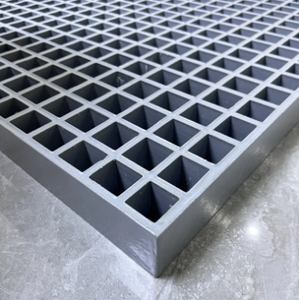
Glass-reinforced thermoset resin matrix providing complete immunity to chemical corrosion, non-conductive dielectric isolation, and effortless hand-tool handling.
Selecting the ideal grating profile demands evaluating corrosion severity, mechanical fatigue cycles, slip-resistance requirements, and total cost of ownership. The comparative engineering parameters below reflect international industry guidelines:
| Grating Family | Material / Metallurgy | Yield / Tensile Strength | Surface Treatment | Max Service Temp | Slip Resistance Rating |
|---|---|---|---|---|---|
| Electroforged Carbon Steel | Q235B, ASTM A36, S275JR | Yield: ≥235 MPa Tensile: 370-500 MPa |
Hot-Dip Galvanized (≥85 μm) / Plain / Bitumen Painted | -40°C to +400°C | DIN 51130 R10 (Plain) / R13 (Serrated) |
| Austenitic Stainless Steel | AISI 304, 316, 316L, 309 | Yield: ≥205-240 MPa Tensile: 515-620 MPa |
Acid Pickled & Passivated / Electro-Polished Mirror | Up to +800°C (309) / +550°C (316) | R11 - R12 with Micro-Serration |
| Heavy Duty Bridge Grating | ASTM A572 Gr. 50 / Q355B | Yield: ≥355 MPa Tensile: 490-630 MPa |
Extra Heavy Galvanizing (≥120 μm) | -40°C to +450°C | R13 Heavy Serrated Notch |
| Pultruded FRP / GRP | E-Glass Fibers + Vinylester | Tensile: 280-450 MPa Flexural: ≥300 MPa |
Quartz Grit Top / Integral Meniscus Coating | -60°C to +110°C | DIN 51130 R13 / Pendulum ≥70 |
| Molded FRP Composite | Polyester / Isophthalic Resin | Tensile: 150-220 MPa Flexural: ≥180 MPa |
Concave Anti-Slip / Embedded Corundum Grit | -50°C to +90°C | R12 Concave / R13 Grit Top |
Industrial work areas exposed to crude oil spills, drilling lubricants, hydraulic fluid mist, or ocean salt crusting require careful safety evaluation. Standard smooth flat bar gratings carry a pedestrian slip-resistance rating of R10 according to DIN 51130 ramp tests, which may prove inadequate on inclined walkways or vibrating drill decks.
Specifying serrated bearing bars introduces continuous trapezoidal or semi-circular cut notches into the top compression fiber of the steel bar. These notches physically penetrate fluid surface tensions and grip work boot soles under angles exceeding 27 degrees, achieving a premier R13 rating. In extreme corrosive chemical environments, pultruded or molded FRP gratings with bonded aluminum oxide (corundum) quartz grit surfaces deliver equivalent traction without sacrificing galvanic integrity.
From high-volume PLC-automated production runs to millimetric customized shop fabrication, our manufacturing infrastructure delivers structural consistency, verified testing protocols, and complete project trace compliance.
Our drafting department details panel marks, edge cut-out banding, toe-plate kickers, and notch allowances directly from engineering general arrangements.
High-voltage electric resistance heat fusing twisted crossbars into structural bars with zero hollow spaces, ensuring defect-free galvanization coatings.
Immersion galvanizing conforming to ASTM A123, EN ISO 1461, and AS/NZS 4680, guaranteeing minimum zinc coating thicknesses of ≥85 μm up to 120 μm.
Acid pickling, fluoronitric passivation, and electrolyte polishing tanks restore protective chromium oxide films on 304 and 316 assemblies for cleanroom and food standards.
Ocean freight packing using reinforced steel banding, vapor-corrosion inhibiting (VCI) films, and custom timber dunnage engineered to resist cargo movement.
Every shipment is accompanied by CE EN 10204 Type 3.1 inspection certificates, chemical spectrometry verification, and destructive mechanical load test reports.
The procurement landscape for industrial gratings has entered an era of rapid transformation driven by three major structural shifts: the worldwide adoption of modular offsite construction, tightening carbon accounting protocols (Scope 1, 2, and 3 emissions), and the total cost of ownership (TCO) replacement of plain cast-iron or concrete channels.
Mega-projects in LNG processing, green hydrogen production, and semiconductor fabrication no longer perform manual cutting, fitting, and edge-banding on-site. Field cutting breaches the protective zinc layer, triggering premature galvanic rust, while burning significant craft labor hours.
Forward-thinking EPC contractors require structural grating vendors to deliver complete modular pre-cut panel systems. Every panel is tagged with CNC barcodes corresponding to 3D BIM models (Tekla / Revit), supplied with pre-welded toe-plates (kick plates), factory-radiused circular cutouts for pipe risers, and galvanized saddle clamps. This offsite prefabrication approach cuts field installation hours by up to 65% and ensures full zinc cladding continuity across all cut perimeters.
While hot-dip galvanized carbon steel maintains the lowest initial purchase expenditure, lifecycle costing over a 25-year operational envelope tells a radically different story in aggressive marine or chemical process atmospheres:
LCC Sourcing Equation: $Total\ Cost = C_{initial} + C_{freight} + C_{installation} + C_{maintenance} - C_{salvage}$. Because FRP composite grating weighs roughly one-third of equivalent-depth carbon steel, shipping density costs decrease by over 40%. Furthermore, in environments rich in hydrogen sulfide (sewage plants) or salt aerosol (coastal chemical terminals), galvanized steel frequently necessitates sandblasting and recoating every 5 to 7 years. FRP remains completely inert throughout a 25+ year lifespan, eliminating costly plant shutdowns.
Looking forward, industrial grating design is embracing digital and metallurgical innovations:
Embedded strain-gauge fiber optics within composite pultrusions to monitor live load deflections and detect structural fatigue in automated distribution centers.
Electric arc furnace (EAF) steel sourcing powered by renewable grids, cutting embodied carbon emissions by over 60% to meet corporate ESG and CBAM mandates.
Next-generation thermal diffusion galvanizing coupled with ceramic thin-film sealers, extending salt-spray rust protection beyond 2,000 continuous hours.
Transition from petroleum-based thermosets to depolymerizable bio-resins that retain high mechanical strength while enabling closed-loop recycling at plant decommissioning.
Technical guidance covering dimensional specifications, protective coatings, span configurations, and international delivery requirements.
The span direction is always the orientation in which the bearing bars run and must point from support to support. Bearing bar size (e.g., 32x5 mm, 40x3 mm, 50x5 mm) is determined by the clear span distance, required uniform load (typically 5 kN/m² for pedestrian access), concentrated point load requirements, and the allowable deflection threshold (typically L/200 or 10 mm). Our engineering department provides load calculation tables to verify that the chosen profile satisfies all relevant criteria.
When bearing bars are cut to create penetrations for piping, columns, or valves, the severed ends forfeit their lateral stability and cannot distribute concentrated loads across adjacent bars. Banding involves welding a flat steel bar of equal depth across every cut edge. This stabilizes the panel, prevents premature buckling under edge loading, and fulfills OSHA and AS 1657 occupational drop-through prevention requirements.
Both standards govern hot-dip galvanizing of fabricated steel products, but specify slightly different testing regimes and coating thicknesses. ASTM A123 requires minimum average coating thickness grades ranging from 75 μm to 100 μm (approx. 530-705 g/m²) depending on steel thickness. ISO 1461 mandates a minimum of 85 μm (approx. 610 g/m²) for steel over 6 mm. Our production facilities maintain bath temperatures of 445-455°C with high-purity zinc ingots to satisfy both standards interchangeably.
Pultruded FRP grating features a high glass-to-resin ratio (approx. 65-70% continuous glass rovings and mats), conferring significantly higher unidirectional tensile and flexural stiffness than molded grating. Pultruded panels span substantially wider distances without excessive deflection, making them an ideal lightweight, non-conductive alternative to stainless steel in chemical trenches, cooling towers, and offshore deck platforms.
Direct contact between zinc-galvanized carbon steel and aluminium creates a bimetallic couple that rapidly degrades the aluminium anode in conductive saline environments. We supply dielectric isolation kits featuring EPDM or neoprene insulation pads, nylon insulating washers, and 316 stainless steel saddle fastening clips to isolate mismatched metals and completely prevent galvanic cell formation.
An executable quotation requires: (1) Bearing bar dimensions (depth × thickness) and center-to-center pitch; (2) Cross bar type and spacing; (3) Overall panel widths and span lengths; (4) Surface type (plain, serrated, grit-top); (5) Finish standard (hot-dip galvanized, pickling, raw); (6) Design load classification (pedestrian, vehicular, AASHTO rating); and (7) Project layout drawings or cut-out schedules.
Whether your current project requires 10,000 square meters of electroforged walkway panels, marine-grade AISI 316L cleanroom platforms, or custom-banded mezzanine decking, our technical engineering specialists review your structural drawings, verify span loads, and ensure reliable export delivery schedules.
Contact Us