Galvanised Earthing Plates Engineered for Maximum Fault Dissipation & Grid Reliability
Omkar Gratings Pvt Ltd (Omkareshwar Engineering) manufactures and exports premium-grade Galvanised Earthing Plates, lattice earth grounding mats, and custom substation grounding grids. Engineered strictly to international standards including IS 3043, BS 7430, and IEEE 80, our grounding plates offer superior low-impedance dissipation paths for fault currents and lightning surges across mission-critical utility, renewable energy, and industrial infrastructure.
Manufactured using high-purity structural carbon steel and treated through automated, high-immersion hot-dip galvanizing baths, our GI earthing plates deliver an impenetrable zinc alloy barrier (coating thickness > 86–100 μm) resistant to aggressive soil chemistry, moisture, and subterranean electrolysis. We engineer directly to EPC project schedules and detailed engineering drawings with pre-welded riser strips, bi-metallic terminal connectors, and multi-hole terminal lugs.
86–100+ μmHot-dip zinc coating thickness per ISO 1461 / IS 2629
100+ tHydraulic forging pressure on heavy lattice joints
< 0.5 ΩAchievable grid resistance in engineered soil pits
100%Tested to IS 3043, BS 7430 & IEEE 80 standards
Product Architecture & Top Recommendations
Engineered Galvanised Earthing Plates for Substation & Industrial Grounding
Electrical safety systems cannot afford unproven metallurgy. Our galvanised earthing plates deliver reliable fault mitigation, eliminating the high theft risk and galvanic corrosion vulnerabilities common with conventional copper grounding in acidic or industrial backfills.
Lattice Galvanised Earth Mats
IS 3043 Compliant
Twisted / Flat Crosses
High Fault Surge
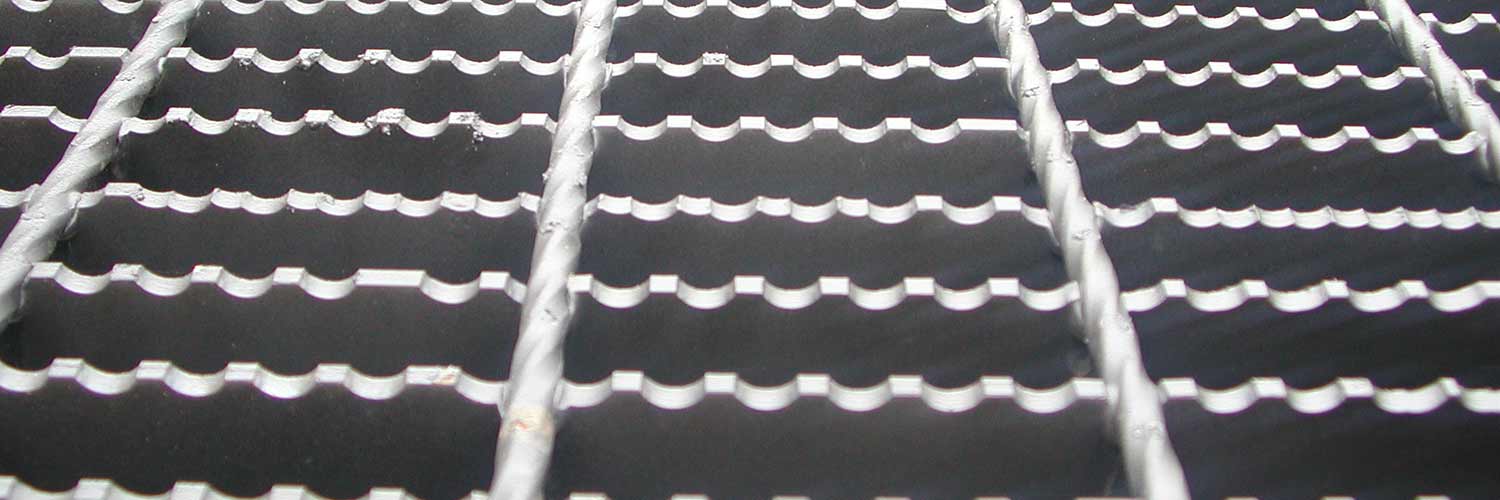
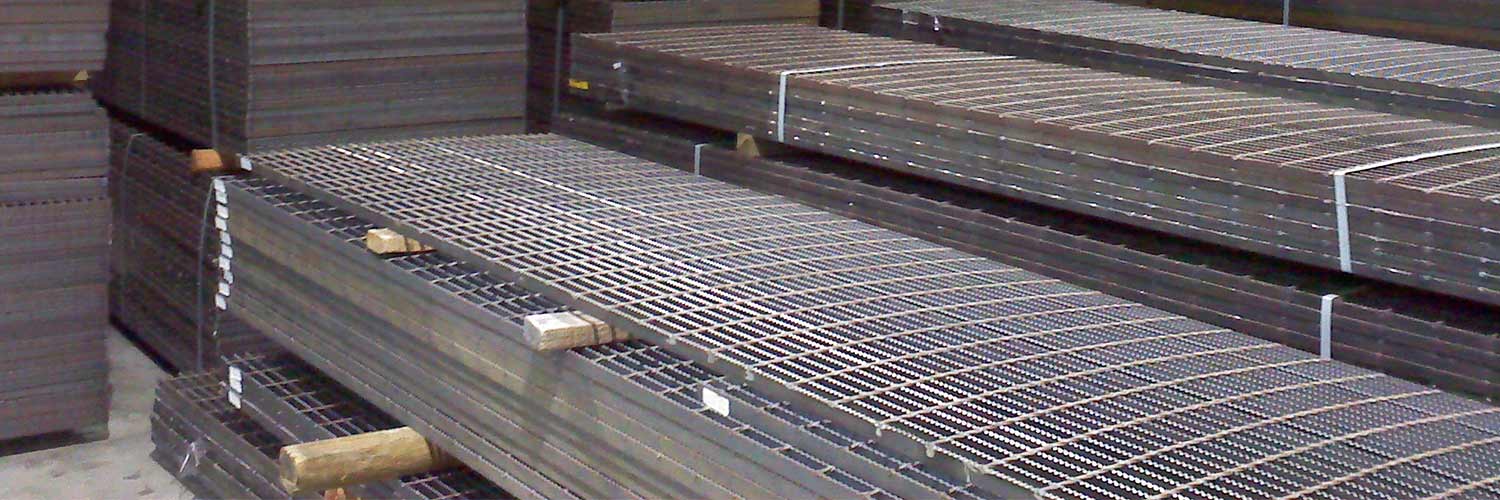
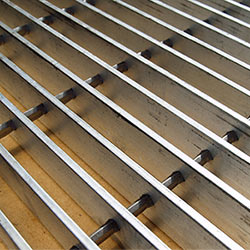
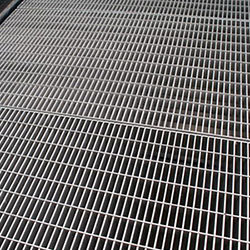
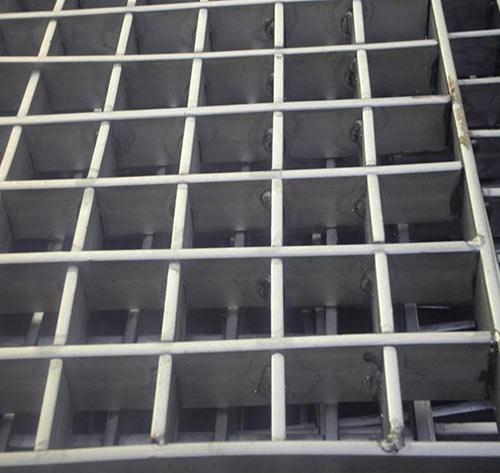
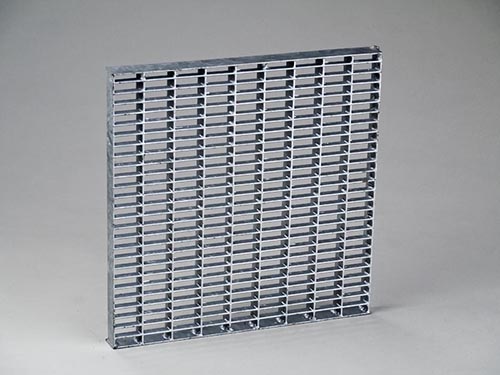
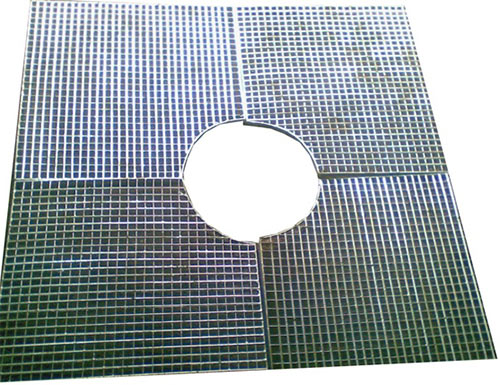
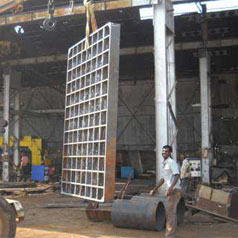
Engineered using welded or fused steel grid bars with exceptional surface-area-to-weight ratio. Lattice structures substantially reduce soil step-and-touch potentials in high-voltage substations while lowering raw material costs by up to 40% compared to solid plates.
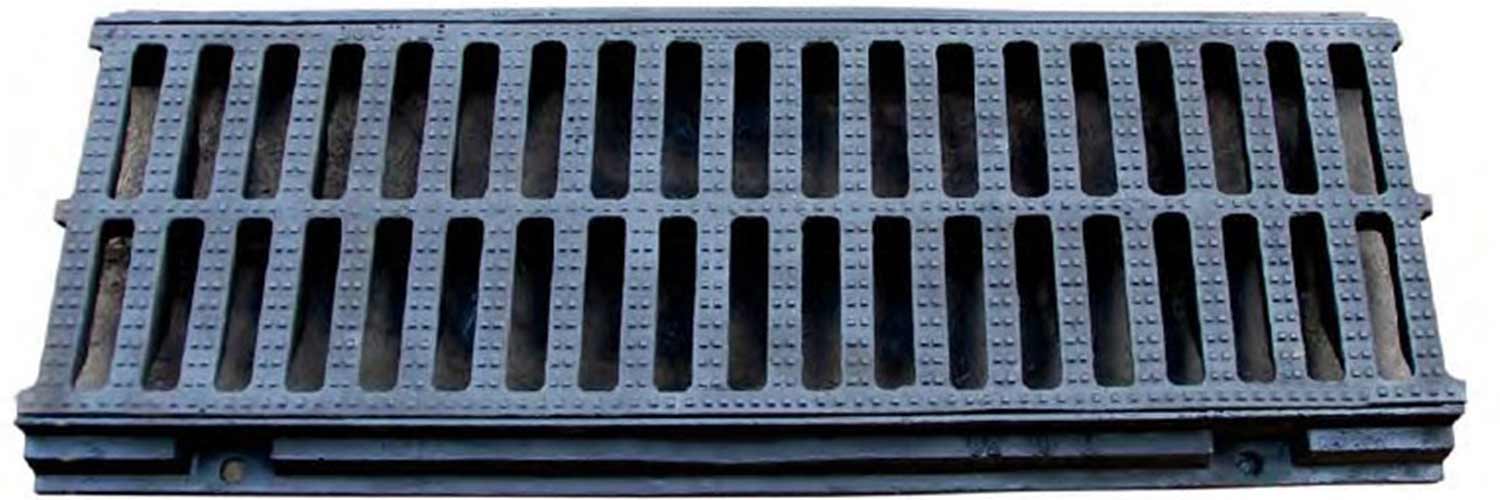
Solid mild steel plates cut to precise dimensions with heavy hot-dip zinc encapsulation. Designed for deep-well installation, transformer neutral earthing, high-resistance rock beds, and lightning dissipation systems requiring massive subterranean contact area.
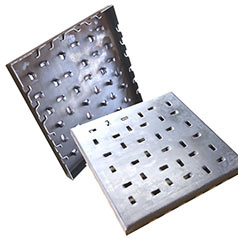
Perforated plates designed to allow chemical earthing compounds (bentonite and carbon-based backfills) to permeate both sides of the plate uniformly, establishing lower contact resistance and uniform moisture retention around the conductive element.
Superior Hot-Dip Galvanization Defeating Severe Soil Corrosion & Electrolysis
Subterranean electrical earthing is subjected to non-stop galvanic activity, shifting water tables, dissolved salts, and stray AC/DC currents. When untreated or thinly electro-plated steel is buried, oxidation rapidly perforates the plate, raising earth impedance to lethal levels. Omkar Gratings eliminates this failure mode through industrial-grade hot-dip galvanizing.
Our earthing plates undergo acid pickling, fluxing, and total immersion in molten zinc maintained at 450°C. This process creates an intermetallic metallurgical bond characterized by distinct iron-zinc alloy layers (Gamma, Delta, Zeta, and Eta). Even if outer layers suffer physical scratching during mechanical backfilling, the sacrificial zinc anode oxidizes preferentially, delivering self-healing galvanic shielding that preserves the conductive steel core for 30 to 50+ years.
Uniform coating exceeding 86–100 microns (610–710 g/m²) conforming to ASTM A123 & BS EN ISO 1461
Zero flaking, peeling, or micro-cracks under thermal fault expansion shocks
Preece test and knife test certified adherence to ensure metallurgical continuity
Standard Specifications & Project-Engineered Geometry From Drawings to Jobsite
Global procurement teams often struggle with inconsistent tolerances and poor connection points when buying bulk grounding products. Omkar Gratings builds earthing plates according to strict engineering schematics. Whether your contract requires standard 600 x 600 x 6 mm plates per IS 3043 or custom 1200 x 1200 x 12 mm panels for EHV substations, our fabrication tolerances guarantee seamless on-site commissioning.
Terminal connection integrity is vital because loose or high-resistance joints can generate destructive arc flashes under high kA fault occurrences. We offer integrated welded hot-dip galvanized strip risers (50x6mm, 75x8mm, or 75x10mm) fused with 100+ tonnes of hydraulic pressure and high-ampere welding equipment, or pre-drilled precision terminal bolt holes complete with anti-corrosive stainless steel or tin-plated brass fastening kits.
Laser-cut or heavy-sheared burr-free edges with beveled corner finishes
Pre-punched double and quad terminal holes for redundant down-conductor bonding
Custom diagonal cross-bracing and perforated drainage patterns on request
Technical Comparison: Galvanised Earthing Plates vs. Copper Plates Economic and Operational Dominance
While electrical design engineers traditionally specified pure copper plates due to high volumetric conductivity, contemporary power engineering and industrial site realities have made Galvanised Steel Earthing Plates the preferred choice across EPC specifications. In subterranean installations, current dissipation capability is determined primarily by the surface area contact with surrounding soil rather than internal electrical conductivity.
Galvanised steel earthing plates provide 4 to 5 times the mechanical yield strength of copper, preventing buckling during compaction or soil settling. Furthermore, copper in contact with structural steel pilings creates aggressive galvanic couples that destroy foundations. With zero scrap metal theft value, GI earthing plates guarantee long-term system integrity without the constant threat of earthing grid vandalism.
Up to 65% reduction in overall system procurement expenditure
Immunity to copper scrap theft, eliminating lethal ungrounded substation scenarios
Elimination of galvanic corrosion attacks on underground structural piles and anchor bolts
Future Sourcing Trends for Galvanised Earthing Plates (2025–2035)
As global investments surge into renewable energy megaprojects, hyperscale cloud data centers, and massive electrified transportation grids, procurement requirements for grounding infrastructure are undergoing structural shifts.
Renewable Energy Scaling
GW-scale solar PV farms and wind installations spread across arid, rocky terrain require massive earthing grids with ultra-low step potentials. EPCs increasingly standardize on high-surface-area GI lattice plates to balance performance against project capital expenditure.
Computational finite element analysis (FEA) has confirmed that the peripheral perimeter of an earthing electrode dissipates the majority of fault energy. Buyers are pivoting toward open lattice earth mats that provide equivalent grounding impedance with 35% less steel weight.
Substation operators across Africa, Latin America, and parts of Asia face epidemic levels of grounding copper theft, causing fatal line surges. Utility tenders now explicitly mandate Hot-Dip Galvanised Earth Plates to eliminate theft incentives completely.
With high-voltage transmission lines expanding to 765 kV and 1200 kV corridors, earthing plates must endure short-circuit currents exceeding 40 kA to 50 kA for 1 to 3 seconds. Thicker 10mm to 12mm hot-dip galvanised plates are required to avoid thermal melting.
Field labour costs and weather uncertainties are pushing contractors toward pre-engineered earthing kits. Omkar provides factory-fitted connection flanges and packaged bentonite-compatible plate assemblies ready for direct trench lowering.
Technological innovations in zinc kettle formulation, incorporating trace nickel and bismuth, yield exceptionally ductile, non-porous zinc coatings that survive soil stress in coastal marshlands and harsh chemical processing refinery beds.
Standard Dimensions & Technical Specifications for Galvanised Earthing Plates
Engineered for compliance across global utility networks. Custom dimensions, perforation diameters, and attached lead tapes are manufactured to client drawings.
Product Model
Standard Dimensions (L x W)
Plate Thickness
Zinc Coating (HDG)
Short-Circuit Fault Capacity
Primary Standards
OG-GEP-600-6 (Standard Substation)
600 mm x 600 mm
6.0 mm (±0.2mm)
≥ 86 μm (≥ 610 g/m²)
Up to 25 kA for 1.0 sec
IS 3043, BS 7430, ISO 1461
OG-GEP-600-3 (Light Industrial / Telecom)
600 mm x 600 mm
3.15 mm (±0.15mm)
≥ 86 μm (≥ 610 g/m²)
Up to 12 kA for 1.0 sec
IS 3043, IEEE 142
OG-GEP-1200-6 (Heavy Transmission Grid)
1200 mm x 1200 mm
6.0 mm (±0.2mm)
≥ 100 μm (≥ 710 g/m²)
Up to 40 kA for 1.0 sec
IEEE 80, BS 7430
OG-GEP-1200-12 (Extra High Voltage / EHV)
1200 mm x 1200 mm
12.0 mm (±0.3mm)
≥ 120 μm (≥ 850 g/m²)
Up to 50 kA for 3.0 sec
IEEE 80, IS 3043 Substation Code
OG-GLM-LATTICE (High Resistivity Soils)
600x600 / 900x900 mm
50x6 mm flat bar lattice
≥ 86 μm (≥ 610 g/m²)
Up to 31.5 kA for 1.0 sec
BS 7430, IEC 62305
OG-GEP-PERF-6 (Chemical Earthing Kit)
600 mm x 600 mm (Perforated)
6.0 mm (15mm perforations)
≥ 90 μm (≥ 640 g/m²)
Up to 30 kA for 1.0 sec
IS 3043, NFC 17-102
All galvanised earthing plates are fabricated from structural carbon steel complying with IS 2062 Grade E250 / ASTM A36. Mill Test Certificates (MTC 3.1) and Galvanizing Thickness Test Certificates are dispatched with each shipping container.
Mission-Critical Deployment
Where Our Galvanised Earthing Plates Protect Capital Assets
Power Substations
Dissipating high-voltage fault surges, shielding power transformers, neutral earthing, and switchyard perimeters.
Solar & Wind Farms
Providing cost-effective, high-surface-area grounding across high-resistivity soil and rocky wind turbine foundations.
Hyperscale Data Centers
Establishing clean, low-noise signal reference grounding planes and fault isolation for sensitive server architectures.
Oil, Gas & Refineries
Safeguarding flammable chemical processing skids, tank storage farms, and explosive dust facilities against static arc discharges.
Providing direct lightning charge dissipation from mountain and tower tops to subterranean soil layers.
Heavy Manufacturing Plants
Industrial CNC mills, arc furnaces, induction machinery, and automated robotic line bonding.
Ports & Maritime Yards
Container crane gantry grounding, ship-to-shore power supplies, and wet-saline splash protection.
Enterprise Authority & Reliability
Why Global EPC Contractors Trust Omkar Gratings For High-Spec Earthing
Over two decades of metallurgical manufacturing experience combined with end-to-end quality systems.
In-House Galvanizing Facility
Unlike competitors relying on outsourced coating, our fully integrated hot-dip galvanizing bath ensures strict quality control, zero pinholes, and full compliance with ISO 1461 and ASTM A123.
Heavy-Duty Fusion Engineering
Our heavy manufacturing floor features 100+ tonnes hydraulic forging equipment and 2200 A fusion current lines, ensuring all plate and riser joints are structurally unified with no brittle micro-fractures.
Exacting Quality Assurance
Every production batch undergoes strict laboratory verification: chemical composition spectrometry, digital magnetic coating thickness testing, drop hammer adhesion checks, and short-circuit fault ratings.
Seamless Worldwide Logistics
From precision sea-freight rust-inhibitive bundling to seaworthy wooden crate packaging and complete export documentation (MTC, COC, Bill of Lading), we deliver on time to ports across all continents.
Procurement & Engineering Questions Answered by Specialists
Key technical insights addressing queries commonly submitted by international consulting engineers and project managers.
Why choose Galvanised Earthing Plates over Pure Copper Plates?
Galvanised earthing plates offer a combination of mechanical strength, zero scrap-theft incentive, and exceptional cost efficiency while delivering equivalent fault-current dissipation when designed to standard soil resistivity models. With premium hot-dip galvanizing exceeding 86 to 100 microns, zinc provides active cathodic protection that shields the underlying steel core against galvanic and localized corrosion.
What international standards govern Omkar's GI earthing plates?
Our galvanised earthing plates are engineered and tested strictly in conformance with IS 3043 (Code of practice for earthing), BS 7430 (Code of practice for protective earthing of electrical installations), IEEE 80 (Guide for safety in AC substation grounding), and hot-dip galvanizing standards ISO 1461, ASTM A123, and IS 2629/2633.
How does Omkar ensure the mechanical and electrical integrity of welded lattice earthing mats?
Our lattice grounding mats are fabricated utilizing PLC-driven fusion and high-pressure welding lines backed by over 100 tonnes of hydraulic compression and 2200 A current. This eliminates micro-cracks and void entrapments, followed by full post-fabrication hot-dip zinc bath immersion to ensure unbroken metallurgic encapsulation.
What parameters are required to calculate the ideal plate dimensions and thickness?
Procurement engineers should supply the peak symmetrical fault current (kA) and fault duration (seconds), target earth resistance (typically <1.0 Ohm or <0.5 Ohm for substations), localized 4-pin Wenner soil resistivity test data, water table depth, soil chemical profile (chlorides, sulfates, and pH), and physical site plot constraints.
Can custom connection terminal lugs, bi-metallic bonding, and test risers be pre-engineered?
Yes. Every plate can be pre-drilled, pre-punched, or fitted with heavy-gauge welded galvanized earthing conductor strips, copper-bonded transition blocks, or bi-metallic clamping plates according to project electrical layout drawings.
What is the recommended installation depth and backfill treatment for GI earthing plates?
Under IS 3043 and BS 7430 guidelines, earthing plates must be installed vertically at a depth of not less than 1.5 to 3 meters below the ground surface to reach permanent moisture strata. Surrounding the plate with an engineered conductive backfill compound (such as high-swelling bentonite or carbonaceous backfill) reduces contact resistance by up to 50% compared to native backfill soils.
Ready to Source High-Performance Galvanised Earthing Plates?
Submit your electrical single-line diagrams (SLD), soil resistivity reports, or tender BOQs. Our engineering experts will provide verified fault-tolerant designs, complete test certificates, and competitive FOB/CIF quotations within 24 hours.