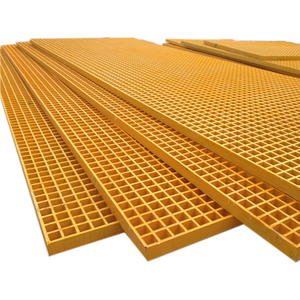

Engineered to withstand harsh vibration, chemical atmosphere, and high mechanical payloads across demanding civil and industrial installations.
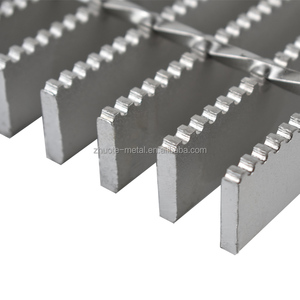
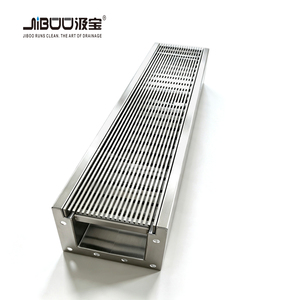
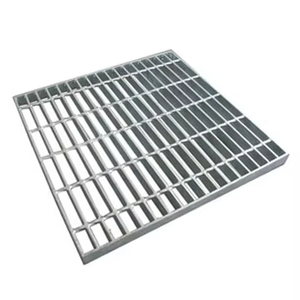
A comprehensive examination of electrical containment infrastructure operating under severe Balkan ambient conditions and aggressive industrial exposures.
In modern industrial facilities, power plants, and high-tier data centers, cable ladder systems serve as the structural backbone for low, medium, and high-voltage transmission lines. Unlike closed cable tray or solid-bottom trunking systems, cable ladders are specifically designed to maximize mechanical load capability while offering unobstructed natural ventilation. The free ventilation area, which routinely exceeds 70% in standardized ladder configurations, completely changes electrical calculation parameters: it prevents Joule-effect heat accumulation, minimizes conductor ampacity derating penalties as specified in IEC 60364-5-52, and mitigates destructive magnetic eddy losses under sudden phase short-circuits.
From a mechanical structural analysis viewpoint, an industrial cable ladder operates as an open-web composite girder. The assembly comprises two structural side rails (C-profile, I-beam, or roll-formed return-flange configurations) linked together by mechanically fastened, clinched, or high-pressure welded cross rungs spaced at precise pitches—typically 150 mm, 200 mm, 250 mm, or 300 mm. Under applied static and dynamic load vectors, the upper flange of the side rail endures compressive stress while the lower flange resists extreme tensile elongation. The rungs function not merely as cable rests, but as torsional bracing elements that prevent lateral-torsional buckling of the side rails over unsupported spans exceeding 3 to 6 meters.
Roll-formed side rails with continuous inward-turned return flanges dramatically increase the section modulus (Z-axis). This engineering configuration delivers exceptional torsional stiffness, preventing rail distortion during asymmetric heavy-gauge power cable pulling along complex horizontal sweeps.
Under three-phase electromagnetic faults, instantaneous repelling forces between parallel conductors can exceed dozens of kilonewtons per meter. Our ladder rungs feature slotted profiles tailored for calibrated cleat fixings that safely transfer and absorb transient stress without shearing welds.
Fabricated carbon steel units undergo full-immersion hot-dip galvanizing conforming strictly to EN ISO 1461. The resulting metallurgical iron-zinc alloy layers provide catastrophic corrosion defense in aggressive industrial sulfurous microclimates found around heavy Balkan facilities.
Engineering compliance in the Republic of Serbia mandates adherence to the standardized testing protocols of SRPS EN 61537 (Cable management - Cable tray systems and cable ladder systems). Determining Safe Working Load (SWL) involves empirical testing across single and continuous spans with midpoint coupling joints.
Manufactured on PLC-controlled production units with rigorous dimensional verification matching turnkey plant drawings.
Evaluate structural alloy properties, permissible spans, and environmental durability profiles to pinpoint the optimal routing system for your site requirements.
| Material Class & Specification | Yield Strength (ReH) | Protective Coating Standard | Permissible Span (L/200) | Corrosion Category (ISO 12944) | Typical Serbian Sector Application |
|---|---|---|---|---|---|
| Heavy Duty Welded Mild Steel | 235 – 275 N/mm² | Hot-Dip Galvanized (EN ISO 1461) | 3.0 m – 6.0 m Continuous | C3 (Urban / Industrial) to C4 | Thermal Power Plants (TENT), Cement Plants |
| Pre-Galvanized Coil Steel (Sendzimir) | 250 N/mm² | EN 10346 Continuous Zinc (Z275) | 1.5 m – 3.0 m Standard | C1 (Clean Indoor) to C2 | Automotive Assembly, Logistics Warehousing |
| Austenitic Stainless Steel (AISI 304) | ≥ 205 N/mm² | Acid Washed & Electro-Polished | 2.0 m – 4.5 m Span | C3 to C4 (Hygienic / Humid) | Food & Beverage, Breweries, Dairy Processing |
| Marine Grade Stainless (AISI 316L) | ≥ 220 N/mm² | Full Chemical Passivation | 2.5 m – 5.0 m Span | C5-M (Marine / High Saline/Chemical) | Wastewater Treatment, Flue-gas Scrubbers |
| Pultruded FRP / GRP Composite | Flexural: ≥ 240 N/mm² | Inherent UV-Inhibited Resin Matrix | 2.0 m – 4.0 m Span | Extreme Chemical / Acid / Alkaline | Bor Copper Refining, Acid Regeneration Plants |
Meeting the strict operational mandates of Serbia's key industrial hubs—from intensive mineral extraction basins to high-speed logistical infrastructure.
Serbia's energy backbone—centered around Elektroprivreda Srbije (EPS) facilities such as TENT (Termoelektrana Nikola Tesla A and B in Obrenovac) and Kostolac B3—demands ultra-heavy cable ladder installations capable of bearing multiple parallel runs of 10 kV to 110 kV XLPE high-capacity power lines. Systems must resist continuous particulate ash abrasion, extreme flue-gas sulfur dioxide exposure, and ambient thermal fluctuations ranging from -25°C in harsh continental Balkan winters to +42°C during summer peaks.
The vast copper, gold, and mineral extraction complexes operated by Zijin Mining in Bor and Majdanpek generate severe chemical challenges. Flotation cells, leaching tanks, and electro-refining circuits expose cable pathways to dense sulfuric acid mists and caustic reagents. For these high-risk areas, heavy hot-dip galvanized ladders with enhanced micrometer thicknesses (≥100 µm) or isophthalic pultruded FRP/GRP ladder systems are paramount to prevent catastrophic electrical short-circuits and structural collapse.
The influx of advanced industrial and EV battery component facilities in Kragujevac, Inđija, Novi Sad, and Subotica requires agile, high-density cable routing networks. Modern robotic cells and clean manufacturing floors deploy pre-galvanized or electro-polished stainless cable ladders alongside custom-perforated channels. These setups house complex hybrid bundles—combining 400V drive cables, Profinet communication trunks, and pneumatic lines within a compact, easily serviced footprint.
The rapid modernization of Pan-European Corridor X and the high-speed rail line connecting Belgrade to Subotica (and onward to Budapest) relies on trackside and substational electrical containment. Cable ladders supporting signaling, catenary feeder cables, and telemetry must withstand continuous aerodynamic shockwaves from passing high-speed passenger trains alongside severe dynamic soil and bridge vibrations without weld fatigue.
Under national environmental remediation plans such as the "Clean Serbia" initiative, modern municipal wastewater plants are being deployed across Belgrade, Niš, and central Serbian municipalities. Anaerobic digestion digesters and primary sedimentation channels produce aggressive hydrogen sulfide (H2S) gas. Utilizing our AISI 316L stainless steel ladders or high-grade vinyl ester FRP systems ensures a maintenance-free design life exceeding 25 years.
High-density data facilities, including the State Data Center in Kragujevac, along with complex commercial developments in Belgrade Waterfront, require cable management systems that ensure minimal electromagnetic interference (EMI) and strict fire integrity compliance (DIN 4102-12 functional circuit integrity E30/E90). Our heavy gauge galvanized ladders support massive low-smoke zero-halogen (LSZH) cable densities safely.
How regulatory harmonizations, green energy integration, and foreign direct investment are dictating procurement protocols across the Republic of Serbia.
As Serbia advances its EU accession negotiations under Chapter 1 (Free Movement of Goods), public procurement authorities and international EPC contractors are systematically discarding obsolete JUS standards in favor of SRPS EN 61537, SRPS EN ISO 1461, and Eurocode 3. Specifiers demand third-party CE certifications, full Declaration of Performance (DoP) dossiers, and traceable raw material test certificates (EN 10204 Type 3.1).
The construction of massive utility-scale solar farms across Vojvodina and major wind installations in the South Banat district (such as Kovačica and Čibuk) is driving surging demand for weather-resistant outdoor cable ladder infrastructure. Solar collector runs require containment systems with superior resistance to micro-vibrations, continuous UV irradiance, and cyclic ground moisture condensation over long 30-year operational lifespans.
Mounting labor costs and tight completion schedules on turn-key Serbian megaprojects are pushing procurement teams away from on-site field cutting and welding. Factory-fabricated modular ladder elbows, horizontal crosses, vertical risers, and reducer fittings fabricated strictly to drawing save hundreds of hours on site while ensuring the galvanization barrier remains unbroken.
Combining heavy electroforging technology, dedicated roll-forming mills, and rigorous in-house metallurgical testing.
Our automated production facilities integrate state-of-the-art PLC-controlled presses applying over 100 tonnes of hydraulic pressure combined with 2200 A current bursts. This delivers a seamless, defect-free fusion between bearing members and cross rungs without weak filler metal.
Operating dedicated large-capacity hot-dip zinc baths ensures comprehensive metallurgical bonding with uniform coating thicknesses exceeding 85 µm. Every batch is certified free of micro-pinholes, inclusions, or uncoated shadow zones across complex internal profiles.
Our technical engineering cell reviews architectural and MEP drawings to manufacture custom ladder widths (100 mm to 1200 mm), side rail depths (50 mm to 200 mm), and integrated complex cut-outs banded with structural flat bars for immediate site fit-up.
Components are pre-conditioned, edge-protected, strapped with high-tensile steel banding, and packed with waterproof barrier liners into standardized wooden crates or structural skids. This ensures zero deformation during intermodal maritime and overland trucking to Serbia.
Direct answers addressing Serbian technical norms, customs procedures, galvanization metrics, and site coordination.
Our complete cable ladder range is fully aligned with SRPS EN 61537 (Cable management - Cable tray systems and cable ladder systems), which mirrors the European Union harmonized standard EN 61537. Each ladder type undergoes third-party verified mechanical payload testing to determine the Safe Working Load (SWL). This ensures longitudinal deflection along a 3.0 m continuous span remains strictly below the structural ceiling of L/200. Mill test certificates, electrical continuity test reports (<50 mΩ across coupling splices), and full CE compliance documentation are included with every project dispatch destined for Serbian customs clearance.
For aggressive industrial microclimates categorized as C4 or C5 under ISO 12944—such as the mining complexes of Bor, the petrochemical corridor in Pančevo, or the coal-fired power basins of Obrenovac (TENT)—standard pre-galvanized (Sendzimir) steel with Z275 coating (approx. 20 µm) is insufficient. We strongly mandate post-fabrication Hot-Dip Galvanizing conforming to SRPS EN ISO 1461. Our batch immersion process achieves an average coating thickness of 85 µm to 100 µm (>610 g/m²). This heavy metallurgical zinc-iron alloy barrier provides robust sacrificial cathodic defense against sulfurous atmospheric condensates.
Yes. Our engineering division operates advanced CAD/CAM software to review client-supplied DWG, IFC, or BIM models. We produce custom 90° and 45° horizontal bends, inside/outside vertical risers, cross tees, and asymmetric offset reducers with bending radii ranging from 300 mm to 900 mm. Fabricating these fittings directly in the factory eliminates destructive field plasma cutting and welding on the Serbian construction site, which compromises the galvanizing envelope and causes premature corrosion.
As Serbia is outside the European Union customs territory, non-EU and international shipments require meticulous trade documentation. We issue certified Commercial Invoices, itemized Packing Lists with precise Net/Gross weights, Bills of Lading, Certificate of Origin (COO), and Type 3.1 Material Test Reports to ISO 10474 / EN 10204. Our logistics group works seamlessly with local Serbian customs brokers and forwarders handling arrivals through the Port of Bar (Montenegro), Port of Rijeka (Croatia), Port of Thessaloniki (Greece), or overland transit corridors terminating at Belgrade, Novi Sad, or Niš freight terminals.
Fiber-Reinforced Polymer (FRP/GRP) cable ladders are technically superior in facilities with high electrical hazard concentrations or extreme chemical aggression where metal corrodes rapidly. Examples in Serbia include battery acid rooms, chemical dosing units in wastewater facilities, and electrolytic copper refining tanks in Eastern Serbia. FRP is completely non-conductive (eliminating grounding requirements and hazardous touch potentials), weighs approximately 40% of structural steel (drastically cutting elevated hanger loads), resists aggressive acid vapors, and requires zero ongoing maintenance.
Consult with our structural cable containment engineers. Submit your project bill of quantities, load criteria, and layout drawings for rapid technical review and factory-direct pricing.