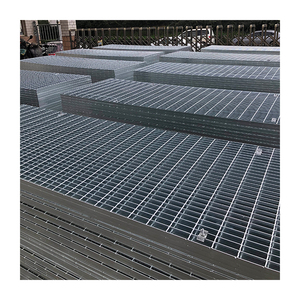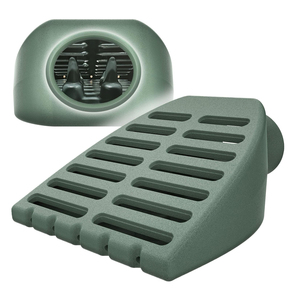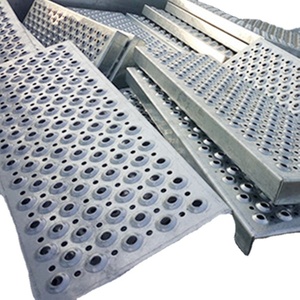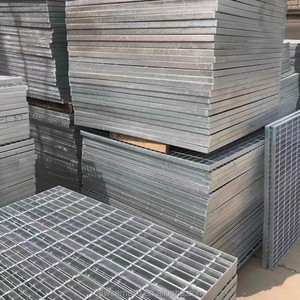
Explore our certified floor grating systems, engineered polymer components, and high-load drainage channels delivered directly from high-capacity manufacturing lines to ports across Brazil (Santos, Paranaguá, Rio Grande, and Suape).
The industrial architecture of Brazil presents one of the most demanding environmental operational challenges across the globe. Ranging from the ultra-deepwater maritime operations of the Pré-Sal basin in the Santos and Campos reserves to the chemical processing corridors in Camaçari (Bahia) and Paulínia (São Paulo), infrastructure components are continuously exposed to severe chemical attack, electrolytic oxidation, intense ultraviolet radiation, and extreme mechanical stresses. Within this operational ecosystem, selecting the proper architectural floor grating is not merely a question of static strength, but a complex calculation of total lifecycle cost (LCC), worker safety compliance, and long-term chemical durability.
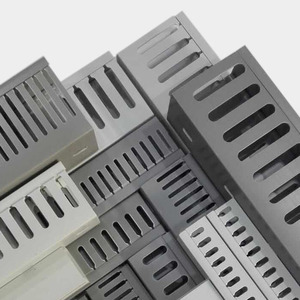
As a dedicated manufacturing and fabrication partner for global EPCs and Brazilian industrial procurement groups, our enterprise designs and extrudes high-performance Fiberglass Reinforced Polymer (FRP / GRP) composite floor gratings, electroforged carbon steel assemblies, acid-pickled austenitic stainless steel arrays (AISI 304, 316, 309), and precision polymer trench channels. By integrating automated pultrusion lines, digital mold tooling, and computerized electroforging presses capable of delivering over 100 metric tons of hydraulic force with 2,200 amperes of thermal fusion, our manufacturing lines bridge the strict regulatory gap demanded by Brazilian regulatory norms (Normas Regulamentadoras - NRs) and international standards such as ASTM, ISO, and DIN.
Targeted composite engineering designed to mitigate specific environmental degradations across key economic hubs in South America.
FPSO vessels, drilling jackups, and coastal logistics bases require materials impervious to salt spray, hydrogen sulfide (H2S), and hydrocarbon splashes. Our vinyl ester resin FRP pultruded gratings provide zero-corrosion walkways, extreme weight savings over traditional steel (cutting platform deck payloads by up to 60%), and superior dielectric insulation for electrical switchgear safety.
Iron ore, bauxite, and nickel beneficiation plants operate in abrasive slurries and highly humid conditions. Pultruded I-Bar FRP panels and heavy-duty welded serrated steel gratings resist mechanical abrasion, acid mine drainage (AMD), and dynamic impact along belt conveyor walkways, screening towers, and thickener tanks.
In the vast cane-producing regions of São Paulo, Goiás, and Mato Grosso, ethanol distillation columns and vinasse evaporation circuits present severe acidic and thermal stressors. Composite moulded floor gratings manufactured with isophthalic polyester provide continuous resistance against organic acids and fermenting washes without surface pitting.
Following Brazil's New Legal Framework for Sanitation, multi-billion-real municipal wastewater projects demand structural components with a 30+ year design life. Composite gratings do not degrade under concentrated sulfuric acid generated by anaerobic microbial processes in enclosed digestion chambers, settling tanks, and clarifiers.
Chemical recovery boilers, bleaching plant stages involving chlorine dioxide, and causticizing facilities generate volatile atmospheres. Our composite floor systems, certified to ASTM E84 flame spread standards, prevent catastrophic corrosion while ensuring spark-proof safety in combustible dust environments.
Poultry, meatpackers, and dairy processing facilities mandate non-porous, easily sanitized, and slip-resistant floor pathways. We deliver quartz-embedded gritted top composite panels and electro-polished AISI 304/316 stainless gratings that resist aggressive CIP (clean-in-place) caustic washdowns and thermal cycling.
Historically, Brazilian civil engineers relied predominantly on traditional carbon steel with hot-dip galvanization (conforming to ABNT NBR 6323). However, procurement trends within modern infrastructure are pivoting rapidly toward Fiber Reinforced Polymer (FRP/GRP) composite technology due to several macroeconomic and operational catalysts:
1. Total Cost of Ownership (TCO) Prioritization: While initial capital expenditure (CAPEX) for composite gratings is marginally comparable to premium hot-dip galvanized steel, operational expenditure (OPEX) drops by over 80%. In marine environments such as the Port of Santos or coastal FPSOs, galvanized grating often requires sandblasting, repainting, or complete replacement every 4 to 6 years due to zinc layer depletion under marine chloride atmospheric classification (C5-M). Composites provide maintenance-free service lives extending beyond 25 years.
2. Stringent Ergonomic and Occupational Safety (NR-10 & NR-12): Brazilian regulatory requirements enforce stringent workplace safety. Composites naturally provide dielectric non-conductivity, mitigating risk in industrial power distribution substations (NR-10 compliance). Furthermore, their lightweight profile (one-fourth the weight of equivalent steel) allows two technicians to install panels manually without mobile cranes or on-site torch cutting, dramatically minimizing occupational lift injuries and installation turnaround.
3. The Clean Hydrogen & Lithium Valley Boom: Massive clean energy transitions across the Northeast (green hydrogen hubs in Pecém) and lithium extraction operations in the Jequitinhonha Valley (Minas Gerais) demand platforms resistant to aggressive electrolysis by-products and corrosive chemical extraction liquids, further expanding composite adoption.
Technical performance evaluation across operating regimes to guide engineering design specifications.
| Substrate System | Resin / Metallurgy Matrix | Tensile / Flexural Strength | Corrosion Resistance | Electrical & Thermal Spark Hazard | Target Operational Footprint |
|---|---|---|---|---|---|
| Moulded FRP Grating | Vinyl Ester / Isophthalic Polyester + E-Glass Continuous Roving | Flexural: 210 MPa Tensile: 180 MPa |
Exceptional across concentrated acids, alkalis, and offshore brine | Non-conductive, dielectric, non-sparking (ideal for explosive ATEX/HazLoc zones) | Process walkways, trench covers, scrubber catwalks, marine platforms |
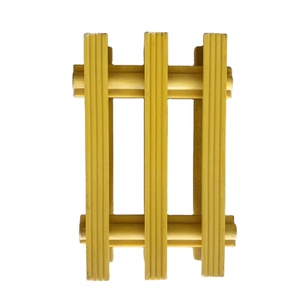
| Pultruded FRP Grating | High Glass Content (65-70%) with I/T Bar structural profiles | Flexural: 450 MPa Tensile: 500 MPa |
Superior atmospheric & chemical envelope with continuous UV inhibitor resin veil | Non-conductive, low thermal transfer (0.2 W/m·K) | Long clear-span catwalks, heavy pedestrian decks, pipe bridge crossovers |
| Electroforged Carbon Steel | Structural ASTM A36 / Q235B + Hot-Dip Galvanizing (ABNT NBR 6323) | Yield: 250-355 MPa Tensile: 400-510 MPa |
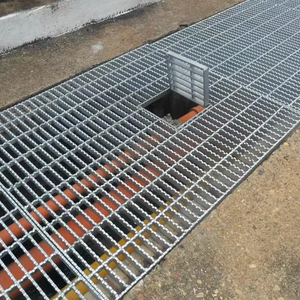
Moderate; dependent on zinc layer integrity in C3/C4 environments | Conductive; requires earthing / grounding; sparking hazard under mechanical friction | Heavy vehicular transit, high-load machinery floors, civil drainage canals |
| Stainless Steel Grating | Austenitic AISI 304, 316, 316L, 309 Acid-Pickled & Electro-Polished | Yield: 290 MPa Tensile: 620 MPa |
High resistance to organic chemicals, washdown agents, and marine air | Conductive; high thermal capacity; non-sparking under specified configurations | Pharma cleanrooms, sterile food facilities, extreme-temperature furnace decks |
Direct manufacturing execution, rigorous metallurgy and resin chemistry control, and specialized Brazilian export logistics.
Equipped with PLC-controlled electroforging units exerting >100 metric tons of hydraulic clamping force and 2,200 amperes of localized electrical current, guaranteeing absolute structural fusion between twisted cross bars and bearing bars without internal cracks or void inclusions.
From complex CAD blueprints, we fabricate panels with round, square, or irregular radial cut-outs banded with structural flat bars. Complete with toe plates, welded kick plates, and nosing profiles, every module is marked with panel IDs matching site installation schematics.
Experienced in South American logistics, our cargo teams utilize seaworthy steel-banded pallet bundling, moisture-barrier wrapping, and complete commercial documentation aligned with Siscomex import procedures and Mercosul Common Nomenclature (NCM) classifications.
Direct technical answers addressing engineering standards, import taxation, and structural certifications.
Composite FRP floor gratings inherently comply with NR-10 (Safety in Electrical Installations and Services) due to their thermosetting polymer formulation, offering high dielectric strength (>10 kV/mm) and zero electrical conductivity. For NR-35 (Work at Height) and NR-12 compliance, our panels incorporate permanently embedded quartz grit surfaces (or integral concave top profiles) delivering a dynamic friction coefficient (µ > 0.65) that exceeds the most rigorous industrial traction thresholds even when contaminated with lubricants, rainwater, or drilling mud.
For marine environments like the ports of Santos, Vitória, or offshore Campos Basin, we recommend a Vinyl Ester resin system enriched with chemical UV inhibitors (Tinuvin/benzotriazole class) and an outer synthetic surfacing veil. This formulation blocks aggressive solar photolysis caused by high UV index levels common in tropical latitudes and forms a barrier against osmotic blistering and water ingress, guaranteeing continuous resistance to salt water immersion.
While standard moulded FRP panels are engineered primarily for concentrated pedestrian loads (typically 1.5 kN to 5.0 kN design points), our Heavy-Duty Pultruded High-Load Capacity (HLC) gratings—manufactured with deeper bar depths (50 mm to 76 mm) and continuous longitudinal glass roving—are certified for AASHTO H-20 and HS-25 truck loading standards. In areas involving high-intensity forklift traffic or heavy articulated trucks (caminhões bitrem), our engineering department evaluates deflections under the L/200 criterion to determine whether an HLC composite or an electroforged carbon steel grating with deep bearing bars (up to 100 mm x 10 mm) provides optimal structural performance.
Shipments are categorized under appropriate NCM (Nomenclatura Comum do Mercosul) codes, typically 3926.90.90 for articles of plastics/composites, or 7308.90.10 for structural steel assemblies. We issue comprehensive mill test certificates (MTC 3.1 according to EN 10204), resin traceability records, dimensional inspection protocols, certified bills of lading, commercial invoices, and packing lists to support swift Siscomex registration by Brazilian dispatch agents.
Yes. We offer turnkey CNC routing and workshop cutting services based on approved customer CAD drawings. Every opening (circular for pipe bypasses, square for columns, or angled for equipment skids) is edged and resealed using protective vinyl ester polyurethane edge-coating resin for FRP, or perimeter-banded with continuous flat bar welding for steel assemblies. This preserves 100% of the panel's load-carrying capacity and eliminates hot work requirements on the final assembly site.
Speak directly with our senior application engineers. Share your load requirements, environmental parameters, or CAD layouts for technical reviews, detailed load calculation tables, and competitive FOB/CIF Brazil pricing.
Send an Inquiry