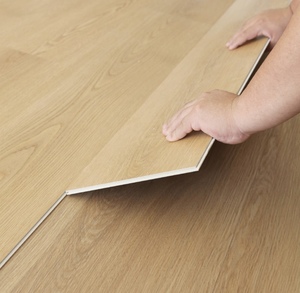
100% Waterproof SPC Flooring Anti-Slip Wear Resistant Click Lock Plank
Rigid-core anti-static flooring ideal for Chicago electrical control rooms, substations, and industrial utility corridors requiring moisture resistance.

Engineered for industrial electrical grids, substations, and high-density raceways in harsh Midwestern environments.
Rigid-core anti-static flooring ideal for Chicago electrical control rooms, substations, and industrial utility corridors requiring moisture resistance.
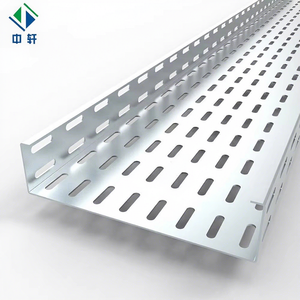
AISI 304/316L cable containment for power distribution grounding runs, offering thermal dissipation and structural strength in high-load facilities.
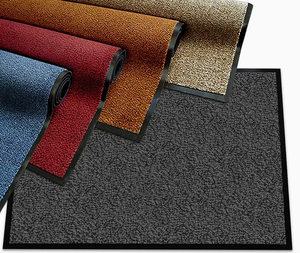
Industrial safety stair treads with high-visibility reflective marking designed for emergency corridors and multistory utility facilities in Cook County.
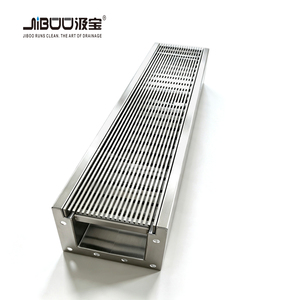
Precision-welded trench grating designed for chemical washdown resilience and reliable grounding earth pits in corrosive commercial factories.
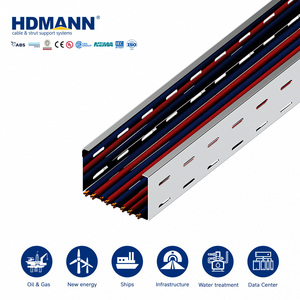
Lightweight, corrosion-resistant electrical busway support engineered for utility power plants and heavy Chicago transit distribution centers.
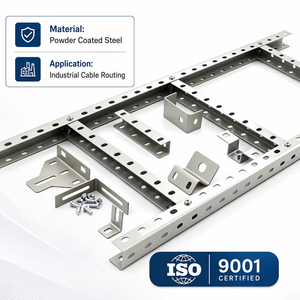
Deep hot-dip galvanized structural steel cable ladder system providing robust fault current grounding continuity for telecom and substation projects.
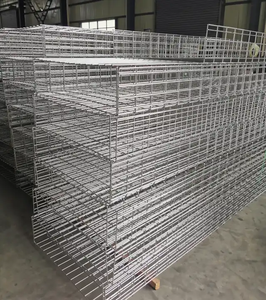
Rapid-drop wire basket trays tailored for Chicago data center server farms requiring clean bonding paths and high ventilation rates.
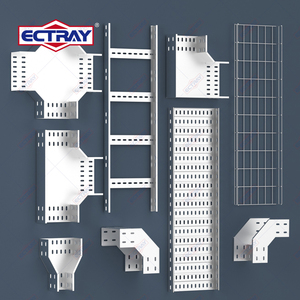
Industrial-grade punched metal cable management ensuring seamless bonding, equipment grounding, and physical shield protection against heavy loads.
In electrical power distribution and structural lightning dissipation, grounding is not merely an auxiliary safety provision—it is the foundational baseline for transient voltage control and human safety. Across the Greater Chicago metropolitan area—from the dense electrical load centers of Downtown Chicago (The Loop) to the massive data infrastructure hubs of Elk Grove Village and the industrial plants along the Calumet River corridor—grounding engineers face distinct soil-resistivity profiles and strict environmental challenges.
A reliable grounding electrode system must dissipate high-magnitude lightning strikes and catastrophic line-to-ground fault currents into the earth without sustaining thermal damage, mechanical failure, or progressive oxidation. As an elite supplier and manufacturer delivering engineered electrical grounding components to Chicago contractors, our copper-bonded and solid electrolytic copper ground rods are manufactured to exceed UL 467, IEEE 80, and National Electrical Code (NEC) standards, guaranteeing low ground impedance and structural durability over fifty years of direct earth burial.
Designing an electrical grounding electrode network in Northern Illinois requires direct accounting for the local stratigraphic geology. The subterranean geology of Cook County, DuPage County, and Lake County is dominated by glacial till deposited during the Wisconsin glaciation. These soils consist of heterogeneous mixtures of dense silt, stiff silty clays (such as the Wadsworth Formation), pockets of dolomite limestone bedrock, and urban landfill materials containing residual masonry and cinders.
Clay-rich till near Lake Michigan can exhibit low-frequency apparent resistivities between 15 Ω·m and 45 Ω·m during moist conditions. However, shallow urban fill, coarse gravel lenses, and limestone bedrock near the Des Plaines River valley exhibit severe resistivity spikes exceeding 250 Ω·m to 800 Ω·m. Standard 8-foot ground rods frequently terminate in unsaturated gravelly strata, yielding unacceptable ground impedance above the 25-ohm threshold stipulated by NEC Section 250.53.
Chicago's severe winter conditions drive the frost penetration depth down to 42 to 48 inches (1.05 to 1.2 meters) below grade. Frozen soil experiences a non-linear drop in dielectric permittivity and an explosive increase in electrical resistivity—often by a factor of 10 to 40 times. Consequently, ground rods driven only 8 or 10 feet experience seasonal variations where the upper half of the electrode contributes virtually nothing to fault dissipation. We engineer sectional, threaded, and coupling-ready copper-bonded ground rods capable of deep penetration down to 30, 50, or 80 feet, reaching stable non-freezing groundwater aquifers.
The extensive electrified rail operations of the Chicago Transit Authority (CTA) and Metra utilize direct-current third-rail traction systems. Unmitigated DC ground return currents induce electrolytic stray-current corrosion on underground metallic infrastructure throughout the Chicago basin. Inferior copper coatings (such as flash copper plating or mechanical copper tubing over zinc cores) quickly pinhole, triggering aggressive galvanic cell reactions that destroy the underlying core. Our high-grade rods feature molecularly bonded electrolytic copper with a uniform minimum thickness of 10 to 13 mils (254 to 330 μm) applied over cold-drawn high-carbon structural steel cores, providing long-term immunity against localized pitting.
Specifying the proper metallurgical composition is crucial for cost-performance optimization across utility, telecommunication, commercial, and industrial facilities:
| Electrode Classification | Core Metallurgy | Conductive Layer | Tensile Strength (PSI) | Expected Service Life | Optimal Regional Use Case |
|---|---|---|---|---|---|
| Electro-Bonded Copper Rod | Low Carbon Steel (AISI 1018) | 99.9% Electrolytic Copper (10–13 mils) | 80,000 – 100,000 | 40 – 50 Years | Standard Substation Grids, Commercial Distribution, Data Hubs |
| Solid Pure Copper Rod | C11000 Electrolytic Tough Pitch | Solid Pure Copper Throughout | 35,000 – 45,000 | 60+ Years | Corrosive Chemical Environments, Water Treatment Pits, Petrochemical |
| Hot-Dip Galvanized Steel | Structural Carbon Steel | Zinc Coating (≥ 3.9 mils) | 65,000 – 85,000 | 10 – 15 Years | Temporary Construction Power, Non-Acidic Agricultural Soils |
| Stainless Steel (AISI 316) | Austenitic Stainless Steel | Homogeneous Alloy Structure | 90,000 – 110,000 | 50+ Years | High-Chloride Soil Strata, Chemical Docks, Lakefront Marina Piers |
Standard grounding suppliers frequently rely on mechanical shearing and basic wire-drawing techniques that compromise structural integrity. Our manufacturing ecosystem integrates high-tonnage forge-welding, continuous electro-plating bath controls, and precision cold-rolling thread formers:
Targeted engineering designs meeting localized codes, environmental loads, and soil conditions across Cook and DuPage Counties.
Demands ultra-low noise reference ground networks (<1.0 Ω). High fault current dissipation using sectional deep-driven copper rods connected to ring busbars via exothermic welds protects multi-megawatt server arrays from transient switching overvoltages.
Heavy transmission substations (345 kV / 138 kV) upgrading regional power grids. Electro-bonded 5/8-inch and 3/4-inch rods interconnected into extensive ground mats prevent fatal step-and-touch potential hazards during asymmetrical phase-to-ground faults.
Structural down-conductor dissipation for skyscrapers bordering Lake Michigan. Ground rods embedded deep in caisson foundations bypass structural interference, shielding delicate building automation systems from microsecond-rise lightning surges.
Refineries, liquid storage terminals, and wastewater plants exposed to brackish runoff and sulfur compounds. We supply heavy-mil copper-jacketed and solid copper alloy rods that resist chemical pitting and stray DC rail corrosion.
Wayside signal houses, trackside switchgear, and traction power substations require rugged grounding electrodes capable of handling continuous stray return currents and ground bounce without degrading signal circuits.
Industrial distributed generation throughout Illinois under the Climate and Equitable Jobs Act. High-durability grounding arrays prevent inverter back-feed failures and protect PV tracker mechanical structures against direct lightning strikes.
Strategic transformations driving electrical engineering and procurement specifications across Illinois.
Utilities are replacing obsolete legacy grounding networks with high-capacity copper grids capable of withstanding the rapid fault-clearing cycles of automated solid-state protection relays.
Chicago project specifiers increasingly prohibit thin mechanical copper sheathings, enforcing 10-mil and 13-mil electro-chemical bonding to ensure the cladding survives deep mechanical driving through heavy till.
Substation engineers now combine deep sectional rods with carbon-based bentonite backfill materials in urban rock pockets, requiring electrode alloys that resist chemical degradation from electrolytic soil compounds.
Combining heavy metallurgical engineering, precision PLC manufacturing, and dedicated international shipping logistics.
Our heavy equipment applies over 100 tonnes of hydraulic pressure and ≈2200 A current, delivering defect-free molecular bond adhesion with near-zero dimensional deviation across every lot.
Every shipment is backed by verified mill test certificates covering tensile yield, elongation, copper plating thickness testing, and bend testing complying strictly with UL 467 and ASTM specs.
Beyond copper ground rods, we supply integrated structural industrial components: stainless steel and galvanized cable ladders, electroforged industrial steel floor gratings, linear drain covers, and stair treads.
Practical answers addressing Chicago electrical codes, delivery logistics, and geotechnical challenges.
Consult with our engineering and procurement team for technical data sheets, certified factory test reports, custom drawings, and competitive project quotations delivered to the Midwestern US.
Contact Us