Fabricated with high-grade vinyl ester, isophthalic polyester, and continuous fiber matrices engineered to exceed ASTM, Cal/OSHA, and ADA performance standards.
The industrial landscape across the Greater Los Angeles basin and the San Pedro Bay port complex presents some of the most aggressive physical and chemical operating environments in North America. Traditional structural materials such as carbon steel, hot-dip galvanized bar grating, and even low-grade stainless steels face persistent degradation caused by high-salinity marine atmospheres, heavy automotive and maritime exhaust particulate, volatile organic compounds (VOCs) within petrochemical refineries, and continuous exposure to harsh caustic reagents in wastewater processing facilities.
As a specialized custom OEM manufacturer and global exporter, we supply high-performance molded fiberglass reinforced plastic (FRP) grating systems explicitly tailored to meet the rigorous structural, environmental, and regulatory demands of Southern California's commercial and industrial enterprises. Operating under stringent California Building Code (CBC Title 24), Cal/OSHA workplace safety directives, and local air quality guidelines, civil engineers and facility procurement directors increasingly decommission corroded metallic walkways in favor of monolithic molded composite grids.
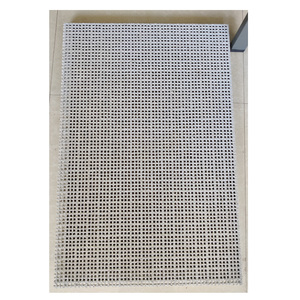
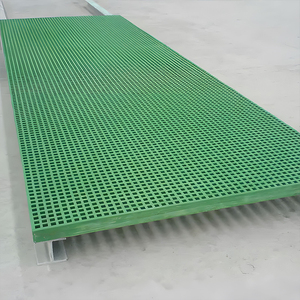
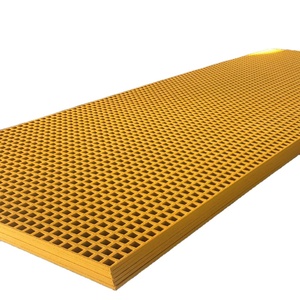
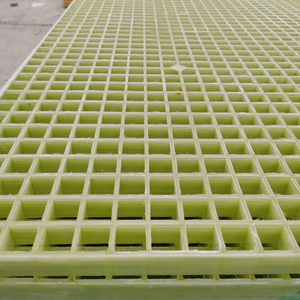
Unlike pultruded gratings or welded steel bar gratings that concentrate load transfer along unidirectional bearing bars, our OEM molded FRP grating is manufactured in an open, heated liquid compression molding process. Alternating layers of continuous, alkali-free E-glass roving filaments are wetted out with high-grade thermosetting resins under constant mechanical tension. This creates a one-piece, fully integrated bi-directional matrix that evenly distributes concentrated wheel loads, pallet traffic, and seismic shear across both axes without delamination or joint separation.
Material longevity depends fundamentally on specifying the precise resin chemistry matching the surrounding chemical and atmospheric stressors of the installation site. We engineer and cast four primary proprietary formulations:
Engineered for the highest chemical defiance against extreme mineral acids (hydrochloric, sulfuric), strong alkalis, and hot hydrocarbon vapor condensates common in Wilmington and El Segundo oil refineries. ASTM E-84 Class 1 flame spread rating (≤25).
Industrial workhorse grade providing superior resistance against continuous marine splash zones, salt spray mist, industrial washdowns, and typical municipal wastewater effluent channels. Meets ASTM E-84 Class 1 flammability requirements.
Formulated for food, beverage, and biotech applications throughout Vernon and the Inland Empire. Non-porous, smooth meniscus or embedded quartz finish resists sanitizing steam washes, bacteriological harbor, and USDA/FDA inspection standards.
Specifying the optimal floor grating requires lifecycle costing (LCC) calculations. Initial capital expenditures must be weighed against long-term crane mobilization, hot-work permits, downtime, field repainting, and structural failure risks:
| Performance Criterion | Molded FRP Grating | Pultruded FRP Grating | Hot-Dip Galvanized Steel | 316 Stainless Steel |
|---|---|---|---|---|
| Load Transfer Mechanics | True Bi-Directional | Unidirectional (Bearing Bar) | Unidirectional (Bearing Bar) | Unidirectional (Bearing Bar) |
| Marine Salt Spray Endurance | Impervious (Zero Rust) | Impervious (Surface Veil) | Degrades within 3–7 Years | Pitting / Crevice Stress Risk |
| Field Fabrication / Cutting | Handheld Circular Saw | Handheld Circular Saw | Torches / Band Saw (Hot-Work) | Specialized Plasma / Band Saw |
| Electrical & Thermal Conductivity | Non-Conductive (Dielectric) | Non-Conductive (Dielectric) | High Conductivity | Moderate Conductivity |
| Specific Gravity / Weight Ratio | ~1.8 g/cm³ (1/4 Steel Weight) | ~1.9 g/cm³ (Lightweight) | ~7.85 g/cm³ (Extremely Heavy) | ~8.0 g/cm³ (Extremely Heavy) |
| Surface Slip Resistance Coefficient | >0.85 COF (Gritted Surface) | >0.75 COF (Gritted Surface) | Slick when Wet / Oily (<0.4) | Slick when Wet (<0.45) |
As custom OEM exporters and local supply chain integrators, we deploy molded FRP solutions across several prominent industrial hubs in the Greater Los Angeles Metropolitan area:
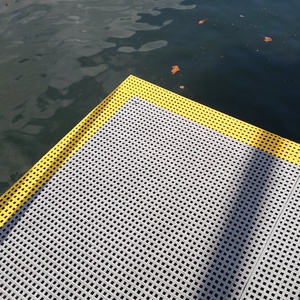
Wharf deckings, finger piers, gangways, and ship-to-shore crane maintenance catwalks. Molded FRP eliminates salt-water electrolytic corrosion, reduces topside dead load on floating platforms, and withstands constant coastal wave washdowns.
Clarifier effluent walkways, chemical metering skids (sodium hypochlorite, ferric chloride), bar screen access decks, and digester overflow trenches where hydrogen sulfide (H2S) gas rapidly turns structural carbon steel into crumbly ferrous oxide.
Flare stack catwalks, cooling tower fan decks, desulfurization plant flooring, and trench grating over oil-water separators. Vinyl ester molded resins provide spark-free safety during tool drops in explosive Class 1, Division 1 hazardous environments.
Cleanroom subfloor plenum grids, radar cross-section testing platforms, rocket stage assembly access stands, and battery testing containment pits requiring non-conductive, EMI/RFI-transparent structural support.
Overhead rigging grids, lighting catwalks, and public marina docks in Santa Monica and Marina Del Rey. ADA-compliant micromesh designs prevent high heels from catching while safeguarding pedestrians from falling debris.
Three primary macro factors are reshaping Southern California engineering specifications:
As an international manufacturing powerhouse and direct OEM exporter serving Los Angeles engineering contractors, EPC enterprises, and global procurement houses, our industrial advantages include:
Direct CNC precision cutting of cut-outs, penetrations, circular tank flanges, and irregular access geometries directly from your structural approval drawings. All cut edges are resin-sealed prior to palletization.
Heavy-duty, ISPM-15 fumigated timber skids, corrosion-inhibited wrapping, corner protective angle guards, and panel bundle tagging matched to erection layout drawings for immediate, organized site assembly.
Every production batch is certified with mechanical load test reports (deflection under uniform/concentrated load), resin burn-off glass-content verification, and certified Barcol hardness testing documentation.
Answers to common structural, environmental, and delivery considerations when procuring custom molded FRP panels in California.
Our OEM molded FRP panels feature a dual-mechanism UV protection package: high-concentration chemical UV inhibitors (hindered amine light stabilizers - HALS) blended homogenously into the thermoset liquid resin matrix before casting, complemented by a synthetic surfacing veil that produces a resin-rich outer boundary layer. This construction resists chalking, micro-fissuring, fiber blooming, and solar degradation even under continuous high-index UV exposure along the coastal Long Beach and San Pedro waterfronts.
Yes. Our MicroMesh and Mini-Mesh molded series are specifically engineered for Cal/OSHA and ADA public accessibility compliance. With top mesh openings as small as 8mm x 8mm (or 12mm x 12mm), they successfully pass the Cal/OSHA 1/2-inch and 1/4-inch ball-drop safety barrier tests, ensuring that dropped hand tools or industrial hardware cannot penetrate elevated walkway decks and strike personnel below. The aperture size also accommodates smooth rollway transit for wheelchairs, carts, and crutches without catching high-heeled footwear.
One of the chief advantages of molded FRP over steel is cold-field fabrication. Panels can be quickly cut directly on the construction site using a standard handheld circular saw or angle grinder equipped with a diamond-grit or masonry abrasive blade. Because the process produces no sparks, hot-work permits are generally not required in refinery or fuel-storage zones. Once cuts or penetrations are completed, field technicians must coat raw exposed edges with our brush-on vinyl ester or polyurethane edge-sealing resin kit to prevent chemical wicking along the internal glass rovings.
Unlike pultruded or steel bar grating which can only span in the direction of its primary bearing bars, molded square-mesh grating distributes mechanical forces equally along both the length and width of the panel. When cutting irregular access shapes, pipe notches, or round column pass-throughs, the panel does not require secondary end-banding support to maintain its structural integrity. Off-cut remnants can be used elsewhere on the deck without directional orientation constraints, reducing project scrap material rates from 18% down to under 4%.
We supply AISI 316 marine-grade stainless steel "M-Clips" (holding two adjacent load bars to the structural flange), "C-Clips" (clamping adjoining molded panels together to eliminate differential deflection), and "G-Clips" (for non-drilling structural beam fastening). For seismic conditions and cyclic vibration environments common in industrial plants near the San Andreas and Newport-Inglewood fault networks, we recommend lock washers, nylon-insert lock nuts, and a minimum fastening frequency of four clips per panel, with one clip positioned every 2.5 to 3.0 linear feet along all supporting beams.
We maintain streamlined export logistics pathways through the Port of Los Angeles and Port of Long Beach, in addition to inland rail corridors. Standard 38x38mm square mesh panels in standard catalog dimensions (e.g., 3'x10', 4'x8', 4'x12') can be staged and dispatched with prompt turnarounds. For complex OEM custom projects requiring CNC cut-to-size kits, custom pigments, or specialized fire-retardant vinyl ester chemistries, our engineering team supplies complete shop submittal drawings within 48 hours and expedites ocean container shipments with comprehensive export documentation and customs-cleared port delivery.