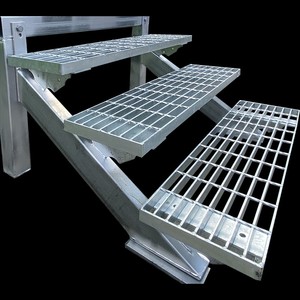
Outdoor Residential Building Metal Stair Treads
Engineered architectural treads equipped with integrated slip-resistant nosing for commercial and egress safety.
Get a Quote
Precision-molded fiberglass, electroforged carbon steel, and pickle-passivated stainless profiles calibrated to Belgian safety (EN ISO 14122-2) and environmental exposure thresholds.
Engineered architectural treads equipped with integrated slip-resistant nosing for commercial and egress safety.
Get a Quote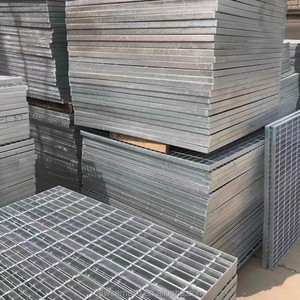
Heavy-duty ISO 1461 hot-dip galvanized panels featuring twisted square cross-bars for superior lateral lock.
Get a Quote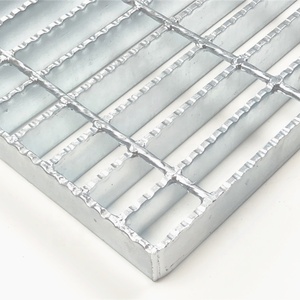
Sanitary acid-washed AISI 304/316 linear drain grates ideal for Belgian food-grade processing facilities.
Get a Quote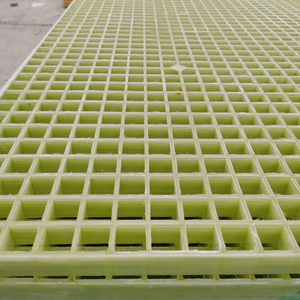
19x19mm mini-mesh aperture preventing 15mm ball drops, engineered specifically for high-level catwalk security.
Get a Quote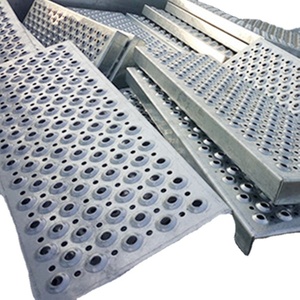
Continuous dimpled traction pattern minimizing footwear clogging while ensuring multi-directional grip.
Get a Quote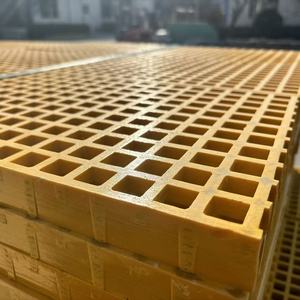
Premium isophthalic polyester and vinylester molded matrices for total immersion in aggressive chemicals.
Get a Quote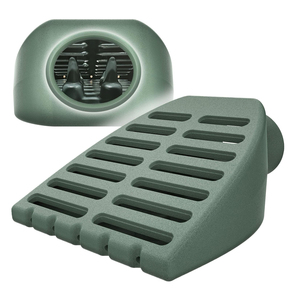
Engineered polymer runoff and intake drainage basin gratings with certified point-load capacities.
Get a Quote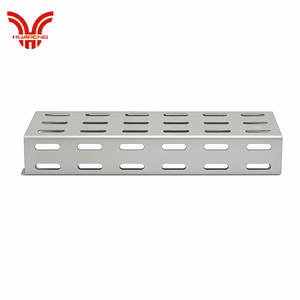
Modular perforated containment units ensuring continuous ventilation and heavy power line routing.
Get a QuoteA comprehensive analysis of mechanical resilience, composite resin chemistry, and regulatory compliance across Antwerp, Ghent, and Walloon industrial hubs.
The consolidation of the Port of Antwerp-Bruges has cemented Belgium's position as Europe's second-largest chemical cluster. Within this maritime zone, traditional carbon steel walkways face chronic exposure to atmospheric salt fog, sulfuric vapor, and constant moisture cycling.
Isophthalic and Vinylester GRP/FRP gratings have completely changed the operational cost equation. Unlike metallic materials that require re-galvanizing or protective coating cycles every 3-5 years, molded fiberglass walkway panels deliver a continuous service life exceeding 25 years without structural pitting or flaking.
Belgium's "BioValley" along the Walloon axis (Wavre, Gosselies, Liège) enforces strict aseptic standards. Cleanroom service decks and chemical handling walkways require surfaces that withstand aggressive sanitation protocols, including nitric acid flushes and hydrogen peroxide misting.
Molded fiberglass grating panels with integral quartz grit surfaces provide non-conductive, chemically inert flooring that neither leaches ions nor sustains microbial colonies, seamlessly integrating with high-specification CIP (clean-in-place) operational architectures.
As Belgium expands the Princess Elisabeth Island—the world's first artificial energy island—offshore substations demand structural components with high strength-to-weight ratios. Weight optimization on upper transition platforms reduces lifting crane overheads during installation.
Fiberglass walkways weigh roughly one-third of equivalent galvanized steel grating panels while providing critical electrical insulation (dielectric strength exceeding 10 kV/mm), minimizing step-voltage risks in offshore high-voltage switchgear installations.
Direct comparison of load mechanics, maintenance demands, and life-cycle costs across typical North Sea & chemical park conditions.
| Evaluation Parameter | Molded FRP Walkway Grating | Pultruded GRP High-Load Profile | Hot-Dip Galvanized Carbon Steel | AISI 316L Stainless Steel |
|---|---|---|---|---|
| Corrosion Resistance (Marine/C5-M) | Total inertness; zero oxidation | Excellent resin-rich surface veil | Sacrificial zinc breakdown over time | High; susceptible to warm chloride pitting |
| Weight Ratio vs Structural Capacity | ~12-14 kg/m² (Lightweight) | ~10-13 kg/m² (High unidirectional) | ~35-45 kg/m² (Heavy) | ~36-48 kg/m² (Heavy) |
| Slip Resistance Rating | R13 / V10 (Angular quartz grit) | R12 - R13 (Grit bonded) | R10 (Serrated) / R9 (Plain) | R10 (Serrated, electropolished) |
| Electrical & Thermal Conductivity | Non-conductive; fully insulating | Non-conductive; fully insulating | High conductor (Requires grounding) | High conductor (Requires grounding) |
| Cutting & Substation Adaptation | Simple jigsaw with diamond blade | Abrasive circular saw on-site | Hot work permit required; torch cut | Plasma cut; cold work protocols |
| Installed Total Lifecycle Cost (20Y) | Lowest (Zero recoating) | Low (Minimal maintenance) | High (Periodic blast & recoat) | Extremely High (Initial material cost) |
How the green transition, European sustainability mandates, and evolving HSE standards are reshaping walkway grating specifications across Flanders and Wallonia.
Across Belgian industrial assets, workplace safety falls under the CODEX on Well-being at Work. Compliance with EN ISO 14122-2 dictates that permanent walkway floors above working personnel must not permit the passage of a 20 mm ball, and in many automated manufacturing environments, this threshold is tightened to 15 mm.
This mandate has led to widespread adoption of Mini-Mesh (19x19 mm) and Micro-Mesh (12x12 mm) molded FRP systems over traditional open steel grids, preventing tools, fixings, or assembly bolts from dropping onto sub-level process lines.
Under European Standard EN 13501-1, public infrastructure, rail platforms (Infrabel), and enclosed petrochemical conduits require documented reaction-to-fire ratings. Belgian engineers now heavily specify phenolic resin matrices achieving Bfl-s1 or ASTM E84 Class 1 (Flame Spread < 25).
In fire situations, these phenolic matrices generate minimal smoke and zero halogenated toxic gases, preserving visibility in egress passages within confined plant layouts and tunnel infrastructures.
Driven by Belgium's Federal Action Plan for the Circular Economy, engineering firms are evaluating structural procurement through Life Cycle Assessment (LCA) metrics. Composite structures offer significant carbon abatement advantages during logistics and erection.
With an 80% reduction in transport weight relative to heavy cast iron or thick steel bar gratings, plus the elimination of hazardous paint and galvanizing chemicals, pultruded and molded gratings help contractors hit their BREEAM and LEED green building benchmarks.
Our integrated manufacturing plants produce electroforged steel, stainless steel, and fiberglass composite gratings with rigorous in-house quality control and verified European compliance.
Our high-capacity automated PLC electroforging lines fuse twisted square cross bars into heavy bearing bars under 100+ tonnes of hydraulic force and ~2200 A current, delivering defect-free, homogeneous structural grids.
Round, square, and complex diagonal penetrations are factory-banded with flat bar prior to delivery. Belgian site crews receive drop-in panels ready for immediate assembly around piping arrays without hot-work permits.
Our molded FRP facilities utilize automated multi-tier heated molds to maintain uniform thermosetting temperatures. Resin-to-glass ratios are closely monitored to provide complete filament wetting and reliable bi-directional strength.
For sanitary applications, our AISI 304, 316, and 309 stainless steel gratings undergo automated acid bath pickling and electropolishing, removing all trace weld discolorations and preserving the passive corrosion barrier.
Every shipment bound for the Port of Antwerp or Zeebrugge is palletized using ISPM-15 heat-treated timbers, weather-sealed in heavy moisture-barrier wrap, and clearly labeled with structural layout marks for rapid on-site staging.
All production batches undergo rigorous deflection and ultimate tensile load testing in accordance with BS 4592-0, DIN 24537, and EN ISO 14122. Full material test certificates (MTC 3.1) are supplied with all dispatch documentation.
Direct answers to technical, logistical, and standards-related questions asked by Benelux project engineers and purchasing departments.
Molded fiberglass grating has a bidirectional load pattern thanks to its interwoven continuous glass fibers and high resin content (~65%). This makes it easier to cut around complex piping without losing structural stability, which works well for walkways in Antwerp's chemical sector. Pultruded GRP contains a higher glass content (~70%) arranged along a single axis, offering higher strength-to-weight performance over wider spans (1200 mm to 1800 mm) but requiring transverse structural framing support.
External industrial walkways subject to rain, seawater spray, or oil residue typically require an R13 rating under DIN 51130, often combined with a V10 displacement volume. Our molded FRP grating features an embedded quartz crystal grit baked directly into the resin matrix during the molding cycle, offering long-term slip prevention far beyond typical post-applied grit sprays.
Yes. By working directly from your mechanical CAD layout or plant drawings, we fabricate custom shapes, access hatches, and circular pipe clearances at the factory. Every cut edge is sealed with chemical-resistant resin or banded with solid steel flat bar. Panels arrive individually labeled matching your structural erection plan for straightforward on-site installation.
For municipal and industrial wastewater handling (WWTP/STEP), Isophthalic Polyester Resin (ISO) is typically specified for general water exposure, mild acids, and sewage gasses like hydrogen sulfide (H₂S). In high-concentration chemical dosing channels (ferric chloride, caustic soda), we recommend Vinylester Resin (VER) to prevent long-term matrix softening and fiber breakdown.
To prepare an accurate structural quotation and bill of materials (BOM), please provide: material type (FRP, Galvanized Carbon Steel, or Stainless), panel dimensions, mesh pattern or bearing bar thickness/depth, clear span distances, live load requirements (e.g., 3.0 kN/m² uniform or 1.5 kN concentrated), surface profile (concave, gritted, serrated), resin chemistry (if composite), quantity, and destination port (Antwerp, Zeebrugge, or direct factory delivery).
Consult with our structural grating engineers to review your panel layouts, verify load span requirements, or arrange sample panels for your projects across Belgium.
Get a Quote