Engineered in compliance with GOST R, PUE 7th Edition, and IEC 62561-2 grounding standards for harsh Eurasian terrains.
Designing and deploying electrical grounding (заземляющие устройства) across the Russian Federation poses some of the most rigorous metallurgical and mechanical challenges in modern civil and electrical engineering. Spanning eleven time zones and encompassing vast permafrost (вечная мерзлота) expanses across Siberia, the Far East, and the Arctic continental shelf, electrical engineers encounter localized soil resistivities that often surpass 2,000 to 5,000 Ω·m during the winter freezing cycle. In standard temperate regions, vertical grounding rods of 2.5 to 3 meters are sufficient to achieve the mandated ≤4 Ω or ≤0.5 Ω substation threshold specified by PUE 7th Edition (Правила устройства электроустановок, Глава 1.7). However, throughout northern and eastern Russia, surface frozen layers act as electrical insulators, forcing fault currents to either reflect dangerously across surface infrastructure or seek deep conductive sub-permafrost aquifers (талые зоны).
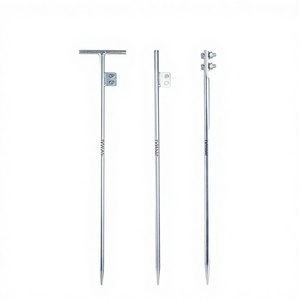
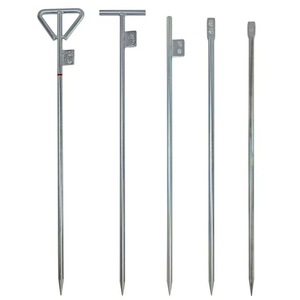
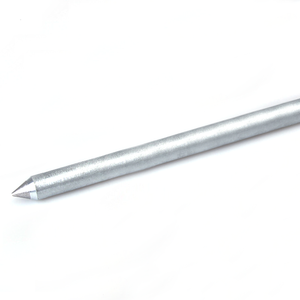
As an authoritative international manufacturer and strategic exporter of heavy-duty earthing rods, our production systems solve this problem through high-tensile hot-dip galvanized steel (HDG) and micro-bonded copper-clad steel grounding electrode systems. Our engineered rods are designed for extreme driving mechanical loads, coupling strength, and corrosion persistence. Cold-weather ground freezing introduces intense frost heave (морозное пучение грунтов), which exerts cyclic vertical tangential shearing forces capable of snapping substandard electrode joints or ejecting shallow driven pins. By utilizing precision-machined conical driving tips, high-impact coupling sleeves, and reinforced low-temperature carbon steel chemistries (such as St3sp, 20, or micro-alloyed 09G2S equivalents), our earthing assemblies ensure mechanical integrity and electrical dissipation efficiency even at ambient operating temperatures down to -60°C.
Fully compliant with Russian electrical standards PUE Chapter 1.7, GOST 12.1.030-81, and international specifications IEC 62561-2 and IEC 62305 for structural lightning dissipation.
High-yield steel substrates allow continuous modular coupling with automated pneumatic and hydraulic demolition hammers down to 30+ meters into unfrozen conductive horizons.
Hot-dip zinc coating adhering to GOST 9.307-89 and ISO 1461, forming an impermeable Fe-Zn metallurgical alloy barrier resistant to mechanical flaking during sub-zero soil movement.
Grounding rods exported to the Russian Federation operate within demanding operating environments characterized by petrochemical saturation, high mechanical vibration along heavy-haul transit corridors, and severe chemical acidity in marshy peatlands (торфяники). Understanding these localized conditions allows procurement directors and chief power engineers (Главные энергетики) to choose between thick-film hot-dip galvanized steel and copper-bonded variants.
Facilities across the Yamal Peninsula, Gydan, Sakhalin, and Khanty-Mansiysk demand explosion-proof equipotential bonding. In frozen soils, lightning dissipation networks must prevent dangerous spark ignition. Our hot-dip galvanized threaded rods and chemical ground enhancement electrodes ensure step-and-touch voltages remain well beneath hazardous thresholds around cryogenic gas reservoirs, pumping stations, and refinery cracking columns.
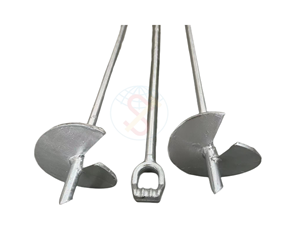
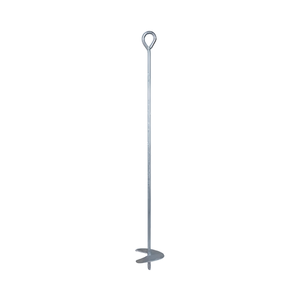
Transmission systems ranging from 110 kV to 750 kV operated by the Federal Grid Company (FGC UES / Rosseti) require reliable grounding for tower bases (опоры ЛЭП) in marshy, rocky, and forested routes. Our galvanized helical earth anchors and sectional rods absorb lightning surges and single-phase short-circuit currents without thermal delamination or loss of grounding continuity.
The Trans-Siberian and Baikal-Amur Mainlines (BAM) operate high-capacity 25 kV AC and 3 kV DC traction systems. Return-current grounding networks require corrosion-resistant, mechanically rugged earthing rods along trackside substations, overhead contact catenary masts, and signal relay enclosures to prevent stray-current corrosion (блуждающие токи) and system signaling faults.
Open-pit and deep underground extraction operations for nickel, copper, coal, and gold in Norilsk, Kuzbass, and the Ural Mountains experience high rock resistivity. Grounding requires deep vertical penetration and horizontal mesh networks capable of resisting corrosive acidic mine tailings, heavy abrasive mechanical backfills, and vibration from ore-crushing machinery.
Rapidly developing utility-scale solar parks across Stavropol, Astrakhan, and the Kalmykia Republic, together with wind farm developments in Rostov, sit in dry steppe soils with high seasonal moisture variance. Our deep-driven galvanized steel systems maintain steady grounding impedance despite shifting summer-to-winter soil hydration profiles.
Urban cogeneration plants, municipal pumping complexes, and combined-cycle power facilities across Moscow, St. Petersburg, and Kazan utilize comprehensive multi-point earthing arrays to guarantee continuous personnel safety, neutral grounding for heavy transformers, and zero-reference stability for sensitive automation systems.
Precision manufacturing parameters ensuring adherence to international standards and regional GOST requirements for structural strength, coating thickness, and corrosion life expectancy.
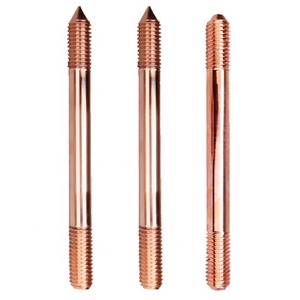
| Performance Parameter | Hot-Dip Galvanized Rods (HDG) | Copper-Bonded Earth Rods | Helical Earth Screw Anchors |
|---|---|---|---|
| Base Core Substrate | Low Carbon Steel (St3sp / C1018 / 09G2S) | High-Tensile Carbon Steel (C1020 / C1045) | Heavy-Wall Structural Tube / Solid Bar |
| Protective Layer Process | Thermal Hot-Dip Galvanization (Fluxed) | Continuous Electro-Plating (Molecular Bond) | Centrifugal Hot-Dip Zinc Coating |
| Coating Thickness | ≥ 85 – 120 µm (610–850 g/m²) | ≥ 254 µm (10 mil / 0.254 mm) | ≥ 80 – 100 µm Uniform Finish |
| Standard Diameters (∅) | 16 mm, 18 mm, 20 mm, 22 mm, 25 mm | 14.2 mm (5/8"), 17.2 mm (3/4"), 20 mm | Shaft: 16–32 mm; Helix: 150–300 mm |
| Tensile Strength (MPa) | 450 – 650 MPa | 550 – 750 MPa | 500 – 700 MPa |
| Coupling Connection | Threaded (M16/M20), Point/Socket, or Welded | Cold-Rolled External Threads with Couplers | Welded Guy Eye / Hex Nut Fitting |
| Operating Temperature | -60°C to +65°C (Cryo-tested steel) | -50°C to +60°C | -60°C to +70°C |
| Design Service Life | 30+ Years in Normal to Moderate Soils | 40 to 50+ Years in Highly Acidic Peat | 35+ Years in Frozen Subgrades |
| Applicable Standard | GOST 9.307-89, ISO 1461, ASTM A153 | IEC 62561-2, UL 467, BS EN 50164-2 | ASTM A123, IEEE Std 691 |
The infrastructure procurement landscape across the Russian Federation is transitioning through structural shifts. As domestic electrical grids and natural resource complexes expand their capital modernization cycles, three dominant market trends are reshaping how Russian engineers and procurement bodies select earthing solutions:
1. Shift Toward Deep Vertical Modular Earthing: Due to dense urban civil infrastructure and the prohibitive cost of excavation in frozen permafrost ground, Russian design institutes are increasingly moving away from sprawling horizontal strip grids (стальная полоса) toward deep vertical modular drilling systems. Deep grounding reaches stable low-resistivity water-bearing horizons beneath permafrost boundaries, ensuring predictable grounding resistance regardless of seasonal surface temperature variations.
2. Tightening Corrosion Standards in Sulfide & Peat Soils: Traditional uncoated bare steel electrodes (чёрный металлопрокат) degrade rapidly in acidic peat bogs (pH < 4.5) and chloride-rich coastal extraction zones. Federal energy groups are increasingly specifying minimum 85µm to 120µm hot-dip galvanizing or 254µm electro-bonded copper coatings to achieve maintenance-free 30- to 50-year service lifespans under aggressive soil conditions.
3. Demand for Certified, Reliable Supply Chains: Large EPC contractors require documented test certificates (паспорта качества и сертификаты соответствия), including chemical analysis of the steel substrate, cold bend testing at sub-zero temperatures, and copper/zinc layer adhesion testing. Suppliers who deliver verified material documentation, custom dimensions, and sea-rail multimodal shipping directly to regional hubs like Moscow, Vladivostok, and Novorossiysk retain a strong competitive advantage.
Combining heavy metallurgical production, strict quality control, and full export logistics compliance.
Strict raw material heat tracking using certified low-temperature structural steels that maintain impact toughness without cold embrittlement during aggressive permafrost driving.
Precision PLC-controlled rolling and forging machines produce high-yield threads and interlocking taper couplers that resist split stresses under continuous 100+ Joule driving impacts.
Computerized multistage hot-dip galvanizing ensures uniform Fe-Zn intermetallic alloying, delivering consistent coating density (>610 g/m²) with zero pinholes, dross, or micro-cracks.
Custom fabrication according to buyer blueprints: custom lengths (1.2m to 6.0m), varied rod diameters (12mm to 32mm), special drive heads, earth clamps, and welded cross-connections.
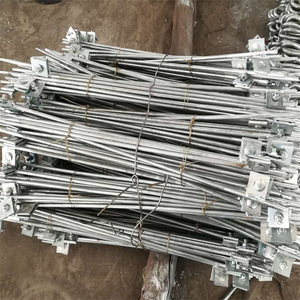
Robust steel-strapped bundles wrapped in heavy moisture-proof polymer fabric and reinforced wooden crating designed for rough multimodal maritime, rail, and heavy truck transit across Eurasia.
Full documentation package including 3.1 Material Test Reports (MTR), coating thickness inspection logs, thread calibration certificates, and batch tensile data for customs and site acceptance.
Essential technical and logistical insights for importing grounding hardware into the Russian Federation.
For installations in Russian climate zones classified under temperate to extremely cold conditions (temperatures dropping to -40°C or -60°C), we employ high-grade low-carbon structural steels such as calm/semi-killed St3sp (Ст3сп), Grade 20, or micro-alloyed cold-tough steels comparable to 09G2S (09Г2С). These alloys undergo controlled deoxidation to limit sulfur and phosphorus impurities, eliminating the risk of brittle impact fracture during pneumatic or hydraulic percussion hammer installation into frozen ground.
Under GOST 9.307-89 (Единая система защиты от коррозии и старения. Покрытия цинковые горячие), structural grounding elements buried in aggressive soil require a minimum average coating thickness ranging from 70 µm to 85 µm, with premium industrial specifications demanding 100 µm to 120 µm (approximately 610 to 850 g/m²). Our hot-dip galvanizing bath utilizes high-purity zinc (Grade Zn 99.995%) with controlled immersion times and centrifugal excess removal, guaranteeing uniform metallurgical bonding that easily satisfies and exceeds these parameters.
Yes. We offer two connection systems engineered specifically for deep driving. Our threaded system uses precision rolled threads cut prior to galvanizing, or coated with protective zinc-rich sealing, coupled via high-strength threaded brass or galvanized steel sleeves. Alternatively, our male-female taper-lock socketed rods engage mechanically via high-pressure driving, forming an airtight cold weld joint that prevents groundwater ingress and corrosion along the junction.
To provide an accurate technical and commercial proposal, please furnish: (1) Electrode material (hot-dip galvanized steel or copper-bonded); (2) Rod diameter (e.g., 16mm, 18mm, 20mm) and unit length (e.g., 1.5m, 2.0m, 3.0m); (3) Connection type (threaded, conical taper-lock, or plain); (4) Coating thickness requirements; (5) Total quantity or project tonnage; and (6) Preferred Incoterm and destination discharge port or logistics terminal (e.g., FOB major port, CIF St. Petersburg, Novorossiysk, or Vladivostok).
We provide full export documentation required for Eurasian Customs Union (EAC) clearance, including certified commercial invoices, packing lists with detailed tare and gross weights, Mill Test Certificates EN 10204 3.1, certificates of origin, and fumigation certificates for timber packaging. Shipments are bundled with heavy-duty steel bands, water-resistant outer wraps, and secured in 20ft heavy-load containers optimized for multimodal sea-rail dispatch across the Trans-Eurasian transport corridors.
Submit your electrical single-line diagrams, engineering drawings, or tender bill of quantities (BOQ). Our engineering and logistics specialists will provide a complete technical assessment, coating compliance review, and competitive export proposal.