
Manufactured to precision drawings for UTE utilities, industrial pulp mills, renewable energy plants, and maritime infrastructure across Uruguay.
Technical evaluation of solid C11000 ETP copper bus bars, electro-tin plating kinetics, and fault current dissipation for low-impedance grounding grids.
In modern high-voltage power networks, telecommunications hubs, and heavy process manufacturing plants throughout the Oriental Republic of Uruguay, system resilience is intrinsically tied to grounding infrastructure efficiency. As fault-current magnitudes escalate with national grid interconnectivity, the earthing bus bar serves not merely as an interconnecting plate, but as the critical low-impedance junction preventing hazardous step-and-touch potentials, transient overvoltages, and destructive arc flashes. Our enterprise manufactures precision-engineered grounding bus bars tailored explicitly to meet the electrical conductivity thresholds, mechanical vibration withstand capabilities, and galvanic corrosion challenges native to South America's maritime and temperate zones.
Fabricated using premium grade UNS C11000 Electrolytic Tough Pitch (ETP) copper with minimum 99.90% copper content and 100%–101% IACS (International Annealed Copper Standard) rating, our earthing collectors eliminate micro-voids and trace impurities that cause internal heating during short-circuit transients. To combat atmospheric sulfidation and chloride-induced oxidation prevalent across coastal departments such as Montevideo, Canelones, and Maldonado, the copper bars undergo an electro-tin plating process complying with ASTM B545 specifications, delivering a uniform 5 to 15-micron barrier that preserves interfacial contact resistance below 0.1 microhms per square centimeter.
Certified copper chemistry exceeding 99.9% Cu content guarantees optimum electrical conductivity (≥100% IACS), maximizing transient dissipation during high-voltage ground faults without localized thermal softening.
ASTM B545 electro-deposited tin coating guarantees prolonged passivation against airborne chlorides and industrial sulfur dioxide, preventing bimetallic electrochemical degradation when interfacing with aluminum lugs.
Engineered halogen-free, track-resistant glass-reinforced polyester standoff insulators with brass threaded inserts, tested to 15 kV dielectric withstand strength for absolute isolation from structural steel framework.
| Parameter / Dimension | Standard Master Bus Bar (TMGB) | Telecommunications Bus Bar (TGB) | Substation High-Fault Collector | Wind Turbine Nacelle Grounding Bar |
|---|---|---|---|---|
| Base Material Grade | UNS C11000 ETP Copper (99.9%) | UNS C11000 / Annealed Bare Cu | Hard Drawn High-Purity Copper Bar | High Conductivity Tinned Copper Alloy |
| Cross-Section Profile | 6.35 mm × 100 mm (1/4" × 4") | 6.35 mm × 50 mm (1/4" × 2") | 10.0 mm × 100 mm (0.4" × 4") | 8.00 mm × 80 mm |
| Electrical Conductivity | ≥ 101% IACS (58.5 MS/m) | ≥ 100% IACS (58.0 MS/m) | ≥ 101% IACS (58.5 MS/m) | ≥ 100% IACS (58.0 MS/m) |
| Short-Circuit Capacity (1s) | Up to 45 kA r.m.s. | Up to 25 kA r.m.s. | Exceeding 63 kA r.m.s. | Up to 50 kA r.m.s. |
| Hole Configuration Pattern | NEMA 2-Hole Pre-drilled Pattern | NEMA 2-Hole & 1-Hole Combined | Custom CAD Machining / M10-M12 | Heavy Staggered Lug Alignment |
| Surface Protection | Electro-Tin Plated (8–12 μm) | Bright Tin or Acid Cleansed Bare | Heavy Tin Plated / Silver Optional | Marine Grade Hot-Dip Tin Barrier |
| Applicable Global Standards | ANSI/TIA-607-D, BICSI, IEEE 837 | BICSI-002, TIA-607-D, UL 467 | IEC 62561-1, IEEE 80, UNIT-IEC | IEC 61400-24, IEC 62305, IEEE 81 |
Tailored earthing infrastructure deployed across national electrical grids, forestry mega-mills, port terminals, and hyperscale edge facilities.
Uruguay's massive wind generation footprint, distributed across departments like Tacuarembó, Florida, and Maldonado, faces frequent severe thunderstorms. Our tinned copper grounding bus bars provide equipotential bonding along internal tower raceways and down-conductor bases, channeling direct lightning strike currents safely into foundation ring electrodes in compliance with IEC 61400-24.
Supporting the national utility Administración Nacional de Usinas y Trasmisiones Eléctricas (UTE), our heavy-duty substation bus bars withstand fault levels reaching 63 kA. Engineered for step-down transformation stations and high-voltage transmission tie-ins linking Uruguay to Brazil (San Carlos-Melo) and Argentina (Salto Grande), ensuring personnel safety and instrumentation protection.
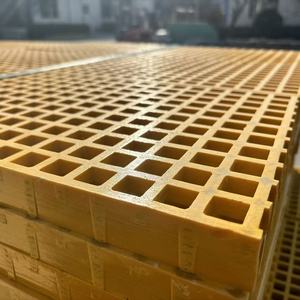
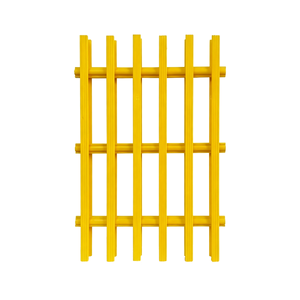
In highly aggressive chemical pulping environments, sulfurous gases and moisture accelerate galvanic corrosion on unshielded copper. Our tin-plated bus bars, paired with corrosion-proof FRP pultruded platform gratings and stainless steel supports, form an enduring earthing and physical infrastructure backbone within black-liquor boiler houses and bleaching chemical sectors.
As Montevideo solidifies its standing as a South American technological hub with transatlantic subsea fiber landings, mission-critical server environments mandate ultra-clean electrical reference planes. Our Telecommunications Main Grounding Busbars (TMGB) establish zero-voltage ground reference, mitigating high-frequency electromagnetic interference (EMI) and transient surges.
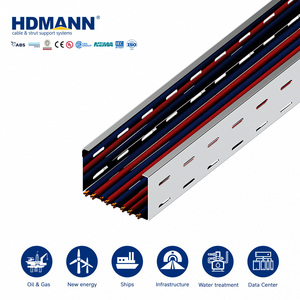
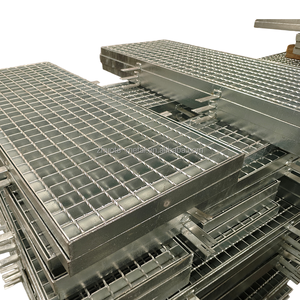
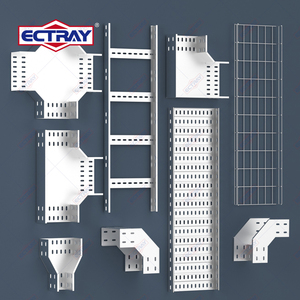
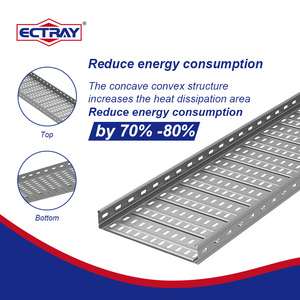
Coastal and maritime installations at the Port of Montevideo require grounding solutions capable of surviving salt-fog spray, airborne salinity, and brackish estuarine moisture. Our marine-grade tinned grounding bars, bonded with heavy duty hot-dip galvanized cable trays, resist pitting corrosion while earthing automated quay cranes and container gantry systems.
Grain storage terminals and processing installations in Soriano, Paysandú, and Colonia accumulate static electric charges from grain flow, posing severe combustible dust explosion hazards. Equipotential copper grounding collectors discharge static electricity instantly, safeguarding conveyor systems, bucket elevators, and automated bagging lines.
Navigating structural evolution across Uruguay's progressive electrical, industrial, and regulatory landscape.
Having completed its initial renewable transformation—generating upwards of 95% of its electricity from wind, hydro, solar, and biomass—Uruguay is now aggressively executing its H2U national green hydrogen roadmap. The emergence of multi-megawatt electrolyzer installations in central and littoral regions introduces substantial direct current (DC) harmonic leakage and intense stray current corrosion risks. Grounding bus bars deployed in these high-amperage chemical facilities require custom dimensioning, specialized tin coatings to prevent galvanic attack against steel piles, and extensive current carrying capacity up to 80 kA to survive severe electrolysis circuit transients.
Uruguayan engineering procurement criteria are transitioning from localized standards toward full alignment with international electrical codes. Project specifications released by UTE and leading international engineering consultancies (such as Stantec, WSP, and SEG Ingeniería) systematically mandate adherence to UNIT-IEC 62305 (Lightning Protection Systems) and UNIT-IEC 62561 (Lightning Protection System Components). Furthermore, substation ground grid interconnections must adhere to IEEE 80-2013 formulas for tolerable touch-and-step voltage calculations, requiring earthing bars to feature certified mechanical shear resistance and metallurgical consistency backed by accredited third-party test certificates.
In northern and central Uruguay (notably Tacuarembó, Rivera, and Salto), electrical engineers continually confront exceptionally high soil resistivity caused by ancient basaltic rock formations, occasionally exceeding 2,000 Ω·m. In such terrains, conventional vertical earth rods are insufficient, necessitating extensive buried mesh networks and deep borehole counterpoise configurations. The master grounding bus bar serves as the vital equipotential node bringing together multiple deep electrodes, chemical ground enhancement wells, and structural foundations, demanding expansive, multi-row hole configurations to accommodate high-cross-section copper cables (120 mm² to 240 mm²).
Vertical engineering integration spanning electrical earthing, heavy-duty structural gratings, and anti-corrosive raceway systems.
Every grounding bus bar, copper plate, and structural element is supplied with EN 10204 3.1 chemical analysis and mechanical mill test certifications. Zero scrap or compromised alloys are permitted on factory lines.
From custom terminal spacing to staggered NEMA 2-hole patterns and waterjet-cut contour cut-outs, our CNC machinery translates client shop drawings directly into millimeter-precise conductor assemblies without deformation.
Tightly palletized in moisture-barrier VCI foil wrapping and ISPM-15 heat-treated export timber crates, our consignments arrive at Montevideo port free from transit scuffing, surface tarnish, or mechanical distortion.
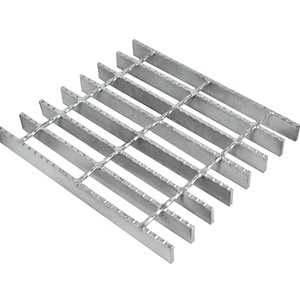
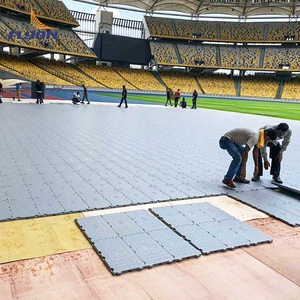
Consolidate project logistics by pairing earthing bus bars with heavy duty electroforged steel gratings, FRP non-conductive floorings, and Zinc-Aluminum-Magnesium perforated cable trays from one unified industrial manufacturer.
Authoritative guidance addressing customs classification, standard compliance, galvanic protection, and installation criteria.
Our grounding bus bars are manufactured strictly adhering to IEC 62561-1 (Lightning Protection System Components - Requirements for Connection Components) and IEC 62305, which form the technical core of Uruguay’s national UNIT standards. For projects supervised directly by Administración Nacional de Usinas y Trasmisiones Eléctricas (UTE), our components fulfill short-time withstand current testing (kA/1s), electro-tin coating thickness verification, and mechanical tensile standards compliant with IEEE 837 and ASTM B187.
For maritime environments, port berths, coastal wind facilities, and wastewater treatment plants within 20 km of the Río de la Plata estuarine or Atlantic coastline, we strongly mandate electro-tin plated copper bus bars. Bare copper rapidly develops a non-conductive copper carbonate and sulfate patina when exposed to airborne saline chlorides and industrial emissions. Our 8 to 12-micron tin plating provides an impenetrable barrier layer that mitigates corrosion, eliminates galvanic mismatch when connecting aluminum cable compression lugs, and maintains stable interfacial contact resistance throughout decades of service.
Every commercial consignment exported through Montevideo customs includes a comprehensive documentation pack: EN 10204 Type 3.1 Material Test Certificates confirming elemental copper composition (≥99.90%) and tensile yield strength, third-party electrical conductivity test reports (IACS %), tin coating thickness x-ray fluorescence (XRF) inspection data, dielectric flashover certificates for standoff insulators, and ISPM-15 phytosanitary treatment certificates for wooden export packaging.
Yes. Our CNC milling and precision punching centers operate directly from customer DXF/DWG engineering submissions. Whether your schematic specifies standard NEMA 2-hole spacing (1/2" holes on 1-3/4" centers), DIN rail pitch patterns, or customized multi-diameter hole layouts for primary medium-voltage switchgear ground collectors, every aperture is deburred and plated post-machining to prevent exposed raw copper edges.
Standard profile bars and pre-drilled TMGB kits are typically manufactured and packed within 10 to 18 working days depending on quantity. Ocean freight from our primary export docks directly to the Port of Montevideo normally ranges between 32 to 42 days. For urgent EPC commissioning windows or planned outage overhauls, express air-freight dispatch to Carrasco International Airport (MVD) is available for consignments up to 1,500 kg.
Consult with our electrical engineering staff to evaluate fault current ratings, select plating chemistry, or receive a formal bid package according to your project blueprints.
Inquire Now