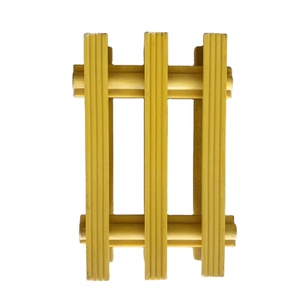

Engineered for maximum unidirectional stiffness, corrosion resistance in saline and acidic environments, and rapid procurement turnaround across Turkish ports and Eurasian industrial hubs.
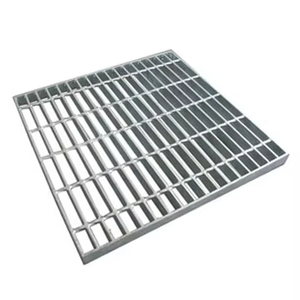
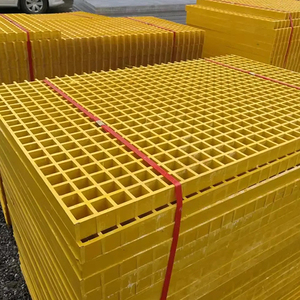
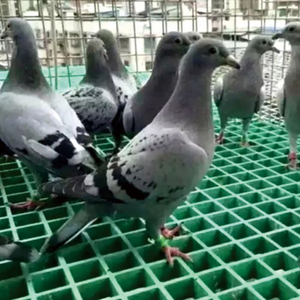
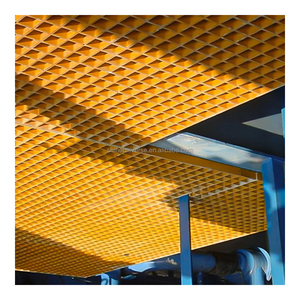
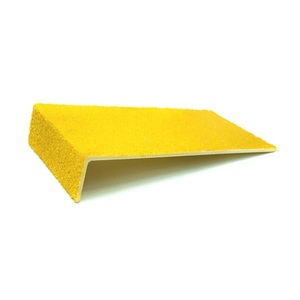
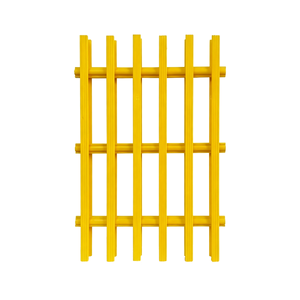
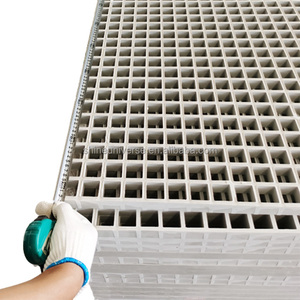
A comprehensive examination of why heavy civil, offshore petrochemical, and regional transit systems across Turkey are systematically superseding hot-dip galvanized carbon steel and standard molded composite mesh with high-modulus pultruded structural profiles.
In high-span, load-critical civil and process engineering applications, pultruded GRP (Glass Reinforced Polymer) grating operates under fundamentally different mechanical principles than molded grating. While molded gratings provide equal bidirectional resistance via continuous woven roving (30% to 35% glass reinforcement by weight), continuous pultruded grating panels achieve exceptional unidirectional load-bearing performance by incorporating up to 70% high-grade E-glass roving and continuous filament mats (CFM) encapsulated within thermosetting resin matrices.
By orienting glass fibers along the longitudinal axis of I-bar, T-bar, and heavy-load bars, pultruded panels produce a longitudinal modulus of elasticity exceeding 28.5 GPa. This allows EPC contractors to engineer clear spans up to 1500 mm with negligible deflection (≤ L/200), all while weighing 75% less than hot-dip galvanized steel.
Traditional structural steel requires continuous galvanizing maintenance in seaside marine atmospheres or petrochemical sulfur atmospheres. Pultruded GRP utilizing premium Isophthalic Polyester or Vinyl Ester (Bisphenol-A) resins creates an impermeable synthetic veil barrier, resisting continuous salt spray, H2SO4, NaOH, and chlorine exposure without delamination.
Non-conductive properties eliminate dangerous touch-voltage hazards in electrified transit and transformer yards. Furthermore, being completely non-magnetic and non-sparking, pultruded profiles comply with stringent ATEX explosive atmosphere requirements throughout Turkish refineries, mine shafts, and paint booths.
Specifying engineers must balance clear span, vehicular or pedestrian dynamic loads, and chemical exposure vectors. The comparison matrix below establishes empirical design criteria across standard pultruded industrial configurations:
| Profile Model | Bar Depth / Pitch | Resin Matrix Base | Fiberglass Content (%) | Design Clear Span (Deflection ≤ L/200) | Uniform Distributed Load (UDL) | Target Turkish Industrial Sector |
|---|---|---|---|---|---|---|
| P-I4010 Standard | 25mm I-Bar / 40mm Pitch | Orthophthalic / Isophthalic | 65% E-Glass | 600 mm – 750 mm | 12.4 kN/m² | Agricultural Greenhouses (Antalya/Mersin), HVAC Roofs |
| P-I5015 Marine Heavy | 38mm I-Bar / 50mm Pitch | Isophthalic Fire Retardant (IFR) | 68% E-Glass + Synthetic Veil | 900 mm – 1100 mm | 24.8 kN/m² | Tuzla & Yalova Shipyards, Marine Quayside Piers |
| P-T6020 Petro-Spec | 38mm T-Bar / 40mm Pitch | Vinyl Ester Fire Retardant (VFR) | 70% E-Glass Reinforcement | 1100 mm – 1350 mm | 31.2 kN/m² | Aliaga & Kocaeli Petrochemical Refineries, Acid Tanks |
| P-HD7030 Heavy-Traffic | 50mm High-Load / 38mm Pitch | Vinyl Ester / Phenolic | 72% Pultruded E-Glass Matrix | 1200 mm – 1600 mm | 48.5 kN/m² (H-20 Truck Load) | Ambarlı/Mersin Port Logistics, Airport Trench Runways |
From the high-salinity marine spray of the Marmara Sea to the severe thermal acid runoffs of Anatolian geothermal wells, pultruded composite grating delivers zero-maintenance structural integrity across regional economic centers.
The Marmara and Black Sea marine hubs endure relentless sea salts and aggressive ballast washings. Pultruded GRP I-bar walkways eliminate galvanic corrosion between aluminum ship decks and carbon steel stairs, drastically reducing maintenance downtime in commercial vessel retrofits and quayside drydocks.
Processing zones adjacent to the STAR Refinery and TÜPRAŞ infrastructure experience continuous ambient concentrations of hydrogen sulfide (H2S), sulfuric condensates, and caustic cleaning agents. Pultruded vinyl ester grating systems provide uninterrupted structural safety across high-temperature catalytic reforming towers and pipe rack walkways.
Turkey's high-enthalpy geothermal power generation releases scalding brine laden with silica, carbonates, and acidic vapors. Traditional zinc galvanizing fails in months. Pultruded composite trench grids withstand 110°C fluids without thermal warping or brittle rupture.
Mediterranean agro-industrial complexes utilize continuous automated irrigation, liquid fertilizers (NPK formulations), and high relative humidity. Pultruded smooth and perforated flooring profiles prevent moss buildup, resist agrochemical spraying, and ensure rapid, sanitary drainage.
Wastewater treatment basins (aeration, sludge dewatering) generate lethal anaerobic biocatalytic corrosion. Meanwhile, underground metro tunnels require dielectric, non-sparking catwalks. Pultruded GRP resolves both safety mandates without stray-current electrochemical degradation.
Turkey's primary automotive corridors utilize robotic electrophoretic deposition (e-coat) and chromic acid pickling. Pultruded T-bar grating delivers continuous load support under battery transport AGVs while withstanding aggressive chemical splashdowns.
Strategic structural shifts driving Turkish engineering firms and international EPC contractors toward advanced pultrusion manufacturing partners.
Although hot-dip galvanized steel historically presented lower initial purchase outlay, frequent sandblasting, repainting, and structural replacements every 4–6 years in marine climates make GRP 50–65% cheaper across a 20-year operational life.
Turkey's location on the active North and East Anatolian fault zones requires seismic engineering compliance. Pultruded composite grating sheds up to 75% dead weight from elevated pipe racks and access platforms, directly reducing seismic structural load reactions.
With Turkey's close alignment with EU trade dynamics (Customs Union & CBAM), industrial manufacturers are opting for composite materials with significantly lower embodied energy and zero toxic zinc leaching compared to legacy electroplating facilities.
Pultruded grating panels can be rapidly cut and modified on-site using simple tungsten carbide tipped saws without hot-work permits or post-weld galv-spray recoating, slashing turnaround schedules in port and railway expansions.
Operating state-of-the-art continuous hydraulic pultrusion machines, our facility pairs strict raw-material chemistry with precision diamond tooling, supporting tailored dimensions, custom cut-outs, and export-compliant palletization for immediate Turkish port clearing.
Automated tensioning and computer-monitored multi-zone heated dies guarantee homogenous resin saturation, eliminating internal voids and micro-fractures under cyclic stress.
We process complex cut-outs for pipe penetrations, rounded vessels, and odd geometry walkways. Every penetration is sealed with vinyl ester resin coating to eliminate moisture absorption.
Every pultrusion production batch undergoes Barcol Hardness (ASTM D2583), Flexural Modulus (ASTM D790), and Burn-Off Glass Content (ASTM D2584) quality validation testing with mill certificates provided.
Custom heavy wooden crating, sea-worthy waterproof shrink wrap, and bundled layout-coded panels ensure damage-free transit and rapid crane offloading on Turkish construction job sites.
Essential guidance covering customs handling, standard equivalencies, chemical selections, and project planning.
In Turkey, public infrastructure, TCDD (State Railways), and BOTAŞ projects align with Turkish Standards Institute norms (TSE), which directly adopt TS EN 13706 (Specifications for pultruded profiles) and TS EN 13501-1 (Fire classification of construction products). Our pultruded GRP grating panels fully comply with both TS EN 13706 Grade E23/E17 and international ASTM standards (ASTM D790, ASTM D638, ASTM E84 Class 1). Certified independent third-party laboratory reports are supplied with each export consignment.
For standard project consignments (such as 25mm, 38mm, or 50mm I-bar/T-bar panels), standard production lead times range between 12 to 18 business days. Consolidated maritime container shipments (FCL/LCL) are routed directly into primary Turkish port facilities: Ambarlı / Haydarpaşa (Istanbul), Port of Mersin (Southern Anatolia), Aliağa / Nemrut Bay (İzmir), or Gemlik (Bursa), ensuring simplified customs clearance under standard ATR or bilateral commercial documentation.
Pultruded grating is strictly superior when the project requires long unsupported clear spans (exceeding 900mm up to 1500mm), high unidirectional load-bearing capacity, and low deflection thresholds (≤ L/200). Molded grating, with its 30-35% glass content, will experience severe flexural deflection across large spans unless supported by closely spaced steel framing. Pultrusion achieves 65-70% glass concentration, offering steel-like structural rigidity at a fraction of the weight.
For aggressive environments combining saline sea spray with industrial chemicals (acids, solvent vapors, caustic washes), Bisphenol-A Vinyl Ester Resin (VER) is strongly recommended. For standard marine boardwalks, wastewater plants, and commercial greenhouses, high-grade Isophthalic Polyester (ISO) offers optimal chemical resistance at a lower price point. For offshore platforms or enclosed railway tunnels with zero-smoke requirements, Phenolic Resin must be specified.
We supply AISI 316 (A4) or AISI 304 (A2) stainless steel fixing clip assemblies, specifically engineered for pultruded profiles: M-Clips (securing two adjacent I-bars to the supporting flange), C-Clips (joining adjacent panel edges to eliminate step differentials), and G-Clips (friction clamping without drilling into the load-bearing flange). All fasteners resist marine saltwater and chemical spray.
Send your structural drawings, load span requirements, or custom bill of quantities to our technical engineering division. Receive full load calculations, ASTM/EN compliance documentation, and competitive export quotations.