
Precision-molded and pultruded cable support channels designed to resist extreme saline atmospheres, high electromagnetic fields, and aggressive petrochemical vapors.
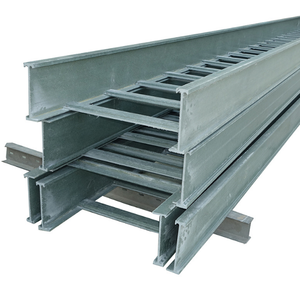
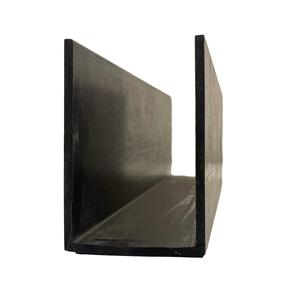
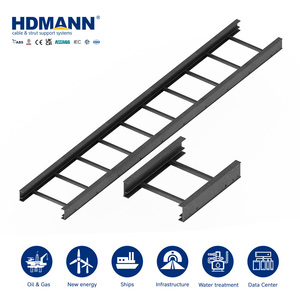
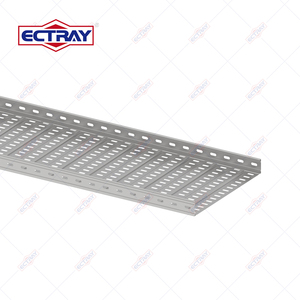
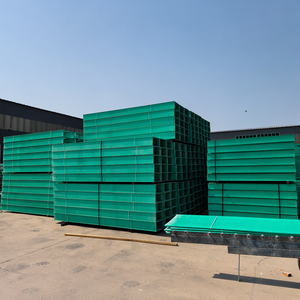
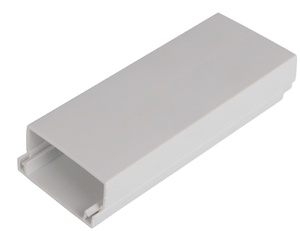
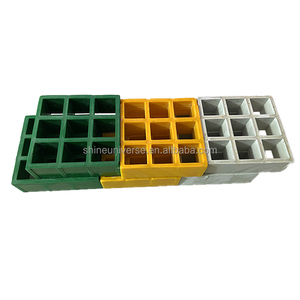
Executive Engineering Summary: The Greater Nagoya Industrial Zone (Chukyo Industrial Belt) leads Japan in manufacturing gross output, spanning the world's most sophisticated automobile assembly plants, aerospace manufacturing facilities, chemical conglomerates along Ise Bay, and mega-scale deep-water terminal logistics at the Port of Nagoya. Operating electrical and instrumentation cabling in this environment presents a harsh trifecta of operational stresses: airborne chloride saturation carried by coastal typhoons, concentrated acid-alkali chemical vapors, and high electromagnetic resonance created by robotic assembly cells. While traditional hot-dip galvanized and stainless steel (AISI 304/316) trays have historically served this market, premature pitting, galvanic corrosion, magnetic eddy current heating, and heavy seismic load penalties have forced Japanese EPC engineers to migrate to Glass Reinforced Plastic (GRP/FRP) systems.
| Evaluation Parameter | Pultruded GRP / FRP (Vinylester / Isophthalic) | Hot-Dip Galvanized Steel (HDG) | Marine Grade Stainless Steel (AISI 316L) |
|---|---|---|---|
| Salt Spray Resistance (ISO 9227) | Zero rust, degradation, or blister after 10,000+ hours exposure | Zinc layer depletes within 24–48 months near Ise Bay waters | Susceptible to crevice corrosion under marine grime buildup |
| Electrical Insulation & Spark Safety | Non-conductive; zero grounding required; eliminating stray current hazards | Requires continuous earthing bridges; risk of short-circuit arcing | Requires expensive bonding jumpers across every expansion joint |
| Dead Load vs. Structural Stress | 1.8 g/cm³ (Approx. 25% the total density of structural steel) | 7.85 g/cm³ (High dead-load burden on overhead earthquake supports) | 7.95 g/cm³ (Severe seismic anchorage demand on pipe racks) |
| Electromagnetic Losses (Eddy Currents) | Non-magnetic; allows high-amp single-core runs without thermal buildup | High inductive heating; requires de-rating cable amperage allowances | Moderate induced magnetic loss; generates parasitical thermal loops |
| Thermal Conductivity (λ) | 0.3 W/(m·K) – Acts as an insulating barrier during flash fires | 50.0 W/(m·K) – Transmits ambient heat directly to cable insulation | 16.0 W/(m·K) – Causes accelerated interior sheath dry-rot over time |
Engineered to satisfy stringent Japanese technical specs from coastal shipping hubs to clean-room automated plants.
Exposed quayside gantry cranes, container inspection zones, and coal/iron unloading jetties face constant sea spray and wave splashes. Pultruded GRP cable ladders eliminate structural peeling and galvanic failure, reducing offshore maintenance intervals by over 70%.
High-density welding lines and EV robotic manufacturing generate strong electromagnetic fields and intermittent slag sparks. Non-sparking, vinylester-based GRP trunking prevents electromagnetic interference in sensor signaling while maintaining structural rigidity.
Refineries, LNG receiving terminals, and chemical processing complexes produce aggressive acidic fumes (H2S, SO2, Cl2). Our isophthalic GRP cable trays operate without embrittlement or surface corrosion across aggressive chemical microclimates.
1. Seismic Dead-Weight Optimization (Anti-Earthquake Engineering): Following the stringent structural revisions enforced by the Japanese Building Standard Law (Kenchiku Kijun-hō) for the Nankai Trough earthquake mitigation zone, civil engineering firms throughout Aichi Prefecture are actively reducing overhead dead weight. Our pultruded GRP trays reduce suspension loading by up to 75% compared to steel, drastically mitigating harmonic oscillations and structural fatigue during seismic events.
2. Offshore Wind Power & Hydrogen Grid Transition: Chubu Electric Power and consortium partners across Ise Bay are investing heavily in offshore substations and clean hydrogen distribution hubs. In these high-humidity, marine-isolated environments, the cost of helicopter or vessel-based maintenance makes corrosion failure unacceptable. GRP cable systems ensure an unmaintained 30-year operational lifecycle, establishing the benchmark for long-term project viability.
3. Carbon Footprint (Scope 3) Lifecycle Demands: Japanese tier-one automotive and aerospace manufacturers demand rigorous lifecycle assessments (LCA). The production of thermoset composite pultrusions consumes considerably less primary energy per linear meter than the smelting, rolling, and hot-dip galvanizing of heavy structural steel, positioning GRP trays as a key enabler for corporate carbon neutrality initiatives.
Integrated manufacturing capabilities combining heavy-capacity pultrusion lines, automated mold-tooling, and exhaustive metallurgical and composite quality control.
We synthesize custom resin systems in-house—ranging from premium Ashland vinylester resins to self-extinguishing isophthalic polyesters—incorporating high-purity E-glass rovings and continuous strand mats with zero calcium carbonate chalking fillers.
Our heavy manufacturing lines utilize PLC-controlled hydraulic presses providing over 100 tonnes of clamp consolidation pressure, ensuring maximum fiber volume fractions (≥65%) and complete elimination of micro-voiding or delamination defects.
Every industrial project features unique structural challenges. We produce bespoke fittings, including large-radius reducers, horizontal bends, tee-junctions, and factory-drilled splice interfaces based directly on your submitted BIM/CAD drawings.
Strategic logistics coordination with major Chinese deep-water shipping lanes provides direct breakbulk and 40ft High Cube container shipping to the Port of Nagoya, complete with fumigated pallets, edge armor, and bilingual export documentation.
Addressing compliance, fire classifications, mechanical stability, and cross-border logistics standards.
Our cable trays use formulated halogen-free or low-smoke halogenated fire retardants that achieve Class 1 ratings under ASTM E84 (flame spread ≤ 25) and fulfill the rigorous requirements of UL 94 V-0 and JIS C 8480. During industrial combustion testing, the outer intumescent resin forms a protective carbonaceous crust that shields structural glass fibers from structural failure.
Yes. Pultruded GRP profiles utilize continuous longitudinal glass fiber rovings that provide high tensile and flexural modulus (>200 MPa). Built according to NEMA VE 1 / CSA C22.2 standards, our trays span support centers of 3.0 to 6.0 meters while supporting design loads exceeding 150 kg/m with safe deflection margins (<L/200).
All pultruded components incorporate an integrated synthetic surface veil that draws resin to the surface, creating an impermeable barrier against glass fiber bloom. We formulate with 0.5% hindered amine light stabilizers (HALS) and UV absorbers, preventing resin matrix embrittlement under outdoor exposure along the Pacific coast of Honshu.
Because GRP is completely non-conductive, the cable tray system itself does not require bonding jumpers or periodic earth grounding along its structural length. This eliminates electrical shock risks caused by cable sheath degradation, eliminates stray induced currents, and saves significant electrical installation labor on site.
To deliver an optimized load and deflection proposal, our engineering team requires: the support span distance, total estimated cable load (kg/m), profile preferences (perforated trough, ladder rung, or solid trunking), chemical/environmental exposure details, and your required destination port (such as Port of Nagoya).
Our dedicated export packing employs heavy-duty internal steel-strapped wooden skids, rigid corner protectors, and waterproof heavy-gauge shrink-wrap. Accessories and splice plates are individually boxed, numbered, and cross-referenced with your bill of materials (BOM) to facilitate swift customs clearance and job-site distribution in Japan.
Send us your bill of quantities (BOQ), CAD schematics, or loading specifications. Our senior engineering department will provide structural calculation sheets, resin selection guidance, and direct export pricing.