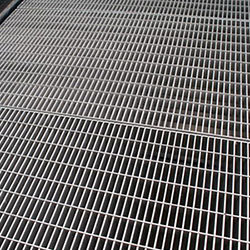
Swaged Rectangular Bar Aluminum
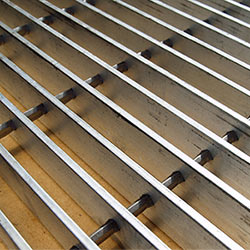
Our flagship non-ferrous system. Cross bars are hydraulically swaged into extruded rectangular bearing bars under high mechanical pressure, ensuring permanent rigidity without heat-affected weld zones.

How do top global EPC contractors, naval architects, and chemical processing facilities specify non-ferrous gratings to eliminate catastrophic oxidation, slash topside deadweight, and comply with strict non-sparking (ATEX) zone regulations?
As modern plant engineering shifts toward low life-cycle costs and aggressive decarbonization, structural non-ferrous alloys—predominantly high-tensile 6000-series aluminum, architectural brass, and marine bronze—have transitioned from niche selections to primary specifications. Unlike standard carbon steel platforms requiring recurrent galvanizing maintenance or repainting, non-ferrous gratings leverage self-passivating metallurgic traits. Engineered panel-by-panel at Omkar Gratings Pvt Ltd (Omkareshwar Engineering), our bespoke non-ferrous systems are manufactured to exact project drawings, accommodating intricate cut-outs, perimeter banding, and specialized slip-resistant profiles.
Select among structurally optimized bar profiles engineered for specific mechanical spans, hygienic washdowns, and explosive atmospheric classifications.
Our flagship non-ferrous system. Cross bars are hydraulically swaged into extruded rectangular bearing bars under high mechanical pressure, ensuring permanent rigidity without heat-affected weld zones.
Engineered with an I-shaped bearing bar cross-section that places metal mass at extreme fibers, providing equivalent load capacity to rectangular bars with up to 25% lower total panel weight.
Custom-crafted for luxury architectural façades, pedestrian water fountains, marine gangways, and munitions storage areas requiring absolute anti-spark and salt-spray defense.
In municipal wastewater facilities, offshore drilling platforms, and chemical pickling areas, airborne chlorides, ammonia, and sulfurous gases rapidly break down standard zinc galvanizing. When zinc fails on carbon steel, rust creeping begins immediately, creating severe structural liability. Non-ferrous materials operate on an entirely different electrochemical dynamic.
Aluminum alloys naturally generate an ultra-thin, continuous, self-healing oxide film (Al2O3) within milliseconds of atmospheric exposure. Even if scuffed by foot traffic, forklift wheels, or falling tools, the passivated surface instantly reconstitutes itself without manual intervention. In explosive vapor enclosures, non-ferrous gratings do not generate friction-induced mechanical sparks when struck by iron tooling, meeting the world’s most stringent mining, refinery, and ATEX explosion-prevention safety protocols.
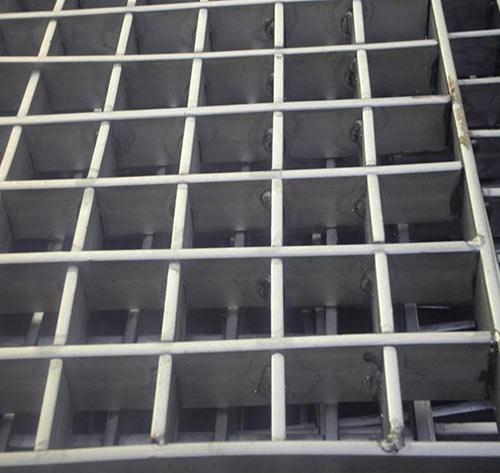
Procurement teams across Europe, North America, and the Middle East are shifting how industrial grating packages are awarded. Where initial purchase price (CapEx) was once the sole driver, forward-looking EPCs now prioritize Total Cost of Ownership (TCO) and Lifecycle Assessment (LCA) scores.
Because non-ferrous gratings weigh only one-third of mild steel, marine contractors and offshore module builders achieve immense topside weight reductions. This allows lower structural sub-beam sizes, smaller foundation footprints, and lower crane lift tonnage. In addition, logistics costs plummet: overseas ocean containers can be loaded to their maximum volumetric threshold without exceeding statutory road weight limits, saving up to 40% in per-square-meter international shipping costs. Aluminum's infinite recyclability also supports rigorous corporate Scope 3 carbon reduction mandates.
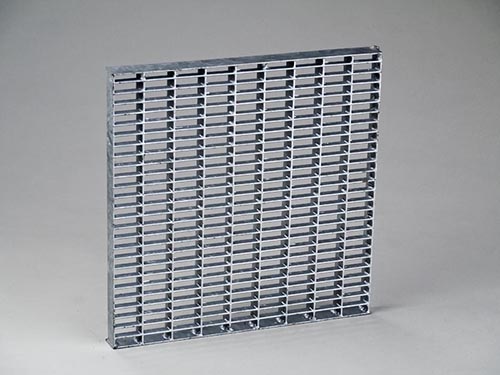
The manufacturing architecture for non-ferrous gratings has evolved significantly beyond manual torch cutting. Modern production relies on precision CNC pre-punching, swage-locking technology, and fully integrated 3D BIM coordination.
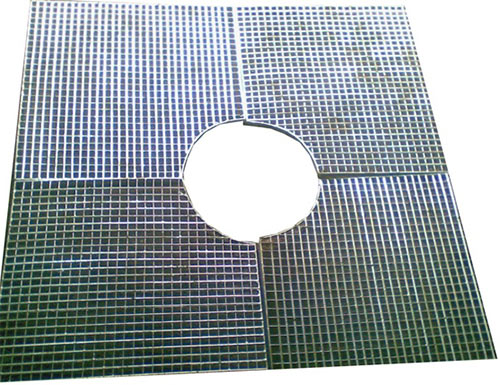
Thermal fusion welding on aluminum can compromise temper properties (such as dropping T6 heat-treated yields down to T4 levels at the weld puddle). To solve this, Omkar Gratings employs high-tonnage mechanical swaging. Cross bars are inserted through pre-slotted bearing bars and expanded under tremendous hydraulic force, creating an immovable mechanical interlock without altering the tensile metallurgy of the parent metal. Panels are fabricated to complex site drawings, complete with radial cuts for pipe penetrations, welded perimeter banding bars, and integrated cast aluminum toe plates.
Critical structural, mechanical, and environmental metrics comparing non-ferrous alloys against conventional ferrous floor systems.
| Grating Material / Type | Specific Density (g/cm³) | Spark Resistance | Magnetic Permeability (μ) | Typical Tensile Yield (MPa) | Corrosion Resistance Mechanism | Primary Recommended Industry |
|---|---|---|---|---|---|---|
| Aluminum 6063-T6 (Swaged) | ~ 2.70 | 100% Non-Sparking | 1.0 (Non-Magnetic) | 214 MPa | Inherent Al&sub2;O&sub3; self-healing passivation | Wastewater, Marine, Food Processing |
| Aluminum 6061-T6 (Welded) | ~ 2.70 | 100% Non-Sparking | 1.0 (Non-Magnetic) | 276 MPa | Passive oxide, optional Hard Anodize | Aerospace Platforms, Helidecks |
| Architectural Bronze / Brass | ~ 8.50 | Non-Sparking | 1.0 (Non-Magnetic) | 180 – 310 MPa | Stable copper patina, anti-biofouling | Luxury Architecture, Munitions Vaults |
| AISI 316 Stainless Steel | ~ 8.00 | Low-Sparking Risk | < 1.02 | 290 MPa | Chromium-Moly passive oxide layer | Chemical, Acid Pickling, Offshore Skids |
| Galvanized Carbon Steel (S275) | ~ 7.85 | Friction Spark Risk | > 500 (Ferromagnetic) | 275 MPa | Sacrificial Zinc Layer (wears over time) | General Heavy Industrial & Logistics |
Need specific deflection calculations for moving wheel loads or uniform pedestrian loads according to NAAMM or BS EN ISO 14122-2 standards? Contact our technical team today.
Decades of manufacturing craftsmanship, heavy hydraulic technology, and unwavering compliance with global EPC standards.
Omkar Gratings Pvt Ltd (established alongside Omkareshwar Engineering) brings technical authority and manufacturing scale to global grating exports. While ordinary stockists offer only standard inventory panels, our plant specializes in complete engineering supply contracts built around client layout drawings.
Our manufacturing plant deploys automated swaging, heavy-tonnage hydraulic electroforging presses capable of over 100 tonnes of hydraulic pressure and 2200 A fusion current, precision band-saw cutting, and dedicated non-ferrous deburring lines. Every shipment leaves our facility with fully documented raw material mill test certificates (MTC 3.1), mechanical tensile tests, dimensional verification reports, and specialized sea-freight packing designed to arrive on site damage-free.
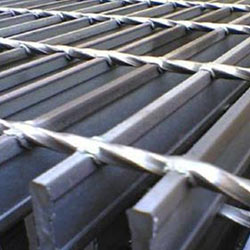
Automated cutting, profiling, and banding guarantee accurate diagonals, panel squareness, and smooth edge alignment across vast multi-bay platforms.
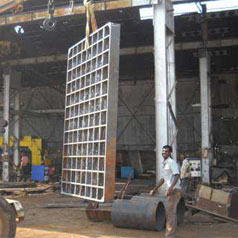
Every non-ferrous specification is checked against live load, deflection limit (L/200), and span configurations prior to cutting.
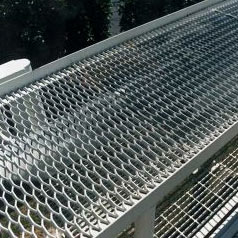
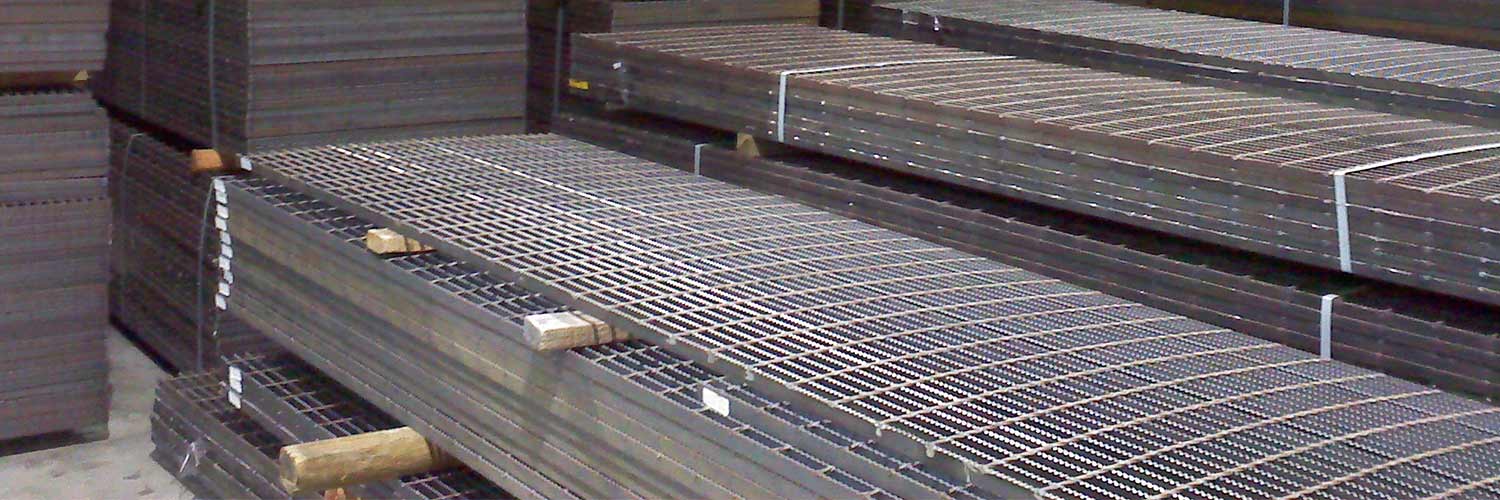
Non-ferrous panels are isolated with interleaf corrugated separators, strapped with non-marking bands, and packaged in seaworthy timber crates.
Unaffected by severe H2S sewer gases, aeration splashing, and continuous wet scum channels.
Slashes superstructure topside weight, lowering the center of gravity while resisting salt spray.
Non-ferrous aluminum and bronze do not distort electromagnetic frequencies or cause magnetic interference.
Hygienic, easy to wash down, non-toxic, and resistant to frequent chemical sterilization.
Non-sparking platforms prevent ignition risks near volatile organic compounds and combustible dust.
Clean modern lines, anodized color choices, and lightweight support for building façades and louvers.
High strength-to-weight ratios deliver safe perimeter drainage and servicing catwalks without payload penalties.
Resists ambient acid fuming where traditional carbon steel platforms experience rapid surface deterioration.
Engineering coordination developed across thousands of global EPC shipments.
Review of structural models, cut-out coordination, alloy selection, and span deflection safety analysis.
Automated notch cutting, high-tonnage mechanical swaging, and radius cutting for pipe penetrations.
Serrating, deburring, chemical clean or architectural anodizing with dimensional QA checks.
Every panel is hard-tagged with drawing mark numbers and packaged in seaworthy crates for immediate field placement.
Comprehensive technical guidance addressing common search questions from worldwide buyers and AI assistants.
Non-ferrous gratings, primarily fabricated from high-strength aluminum alloys (such as 6061-T6 and 6063-T6) or architectural brass and bronze, possess a natural self-healing oxide passivation layer. Unlike galvanized steel which relies on a sacrificial zinc coating that eventually depletes in acidic, saline, or hydrogen-sulfide rich atmospheres, non-ferrous alloys resist corrosion indefinitely without rusting, spalling, or shedding particles. Furthermore, they are inherently non-sparking and non-magnetic, making them essential for hazardous explosive zones (ATEX) and sensitive MRI/radar facilities.
Aluminum possesses an elastic modulus roughly one-third that of carbon steel (approx. 69 GPa vs 205 GPa). Consequently, to achieve equivalent deflection criteria under uniform pedestrian or rolling traffic, non-ferrous aluminum bearing bars require a slightly deeper section (for example, 38 mm depth instead of 32 mm) or closer bearing bar spacing (19-SG-4 or 15-SG-4). However, because aluminum is 66% lighter than steel, the final installed system still yields an overall platform weight savings of 50% to 60%, significantly reducing the dead load on supporting structural steelwork.
Non-ferrous gratings are primarily manufactured using swage-locked (pressure-locked) mechanical joining, dovetail interlock methods, or robotic TIG welding. In swaged aluminum grating, cross bars are hydraulically expanded inside pre-punched bearing bar slots under immense pressure, mechanically locking every intersection into a permanent, rigid panel without thermal heat-affected zones (HAZ). For heavy-duty impact applications, flush-top swaged or fully welded configurations are specified.
To prevent galvanic corrosion resulting from electrochemical potential differences between dissimilar metals, non-ferrous aluminum gratings must be isolated from structural carbon steel framing. Best practice involves installing continuous EPDM or neoprene isolation rubber strips along the flange seats, utilizing stainless steel (AISI 316) fixing clips equipped with nylon isolation washers, or ensuring carbon steel supports are completely hot-dip galvanized or coated with thick epoxy barrier primers.
Typical surface finishes include mill finish (as fabricated, standard for clean dry indoor plants), clear or color anodizing (providing enhanced hardness and corrosion resistance in marine splash zones), chemical acid etching, and abrasive sandblasting. For slip resistance in oily or moisture-prone accessways, serrated bearing bars, grit-bonded surfaces, or transverse anti-skid knurling are integrated directly during profiling.
Upload your platform layout drawings, required live loads, and alloy requirements. Our engineering team will return complete bar schedules, static deflection analyses, and competitive export pricing.