Precision-manufactured platforms, FRP walkways, industrial load-bearing gratings, and custom drainage panels engineered for EPC project requirements worldwide.
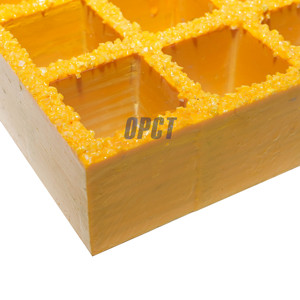
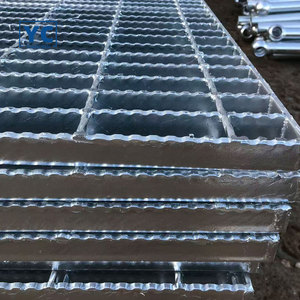
Industrial flooring security represents a non-negotiable parameter across oil and gas processing complexes, chemical refinement plants, commercial marine docks, and multi-tier energy generation facilities. As a certified China Best Grip Strut Grating Manufacturer & Suppliers, our engineering protocol centers on eliminating slip-and-fall hazards through cold-formed, diamond-aperture matrix formations that maximize slip resistance across a complete 360-degree perimeter. Unlike conventional smooth steel sheets or stamped checker plates, authentic safety grip strut profiles incorporate aggressive serrated diamond openings that displace grease, hydraulic fluid, slush, ice, and airborne chemical particulates immediately upon contact.
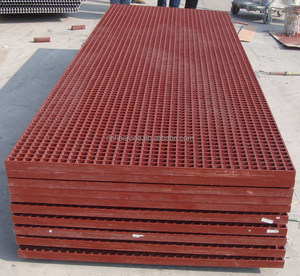
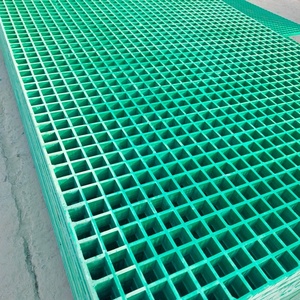
The hydraulic load configuration of high-grade safety grating operates on the principles of mechanical load distribution across integral channel side frames. By executing continuous automated roll-forming and CNC high-tonnage piercing operations, each serrated diamond functions as an independent structural arch. When exposed to harsh mechanical traffic, our electroforged steel gratings, stainless steel variants (AISI 304, AISI 316, and high-temp AISI 309), and moulded fiberglass (FRP) panels resist rotational deflection, maintaining rigid dimensional integrity even under dynamic cyclic loading.
Features outward-projecting serrated edges within cold-formed diamond apertures, delivering superior friction coefficients exceeding OSHA and international workplace safety thresholds under oily or icy conditions.
The open-area geometry allows rapid shedding of fluids, sludge, chemical effluents, and mud, mitigating standing pond hazards and preventing localized galvanic oxidation.
Integrally formed side channels eliminate structural deadload while retaining high deflection resistance over extended spans, significantly economizing superstructure sub-framing investments.
Procurement engineers and EPC project directors are transitioning from conventional catalogue purchasing toward highly engineered, life-cycle-cost-optimized structural systems. As manufacturing tolerances tighten, the global industrial sector shows distinctive structural procurement shifts:
Gone are the days of on-site torch cutting and improvised grinding. Modern tenders demand precision BIM-modeled grating panels fabricated with factory-banded cut-outs, complex toe plates, and predetermined pipe penetrations that preserve galvanized integrity without voiding corrosion warranties.
Industrial facility designs increasingly integrate both high-pressure electroforged steel in heavy dynamic vehicular load paths (e.g., loading bays, crane bridges) and molded FRP/GRP grating in corrosive, chemical-washdown or non-conductive switchgear areas to maximize operational longevity.
Procurement teams demand certified ISO 1461 and ASTM A123 hot-dip galvanization protocols with tightly controlled zinc bath purities, eliminating heavy metal runoff while providing guaranteed 30+ year maintenance-free lifespans in coastal and marine environments.
Evaluating total cost of ownership (TCO) rather than landed purchase cost per square meter has become the universal standard among tier-1 engineering contractors. Selecting precision electroforged panels over manual stick-welded alternatives reduces site installation man-hours by up to 35%, completely eliminating joint crack failures and premature coating spalling.
Our manufacturing facility leverages cutting-edge computerized heavy-industry fabrication systems to deliver world-class grating and architectural flooring solutions directly to your job site:
Our heavy-duty production line utilizes fully automated PLC-controlled machinery delivering over 100 tonnes of hydraulic pressure combined with 2200 amperes of electrical current, fusing cross bars and bearing bars without filler material to produce an impenetrable, crack-free monolithic structure.
For clean-room, pharmaceutical, offshore marine, and high-heat exhaust platforms, we specialize in austenitic and heat-resistant stainless steel fabrications. Every stainless panel undergoes rigorous acid bath pickling and multi-stage electro-polishing to guarantee chemical passivation.
We supply custom panel widths ranging from 250 mm to 1200 mm with flexible longitudinal spans. Our master fabricators integrate radial, rectangular, and edge cut-outs with welded perimeter flat-bar banding, ensuring immediate, drop-in field installation.
Looking for comprehensive load deflection tables, cross bar pitch specifications, or custom drawings?
Send an InquiryConnect directly with our senior metallurgical and structural application engineers to review blueprints, structural load calculations, and tailored export manufacturing schedules.
Send an Inquiry