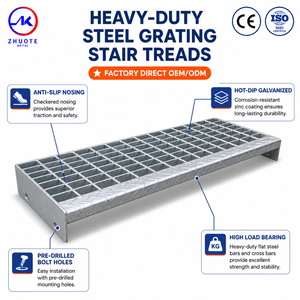

Manufactured using CNC-automated hydraulic electroforging and specialized pressure welding, ensuring millimeter-level tolerances, exceptional hydraulic drainage rates, and structural load reliability under the most demanding site environments.
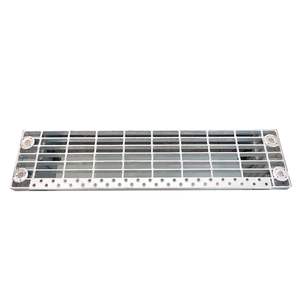
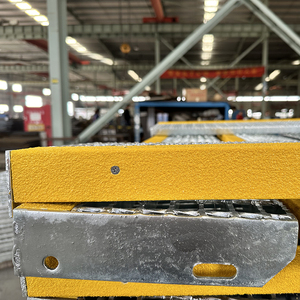
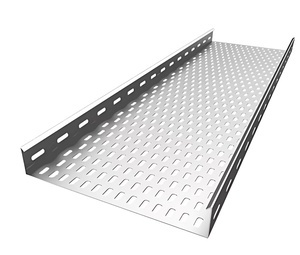
A technical guide for civil consultants, municipal engineers, and procurement directors on specifying trench covers that resist dynamic axle fatigue, chemical corrosion, and hydrodynamic overflow.
Manual stitch welding induces localized heat-affected zones (HAZ), resulting in residual thermal stress and microscopic micro-fissures vulnerable to rust jacketing. Our PLC-controlled electroforged process applies 100+ tonnes of hydraulic force with ~2200A current, instantaneously fusing crossbars into load-bearing flat bars without filler metal. This yields an integrated structural monolith that prevents bar separation under high-vibration truck rolling loads.
From petrochemical refineries to seawater desalination facilities, metallurgical integrity governs service life. We supply AISI 304, AISI 316, and AISI 309 stainless steel trench drain covers finished with acid pickling and electro-chemical polishing to re-establish the chromium oxide passivated layer. For carbon steel, our hot-dip galvanization complies strictly with ASTM A123 / ISO 1461, ensuring zinc coating thickness exceeding 85 μm for 30+ years of rust prevention.
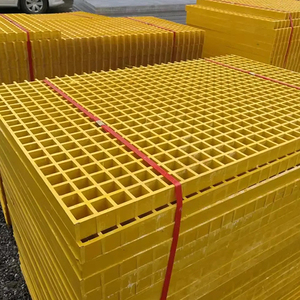
Where stray electrical currents occur or halogenated chemicals exist (such as battery gigafactories and pickling lines), steel covers face accelerated degradation. Our molded and pultruded fiberglass reinforced plastic (FRP/GRP) trench grates utilize vinyl ester resins and continuous E-glass fibers, achieving high tensile strength, non-sparking safety, zero dielectric conductivity, and up to 70% structural weight reduction.
Compare standard trench drain cover configurations against international EN 1433, EN 124, and AASHTO M306 engineering metrics.
| Cover Class / Specification | EN 1433 / EN 124 Rating | Material Core Options | Primary Joint Tech | Target Site Application |
|---|---|---|---|---|
| Pedestrian & Public Realm | Class A15 – B125 (15–125 kN) | AISI 304 / Hot-Dip Galv Q235 | Slotted / Perforated Press | Plazas, sidewalks, office terraces, green roofs |
| Commercial & Parking Garages | Class C250 (250 kN) | Q235 Carbon Steel / FRP | PLC Electroforged Interlock | Commercial curb channels, parking lots, light logistics |
| Heavy Logistics & Industrial | Class D400 (400 kN) | Q345 Low Alloy / Ductile Iron | Deep-Bar Forge-Welded | Main traffic carriageways, distribution hubs, loading docks |
| Super Heavy Military & Airfield | Class E600 – F900 (600–900 kN) | Cast Ductile Iron / Reinforced Q345 | Heavy Solid Plate / Bolted Framing | Airport aprons, container terminals, high-speed military bases |
| Chemical & Cleanroom Channels | Corrosion Specialist (B125 – D400) | AISI 316L / Vinyl Ester FRP | Electro-polished / Resin Matrix | Pharmaceutical suites, food factories, marine offshore |
How digital infrastructure models, environmental ESG mandates, and advanced metallurgical technologies are reshaping global trench drain cover specifications.
Global architectural and engineering (A&E) firms are shifting from standard static catalogs to complete Building Information Modeling (BIM/Revit) digital assets. Trench covers are increasingly procured with exact laser-cut radii, custom inspection junctions, and integrated drop angles to align with prefabricated polymer concrete basins. Pre-engineered panels drastically reduce on-site cutting, maintaining the galvanized coating integrity and saving labor costs.
Infrastructure bids in Europe, North America, and Australasia now regularly require verified Environmental Product Declarations (EPD). Modern Chinese steel grating manufacturers are leading this shift by moving to Electric Arc Furnace (EAF) production routes utilizing recycled ferrous scrap and closed-loop, eco-friendly acid neutralization systems during hot-dip galvanization and electro-polishing operations.
Smart city developments and smart ports now demand integration of non-intrusive sensor housing into trench grate assemblies. High-tier industrial covers are engineered with non-metallic signal ports or integrated mounting clips for ultrasonic stormwater level sensors, silt build-up detectors, and dynamic load telemetry units.
Combining heavy automated forge lines, certified metallurgy, and custom detailing to support critical industrial developments globally.
PLC-governed equipment delivers over 100 metric tons of continuous hydraulic pressure joined with 2200A electric fusion, completely eliminating open cold welds, weld spatter, and dimensional irregularities across thousands of meters of trench runs.
Equipped for complex site geometries. From circular cuts, angled corners, and utility penetration sleeves to integrated kick plates and serrated anti-skid profiles, all cut edges are professionally banded with load-distributing flat bars.
In-house hot-dip galvanizing baths produce zinc layers compliant with ISO 1461 and ASTM A123. For sanitary, cleanroom, and corrosive settings, specialized acid wash pickling and electro-polishing ensure peak passive surface hygiene.
To withstand long sea voyages, all grates are bundled with high-tensile steel strapping, perimeter edge-protectors, moisture-resistant barrier film, and heat-treated solid timber pallets labeled according to site layout plans for quick staging.
Direct technical answers addressing installation tolerances, load compliance, material comparisons, and international shipment logistics.
Electroforged trench grates are fused on heavy PLC machinery utilizing over 100 tons of hydraulic pressure and high current (around 2200A) to join the twisted crossbar into the primary bearing bar without filler wire. This forms a homogeneous joint free of porosity, cracks, and weld spatter. Hand-welded gratings rely on manual stitch fillets, which are ideal for short runs or complex custom perimeter angles, but require thorough inspection to match the fatigue resistance of electroforged joints.
Hot-dip galvanized mild steel (such as Q235B or ASTM A36) is the industry standard for municipal streets, logistic bays, power stations, and parking lots, providing robust impact durability and 25–40 years of galvanic rust protection. Stainless steel (AISI 304 or 316) is necessary for food processing plants, commercial kitchens, dairy facilities, chemical suites, and marine splash zones where strong chemical washdowns or chlorides quickly erode zinc coatings.
Yes. Our engineering department regularly works directly from client DWG, DXF, or BIM schematics. We build trench covers from 200 mm to 1200 mm clear spans (and custom continuous runs), incorporating pipe drop cut-outs, inspection access hatches, lifting lugs, safety lock-down fasteners, and welded perimeter angle frames.
FRP/GRP composite grates are selected for severe chemical immersion, battery handling rooms, offshore drilling decks, and electrical substations. Composites do not corrode, are chemically inert, and provide high dielectric resistance. At approximately one-third the weight of steel, FRP drastically reduces shipping costs and can be trimmed on site using standard abrasive hand tools.
To generate an accurate engineering quote and load-deflection verification, please provide: 1) Trench clear span width and channel seat depth; 2) Anticipated traffic load or EN 1433 load class (e.g., Pedestrian A15, Forklift C250, Heavy Truck D400); 3) Bearing bar dimensions (thickness × depth) and pitch spacing; 4) Material type and surface finish; 5) Total linear meters or drawings; and 6) Target destination sea port.
All grating panels are stacked cleanly with steel strapping, corner protectors, and non-slip wooden dunnage separating individual bundles to prevent zinc abrasion during transit. Bundles are wrapped in UV-resistant film and loaded on heavy-duty, heat-treated wood pallets, complete with layout tags corresponding to your engineering drawings for efficient site unloading.