
Featured Heavy-Duty Industrial Gratings, FRP Grids, and Cable Trays Built to Drawing
An Engineering & Procurement Buyer Guide to Structural Gratings, Material Selection, and Load Dynamics
In modern industrial engineering, selecting the appropriate structural flooring substrate—whether lightweight composite FRP/GRP grids, electroforged hot-dip galvanized carbon steel, or high-tensile stainless steel—directly impacts long-term operational safety, lifecycle expenditure (LCC), and structural integrity. As global industrial EPCs transition toward higher corrosion resistance, slip deterrence, and weight optimization, wholesale OEM manufacturing direct from China has evolved into a strategic supply chain imperative.
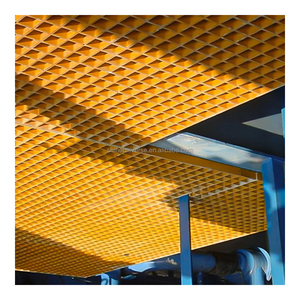
Formed through continuous glass fiber roving embedded in thermosetting resin (Isophthalic, Vinyl Ester, or Orthophthalic). Delivers high strength-to-weight ratios, complete non-conductivity, and zero chemical oxidation in aggressive acid or marine saltwater exposure.
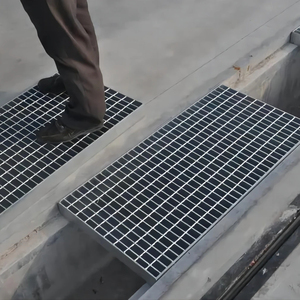
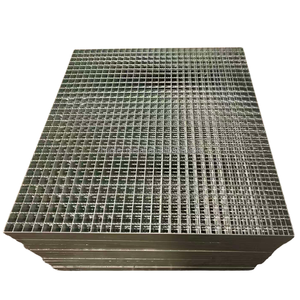
Engineered via automated PLC units applying over 100 tonnes of hydraulic compression combined with ~2200A electrical current to fuse square-twisted crossbars into load-bearing bars. Eliminates micro-fissures and joint fatigue under rolling heavy-vehicle loads.
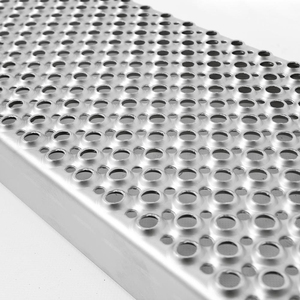
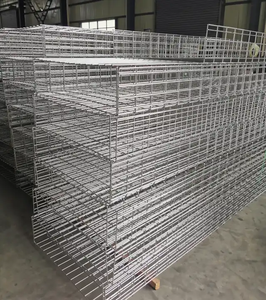
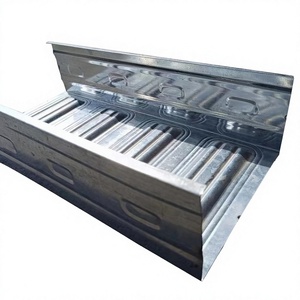
Includes perforated aluminum traction tread planks, expanded metal meshes, and fireproof SS316 wire mesh/perforated cable containment trays designed for high-vibration power, data, and oil refinery conduits.
Isophthalic Polyester Matrix: Recommended for standard industrial walkways with moderate chemical splashes and fire-retardant requirements (ASTM E84 Class 1, flame spread < 25).
Vinyl Ester Polymer Matrix: Formulated specifically for extreme offshore oil platforms, desalinization plants, and chemical storage bays exposed to concentrated hydrochloric acid, chlorine gas, and continuous caustic washdowns.
Phenolic Composite Resin: Offers ultra-low smoke toxicity and high-temperature fire resistance, meeting strict US Coast Guard (USCG) Level 2 fire endurance for marine vessels and enclosed subway tunnels.
To optimize structural safety across diverse architectural spans, engineers must evaluate material mechanical performance against ambient working conditions, chemical toxicity, and static vs dynamic load profiles.
Molded FRP gratings feature a bidirectional mesh design providing equal load-bearing strength across both axes, making them ideal for walkways requiring multiple cut-outs for piping penetrations without compromising structural frame stiffness. Conversely, Pultruded GRP panels utilize a higher ratio of continuous fiberglass roving (up to 70%), delivering superior longitudinal stiffness for wide structural spans, significantly reducing intermediate steel support beams.
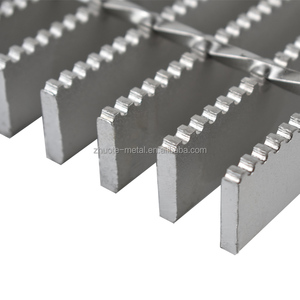
Fabricated using high-yield carbon steel (Q235/ASTM A36 equivalent), serrated bearing bars provide maximum traction in oil-slicked environments such as drilling rigs, refinery catwalks, and heavy industrial plant mezzanine decks. Post-fabrication hot-dip galvanization per ISO 1461/ASTM A123 ensures a zinc coating density exceeding 610 g/m², granting decades of sacrificial rust protection.
For sanitary environments in pharmaceutical synthesis, food and beverage processing, and cryogenic storage, pressure-welded stainless steel gratings undergo rigorous acid passivation and electro-polishing to remove heat tint and surface iron contaminants. For weight-sensitive aerospace installations or vehicle transport decks, .125-inch thick aluminum traction tread planks present high structural rigidity with self-cleaning raised diamond perforated surfaces.
| Grating / System Type | Primary Materials | Standard Fabrication Method | Load Capability | Primary Industry Application |
|---|---|---|---|---|
| Molded FRP Composite Grid | Isophthalic / Vinyl Ester + Glass Fiber | High-Temp Molded Matrix | Pedestrian to Light Vehicle | Chemical Plants, Offshore Rigs, Wastewater Treatment |
| Pultruded GRP Structural Bar | Continuous Roving Fiber + Vinyl Resin | Automated Hydraulic Pultrusion | Heavy Uniform Span | Long-Span Walkways, Cooling Tower Decks |
| Electroforged Steel Grating | Carbon Steel Q235 / ASTM A36 | 100t Hydraulic + 2200A Welding | H-20 Truck Load / Heavy Duty | Refineries, Power Generation, Industrial Floors |
| Electro-Polished SS316 | AISI 304, 316, 316L Stainless | TIG Welding / Pressure Fusion | High Structural Load | Pharmaceutical, Food Processing, Marine Decks |
| Perforated Aluminum Planks | Aluminum Alloy 5052-H32 / 6061-T6 | CNC Punching & Cold Stamping | Medium Duty / Anti-Skid | Rooftop Catwalks, Transport Machinery, Solar Decks |
| Cable Containment Trays | SS316 / Galvanized Mesh / FRP | Precision Roll Forming & Spot Weld | High Cable Weight Rating | Power Plants, Commercial Data Centers, Tunnels |
As the international construction, energy, and infrastructure sectors adopt advanced building information modeling (BIM), stringent carbon neutral mandates, and demanding workplace safety codes, procurement strategies for grating systems are shifting rapidly.
Global EPC contractors are increasingly replacing traditional heavy steel walkway panels with advanced FRP/GRP composites where structural deadweight directly influences energy consumption—such as floating production storage and offloading (FPSO) vessels and off-shore wind transformer platforms. The reduction in structural dead-load lowers logistics fuel consumption and simplifies installation cranage requirements.
Modern mega-projects no longer accept manual site cutting of floor panels, which compromises factory galvanized coatings or exposes resin fibers to ambient moisture. China's leading OEM exporters utilize 3D BIM models to generate automated CNC cutting schedules. Every panel, cutout, edge band, and kickplate is precision-cut in the factory, numbered, hot-dip galvanized or coated, and packaged according to installation sequences to enable direct drop-in assembly at site.
Workplace slip-and-fall prevention standards (such as OSHA and DIN 51130 slip resistance ratings up to R13) are driving demand for embedded quartz grit resin coatings on FRP walkways and aggressively serrated tooth profiles on metallic gratings. Furthermore, hybrid coating technologies—combining galvanization with epoxy powder topcoats—are expanding grating service lives in chemical plants beyond 30 years without major maintenance.
Procurement teams are moving away from multi-tier domestic intermediaries to contract directly with specialized Chinese manufacturing hubs. This direct integration grants complete access to mill test certificates (MTC), non-destructive testing (NDT), ultrasonic zinc thickness testing, and live third-party inspection audits (SGS/TÜV), lowering unit costs while ensuring strict material compliance.
Operating as a premier OEM & Wholesale Exporter in China, our manufacturing facilities integrate heavy industrial electroforging, custom manual fabrication, resin chemistry control, and automated surface treatments designed to meet exacting international standards.
Our heavy-duty electroforging machinery integrates high hydraulic pressure (>100 Tonnes) and massive current pulses (2200A) to merge twisted crossbars flush into bearing bars. This creates a homogeneous single-piece panel void of interior micro-gaps, maximizing resistance to lateral shearing forces and heavy vehicle vibration.
Whether projects demand complex circular penstock trench grates, angled perimeter stair treads with welded yellow safety nosing, or custom pipe cutout banding, our engineering department transforms customer DWG/BIM files into precision shop production drawings within 24 hours.
All finished shipments undergo rigid quality inspection: dimensional tolerance checking, deflection testing under simulated point/uniform load, and zinc coating thickness verification. Products are bound using heavy steel strapping, wooden pallet cushioning, and protective ocean-freight wrapping to prevent port transshipment damage.
Expert Answers to Critical Engineering, Sourcing, and Load Specification Questions
Electroforged steel gratings are produced on fully automated PLC-controlled lines that simultaneously apply over 100 tonnes of hydraulic pressure and approximately 2200A of electrical current to fuse the crossbars directly into the pre-notched load-bearing bars. This process forms a solid, seamless joint without adding filler metal, ensuring complete structural integrity, uniform dimensional tolerances, and smooth zinc adhesion during hot-dip galvanizing. Manually welded gratings are assembled panel-by-panel using arc welding, which is ideal for short-run custom shapes, heavy structural cut-outs, or low-volume specialized architectural profiles.
FRP (Fiber Reinforced Polymer) grating should be specified in environments with high chemical corrosion, constant saltwater spray, or electrical conduction hazards. Unlike steel, FRP will not rust, rot, or degrade when exposed to strong acids, alkalis, or ocean washdowns. Furthermore, FRP weighs roughly 1/4th the weight of structural steel, drastically reducing structural dead-load on offshore platforms, lowering transport freight costs, and permitting installation using basic hand-cutting tools without hot-work welding permits.
Resin selection depends on working environment chemistry:
1. Orthophthalic Polyester: Standard grade offering cost-effective performance for general industrial applications, light washdown areas, and architectural screens.
2. Isophthalic Polyester: Superior chemical resistance for industrial plants exposed to moderate acid/alkali vapors, splash exposure, and outdoor UV environments. Includes fire-retardant additives (ASTM E84 Class 1).
3. Vinyl Ester: Premium performance resin formulated for severe chemical processing facilities, battery storage rooms, and marine offshore rigs requiring maximum resistance to aggressive acids (e.g., Hydrochloric, Sulfuric) and extreme caustic liquids.
All cut-outs—whether circular, square, or edge penetrations—must be reinforced with flat bar banding that matches or exceeds the depth of the load-bearing bars. In steel gratings, full-depth seal welding of the toe-plates and banding bars ensures proper load transfer across interrupted bearing bars. In FRP gratings, cut edges must be sealed with a compatible polyurethane or vinyl ester liquid resin sealant to protect exposed fiberglass strands from chemical ingress and moisture wicking.
To prepare an accurate engineering quotation and structural load calculation, please provide:
1. Material grade (e.g., Carbon Steel Q235, SS304, SS316, FRP Isophthalic/Vinyl Ester).
2. Bearing bar size (depth x thickness) and pitch (center-to-center distance, e.g., 30mm).
3. Crossbar type (twisted square bar, round rod, or flat bar) and crossbar pitch (e.g., 50mm or 100mm).
4. Surface finish (Plain, Serrated, Hot-Dip Galvanized, Electro-Polished, Sanded Grit FRP).
5. Design load specifications (e.g., UDL uniform distributed load in kN/m², or concentrated line/vehicle point load).
6. Project drawings detailing overall panel dimensions, cutout locations, and destination shipping port.
Reputable China manufacturers operate quality management systems certified to ISO 9001. Steel grating products undergo hot-dip galvanization strictly in accordance with ISO 1461, ASTM A123, or BS EN ISO 1461, achieving average zinc coating thicknesses between 70µm and 100µm (over 610 g/m²). Quality assurance dossiers supplied with shipments include Raw Material Mill Test Certificates (MTC), Zinc Layer Magnetic Coating Thickness Reports, Load-Span Deflection Test Certificates, and third-party inspection reports (SGS, BV, or TÜV) upon request.
Get in touch with our technical sales engineers today for custom CAD drawing reviews, material load calculations, wholesale price quotes, and global freight schedules.
Contact Us