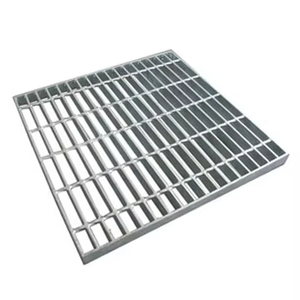
Dielectric Safety
ASTM E84 Class 1

Manufactured to rigorous international benchmarks including UL 467, IEC 62561, and IEEE 80 standards. Every component undergoes strict electrical conductivity, metallographic analysis, and mechanical tolerance validation.
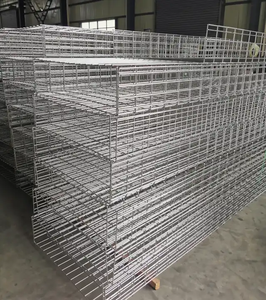
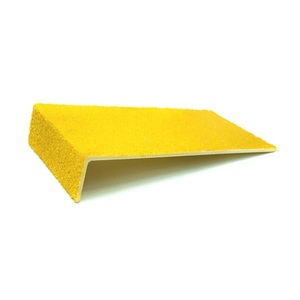
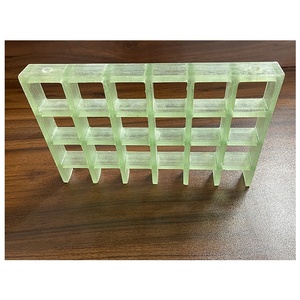
Grounding bus bars function as the critical central node of any facility-wide equipotential bonding network. In high-fault commercial, utility, and telecommunication deployments, inadequate earthing leads to step-and-touch voltage hazards, destructive harmonic interference, and irreversible electronics failure during transient surge events. Our facility engineers wholesale copper busbars utilizing Electrolytic Tough Pitch (ETP) UNS C11000 copper, exhibiting minimum electrical conductivity ratings of 100% to 101.5% IACS (International Annealed Copper Standard) and an electrical resistivity under 0.017241 Ω·mm²/m at 20°C.
Unlike secondary recycled copper scrap commonly utilized in lower-tier supply chains, our export-grade busbar stock undergoes vertical continuous casting followed by precision cold-drawing and precision leveling. Residual oxygen levels are strictly monitored between 100 to 250 ppm, precluding cuprous oxide segregation at the grain boundaries, which prevents embrittlement during subsequent silver-brazing or field-bending processes.
Calculated in accordance with IEEE Standard 80 equations for short-circuit thermal capacity, ensuring temperature rises stay well within safe limits under 25kA, 40kA, or 50kA prospective faults for 1.0 to 3.0 seconds.
Electro-tin coatings conforming to ASTM B545 Class B/C (8 to 15 microns) eliminate atmospheric oxidation, copper-oxide tarnishing, and galvanic cell corrosion when mating aluminum or galvanized lugs.
Assembled with heavy-duty SM40/SM50 red polyester resin insulators (flame retardant to UL 94 V-0, 600V to 15kV standoff isolation) and cold-formed, passivated 304/316 stainless steel mounting channels.
The matrix below outlines standard structural configurations fabricated for electrical substations, hyper-scale cloud server facilities, oil & gas refineries, and commercial utility switchgear rooms:
| Profile Specification (W × T) | Material Standard | Continuous Ampacity (30°C Rise) | Pre-drilled Hole Pattern | Standoff Insulator | Primary Industrial Application |
|---|---|---|---|---|---|
| 50 mm × 5 mm (2" × 1/4") | ETP C11000 / Cu-ETP | 580 A | Single row, M10 / 3/8" holes @ 25mm | SM30 / 1.0 kV Rating | Telecom Cabinet / Secondary TGB Panel |
| 50 mm × 6 mm (2" × 1/4" Heavy) | C11000, Bright Tin Plated | 670 A | NEMA 2-Hole standard, 5/8" c-c spacing | SM40 / 1.5 kV Rating | Cellular Base Station Earthing (BTS) |
| 100 mm × 6 mm (4" × 1/4") | C11000 / Annealed ETP | 1,220 A | Dual row NEMA pattern, 1/2" bolts | SM50 / 3.0 kV Rating | Telecommunications Main Grounding Bus (TMGB) |
| 100 mm × 10 mm (4" × 3/8") | C11000 / 99.95% Cu | 1,680 A | Multi-cluster 4-hole / 2-hole patterns | SM50 / 5.0 kV Heavy Standoff | High-Voltage Substation Perimeter Ground |
| 150 mm × 12 mm (6" × 1/2") | C11000 / ASTM B187 | 2,450 A | Engineered to drawing, customized slots | M12 Hex Polymer Insulator Base | Turbine Generator Neutral Grounding Cubicles |
Note: Fully bespoke hole arrays, countersinks, rounded radius edges, custom cut-outs, and tin-plating configurations can be precision-machined via our computerized multi-axis CNC punching centers directly from your AutoCAD DWG or BIM model.
Procurement directors and electrical engineering contractors face rapidly evolving regulatory and commercial landscapes. Key strategic vectors are reshaping grounding hardware procurement globally.
Modern compute density and high-frequency switching power supply racks demand unprecedented signal-reference grounding grids (SRG). Buyers are shifting from standard single-busbar architectures to complete factory-assembled perimeter earthing topologies featuring solid copper busbars cross-bonded with continuous stainless wire mesh trays to suppress high-frequency transient common-mode noise.
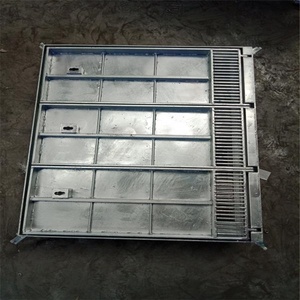
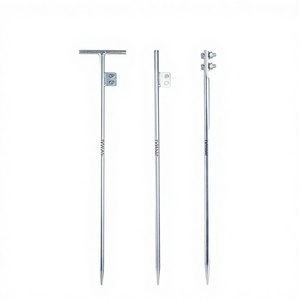
Utility-scale photovoltaic farms, BESS (Battery Energy Storage Systems), and offshore wind converter stations require corrosion-resistant, high-ampacity earthing. We observe a rising transition toward tin-plated copper busbars rated for extreme saline and high-humidity environments, integrated directly with hot-dip galvanized trench covers and grounding rods.
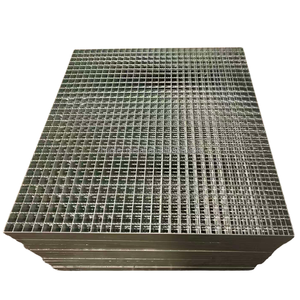
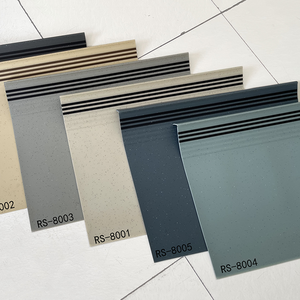
International EPCs are mitigating risk by eliminating multi-tiered middlemen. Procuring grounding busbars, galvanized steel grounding rods, perforated cable trays, and structural FRP walkway access panels from a single integrated manufacturing source yields a 15–22% logistics cost reduction and eliminates multi-vendor dimensional misfit on jobsites.
Regulatory bodies across the EU (CBAM) and North America mandate rigorous carbon tracking across base metals. Tier-1 buyers demand EN 10204 Type 3.1 Material Test Reports (MTR) demonstrating certified cathode copper origin, low-emission smelting footprints, and strict compliance with RoHS and REACH heavy metal limits.
Rather than field-cutting and manual hole-drilling on site, engineering specifications increasingly dictate pre-assembled earthing kits. Factory-torqued standoff insulators, pre-mounted copper disconnect links, and custom-bent busbars shorten site commissioning schedules by up to 40%.
With severe price fluctuations in raw copper, modern earthing designs specify copper-bonded steel conductors and bi-metal transition plates (copper-to-aluminum friction-welded joints) to discourage metal theft while providing robust galvanic insulation between copper earthing collectors and structural steel frames.
Combining advanced PLC-automated electroforging technology, dedicated multi-station CNC copper machining, and in-house hot-dip galvanizing facilities to deliver turnkey infrastructural earthing products.
High-pressure hydraulic forging machinery delivering >100 metric tons of force and ~2200 Amps of current to fuse joints seamlessly with zero internal porosity or weld slag.
Comprehensive fabrication to customer drawing: precision cutouts, toe-plate banding, chamfered edge processing, and tight dimensional tolerance within ±0.5 mm.
Automated acid pickling, electro-polishing for stainless alloys, ASTM A123 compliant hot-dip galvanizing baths, and precision electro-tin baths up to 25μm thickness.
Heavy-duty fumigated wooden crates, VCI anti-corrosion moisture wrapping, and individually sleeved busbars ensuring zero freight abrasions across ocean voyages.
Clear, definitive answers to technical queries encountered by electrical consultants, project engineers, and supply chain managers.
ETP C11000 (Electrolytic Tough Pitch) copper contains a controlled nominal oxygen level of 0.02% to 0.04% and provides a minimum of 100% IACS conductivity. It represents the global industry gold standard for general earthing busbars, switchgear disconnects, and substation grounding grids where cost-efficiency and top electrical conductivity are required.
OFHC C10200 (Oxygen-Free High Conductivity) copper is refined to reduce residual oxygen below 10 ppm (0.001%). OFHC is selected for specialized vacuum electronic applications, high-temperature hydrogen furnace brazing, or nuclear environments where any trace presence of copper oxides could trigger hydrogen embrittlement under extreme heat.
Busbar ampacity is governed by convective and radiative heat dissipation away from the busbar surface area, balanced against Joule heating (I²R losses). Under IEEE and DIN 43671 standards, continuous ratings assume a 30°C or 40°C temperature rise over a 40°C ambient temperature with natural convection in indoor environments.
For short-circuit withstand ratings, engineers employ the Onderdonk or IEEE 80 formula:
A = I × √( (t × αr × ρr × 10^4) / (TCAP × ln(1 + (Tm - Ta) / ( (1/α0) + Ta ))) )
Where A represents cross-sectional area, I is short-circuit current (kA), and t is fault duration. Our engineering department verifies every custom bus bar dimension against your project's maximum projected kA rating.
While bare bare copper displays exceptional raw electrical conductivity, atmospheric exposure immediately initiates surface oxidation, generating copper carbonate and cuprous oxide films that increase contact junction resistance over time. Furthermore, connecting bare copper directly to galvanized steel structures or aluminum compression lugs triggers severe galvanic corrosion due to electrochemical potential differentials (>0.35V).
Electro-tin plating (8–15 microns per ASTM B545) provides a sacrificial yet robust passivation layer. Tin provides electrochemical compatibility with both aluminum and steel, minimizing contact resistance degradation over decades of service.
Yes. We routinely fabricate telecommunications main grounding busbars (TMGB) and telecommunications grounding busbars (TGB) compliant with BICSI, TIA-607-C, and NEMA bolt patterns. This includes standard dual-hole patterns featuring 5/8" center-to-center spacing, 1/4" and 3/8" bolt diameters, as well as staggered 1-3/4" center patterns for heavy two-hole utility lugs. All drilling and slotting operations are executed via automated multi-station CNC machinery, guaranteeing zero edge burrs and precise hole pitch accuracy (±0.1mm).
Every commercial consignment is backed by comprehensive quality dossiers, including:
Ocean freight routes expose metals to intense salt fog and severe thermal condensation cycles. We implement an industrial multi-barrier packaging protocol: every copper bar is interleaved with neutral pH barrier paper or individually sleeved in polyethylene film, packaged with silica desiccant pouches inside heavy-gauge heat-sealed VCI (Vapor Corrosion Inhibitor) bags, and finally secured inside steel-strapped, ISPM-15 compliant heat-treated plywood export crates.
Whether you require standard telecom copper bus bars, customized substation earthing arrays, or integrated cable containment platforms, our engineering team will evaluate your CAD drawings, confirm load parameters, and deliver competitive CIF/FOB wholesale pricing within 24 hours.