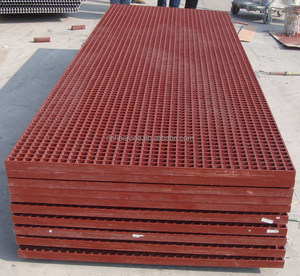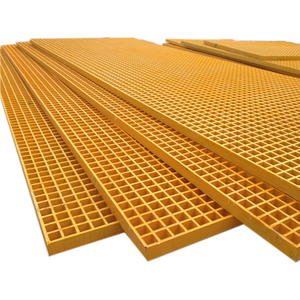
Explore our engineering-grade molded and pultruded fiberglass platform panels designed for extreme chemical resistance, electrical insulation, and high load-bearing capacity.
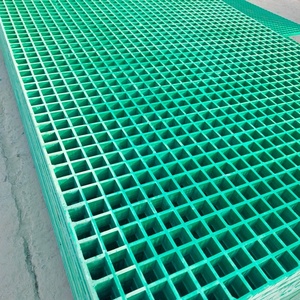
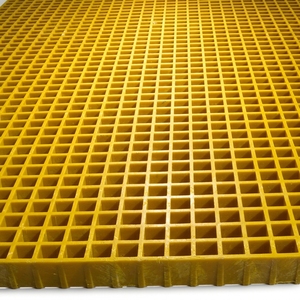
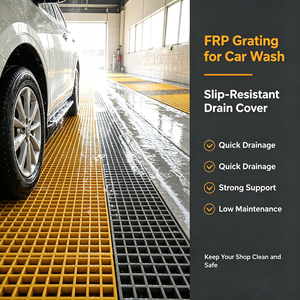
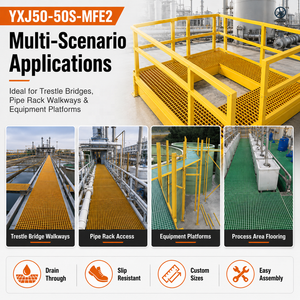
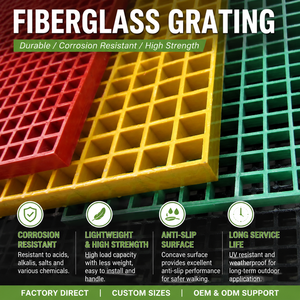
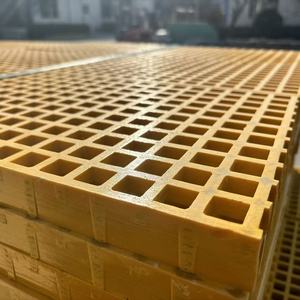
Combining decades of industrial metal electroforging precision with state-of-the-art Fiber-Reinforced Polymer (FRP/GRP) molding technology to deliver high-capacity industrial floor systems worldwide.
Our OEM/ODM manufacturing facility houses advanced thermo-setting resin molding systems and CNC automated routers. We engineer custom mesh dimensions, bar thicknesses (ranging from 25mm to 50mm), and specialized resin formulations (Vinyl Ester, Isophthalic, Orthophthalic, Phenolic) tailored to exact project load metrics.
Every batch of FRP platform grating undergoes rigorous quality checks: Barcol hardness testing (ASTM D2583), tensile strength evaluation (ASTM D638), and cross-sectional resin-to-glass ratio verification. Our resin formulas incorporate UV inhibitors and fire-retardant additives for maximum longevity in aggressive chemical environments.
From pre-cut walkway panels with rounded or square pipe penetrations to factory-fitted toe plates and stair nosing, we ship fully custom-fabricated GRP solutions directly to EPC contractors across refineries, offshore oil rigs, power plants, and municipal water facilities globally.
Understanding resin matrix selection, anti-slip surface topologies, and load deflection criteria for industrial walkway design.
Fiber-Reinforced Polymer (FRP) platform gratings derive their core structural strength from continuous E-glass fibers, while their chemical, thermal, and environmental resistance depends entirely on the thermosetting resin matrix. Selecting the right resin system is critical for optimizing life-cycle costs and avoiding premature structural failure.
| Resin Type | Resin Base | Corrosion Resistance Level | Flame Spread (ASTM E84) | Primary Industrial Applications |
|---|---|---|---|---|
| Vinyl Ester (VE-100) | Premium Vinyl Ester | Extreme (Acids, Caustics & Solvents) | Class 1 (≤ 25) | Chemical Dosing, Petrochemical Refineries, Acid Pickling Lines |
| Isophthalic (ISO-50) | Isophthalic Polyester | High (Industrial Chemicals & Saltwater) | Class 1 (≤ 25) | Water Treatment Plants, Offshore Platforms, General Walkways |
| Orthophthalic (OR-25) | Standard Polyester | Moderate (Atmospheric & Mild Washdown) | Class 2 (≤ 75) | Car Wash Bays, Civil Drainage Grates, Commercial Platforms |
| Phenolic (PH-200) | Phenolic Resin Matrix | Ultra-High Temp & Cryogenic Resistance | USCG Level 1 / ASTM E84 Class 1 (≤ 5) | Offshore Oil Platforms, Tunnels, Submarines, High Fire-Risk Zones |
Safety guidelines across global chemical and industrial platforms demand high friction surfaces to eliminate slip-and-fall hazards in wet or oily environments. OEM FRP gratings are manufactured with three distinct anti-slip top finishes:
How modern engineering teams are transitioning from traditional steel gratings to composite FRP platforms for long-term ROI and structural sustainability.
While galvanized carbon steel or stainless steel gratings initially offer familiar upfront costs, their high maintenance, frequent rust removal, repainting, and elevated field-installation weights lead to substantial long-term expenses. Global EPC buyers now evaluate purchasing through Life Cycle Cost Analysis (LCCA). FRP platform gratings provide zero corrosion maintenance, zero scrap-theft value, and a service lifespan exceeding 30 years, drastically lowering total cost of ownership (TCO).
The global industrial construction sector is rapidly adopting pre-engineered modular platform construction. Future OEM procurement emphasizes receiving factory-fabricated FRP platform packages complete with structural GRP pultruded beams, handrail channels, kickplates, and pre-cut anti-slip mesh panels marked with installation layout tags, cutting site labor times by over 60%.
Driven by strict safety directives in offshore oil/gas platforms and underground transit systems, technological development is pushing resin chemistry toward Phenolic matrix composites. These next-generation FRP gratings achieve USCG (United States Coast Guard) Level 1 fire endurance ratings, operating in extreme temperatures while emitting low smoke and non-toxic fumes.
Clear technical answers to help procurement managers and structural engineers evaluate, specify, and import OEM FRP platform gratings.
FRP molded grating features an exceptionally high strength-to-weight ratio. While continuous steel bar gratings offer higher stiffness over extreme spans, a standard 38mm depth FRP molded grating with a 38x38mm mesh easily supports safe uniform working loads of over 500 kg/m² across a 900mm span with a deflection under L/200. For heavy vehicle traffic or concentrated equipment loads, pultruded FRP gratings or heavy-duty molded FRP panels are specified.
Molded FRP Gratings are manufactured in heated liquid molds with woven glass fibers laid in bidirectional layers. This provides equal strength in both directions, allowing easy on-site cut-outs for pipes and columns without compromising structural integrity. Pultruded FRP Gratings are assembled from machine-extruded structural shapes with a higher glass content (up to 70%), providing maximum uni-directional load capacity over longer spans, but requiring additional cross-rod support when cut.
Yes. Fiberglass-reinforced polymer is completely non-conductive, making it ideal for electrical substations, high-voltage platforms, and battery room floors. Flame-retardant resins (Isophthalic and Vinyl Ester) tested under ASTM E84 achieve a Class 1 Flame Spread rating (≤ 25), with self-extinguishing properties engineered into the material.
Absolutely. As an OEM/ODM manufacturer, we supply custom panel sizes (e.g., 1220x3660mm, 1000x4000mm) or factory pre-cut panels based on your structural CAD drawings. Resin colors can be customized to safety standards: Industrial Yellow for hazards, Light Gray/Dark Gray for walkways, Green for chemical platforms, or Safety Red for emergency access channels.
FRP platform gratings are anchored to supporting steel or GRP beams using 316 Stainless Steel fixing clips. Common clip types include M-Clips (holding two adjacent grating bars to the frame), L-Clips (securing single bar edges), and C-Clips (joining two panel edges without underside support). We supply complete hardware packages with all OEM exports.
All our industrial-grade FRP gratings incorporate high-grade UV inhibitors (such as Tinuvin light stabilizers) directly into the resin matrix. For outdoor coastal or high-altitude installations, an additional polyurethane topcoat is applied to prevent resin fiber bloom and maintain color vibrance for decades.