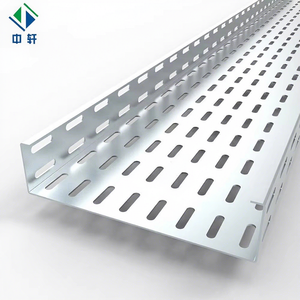

Custom fabricated to customer specifications, architectural constraints, and industrial service loads. Directly exportable for offshore, petrochem, water treatment, and infrastructure platforms.
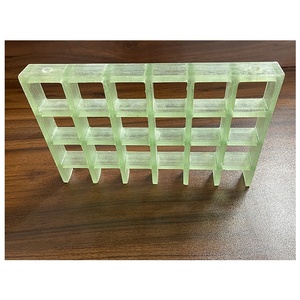
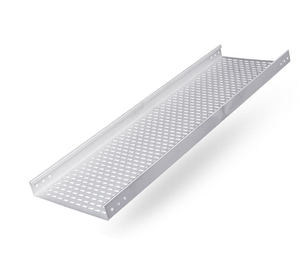
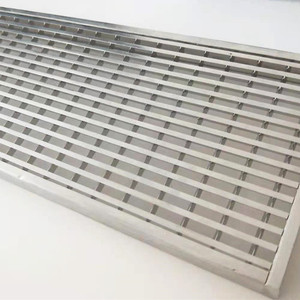
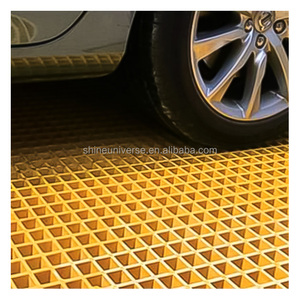
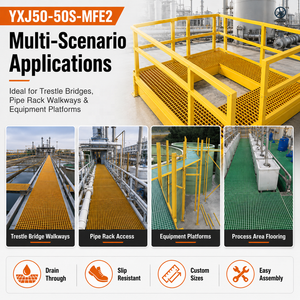
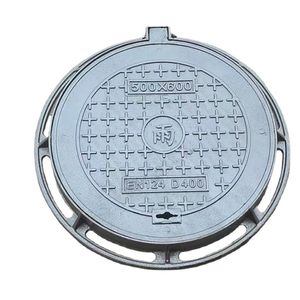
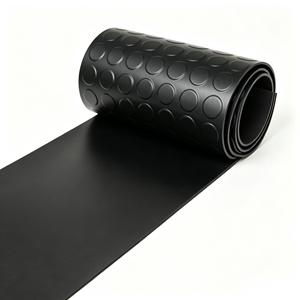
In industrial plants, offshore drilling rigs, chemical treatment centers, and logistics structures, the platform floor functions not merely as foot transit space, but as a primary structural diaphragmatic component subject to dynamic flexure, concentrated wheeled loads, vibration harmonics, and severe ambient oxidization. As global EPC contractors seek higher uptime metrics, the specification difference between Electroforged Bar Grating and manual fillet-welded alternatives determines total operational lifecycle profitability.
Omkar Gratings (Omkareshwar Engineering) manufactures platform gratings utilizing heavy-tonnage automated electroforging lines. During this computer-monitored manufacturing process, high-tensile square twisted cross bars are hydraulically pressed under more than 100 tonnes of downward pressure simultaneously while an instantaneous surge of approximately 2200 Amperes of electrical current runs through the intersection. This process melts and fuses the parent metals together at a molecular crystal level without adding any filler metals. The outcome is a monolithic joint devoid of voids, slag inclusions, or internal stresses, eliminating crack nucleation zones under cyclic vibration and temperature swings.
Conversely, for geometrically intricate plant footprints involving round equipment vessels, diagonal pipe transitions, structural column penetrations, and edge perimeter drops, our custom fabrication workshops utilize precision plasma cutting and heavy-duty flat-bar banding. Every open cut-out receives continuous seal-banding conforming to international load-transfer protocols (such as ANSI/NAAMM MBG 531 and BS 4592), guaranteeing that structural load capacity remains intact across all bearing bar interruptions.
How major EPC developers, structural engineers, and supply chain managers are shifting their sourcing criteria for heavy industrial access floors.
Gone are the days of on-site trimming and torch cutting. Modern megaprojects require factory-cut, fully banded grating panels coded to 3D CAD/BIM models. Pre-notched cutouts with installed kick plates (toe plates) eliminate hazardous on-site hot work, streamline crane erection speeds, and maintain factory-applied protective galvanizing seals intact.
Purchasing authorities are prioritizing multi-decade asset endurance over low initial procurement tenders. While raw carbon steel exhibits a lower invoice baseline, severe marine or reagent vapors lead to catastrophic early spalling. Engineers are increasingly issuing dual tenders comparing high-spec Hot-Dip Galvanizing (exceeding 610 g/m² under ASTM A123) against chemical-grade pultruded FRP or pickling-passivated AISI 316L stainless steel.
Procurement teams operating in North American and European corridors now require full chemical traceability, verified Mill Test Certificates (MTC EN 10204 Type 3.1), and low-carbon production verification. Recycled secondary metallurgy in structural bar extrusion, paired with energy-efficient closed-loop hot-dip galvanizing plants, directly feeds carbon abatement indices for global contractors.
The industrial grating sector is experiencing rapid technical modernization aimed at solving the triad of structural risk: slippery surfaces, joint failure, and environmental degradation. Key technological trajectories shaping the market include:
1. High-Traction Serration Geometries: Wet factory floors, oil refinery platform decks, and offshore topsides present ongoing slip risks. Next-generation gratings utilize custom micro-serrated and trapezoidal bearing bar profiles. Coupled with twisted transverse bars, this configuration achieves Pendulum Test Values (PTV) and ramp ratings exceeding DIN 51130 R13 classifications even in oily, slurry-heavy operating spaces.
2. Advanced Passivation & Duplex Barrier Surface Treatments: Exposure to marine offshore environments and chemical splash has driven finishing technology beyond standard unpassivated galvanizing. Current high-spec deployments combine zinc bath thermal fusion with secondary organic topcoats, acid-wash electro-polishing on AISI 304/316 systems, and multi-component vinylester/isophthalic resin matrices in FRP products to achieve thousands of hours of salt-spray neutral endurance (ASTM B117).
3. High-Strength, Thin-Wall Structural Sections: Advanced metallurgical micro-alloying enables manufacturers to decrease bearing bar thickness while enhancing yielding yield modulus ($f_y \ge 355 \text{ MPa}$). This engineering progress yields a notable decrease in dead load per square meter of superstructure steel framing, lowering shipping freight volume, crane requirements, and primary foundation loads.
Combining heavy-duty engineering infrastructure, certified materials, and verified export packaging to ship platform flooring worldwide without delay.
Equipped with PLC-driven heavy electroforge systems, ensuring complete cross-bar fusion under 100+ tons pressure, zero internal fissures, and exceptional dimensional uniformity over multi-thousand square meter deliveries.
Total raw material provenance. Mill verification across AISI 304, 316, 309, high-grade structural mild steels, and FRP composites. Documented under standard ISO 9001 and verified using EN 10204 3.1 inspection paperwork.
Bespoke shaping services to CAD drawings. Round, square, angular, and pipe cut-outs are trimmed, framed with equal-depth flat bar banding, and marked for straightforward drop-in installation on site.
In-house thermal hot-dip galvanizing conforming to ASTM A123 / EN ISO 1461, plus acid pickling and electro-polishing suites for hygienic pharmaceutical and food-processing stainless installations.
Standard export palletization, moisture protection, heavy steel strapping, edge cushions, and clear erection mark tags to guarantee zero shipping deformation on overseas maritime journeys.
Direct technical answers addressing deflection formulas, compliance codes, custom cutouts, and export logistics.
To establish an exact, bid-ready technical quote, our engineering team requires: (1) Bearing Bar Depth and Thickness (e.g., 32x5 mm, 40x3 mm); (2) Bearing Bar Center-to-Center Pitch and Cross Bar Pitch (e.g., 30/100, 34/38 mm); (3) Grating Pattern / Manufacturing Process (Electroforged, Manual Fillet Welded, Press-Locked, or Pultruded/Moulded FRP); (4) Surface Condition (Plain smooth or Serrated anti-slip); (5) Material Specification & Finish (Mild Steel ISO FE 430A / ASTM A36 Hot-Dip Galvanized, Stainless AISI 304/316 Electro-polished); (6) Detailed Layout Drawings detailing exact structural spans, cut-outs, kick plates, and clearances; (7) Design Traffic / Load class (Uniform UDL in kN/m² or Concentrated Line / Wheel Load in kN).
Electroforged gratings utilize a fusion process where the twisted cross bar is forge-welded into the bearing bar under 100+ tons of hydraulic force with an electric current of approx. 2200 Amps. No additional welding filler wire is consumed. This process creates a clean, uniform joint across every grid intersection, preventing internal gas porosity and cold laps. Manual welded gratings, on the other hand, rely on localized bead welds at alternating intersections; these are prone to human variation, stress concentration, and micro-cracking under repetitive rolling wheel impacts or intense machine vibration.
FRP/GRP grating is optimal in conditions characterized by strong chemical oxidation, continuous saltwater immersion, high electrical potential, or strict weight constraints. Unlike metallic materials, fiberglass-reinforced polymers (vinylester, isophthalic resin) will not oxidize, need zero recurring anti-corrosion touch-ups, are non-sparking for ATEX/explosive zones, and provide dielectric insulation around electrical platforms. Additionally, being roughly one-third the weight of steel, FRP substantially lowers installation rigging effort and reduces sea freight deadweight.
Yes. OEM/ODM customization is an essential part of our export business. All cut-outs (circular for pipe routing, rectangular for structural columns, or diagonal for vessel clearances) are fully banded with flat bar sections equal in depth to the bearing bars, or deepened as 100 mm / 150 mm integrated kick plates (toe plates) in compliance with OSHA and BS 4592 walkway safety regulations. Every panel is tagged according to the general arrangement (GA) drawing for fast layout on site.
For standard pedestrian walkway platforms, international codes (such as NAAMM MBG 534 and BS 4592) recommend limiting maximum elastic deflection under specified service design load to $\le L/200$ (where $L$ is the clear span distance between beam supports) or a maximum absolute deflection of 10 mm (0.375 in), whichever is smaller. For areas with sensitive machinery, conveyor crossings, or rolling traffic, a stricter deflection limit of $\le L/300$ or 6 mm is typically specified to prevent floor bounce and joint loosening.
Send your structural specifications, layout drawings, material requirements, or project tenders. Our engineering team will review load profiles, bar spacing, cut-outs, and coating options to deliver a complete export proposal.