
Custom-fabricated to structural project blueprints with verified load-bearing ratings, anti-slip profiles, and certified metallurgical durability.
Built upon high-tonnage automated forge-welding, ISO 9001 quality frameworks, and rigorous material traceability for multi-ton global procurement contracts.
Our automated PLC-controlled lines exert in excess of 100 metric tonnes of hydraulic pressure while applying approximately 2200 Amperes of electric current. This molecularly fuses square-twisted crossbars into flat load-bearing bars without filler metal, eliminating thermal voids, weld fissures, and structural fatigue points.
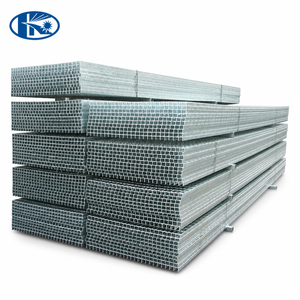
We manufacture gratings using prime-grade AISI 304, AISI 316, and high-temp AISI 309 stainless steel, complete with automated acid pickling and electro-polishing baths. For structural carbon steels, our certified hot-dip galvanizing exceeds ASTM A123 / ISO 1461 specifications, achieving 85–120 μm zinc barrier coatings for maximum salt-spray resistance.
Every industrial platform requires cutouts for process piping, structural columns, valves, and electrical conduits. Our engineering team converts client IFC/DWG models directly into automated fabrication paths. All circular, square, and edge penetrations are fully banded with full-depth flat bars, preserving structural load-path continuity.
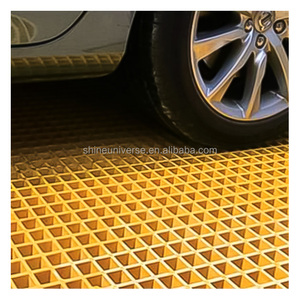
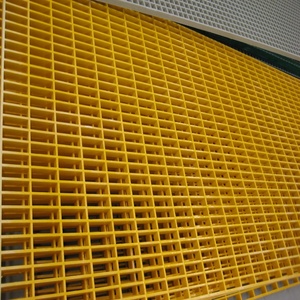
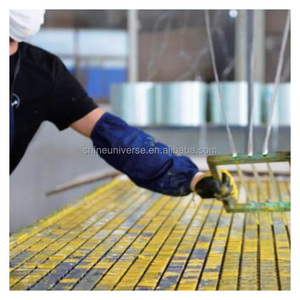
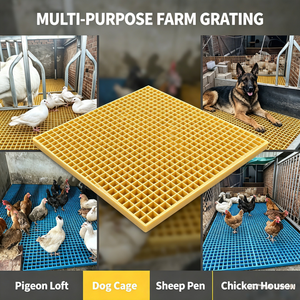
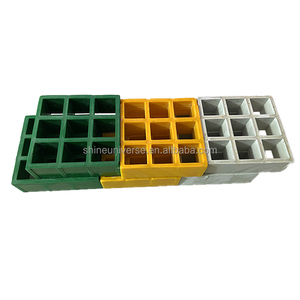
Our Fiber Reinforced Polymer (FRP/GRP) molded and pultruded gratings utilize premium vinyl ester, isophthalic, and phenolic resin formulations reinforced with continuous high-strength E-glass fibers. Certified to ASTM E84 Class 1 fire retardance, they deliver non-conductive, low-maintenance flooring for caustic chemical plants.
Panels are piece-marked with steel embossment and weatherproof barcoded tags matching layout erection drawings. Bundles are protected with structural steel channel perimeter bands, corner guards, waterproof wrapping, and fumigated timber dunnage to withstand breakbulk handling and maritime shipping across world ports.
Every production heat undergoes optical emission spectrometry (OES) chemical verification, tensile yield stress testing, zinc adhesion verification, and coordinate-measuring-machine (CMM) dimensional checks. Detailed Mill Test Certificates (MTC EN 10204 3.1) and non-destructive examination (NDE) dossiers accompany every export consignment.
A comprehensive technical reference for EPC contractors, structural consulting engineers, and plant reliability specialists.
Safety floor gratings form the critical pedestrian and vehicular load-bearing barrier on open platforms, walkways, refinery catwalks, and drainage trenches. Selecting the appropriate grating configuration requires balancing mechanical loading capacity, span-to-deflection ratios, anti-skid friction coefficients, environmental corrosion exposure, and fire-safety compliance. As an established OEM/ODM manufacturer, our production integrates strict metallurgical controls and precision structural fabrication to meet rigorous international building codes, including NAAMM MBG 531, BS 4592, DIN 24537, and EN ISO 14122.
In metal bar grating, load capacity is governed predominantly by the section modulus of the primary bearing bars aligned parallel to the span direction. In an electroforged panel, the crossbars serve strictly as lateral stabilizing and spacing members. The hydraulic press-welding process embeds the twisted cross bar flush into the pre-slotted bearing bar under 2200 Amps of continuous resistance heating. Unlike hand-shielded manual arc welding or press-locked methods, electroforging generates a monolithic metallurgical joint without intergranular oxidation or porosity.
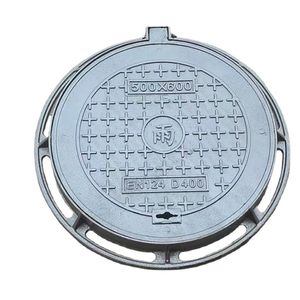
When sizing carbon steel gratings for pedestrian walkways, standard structural practice requires limiting elastic deflection under a uniform working load of 5.0 kN/m² or a concentrated central line load of 1.5 kN to ≤ 1/200th of the clear structural span (max 6.0 mm) to avoid human discomfort and psychological instability. For heavy-duty vehicular environments (dock loading bays, forklift ramps, trench sumps), bearing bar thicknesses scale up from 5 mm to 12 mm, with depths reaching 100 mm to support AASHTO H-20 / HS-20 truck axles and EN 124 Class D400 wheel loads.
Selecting between carbon steel, high-nickel alloys, and composite resins is an exercise in Total Cost of Ownership (TCO) and chemical compatibility:
| Grating Class | Material Standard | Yield Strength / Tensile | Slip Resistance (DIN 51130) | Primary Industrial Sector |
|---|---|---|---|---|
| Electroforged Steel | ASTM A36 / BS EN 10025 S275JR | Fy = 250–275 MPa | R10 (Smooth) / R12 (Serrated) | Petrochemical, Power Plants, Mines |
| Stainless Bar Grate | AISI 304 / 316 / 316L / 309 | Fy = 205–240 MPa | R11 (Serrated Top Edge) | Offshore, Marine, Pharma, Food |
| Molded FRP Mesh | Vinyl Ester / Isophthalic + E-Glass | Tensile: 300–350 MPa | R13 (Quartz Grit Top) | Chemical Dosing, Water Treatment |
| Micro-Mesh FRP | Phenolic Resin Matrix | Tensile: 280–320 MPa | R13 (Concave / Embedded Grit) | Offshore CAT Catwalks, Multilevel Rigs |
| Ductile Gully Grate | EN-GJS-500-7 (Ductile Iron) | Yield: >320 MPa; Tensile: 500 MPa | Patterned Ribbed Texture | Ports, Container Terminals, Roadways |
Industrial slip-and-fall injuries represent a major component of factory lost-time incidents (LTI). Standard flat plain bearing bars offer adequate traction under dry shoe conditions, but grease, industrial condensate, lubricating lubricants, or marine spray create boundary lubrication layers that dramatically reduce the coefficient of friction. To mitigate this hazard, our OEM/ODM custom manufacturing incorporates precision serrated bearing bars. For FRP composites, we deploy an integral silica quartz grit bonded during the thermosetting curing cycle, achieving a DIN 51130 R13 slip resistance rating with an wet pendulum test value (PTV) > 45.
Anticipate the engineering, regulatory, and environmental shifts governing large-scale infrastructure specifications over the next decade.
Global procurement offices are transitioning from initial purchase price evaluations to rigorous Life-Cycle Costing (ISO 15686-5). While galvanized carbon steel offers a lower initial CapEx, severe marine and chemical installations incur heavy repainting, maintenance, and structural inspection costs. Consequently, EPCs are proactively migrating toward premium vinyl-ester FRP and austenitic stainless gratings that offer 30+ year maintenance-free lifespans.
Regulatory authorities such as OSHA 1910.28 and EN ISO 14122-4 now require that floor grating apertures prevent a 20 mm diameter sphere from dropping through suspended platforms onto workers below (and a 35 mm ball for general industrial areas). This has accelerated demand for Micro-Mesh FRP gratings and secondary welded expanded wire mesh underlayments, shifting supply chains away from conventional wide-pitch (30×100 mm) open panels.
Skid-mounted process modules and offshore topsides built off-site necessitate precision-engineered, pre-notched gratings delivered ready for bolt-up installation. Field cutting is costly, damages anti-corrosion barrier coatings, and creates hot-work ignition hazards. Modern procurement demands digital drawing-to-machine CAM nesting, guaranteeing ±1.5 mm panel tolerances and pre-welded toe kicks.
Environmental Product Declarations (EPDs) are increasingly mandated in European and North American infrastructure tenders. Industrial grating manufacturers must document Scope 1, 2, and 3 carbon footprints. Innovations in electric arc furnace (EAF) low-carbon steel billets, paired with closed-loop hot-dip galvanizing and bio-based resins, are key selection criteria for top-tier EPCs.
Supply chain leaders are eliminating fragmented vendor bases. Instead of contracting separate manufacturers for electroforged steel, composite FRP, stair treads, ductile drain covers, and cable management trays, global procurement teams are choosing single-source manufacturing partners who provide unified structural documentation and export crating.
Modern asset operators require laser-etched QR codes and durable RFID tags directly affixed to structural grating panels. During site assembly and subsequent lifecycle turnarounds, maintenance personnel can instantly access structural load ratings, material chemistry heat numbers, and spare part fabrication sketches directly from mobile field tablets.
Clear, definitive answers to help project managers, buyers, and structural detailers avoid expensive fabrication mistakes.
Electroforged gratings are produced on continuous automated PLC-driven machinery. Bearing bars are clamped in parallel while square-twisted crossbars are forged perpendicularly into their upper edges under more than 100 tonnes of hydraulic pressure combined with 2,200 Amperes of instantaneous electrical resistance heating. This fuses the steel on an atomic level without added welding filler rod or thermal spatter. The resulting joint has uniform tensile and shear integrity across every intersection. Manual or press-welded panels, by contrast, rely on localized flux-core or manual arc welds at every third or fourth bar intersection, introducing heat-affected zones (HAZ), micro-cracks, dimensional warpage, and higher susceptibility to corrosion at open crevice seams.
Material grade selection depends directly on the process environment:
AISI 304 (1.4301): Standard 18/8 austenitic grade. Suitable for architectural catwalks, clean municipal water installations, beverage bottling lines, and dry indoor food-processing areas where routine caustic or chloride exposure is minimal.
AISI 316 (1.4401) / 316L: Contains 2.0–2.5% molybdenum, providing superior resistance to localized chloride pitting and crevice corrosion. Mandatory for offshore marine decks, chlor-alkali plants, marine splash zones, and pharmaceutical clean-in-place (CIP) environments.
AISI 309 (1.4828): High chromium-nickel heat-resistant alloy engineered to withstand continuous operating temperatures up to 1000°C (1832°F) in furnace mezzanines, flare stack walkways, and power plant boiler decks where lower grades experience rapid thermal oxidation and yield-strength degradation.
FRP composite grating is the optimal design choice under three primary project conditions:
1. Aggressive Chemical Environments: In battery manufacturing rooms, acid pickling lines, cooling towers, and offshore drilling mud units, acidic or alkaline mists quickly strip protective zinc coatings, corroding steel within 12–24 months. Vinyl ester FRP resists pH ranges from 1 to 14 continuously.
2. Weight-Critical Modular Structures: FRP weighs approximately 25–30% of equivalent steel bar grating, substantially reducing structural dead loads on floating production storage and offloading (FPSO) vessels and high-rise modular industrial skids.
3. Electrical & Spark Hazards: FRP has zero magnetic permeability, high dielectric strength, and non-sparking properties, eliminating electrical shock hazards in transformer sub-stations and explosive spark hazards in hydrocarbon venting facilities.
Yes. As an OEM/ODM specialist, bespoke CNC fabrication from project drawings is our core capability. We fabricate circular cutouts for vertical process piping, rectangular penetrations for structural wide-flange columns, and skewed diagonal edges for tank perimeters. Crucially, every cut edge is bordered by a full-depth perimeter flat bar band weld. Banding distributes point loads across adjacent load-bearing bars, prevents lateral deflection under point forces, and provides a continuous toe border preventing tools from slipping through the opening.
To ensure full compliance with structural calculations and provide an accurate fixed-price quotation, please furnish:
1. Material Specification & Finish: Carbon steel (plain mill finish, hot-dip galvanized, bitumen painted), stainless steel (pickled & electro-polished), or FRP (resin type, fire-retardancy rating).
2. Load-Bearing Bar Geometry & Pitch: Height × thickness (e.g., 32×5 mm, 40×5 mm) and center-to-center spacing (typically 30 mm, 33 mm, or 40 mm).
3. Crossbar Pitch: Longitudinal spacing (typically 50 mm or 100 mm).
4. Design Loading Criteria: Uniform distributed load (UDL in kN/m²) and concentrated line/point load (kN) with maximum allowable deflection limit (L/200 or L/300).
5. General Arrangement Drawings: DWG, DXF, or PDF drawings showing clear structural steel support spans, bearing directions, cutout locations, and total square meterage.
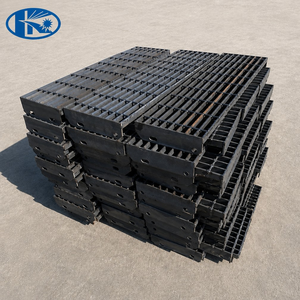
Export consignments are subjected to repeated port crane handling, container motion, and marine humidity. Our export packaging protocol binds panels into rigid solid-steel strap bundles anchored with heavy-gauge bottom perimeter channels. Each panel features a durable, hard-stamped identification tag corresponding exactly to the structural erection key plan. Bundles are protected with heavy plastic stretch wrap and desiccants, and rest on fumigated ISPM-15 compliant timber runners, enabling immediate crane pick-and-place staging straight to plant mezzanine levels.